Are you worried about the next big cyberattack? It’s a fair question. The truth is, the digital vulnerabilities haunting our systems today might be a rehearsal for something much more sophisticated. But here’s the twist: the same quantum technologies that could one day crack our strongest encryptions are already being harnessed to protect us. What once sounded like science fiction is quietly becoming the new frontier in keeping our world running safely: from power grids and hospitals to the phone in your hand.
If that sounds dramatic, it is. The question isn’t whether another major cyber catastrophe will strike: it’s when and how cleverly it’ll be executed. We’ve already seen the cracks form. Remember the ransomware attack on the Colonial Pipeline that halted fuel delivery across the U.S. East Coast? Or the persistent intrusions into utility networks that have left entire cities on edge? These incidents aren’t isolated. They’re signs of a digital landscape that’s evolving faster than the defenses built to protect it.
Right now, most of our cybersecurity relies on mathematical puzzles like factoring large prime numbers, so complex that it’s assumed no computer could reasonably solve them in our lifetime. But as computing power surges and attackers become state-sponsored and laser-focused, that assumption is starting to wobble. The guardrails of classical encryption are showing their age, and the question every government and company must face is unsettling but straightforward: Are we really ready for what’s coming next?
The Quantum Wildcard
Enter quantum computing—the ultimate disruptor. Instead of crunching data as ones and zeros, quantum computers use qubits, which can exist in multiple states at once. This gives them the potential to solve specific problems exponentially faster than even the most advanced supercomputers today. That’s incredible news for science, medicine, and climate modeling. But for cybersecurity? It’s… complicated.
At the center of this looming storm is something called Shor’s algorithm: a mathematical trick that, if run on a powerful enough quantum computer, could break the encryption protecting everything from your online bank account to military communications. We don’t yet have a machine capable of doing this, but experts estimate it could arrive within the next decade or two. And here’s where things get unnerving: data is already being stolen today and stored, waiting for that future moment when quantum decryption becomes possible. It’s called “harvest now, decrypt later,” and it’s precisely as ominous as it sounds.
The consequences of unpreparedness could be staggering, like blackouts, financial chaos, and communication collapses. It’s no wonder global cybersecurity teams are sounding the alarm and accelerating efforts to build defenses that can withstand this quantum leap in offensive capability.
Building Quantum-Resilient Defenses
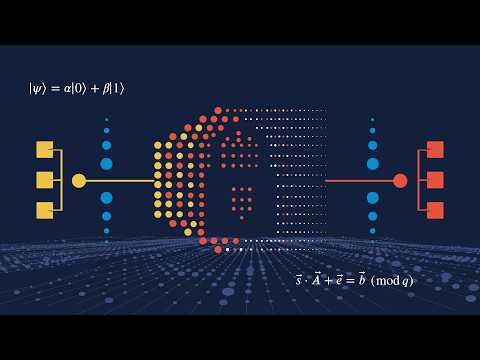
The good news? We’re not standing still. Around the world, researchers, governments, and tech companies are developing post-quantum cryptography (PQC): a new generation of encryption designed to survive both classical and quantum attacks. Think of PQC as the next-gen armor for our digital infrastructure. These algorithms use entirely new mathematical foundations: lattice-based systems (think of them like multi-dimensional mazes), error-correcting codes, and one-way hash functions that even quantum computers struggle to untangle.
The U.S. National Institute of Standards and Technology (NIST) is leading the charge, working to standardize PQC algorithms and guide industries through a massive digital migration. Some banks and government agencies have already begun pilot programs to test how these new algorithms perform in real-world conditions. This transition is happening now, one system at a time.
Quantum Tools for Real-World Security
Beyond new math, the next wave of cybersecurity will also lean on physics itself. One of the most fascinating tools in the arsenal is quantum key distribution (QKD). It uses the strange laws of quantum mechanics to create encryption keys that self-destruct if anyone tries to eavesdrop. The moment a hacker tries to intercept the key, its quantum state changes, alerting both parties and halting communication. In other words, nature becomes the bouncer.
Even more exciting? The merging of quantum and AI. Machine learning models, turbocharged by quantum processing, could predict and neutralize cyber threats before they strike. Imagine an immune system for the digital world that constantly adapts, learns, and outsmarts attackers. It’s a glimpse of how human and artificial intelligence might collaborate to keep our digital lives intact.
Crafting a Resilient Future
Creating this quantum-secure world isn’t a solo mission. Linking policymakers, scientists, and industries in a global race against time. Governments are issuing guidelines, universities are designing new cryptographic algorithms, and companies are conducting “crypto-agility” audits to map every system that will need to evolve. This migration will be one of the most significant and most intricate technological shifts in modern history.
And yet, there’s hope woven through the challenge. The same ingenuity that brought us quantum computing in the first place is now driving the innovation to secure it. As one IBM researcher put it, “Quantum isn’t just a threat—it’s a transformation.” The difference will come down to how wisely and swiftly we act. The future of cybersecurity isn’t just about surviving the quantum era; it’s about thriving in it. If we approach it with foresight, collaboration, and creativity, the result could be a digital ecosystem more resilient and transparent than anything we’ve ever known. The quantum leap doesn’t have to be a fall; it can be a landing on higher ground.