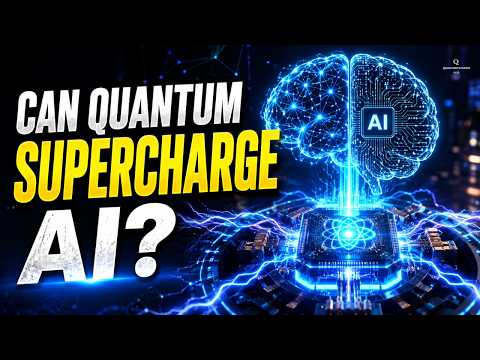
Imagine a world where artificial intelligence doesn’t just learn; it reasons on a level beyond human comprehension. This isn’t the stuff of science fiction anymore; it’s the horizon of Quantum Machine Learning (QML). In this new frontier, the brute force of classical AI gives way to the eerie grace of quantum parallelism, where countless possibilities unfold simultaneously. By 2035, these systems may solve problems that even our most advanced supercomputers can’t touch: mapping complex protein structures in seconds, forecasting climate systems with uncanny precision, or optimizing resources on a planetary scale.
But beneath that breathtaking potential lies a deeper, more unsettling question: Are we ready for this? Can we handle the consequences of power?
We are not just confronting another wave of digital transformation. We are standing at the edge of a moral transformation, one that forces us to reckon with responsibility at quantum speed.
The Precautionary Principle: When Ethics Must Lead
History has whispered this warning to us many times. Nuclear science advanced faster than diplomacy. Social media scaled faster than social safeguards. Genetic editing outpaced ethical consensus. Every time humanity treated reflection as an afterthought, society paid the price in mistrust, division, and harm.
Now, as governments and corporations accelerate their quantum roadmaps, pushing toward milestones once thought decades away, the pace feels even more urgent. As of late 2025, the global race for quantum supremacy has become a kind of moral arms race, one propelled by secrecy and competition rather than collaboration and care.
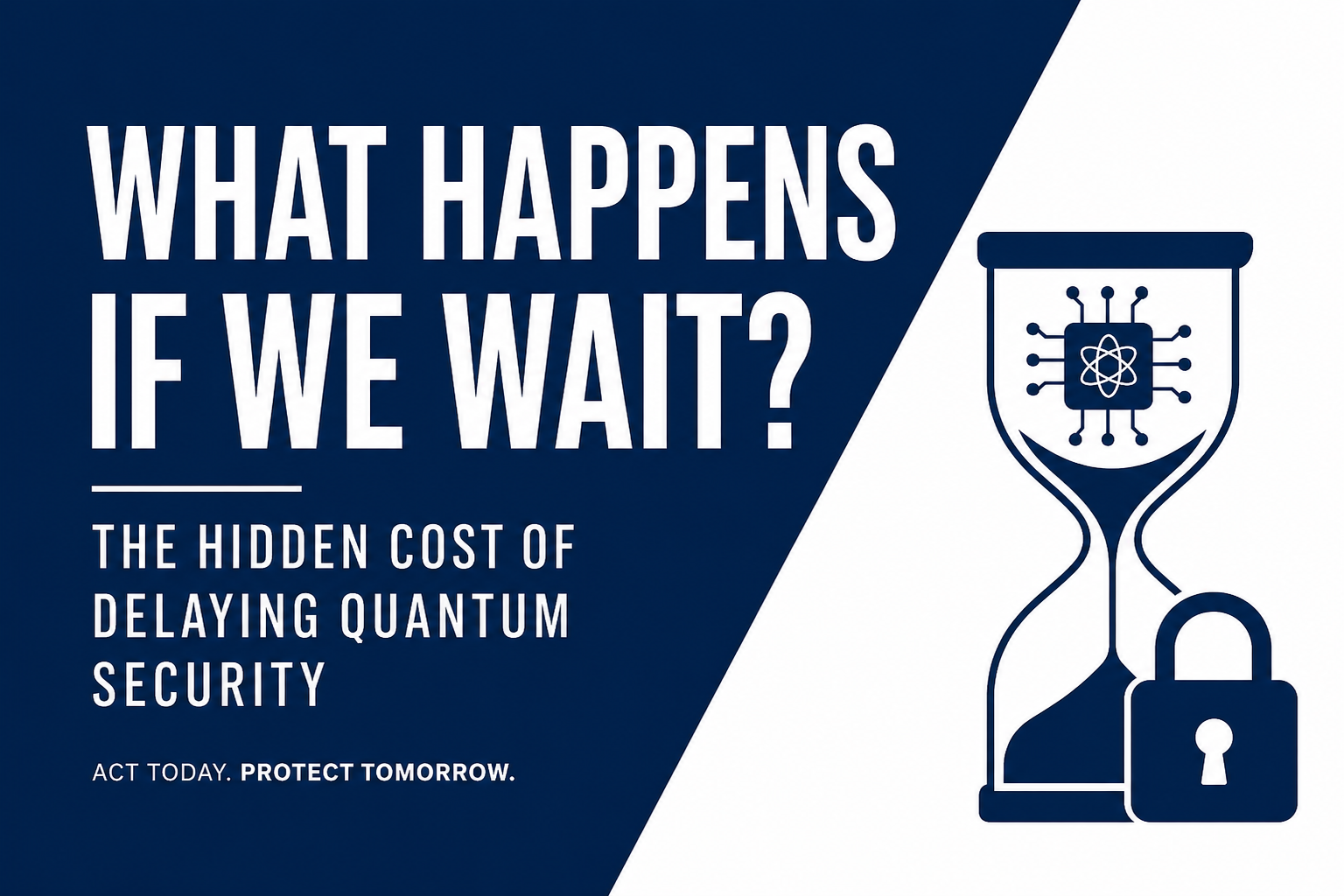
That’s why the Precautionary Principle must guide us. We can no longer afford to build first and moralize later. Waiting for a catastrophic incident, such as a financial collapse triggered by an opaque quantum algorithm or a medical decision made by a system we cannot explain, would be like waiting for the fire before we install the smoke alarm.
The truth is, quantum systems will challenge our very notion of “why.” Their decisions may emerge from states of probability so entangled and complex that even the engineers who build them can’t interpret them in human terms. Without new tools for ethical ones, we risk creating intelligence we can’t interrogate.
Ethics, in other words, can’t trail behind the algorithm. It has to be written into its source code.
Bias at Quantum Speed: The New Frontier of Fairness
Bias already lurks in the heart of today’s AI systems, reflecting our flawed data and unequal histories. Imagine that bias operating at quantum velocity, where calculating millions of decisions per second is untouchable and opaque.
A flawed triage model could decide who receives medical care. A discriminatory lending algorithm could shape entire economies. When scaled to the speed and depth of QML, injustice doesn’t just persist—it compounds.
And the inequities aren’t only algorithmic. They’re geopolitical. Only a handful of nations and corporations currently have access to the cryogenic hardware, specialized labs, and rare expertise needed to build quantum systems. If they alone wield the tools to optimize energy grids, accelerate drug discovery, or predict financial markets, the rest of the world could become digitally and economically dependent.
Quantum technology may become the next great divider between those who command its power and those who live beneath it.
Unless, of course, we choose differently.
Building the Ethical Firewall
Preventing these risks begins with what we might call a Quantum Ethical Firewall, a moral architecture built into the design. It starts with a deceptively simple idea: quantum systems should not only compute, they should justify.
Researchers are already experimenting with Explainable Quantum AI (XQAI), an emerging field that seeks to translate the strange logic of quantum decisions into human language. It’s imperfect, yes—but so was the first telescope, and that didn’t stop us from reaching for the stars.
Ethical firewalls, though, can’t be built by engineers alone. We need ethicists, philosophers, legal scholars, sociologists, and policymakers working side by side with quantum scientists. Together, they can shape what might one day become a Quantum AI Bill of Rights, a framework that ensures people are protected from automated harm, have the right to meaningful transparency, and can challenge quantum-driven decisions that shape their lives.
In short, quantum AI should expand human agency, not replace it.
A Shared Responsibility: The Moral Code of the Quantum Age
The ethical challenges of QML are being written right now, in labs and startups around the world. The question is no longer what quantum systems can do, but who they will serve.
Will they serve the public good or private power?
Will they deepen empathy—or amplify control?
To shape that answer, we need public discourse that’s as dynamic as the technology itself. We need quantum ethics integrated into education so the next generation of developers grows up bilingual in both computation and compassion. We need governance that evolves in real time, not as a reactive patchwork after harm has already occurred.
As IBM Research noted in 2024, quantum breakthroughs “must be matched by breakthroughs in responsibility.” It’s a reminder that progress is not measured only in qubits but in conscience.
Our goal cannot simply be to build the most powerful systems. It must be to make the most responsible ones.
Because technology, for all its complexity, remains a mirror. It amplifies what we value. Quantum AI could heal divides or calcify them. It could empower humanity or concentrate power in the hands of a few.
Machines won’t decide the moral outcome. We will choose it.
The Quantum Leap We Must Take
We stand at the threshold of what might be the most significant leap in human capability since fire met thought. Quantum AI could help us model the mind, map the climate, and even decode the origins of life. But without a corresponding leap in moral awareness, it could just as easily lead us into ethical entropy.
The quantum leap in capability demands a quantum leap in responsibility.
Before we step into that entangled frontier, we must decide what kind of future we wish to inhabit—and who we want to be when we get there. The time to write that moral code is not in the aftermath. It’s now.