Neuromorphic and quantum computing are both reshaping what we think computers can be—but they approach the future from entirely different angles.
Neuromorphic computing is inspired by biology, particularly the human brain. It uses artificial neurons and synapses to process information in a way that mimics how we think and adapt. These chips are event-driven, meaning they only consume power when something needs attention—just like real neurons. They excel at tasks such as pattern recognition, sensory data analysis, and real-time learning, with minimal energy consumption.
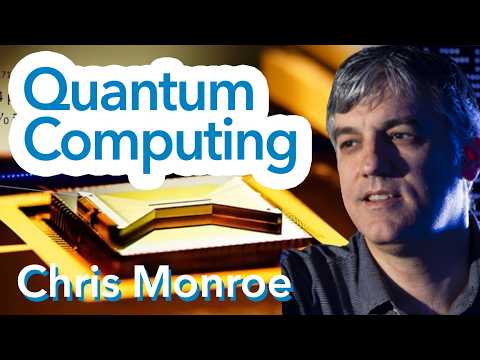
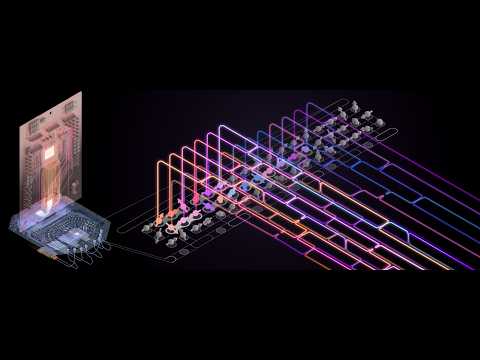
Quantum computing, on the other hand, is inspired by the laws of physics. It operates on qubits, which can exist in multiple states at once (a principle known as superposition). This allows quantum computers to explore vast solution spaces in parallel—making them ideal for optimization, cryptography, and simulating quantum systems like molecules or materials.
Although quantum computers and traditional computers solve different problems, they share an underlying philosophy: both aim to transcend the conventional binary, step-by-step processing model that characterizes most of today’s technology.
Where they start to connect is in their potential complementarity. Imagine a future hybrid system where a neuromorphic front-end handles real-world learning and adaptation, while a quantum back-end processes deep computational problems like optimization or simulation. One could learn in real time; the other could think in probabilistic dimensions.
They also share a common goal: reducing the energy demands of modern computing. Today’s AI is powerful, but it is also power-hungry. Neuromorphic chips mimic the brain’s efficiency; if quantum computing can be made scalable, it could perform complex calculations with fewer steps.
While they differ in origin—biological vs. physical—they’re part of the same movement: rethinking computation for a more intelligent, adaptive, and energy-aware future.
Supplemental Summary Chart
| Feature | Neuromorphic | Quantum |
|---|---|---|
| Inspired by | The brain (biology) | Quantum physics |
| Units of computation | Neurons/synapses | Qubits |
| Strengths | Learning, adaptability, real-time | Optimization, simulation, speed |
| Current use cases | Robotics, sensoryneuromorphic computing, quantum computing, future of AI, energy-efficient computing, brain-inspired tech, emerging technologies AI, IoT | Chemistry, finance, cryptography |
| Future potential | Humanlike AI | Solving intractable problems |
Stay Connected
Follow our journey and be part of the conversation:
🔗 Find us on LinkedIn
📬 Join our mailing list
📺 Subscribe to our YouTube channel