What if the most powerful computer wasn’t just about faster calculations—but about strategic supremacy?
We are standing on the brink of quantum advantage—the moment when quantum systems outperform even the fastest supercomputers on real-world problems. Google’s Sycamore and China’s Jiuzhang photonic processor proved it was possible. Quantum supremacy is no longer a theory—it’s a confirmed signal flare. The real race now? Deploying machines that matter in the real world.
This race is redrawing global power, reshaping diplomacy, security, and economics with each new qubit added to the battlefield.
The New Arms Race: National Security
Let’s not sugarcoat it: this is a cyberweapon in the making.
A fully developed quantum computer poses a significant threat to the majority of today’s encryption systems, such as RSA and ECC. Shor’s algorithm could render them obsolete, exposing everything from military secrets to personal banking.
That’s why the world’s intelligence agencies are scrambling for Post-Quantum Cryptography (PQC)—new mathematical defenses resistant to quantum attacks. But it’s not just code-breaking.
Quantum sensors may soon be able to detect stealth aircraft, submarines, or even shifts in gravitational fields—giving militaries the power to see the invisible.
Whoever gets there first doesn’t just win—they control the board.
Economic Shockwaves Across Industries
Quantum computing isn’t just a security issue—it’s an economic tremor that could become a full-blown quake.
Entire industries are bracing:
- Pharma & Materials Science: Simulate molecules and materials with precision never before possible. Imagine room-temperature superconductors or lightning-fast drug discovery pipelines.
- Finance: Optimize portfolios, model systemic risk, and squeeze hidden value from oceans of market data.
- Logistics & Manufacturing: Solve optimization problems that classical computers can only approximate.
But where there’s gold, there’s also theft.
IP espionage is set to explode. Quantum capabilities could easily crack open corporate secrets, R&D pipelines, and patented algorithms. The coming decade may see a new kind of industrial warfare—subtle, silent, but devastating.
Geopolitical Alliances and Flashpoints
The quantum race is the space race of the 21st century—but with higher stakes and fewer rules.
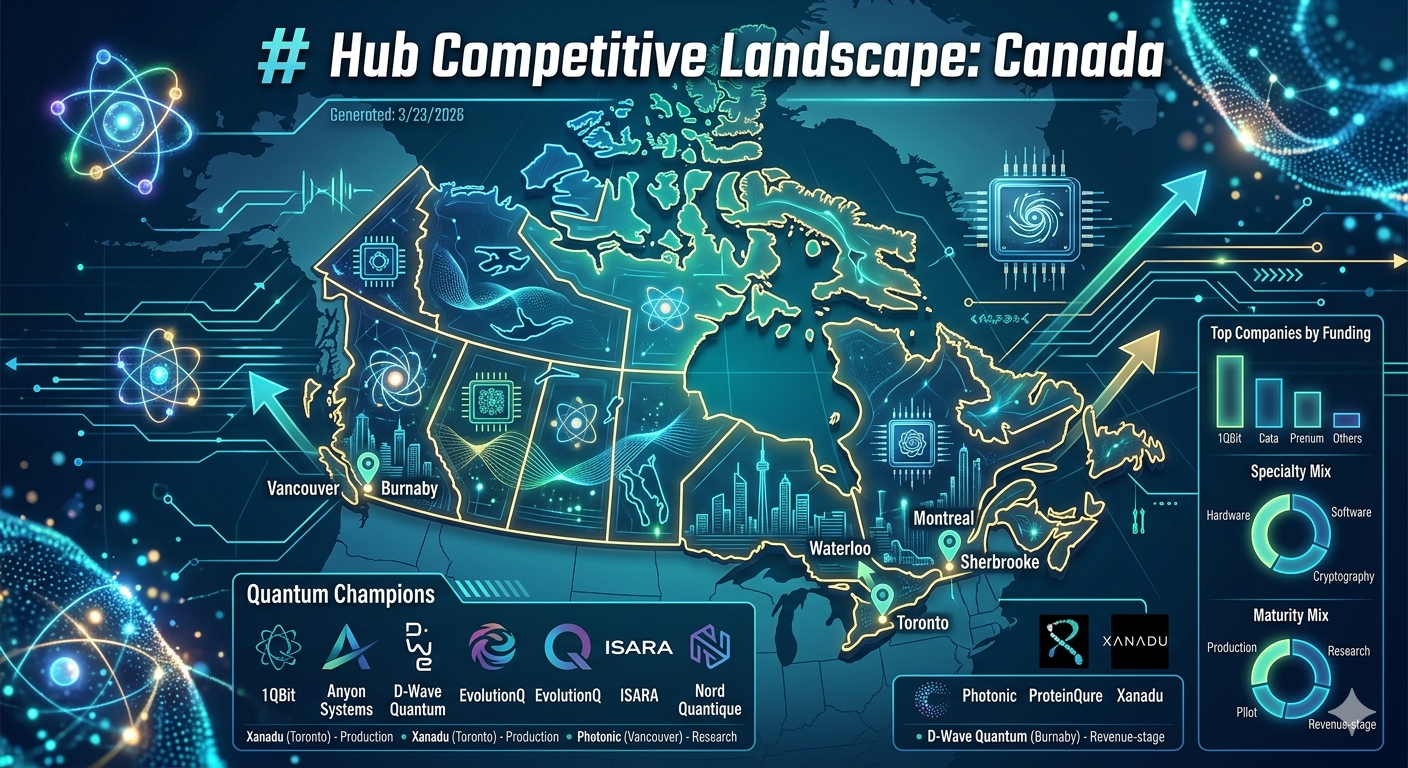
The U.S. and China lead the pack, pouring billions into national quantum initiatives. Europe, Japan, Canada, and Australia are fighting to stay in the ring. But there’s a growing risk of a Quantum Divide—where only a handful of nations hold the power to solve the world’s most complex problems, from climate modeling to AI acceleration.
This could lock others out—not just economically, but diplomatically. Quantum dominance means setting the terms of international engagement.
And it’s not hard to imagine a scenario where quantum-powered AI becomes the ultimate soft (or hard) power instrument.
Why It Matters—Now
Quantum technology is not some far-off promise—it’s a rapidly approaching inflection point.
To meet it with clarity and conscience, we need two things:
- Aggressive development to harness quantum’s transformative potential.
- Global coordination to set ethical guardrails before an unregulated arms race throws the world into deeper instability.
Because the question is no longer if quantum will reshape the future.
It’s who will control it—and on what terms.