In the rapidly evolving world of deep tech, Canada has quietly transformed from a research powerhouse into a global commercial heavyweight. While the world’s eyes have been on Silicon Valley, the “Great White North” has built a quantum ecosystem so robust that it is no longer a question of if Canada will lead the quantum era but how fast the rest of the world can keep up.
The $2 Billion Foundation: From Lab to Market
Canada’s ascent to the top of the quantum leaderboard wasn’t an overnight success; it was a decades-long strategic play. The nation has invested more than CA$2 billion over the last twenty years to build the academic foundations necessary for a sovereign quantum industry. This investment is now being stress-tested across five critical domains: photonic hardware, superconducting systems, post-quantum cryptography, quantum sensing, and a sophisticated software layer.
Under the National Quantum Strategy (NQS), which was fully rolled out in late 2025, the federal government committed an additional $334.4 million over five years. This strategy is built on three core pillars—Research, Talent, and Commercialization—designed to translate world-class expertise into scalable products that benefit global industries.
The Quantum Champions: Hardware Without Borders
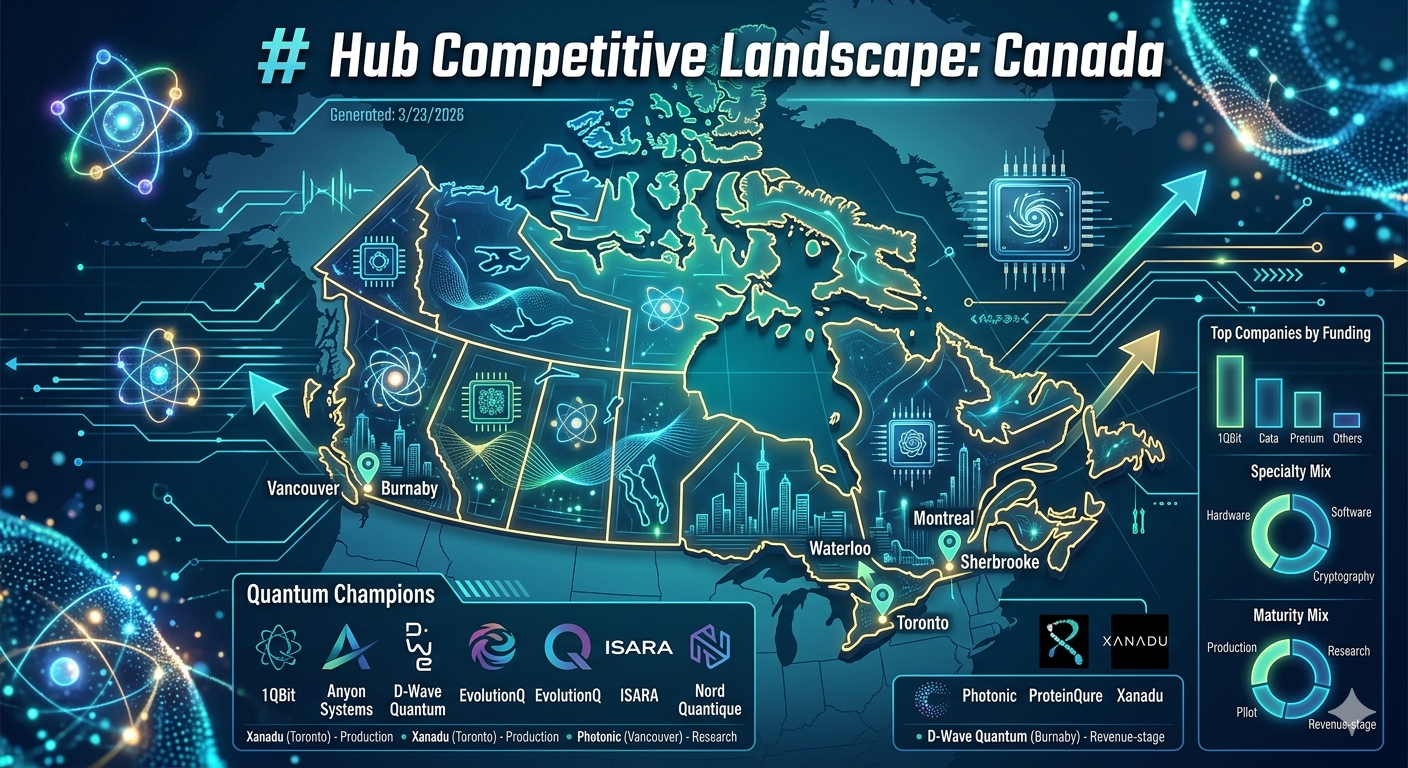
The Canadian landscape is anchored by what are known as the “Quantum Champions” a select group of hardware companies receiving milestone-gated funding to ensure they remain headquartered in Canada.
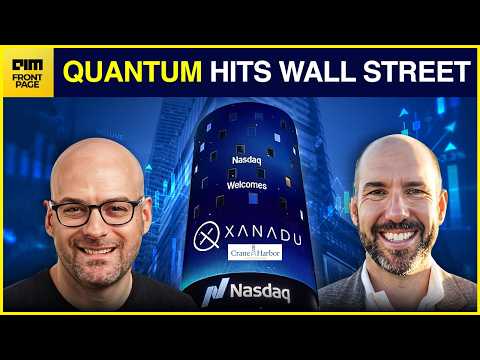
- Xanadu (Toronto): On the verge of a historic milestone, Xanadu is set to become the world’s first publicly traded pure-play photonic quantum computing company through a SPAC merger in early 2026. Their Borealis system already achieved quantum supremacy in 2022, and they are now partnering with giants like Rolls-Royce to simulate jet engine airflow.
- Photonic Inc. (Vancouver): Recently closed a massive $180 million CAD funding round, one of the largest in Canadian history. Backed by Microsoft, RBC, and TELUS, Photonic is building an “Entanglement First™” architecture that networks quantum computers using existing telecom fiber.
- D-Wave Quantum (Burnaby): A veteran in the space, D-Wave reported a 314% increase in usage of its Advantage2 systems over the past year. They are currently executing a dual-platform strategy that integrates machine learning into quantum optimization workflows.
- Nord Quantique (Sherbrooke): This Quebec-based star is focused on the “holy grail” of quantum: fault tolerance. They recently demonstrated error correction that increased qubit coherence by 14% without adding extra physical qubits—a hardware-efficient approach that could reach utility scale much faster than competitors.
Strategic Hubs: A Coast-to-Coast Ecosystem
Canada’s quantum strength is decentralized, with specialized hubs across the country:
- Toronto-Waterloo Corridor: Known as the country’s strongest private-sector cluster, home to 22 quantum companies and the Creative Destruction Lab, which has supported over 120 early-stage startups.
- Sherbrooke-Montreal: A leader in superconducting hardware and error correction, centered around the University of Sherbrooke’s world-class facilities.
- Vancouver Area: A hub for photonic innovation and the home base for Photonic Inc. and D-Wave’s original roots.
2026: The Year of Quantum Security
As hardware advances, so does the risk to our digital infrastructure. Canada has designated 2026 as the “Year of Quantum Security” (YQS2026). This is not just a commemorative title; it’s a call to action. The National Research Council (NRC) is currently investing over $161 million specifically in quantum tech as part of a broader $900 million defense plan.
Companies like EvolutionQ and ISARA are already at the forefront of this transition, developing post-quantum cryptography (PQC) to protect critical infrastructure from future quantum attacks. The goal is clear: ensure the privacy and cybersecurity of citizens in a quantum-enabled world.
Key Takeaways
- Commercial Inflection: Canada is moving from “demonstration to deployment,” with companies like Xanadu and Photonic securing hundreds of millions in capital for commercialization.
- Global Collaboration: Canadian firms are deeply integrated with global tech leaders like Microsoft, NVIDIA, and Mitsubishi Chemical.
- Sovereign Growth: The Canadian Quantum Champions Program ensures that the intellectual property and headquarters of these high-value firms stay within the country.
- Hardware Diversity: From photonic qubits to superconducting cavities and annealing systems, Canada’s “mosaic” approach covers every major modality in the field.
The quantum race is a marathon, but Canada has already built the stadium, trained the athletes, and is currently leading the pack.