The biggest misconception? That quantum can solve anything.
It’s a seductive idea. You can almost feel how easily it takes hold—the way a single phrase like “exponential speedup” stretches into something larger, something more absolute than it was ever meant to be. Somewhere along the way, quantum computing stopped being a tool and became a kind of promise. A quiet assumption that when it finally arrives, it will arrive as an answer.
But when you sit with the people actually building in this space, the tone shifts. Not dramatically. Not in a way that announces itself. Just… enough to notice.
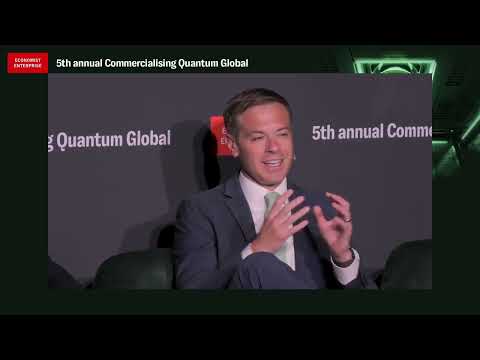
In a recent conversation on Impact Quantum, that shift showed up in the smallest of moments. Not in a headline claim or a bold prediction, but in a simple correction. Quantum isn’t here to solve everything. It’s here to solve something specific. And even that something requires care—precision in how we define the problem, patience in how we approach it, and restraint in how we talk about it.
There’s a kind of discipline in that thinking. A refusal to let possibility turn into exaggeration.
Because the truth is, most of the world already runs on systems that are very good at what they do. Classical computing, high-performance systems, decades of optimization layered carefully over time. These aren’t broken. They’re stable. Predictable. Trusted. And in industries like finance, where the cost of error is measured in real consequences, that stability isn’t something you casually replace.
So when quantum enters the conversation, it doesn’t arrive as a revolution. Not really. It arrives more like a question.
Where does the current system strain?
Not fail completely—but strain. Where does the data become too complex, too dense, too interconnected to map cleanly without approximation? Where do we start losing something—not visibly, not immediately—but enough that the output is no longer as sharp as it could be?
That’s where quantum begins to matter.
And even then, it doesn’t take over. It doesn’t sweep in and rebuild the entire pipeline. It finds a narrow opening. A bottleneck. A place where the rules we’ve relied on start to bend under pressure. And it offers a different way of looking at the same problem.
That distinction is easy to miss if you’re only watching from the outside.
Because from the outside, quantum often gets framed in terms of scale. More qubits. Bigger systems. Faster timelines. It becomes a race—something measurable, something comparable. But inside the work itself, scale isn’t the only thing that matters. Sometimes it’s not even the most important thing.
What matters is fit.
Does this problem actually benefit from a quantum approach?
And that’s where the conversation becomes quieter. More thoughtful. Less certain in a way that feels… honest.
There was a moment in the discussion that stayed with me. The idea that quantum isn’t a universal upgrade. It’s a selective one. A tool that applies only when the structure of the problem aligns with what quantum does well. And that alignment isn’t always obvious. It takes time to see it. It takes experience to recognize it. And sometimes, it takes trying—and failing—to understand where it doesn’t belong.
That kind of nuance doesn’t travel well in headlines.
But it matters. Because without it, we end up building expectations that the technology was never designed to meet. We start asking it to do things it was never meant to do. And when it doesn’t deliver, the disappointment feels like failure, when in reality, it’s just a mismatch.
There’s something familiar about that pattern.
We’ve seen it before with other technologies. The early surge of attention. The rush to apply it everywhere. The slow realization that its strength lies in specific use cases, not universal ones. And then, eventually, a settling. A kind of maturity where the conversation shifts from what could this do? to where does this actually belong?
Quantum feels like it’s somewhere in the middle of that arc right now.
Not early enough to be ignored. Not mature enough to be fully understood.
And in that space, there’s a lot of noise.
That’s where something like Impact Quantum becomes more than just a platform. It becomes a filter. A place where the conversation isn’t driven by urgency or hype, but by curiosity. Where questions are allowed to remain open a little longer. Where uncertainty isn’t something to hide, but something to explore.
Because the people listening—whether they realize it or not—are trying to orient themselves. They’re not just asking what quantum is. They’re asking what it means for them. For their work. For the systems they’re responsible for. For the decisions they’ll eventually have to make.
And those answers don’t come from exaggeration. They come from clarity.
From understanding that quantum advantage isn’t about doing everything better. It’s about doing a few things differently. Things like optimization, where the complexity of possible outcomes grows too large to navigate efficiently. Or cryptography, where the underlying mathematics opens the door to entirely new approaches.
These aren’t edge cases. But they’re not everything either.
And that’s the tension.
The industry is full of people who know this. Who work within these constraints every day. Who understand that progress is incremental, uneven, sometimes frustratingly slow. But it’s also full of narratives that move faster than the reality. Narratives that simplify, compress, and amplify until the original shape of the technology is hard to recognize.
So maybe the real work right now isn’t just building better systems.
Maybe it’s learning how to talk about them differently.
To hold both things at once: the possibility and the limitation. The excitement and the restraint. The sense that something important is happening, without needing to declare that everything is about to change.
Because in a way, that’s what makes this moment interesting.
Not the idea that quantum will solve everything.
But the quieter realization that it won’t.
And that within that boundary—within that specificity—there’s still something meaningful to build. Something worth understanding. Something that, if approached carefully, could reshape parts of the world in ways that feel less like disruption and more like refinement.
More like clarity.
We talked about where it actually works—and where it doesn’t.