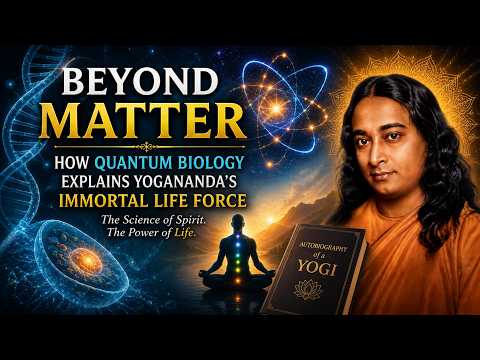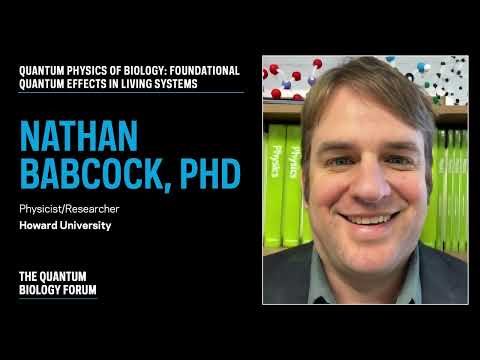
Most of us were taught to manage performance from the outside in. Sleep more. Eat better. Move your body. All valid. All necessary. But also incomplete. Because beneath those systems, something quieter is happening. Dr. Catherine Clinton talks about quantum biology not as a distant, abstract concept but as something already shaping how our bodies function. Not metaphorically. Literally. The movement of electrons. The exchange of photons. Tiny, almost invisible interactions that determine how efficiently we produce energy, recover from stress, and stay mentally clear. And suddenly, “energy” doesn’t feel like a vague word anymore. It feels measurable. Structural. Almost mechanical in a way we haven’t fully acknowledged. For anyone who has experienced burnout, especially the kind that doesn’t make sense on paper, this lands differently. Because you can be doing everything “right” and still feel like something isn’t connecting.
We talk a lot about deep work in professional circles. Focus. Discipline. Protecting your time. But what if the real constraint isn’t your calendar; it’s your biology? At a quantum level, your body is constantly managing energy through mitochondria, enzymes, and protein interactions. These aren’t just biological terms you learned once and forgot. They’re the systems deciding whether you can sustain attention, regulate stress, or even access creative thinking. Your mitochondria aren’t just “cellular powerhouses.” They’re the difference between clarity and fog. Your nervous system isn’t just reactive. It’s interpreting light, environment, and stimulus in ways we’re only beginning to understand. And this is where it gets interesting. Because for a lot of neurodivergent thinkers, especially, the experience of “inconsistent performance” has never really matched the advice we’re given. Try harder. Focus more. Stay disciplined. But what if the issue isn’t effort? What if it’s energy at a level we haven’t been measuring?
There’s a line in this conversation that lingers: the impact of quantum biology on health is “pretty profound.” Not dramatic. Not loud. Just profound. And you can start to see why. If light exposure influences how your body produces energy, if electron flow impacts recovery and inflammation, if your environment is constantly interacting with your biology in ways we’ve overlooked, then performance isn’t just internal discipline. It’s an interaction. Between you and your environment. Between your body and the systems around it. For people building companies, leading teams, or navigating high-stakes decisions, that realization changes the frame. Because now the question becomes: are you designing your work, and your environment in a way that actually supports how your body functions? Or are you working against it without realizing?
This isn’t about turning leaders into scientists. It’s about awareness. We’ve spent years optimizing workflows, tools, and systems while treating the human operating those systems as static. But we’re not static. We’re responsive. Adaptive. Sensitive to inputs most of us don’t consciously track. Light. Stress. Recovery cycles. Even the subtle signals we ignore because they don’t fit neatly into a productivity framework. And for a lot of people, especially those who think differently, this explains something that’s been hard to articulate. Why some days feel sharp and clear, and others feel like moving through resistance. Why certain environments energize you, while others quietly drain you. Why “pushing through” works until it suddenly doesn’t.
There’s something almost humbling about this. The idea that the smallest processes in our body, the ones we can’t see, can’t be controlled directly, is shaping our biggest outcomes. Not in a deterministic way. But in a foundational one. It reframes performance. Not as something you force, but something you align with. And maybe that’s the shift. No more optimization. No more pressure to perform. Just a different kind of awareness.
Quantum biology isn’t something most professionals are thinking about yet. It sits just outside the mainstream conversation. But it won’t stay there. Because once you start to see performance through this lens, it’s hard to unsee. You start asking different questions. About energy. About the environment. About what’s actually sustainable. And maybe that’s the real advantage. Not hacking your biology. Not chasing another edge. Just understanding the system you’re already operating in a little more clearly and working with it instead of against it.