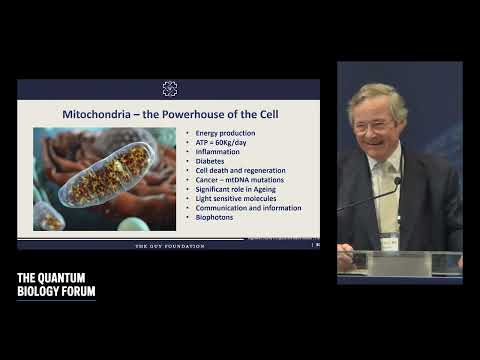
What if your cells are running quantum calculations right now and no one ever thought to mention it? As we dive into this episode of Elena’s Quantum Diaries, we pivot from the structural framework of reality to the very biological hardware supporting it. This exploration finds its roots in a bold proposal by Roger Penrose and Stuart Hameroff, known as the Orchestrated Objective Reduction (Orch-OR) theory. They suggest that consciousness might emerge from quantum events within microtubules—the unseen, protein scaffolds within neurons.
Based on content from Elena’s Quantum Diaries – by Elena D’Avalon
What if your cells are running quantum calculations right now and no one ever thought to mention it? As we dive into this episode of Elena’s Quantum Diaries, we pivot from the structural framework of reality to the very biological hardware supporting it. This exploration finds its roots in a bold proposal by Roger Penrose and Stuart Hameroff, known as Orchestrated Objective Reduction (Orch-OR) theory. They suggest that consciousness might emerge from quantum events within microtubules—the unseen, protein scaffolds within neurons.
Here’s the intriguing premise: anesthesia affects microtubules rather than neurons, challenging conventional beliefs about the nature of consciousness. Consider the implications of quantum superpositions residing in your neural cells. Imagine the discrete events of quantum collapse crafting the fabric of your conscious moments. Essentially, your body becomes the terrain where theory meets lived experience.
Breaking Down Orch-OR: A Closer Look
The mechanism behind Orch-OR, more precise than anything discussed thus far, unfolds within microtubules, where quantum superpositions materialize—mirroring the same laws governing Schrödinger’s cat. Penrose argues that these superpositions don’t collapse merely upon measurement, but rather because gravitational forces mandate a resolution when divergent possibilities strain the fabric of space-time. The brain, via microtubules, orchestrates these collapses to shape subjective experience, Penrose suggests.
This perspective diverges from conventional neuroscience narratives that merely outline neuronal networks without penetrating deeper into the essence of consciousness. Standard explanations often recast the mystery of consciousness with scientific jargon, overlooking the gap David Chalmers termed the “hard problem of consciousness” in 1995. Orch-OR proposes a bridge across this chasm.
Quantum Echoes in Nature: Living Systems and Coherence
Mainstream science long resisted the notion that warm, wet biological conditions could sustain quantum effects, a stance gradually overturned by evidence. In 2007, researchers at UC Berkeley, led by Graham Fleming, identified quantum coherence in the photosynthetic processes of bacteria. It wasn’t just microtubules defying expectation; photosynthetic efficiency and avian magnetoreception unraveled similar threads of quantum logic. Birds might navigate using radical pair entanglement within their eyes—a phenomenon once deemed improbable under such ambient conditions.
Recent studies further affirmed that anesthesia influences microtubule quantum states, suggesting that Hameroff’s early observations held untapped potential. Much like the fungi defying gravity to form networks, the evidence implies that quantum coherence in biological tissue holds profound implications, urging us to reconsider boundaries previously accepted as unyielding.
Weaving Quantum Threads: What This Means for You
The relevance of this exploration resonates beyond academic curiosity; it shapes a new paradigm of understanding consciousness. If Penrose and Hameroff are indeed correct, your body performs a masterclass in quantum computation, resolving myriad possibilities into singular experiential realities. Such a perspective reiterates the fusion of physics and biology rather than treating them as disparate fields.
Remarks from skeptics, resting on the precariousness of coherence in the unstable biological environment, only invite further investigation, transforming each objection into an opportunity to explore our complex biophysical narrative.
This is not merely a metaphorical elaboration of human consciousness but rather a potential restructuring of how we perceive the very essence of what it means to be aware, altering the longstanding dichotomy between mind and matter.
Join me next week as we unravel the mystery of entanglement—how particles and consciousness might intertwine. I am eager to hear your reflections on what most resonated with you from this exploration—whether it be the anesthesia paradox, photosynthetic revelations, or the intricate dance of bird navigation. Every comment is read, finding a place within this vibrant examination of quantum consciousness.
—