For years, the quantum industry felt a bit like a room full of engineers talking excitedly over one another while everyone else stood nearby thinking:
“Okay… but why does this matter to me?”
Every headline sounded like a scoreboard:
more qubits,
faster processors,
lower error rates,
bigger systems.
Important? Absolutely.
Human? Not exactly.
Outside physics labs and venture capital meetings, most people were still trying to connect the dots between all this breathtaking technical progress and everyday life. The industry often spoke in the language of architecture diagrams and benchmark charts while the rest of the world was quietly asking a much simpler question:
Will this actually help people?
In 2026, that conversation is finally beginning to shift.
And honestly, it feels a little like quantum computing is growing up.
The center of gravity is moving away from “Look how powerful this machine is” toward something much more grounded:
“What problems can we solve now that we couldn’t solve before?”
That difference changes everything.
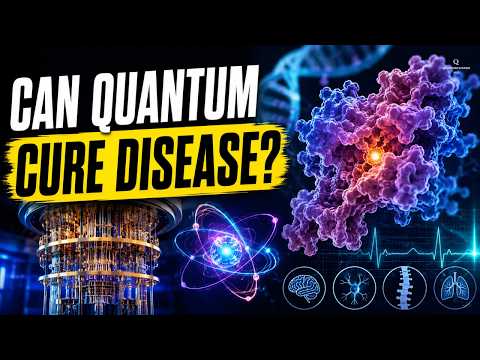
Nowhere is that shift more visible than in healthcare and biology, where quantum computing suddenly stops feeling abstract and starts feeling deeply personal.
This week’s growing partnership between PsiQuantum and Japan’s National Cancer Center is part of that larger story. The announcement itself matters, of course, but what it represents may matter even more. The industry is beginning to recognize something profound:
Quantum computing may work best when it’s applied to systems that are already quantum by nature.
And biology has always been one of those systems.
There’s something beautifully poetic about that.
For decades, classical computers have struggled to model molecular behavior because reality becomes wildly complicated at the atomic scale. Every additional electron interaction multiplies the complexity. Eventually even the world’s fastest supercomputers start making approximations because simulating “perfect reality” becomes computationally impossible.
Nature, meanwhile, never approximates.
Proteins fold according to quantum mechanics.
Enzymes interact according to quantum mechanics.
Drug binding happens according to quantum mechanics.
Life itself operates in this strange shimmering layer of probability, interaction, and energetic dance long before humans ever invented silicon chips to study it.
That’s why this moment feels different.
Quantum computers aren’t just “faster computers.” They process information using principles that mirror the underlying behavior of molecular systems themselves: superposition, entanglement, interference, non-locality. Suddenly researchers are no longer translating biology into simplified classical language. They’re beginning to model it using the native grammar of nature.
That changes the architecture of discovery in a very real way.
And maybe this is why healthcare has become such an emotional turning point for the industry.
Most people do not care about qubit counts.
They care about whether their parent’s cancer treatment works.
They care about faster drug discovery.
They care about lower healthcare costs.
They care about earlier diagnoses and fewer years lost waiting for medical breakthroughs.
Healthcare gives quantum computing a human face.
That matters more than the industry sometimes realizes.
The PsiQuantum collaboration reflects this new maturity. Instead of focusing on carefully controlled “toy problems” designed mainly to prove theoretical concepts, the partnership is targeting practical oncology applications with actual clinical implications.
The work includes:
chemically accurate drug-target simulations,
quantum optimization for treatment development,
healthcare resource modeling,
and preparation for fault-tolerant systems capable of handling biologically meaningful workloads.
That last phrase may sound technical, but it’s incredibly important.
For years, the industry has existed in what researchers called the NISQ era, shorthand for noisy intermediate-scale quantum systems. In simpler terms: machines powerful enough to experiment with, but still unstable and error-prone for large-scale real-world applications.
Now the conversation is slowly shifting toward fault tolerance. Stable systems. Reliable systems. Machines capable of sustained, meaningful computation at scales biology actually requires.
And when you start imagining what that means, the implications ripple outward fast.
What happens if drug development timelines shrink dramatically?
What happens if molecular simulations that currently take years become possible in weeks?
What happens if pharmaceutical companies can test interactions digitally before costly clinical stages even begin?
The economics of healthcare could change entirely.
Meanwhile, another breakthrough quietly reinforced how quickly this field is evolving.
Researchers from IBM, Cleveland Clinic, and RIKEN successfully modeled trypsin, a biologically important protein system containing more than 12,000 atoms.
That number may sound oddly specific, but crossing the 10,000-atom threshold is significant because it pushes quantum simulation closer to the complexity scale of actual biological systems rather than tiny laboratory examples.
And perhaps even more interestingly, they accomplished this using a hybrid approach where classical supercomputers and quantum processors worked together.
That hybrid future feels increasingly likely.
For years, people framed quantum computing almost like a sci-fi replacement story:
quantum versus classical,
new versus old,
future versus obsolete.
Reality is looking much more collaborative.
Classical systems are extraordinarily good at many tasks. Quantum systems are extraordinarily good at others. The future may not belong to one architecture replacing another, but to ecosystems where each handles the problems it’s naturally suited for.
Honestly, there’s something comforting about that.
It mirrors human intelligence, too.
No single mind does everything perfectly. We collaborate. We specialize. We build systems together. A jazz ensemble sounds richer than a solo instrument. Forests survive because roots intertwine underground. Even our brains distribute tasks across different regions in beautifully coordinated ways.
Technology increasingly seems to evolve the same way.
And governments and major technology companies clearly see where this is heading.
Google recently launched REPLIQA, combining AI and quantum science for life sciences research. The Wellcome Leap Q4Bio initiative has narrowed its focus toward near-term healthcare applications expected to run on emerging hardware within the next few years.
That timeline matters because it signals growing confidence that useful biological quantum applications may arrive sooner than skeptics expected.
Not decades away.
Not “someday.”
Not trapped in perpetual research limbo.
Closer.
And maybe that’s the real story unfolding underneath all these announcements.
Quantum computing is starting to feel less like mythology and more like infrastructure.
Less like a distant moonshot.
More like a tool humans are gradually learning how to use responsibly.
The industry itself feels different now. More grounded. More patient. Less obsessed with spectacle.
There’s a quiet maturity emerging in the space, almost like the field collectively realized that the most important breakthroughs may not be the loudest ones.
Because at the end of the day, the real measure of technological progress isn’t whether machines impress each other.
It’s whether they help people live better lives.
And for the first time, quantum computing genuinely feels like it’s beginning to answer that question in a language the world can actually understand.