There is a subtle shift happening inside quantum computing right now. You can feel it if you spend enough time listening to researchers talk when the cameras are off and the polished presentations fade into quieter technical honesty.
The conversation is becoming less about building one impossibly gigantic quantum machine.
And more about connection.
This week, researchers published new work exploring distributed photonic quantum computing architectures, systems designed around interconnected quantum nodes rather than one monolithic processor. The work reflects a growing realization across the industry: scaling quantum computing may ultimately look less like building a single supercomputer and more like constructing an ecosystem of smaller quantum systems that communicate through light.
That distinction matters more than it initially sounds.
For years, much of the public narrative around quantum computing revolved around qubit counts. Bigger machines. More qubits. Larger chips. Every announcement carried the quiet undertone of a race toward physical size, as though quantum progress could simply be measured like skyscrapers or data centers.
But quantum systems are fragile in ways classical systems are not.
As machines grow larger, the engineering problems multiply almost exponentially. Heat management becomes harder. Error correction becomes overwhelming. Wiring becomes chaotic. Signal integrity begins to collapse under its own complexity. Even physically routing control electronics to qubits starts resembling an impossible urban planning problem at the microscopic scale.
Researchers are increasingly acknowledging something the industry has perhaps sensed for a while:
Maybe quantum computing does not scale vertically.
Maybe it scales horizontally.
Photonic architectures sit at the center of that possibility because photons, particles of light, are unusually good at carrying quantum information across distance. Unlike many matter-based qubits, photons naturally move. They travel through optical fiber. They connect systems without requiring every qubit to physically live on the same chip.
That makes photonics uniquely attractive for distributed quantum systems.
The newly published PIQC architecture paper pushes this idea further by proposing interconnected molecular quantum nodes linked through photonic integration. Instead of treating scaling as a single-machine problem, the architecture treats quantum computing more like a network problem. Multiple smaller nodes cooperate, share entanglement, and collectively perform computation.
Oddly enough, it starts to resemble the evolution of classical computing itself.
Modern cloud infrastructure does not rely on one colossal processor hidden in a mountain somewhere. It relies on distributed systems. Data centers. Network orchestration. Interconnected resources operating together across physical distance.
Quantum computing may be drifting toward the same architectural truth.
And honestly, there is something emotionally interesting about that.
The mythology around technology often centers on singularity. One machine. One breakthrough. One magical object powerful enough to change everything overnight.
But reality tends to prefer networks.
Forests instead of trees.
Cities instead of towers.
Quiet coordination instead of isolated brilliance.
Distributed quantum architectures acknowledge that scaling may emerge through cooperation rather than concentration.
That shift is becoming visible across the ecosystem. Researchers working on optical interconnects are now studying how quantum nodes can exchange entangled information efficiently while minimizing photon loss across networks. Companies and institutions are simultaneously exploring modular photonic systems capable of linking smaller quantum devices into larger fault-tolerant environments.
Even some of the largest commercial players appear to be moving toward modularity.
PsiQuantum continues emphasizing photonic networking and manufacturable scaling strategies tied to interconnected systems rather than isolated experimental machines.
Cisco recently unveiled a prototype “Universal Quantum Switch,” specifically focused on routing entangled quantum information across distributed infrastructures.
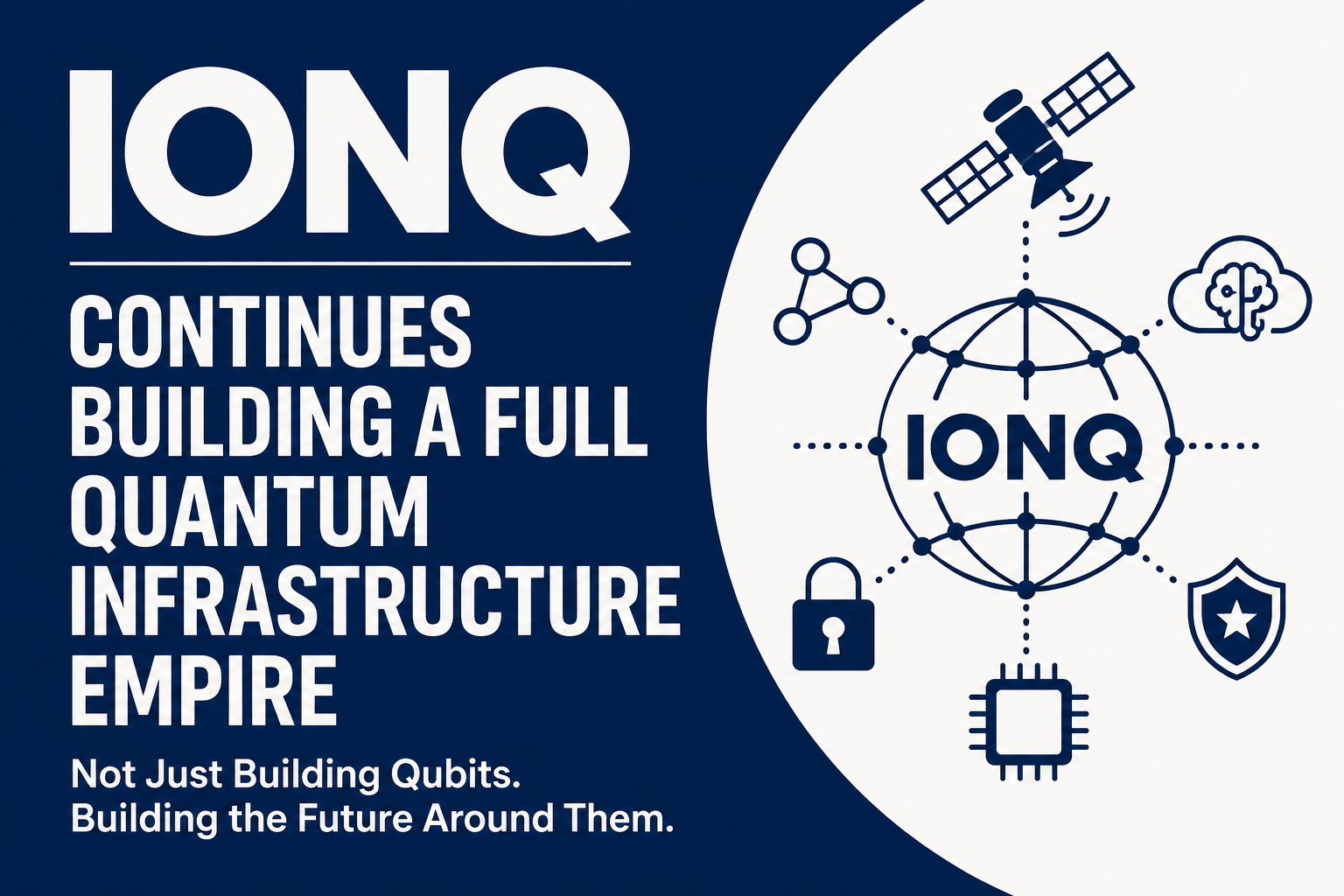
IonQ demonstrated photonic interconnection between remote trapped-ion quantum systems, another signal that networking is moving closer to the center of quantum strategy.
The edges of the industry are beginning to converge around the same idea:
Networking may not be secondary to quantum computing.
Networking may be quantum computing.
And photonics could become the connective tissue holding the entire ecosystem together.
There is also a practical reason this matters.
Distributed architectures potentially reduce some of the manufacturing burdens associated with gigantic single-chip systems. Smaller quantum nodes can be fabricated independently, optimized separately, and connected modularly over time. Failures become more manageable. Upgrades become more flexible. Entire systems become less dependent on one perfect piece of hardware.
It mirrors how resilience often works in nature.
Smaller interconnected systems frequently survive better than one enormous fragile organism.
The quantum industry rarely talks about scalability in emotional terms, but underneath the engineering diagrams there is a recurring tension between ambition and fragility. Quantum computing remains one of the most technically difficult engineering pursuits humanity has attempted. Every advancement exists beside enormous instability.
Which is why modularity feels psychologically important too.
A distributed architecture quietly admits something very human:
No single machine may ever carry the entire burden alone.
Instead, intelligence may emerge through relationships between systems.
Through synchronization.
Through coordination.
Through light moving between nodes.
There is also something poetic about photons becoming the medium for this future. Classical computing was built largely around electrons confined inside circuits. Photonic quantum computing, by contrast, feels almost spatial. Less trapped. More fluid. Information traveling through fiber as pulses of light connecting distant quantum states.
The architecture itself begins to resemble communication.
And perhaps that is why distributed photonic quantum computing feels increasingly believable compared to some earlier visions of quantum supremacy that relied on endlessly scaling isolated processors.
It aligns better with how modern infrastructure actually evolves.
Hybrid systems.
Networks.
Interdependence.
The broader quantum industry is slowly moving away from theatrical demonstrations toward operational realism. The emotional texture of the field feels different lately. Less mystical. More infrastructural.
Researchers are discussing networking layers, modular fault tolerance, optical routing, interoperability, fabrication compatibility, and manufacturable scaling strategies more openly.
The fantasy of one giant quantum machine solving everything overnight is fading a little.
In its place is something quieter but perhaps more durable:
An interconnected quantum ecosystem built node by node, photon by photon, link by link.
Not one machine towering above everything else.
But many systems learning how to speak to each other through light.