Why Silicon Is Back in the Quantum Spotlight
The “Holy Grail” of quantum computing has been finding a technology that can do two very hard things at the same time:
- Stay stable enough to perform complex quantum calculations
- Be scalable enough to manufacture in large numbers
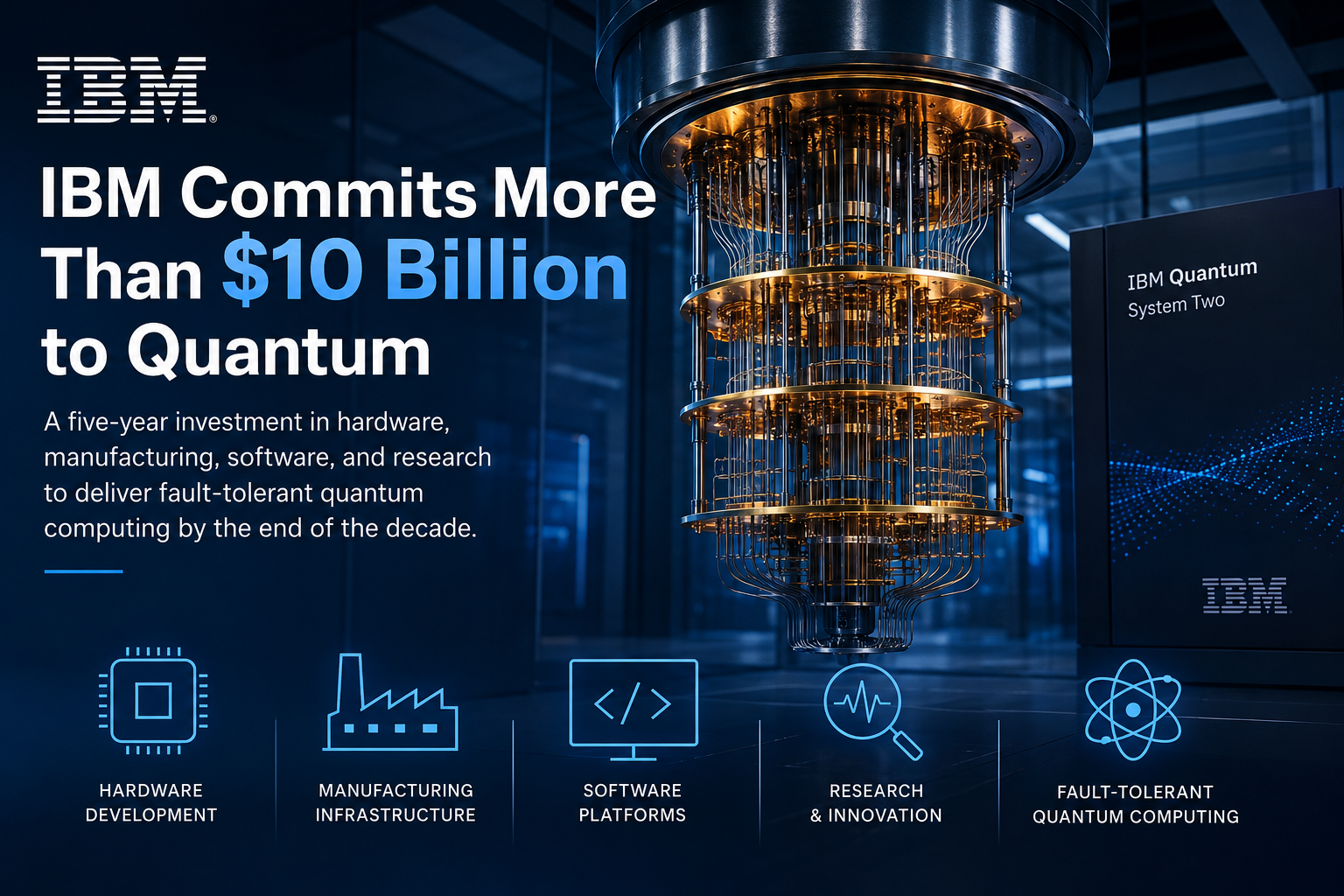
So far, the leading approaches have been superconducting circuits (used by companies such as IBM and Google) and trapped-ion systems. These platforms have driven much of the early progress in quantum computing.
However, a recent breakthrough by researchers in Australia has shifted attention toward a material we already know extremely well: silicon.
By successfully building an 11-qubit quantum processor using phosphorus atoms embedded in a highly purified form of silicon (called silicon-28), researchers showed something remarkable:
The same material that powers today’s computers may also power tomorrow’s quantum machines.
The Big Idea: Atoms as Qubits
To understand how this works, let’s start at the atomic level.
A normal silicon atom has four outer (valence) electrons. These electrons are responsible for silicon’s formation of the crystal structures used in computer chips.
Now imagine replacing just one silicon atom with a phosphorus atom.
Phosphorus has five valence electrons, not four. That extra electron is the key.
When a phosphorus atom is introduced into a silicon crystal (a process called doping), it brings an extra electron that becomes loosely bound to the phosphorus nucleus.
At extremely low temperatures, researchers can control the spin of:
- that extra electron, or
- the phosphorus nucleus itself
That spin (which can point in different quantum states) is used as a qubit, the fundamental unit of quantum information.
Instead of using large-scale circuits or lasers, this approach employs individual atoms as qubits.
Why Phosphorus in Silicon Works So Well
This system stands out for two major reasons.
1. Exceptional Stability (Coherence)
Quantum systems are extremely sensitive to their environment. Tiny magnetic disturbances can cause a qubit to lose its quantum state, a problem known as decoherence.
Most natural silicon contains a small percentage of silicon-29, an isotope that behaves like a tiny magnet. Those tiny magnets create background “noise” that disrupts qubits.
Silicon-28 is different.
It has no nuclear spin, which means it creates a much quieter environment. When silicon is purified to remove silicon-29, researchers essentially create a “semiconductor vacuum” with almost no magnetic noise.
The result?
Phosphorus qubits in silicon-28 can remain coherent for minutes, an eternity in the quantum world, where many systems lose coherence in milliseconds.
2. Atomic-Scale Precision
Using scanning tunneling microscopy, researchers can place individual phosphorus atoms into silicon with subnanometer precision.
That level of control enables them to build a predictable, reproducible qubit grid, which is extremely difficult on many other quantum platforms.
Solving the Quantum “Noise” Problem
One of the biggest challenges in quantum computing is protecting qubits from environmental interference.
In noisy materials, qubits randomly flip or lose information. That makes reliable computation nearly impossible.
By using silicon-28, which produces almost no magnetic interference, the Australian team dramatically reduced this problem. Removing the magnetic “chatter” allows the qubits to behave as quantum theory predicts for much longer periods.
This is one of the main reasons the phosphorus-in-silicon approach is so promising.
The Scalability Advantage: Riding on 70 Years of Silicon Manufacturing
Here’s where things get really interesting.
The world already knows how to manufacture silicon at scale.
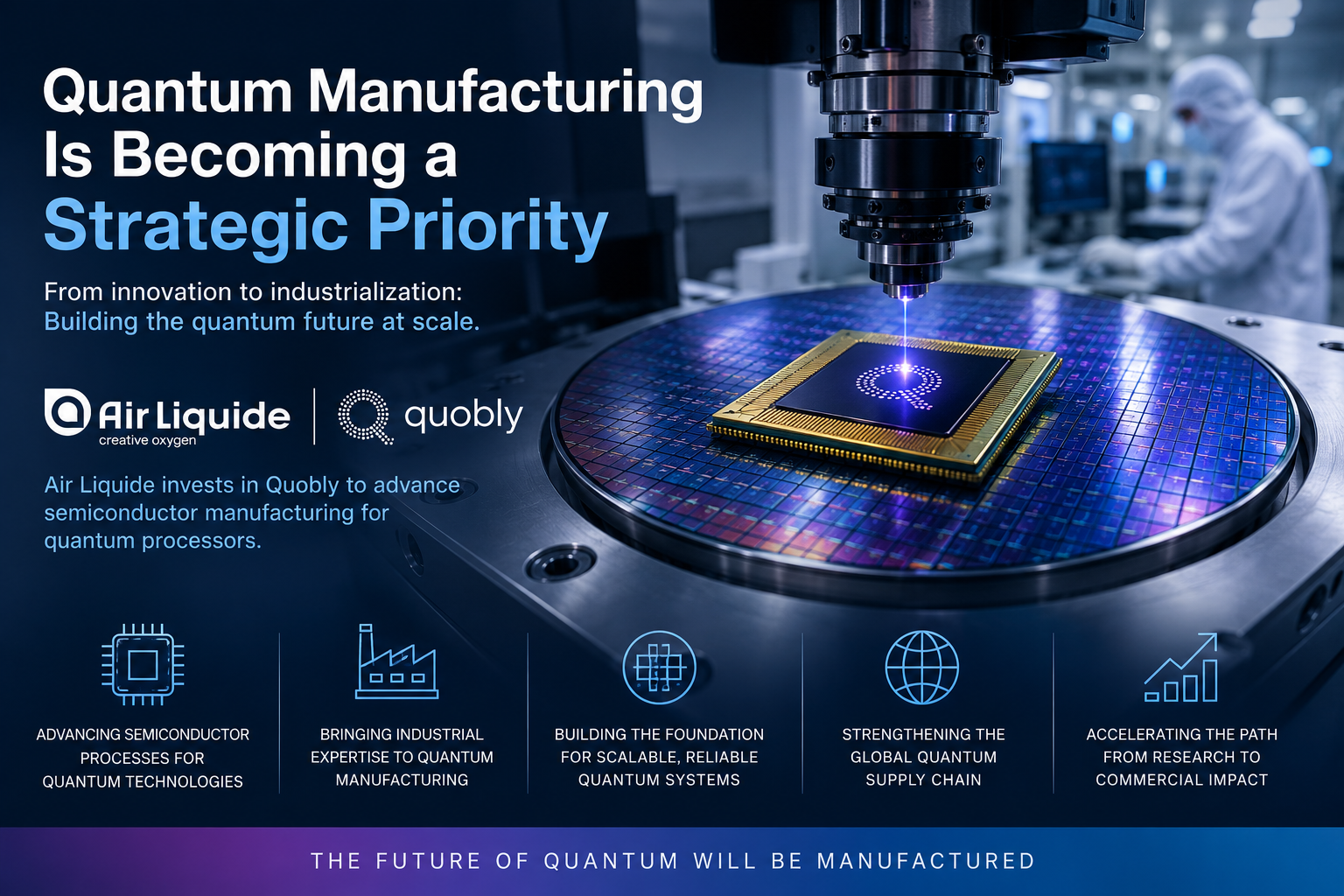
For more than 70 years, the semiconductor industry has refined a process called CMOS manufacturing, which allows billions of transistors to be etched onto silicon wafers with incredible precision.
Because phosphorus qubits:
- are atomic-scale, and
- live inside silicon
They are theoretically compatible with the same fabrication plants that make today’s processors for laptops and phones.
Compared to other approaches:
- Superconducting qubits are millimeter-scale and require specialized labs
- Ion traps rely on complex optical systems
- Phosphorus-in-silicon qubits are nanometer-scale and could be produced in standard semiconductor fabs
In theory, this implies millions of qubits on a single chip, a capability that other platforms struggle to envision.
Why the 11-Qubit Demonstration Matters
Moving from a few qubits to 11 connected qubits is a critical step.
At this scale, researchers can begin experimenting with:
- quantum error correction
- multi-qubit interactions
- coordinated behavior across a lattice of atoms
In this experiment, the qubits were able to “talk” to one another while still maintaining their individual quantum identities, a requirement for useful quantum computation.
This isn’t just a proof of concept anymore. It’s a functional architecture.
Remaining Challenges
Despite the promise, important hurdles remain:
- Cryogenics: These systems must operate near absolute zero to keep electron spins stable
- Signal routing: While qubits are tiny, the wires used to control them are not. Designing three-dimensional architectures to connect millions of atomic qubits is a massive engineering challenge
None of these is a showstopper, but they will define the pace of progress.
The Bigger Picture
The success of this work suggests something profound.
The Silicon Age isn’t ending.
It’s evolving.
By shrinking from transistors to individual atoms, researchers are extending the same material foundation that built the digital world into the quantum era.
This 11-qubit processor isn’t the destination.
It’s the blueprint.
The next decade will determine how quickly atomic-scale quantum systems can be integrated into the existing semiconductor supply chain and whether silicon becomes the bridge between today’s computers and tomorrow’s fault-tolerant quantum machines.
For the first time, quantum scalability appears to be something we already know how to build.