PsiQuantum’s $1B isn’t just a raise—it’s a signal. Think of it as a flare shot up over the vast tundra of deep tech, catching the attention of players who usually wait until the ice is already melting under someone else’s feet. Sovereign wealth funds don’t exactly have a taste for sci-fi speculation. If they’re in, it means the risk landscape has changed. It’s not about confidence in one company. It’s about a growing belief that somebody is going to crack this, and soon enough to matter.
Quantum has lived most of its life inside whiteboards and clean rooms. For decades, it was the realm of physicists mumbling about decoherence and gate fidelities. But now, funding is pouring in from asset managers who barely know what a qubit is—and that’s the point. You don’t have to understand quantum mechanics to understand the value of a first-mover advantage in a potentially trillion-dollar industry. The players are shifting, and so is the language. We’re no longer asking, “Can it be done?” Now we’re asking, “Who will do it first, and who gets left behind?”
One of the most overlooked details here? This isn’t just about American tech muscle flexing. Finland, Japan, the UK—regions with historically modest footprints in general-purpose computing—are becoming power centers in quantum. Why? Because in quantum, no one’s had their Microsoft moment yet. The field is wide open. That means smaller countries and newer players can actually win. And they know it.
Some investors see AI and quantum as separate buckets. Others are starting to notice how tightly they intertwine. AI is hungry. It eats compute for breakfast. The smarter it gets, the more power it needs. That makes quantum not a “what if,” but a “what next?” And then there’s quantum-enhanced AI—still theoretical, but potentially game-changing. That speculative frontier alone is enough to justify moonshot money.
Let’s be real: there will be flameouts. Big, messy, expensive ones. Not every startup that raises mega-rounds will deliver. But VCs and sovereign funds are thinking probabilistically. You don’t need every company to succeed. You just need one. This isn’t unlike the early days of aerospace or the internet. Fortunes were lost before any rockets flew or browsers loaded. But the ones who stayed in the game long enough ended up owning the infrastructure of the future.
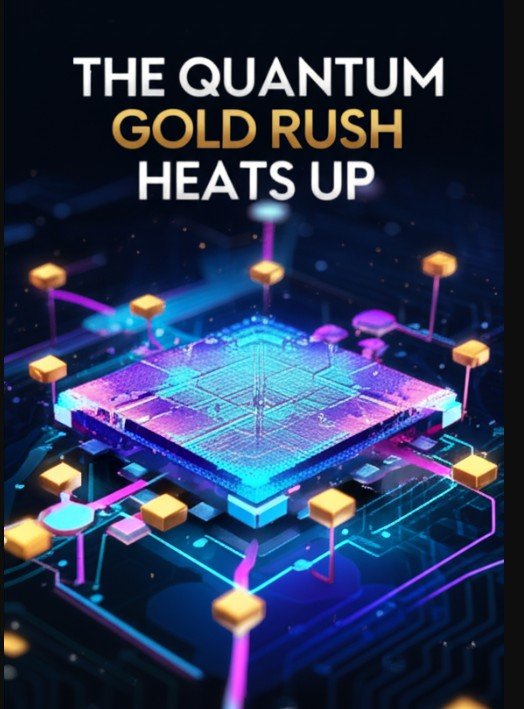
The quantum gold rush isn’t in the dreaming phase anymore. It’s in the trench-digging phase—the dirty work of error correction, cryogenics, fab-scale manufacturing, software stack optimization. The attention has shifted from pitch decks to roadmaps, from TED Talks to thermal budgets. And that’s good. Because quantum doesn’t need more mystique—it needs more engineers, better algorithms, sharper use cases, and a grounded, brutalist awareness that this stuff is hard. But it’s happening. And that is what makes it worth watching.
Stay Connected
Follow our journey and be part of the conversation:
🔗 Find us on LinkedIn
📬 Join our mailing list
📺 Subscribe to our YouTube channel