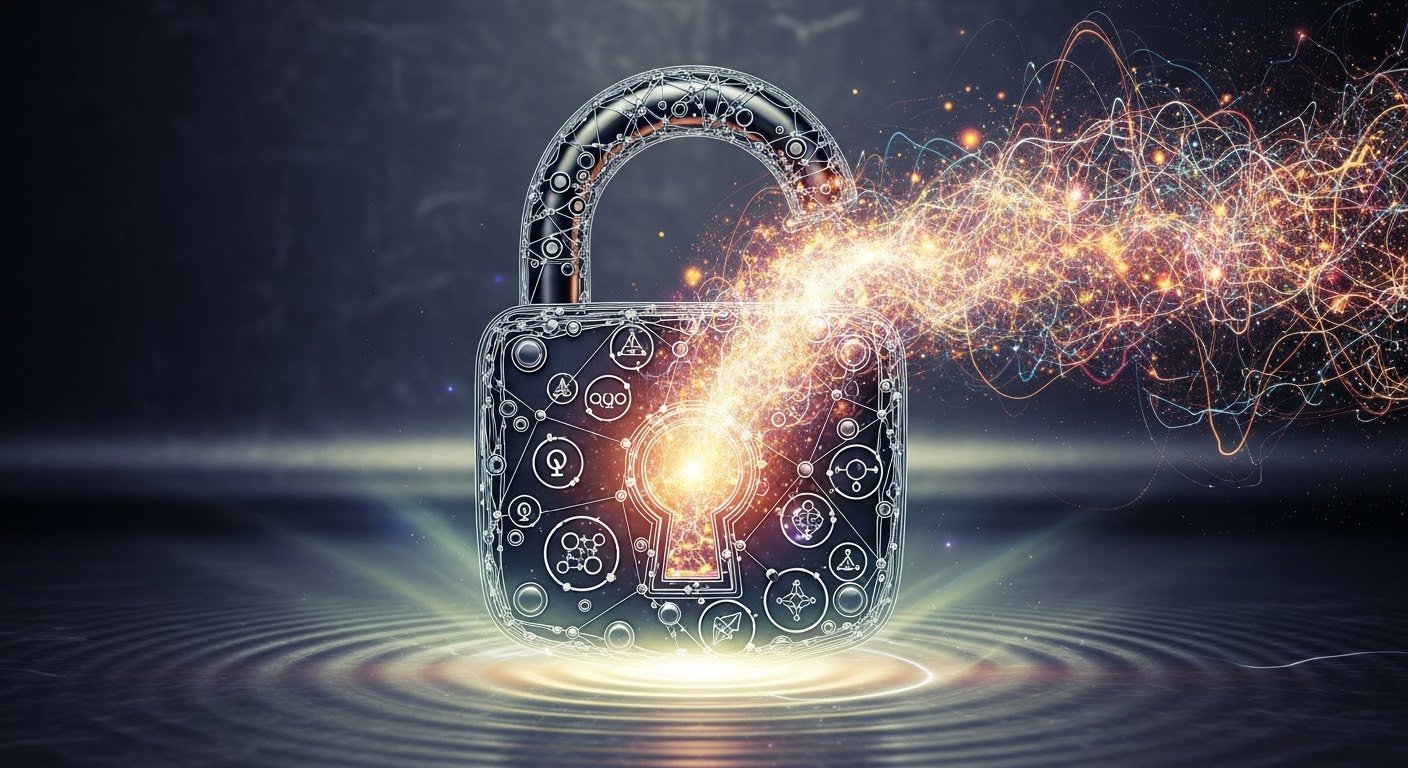
Imagine every secret on Earth—bank transfers, medical records, and diplomatic cables locked away in digital safes built from math. For decades, those locks have seemed unbreakable. Systems like RSA and Elliptic Curve Cryptography have guarded our world’s information with puzzles so large that even the fastest supercomputers would need more years than the universe has existed to solve them.
But now, something new is humming at the edge of possibility: the quantum computer. And these strange machines, built from qubits instead of bits, are starting to pick the locks we thought were eternal.
When Math Meets Its Match
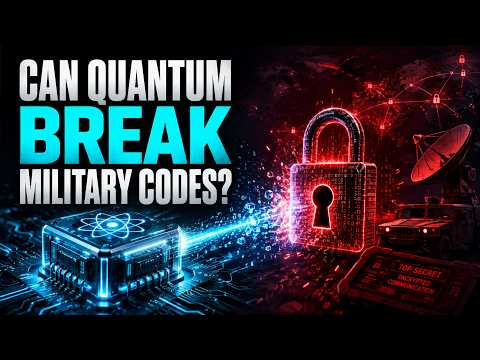
Classical encryption relies on the difficulty of mathematical problems so complex that no realistic machine can solve them quickly enough. Quantum computing flips that equation. With algorithms like Shor’s Algorithm, a mature quantum computer could factor gigantic numbers almost instantly. The steel vault doors of RSA could turn to glass overnight.
Experts estimate that within the next decade or so—some say 10 to 15 years a powerful enough quantum computer could crack RSA-2048, the encryption standard used across banks, governments, and cloud platforms.
And there’s a chilling strategy already in motion called “harvest now, decrypt later.” Adversaries are hoarding encrypted data today, knowing they can one day unlock it once quantum power arrives. It means the secrets we’re writing now—trade deals, health records, personal histories—could be tomorrow’s open books.
It’s no wonder that more than half of global enterprises now list quantum threats among their top cybersecurity concerns. The countdown to “Q-Day,” as it is sometimes called, has already begun.
The Quantum Fix: When Physics Guards the Door
Here’s the twist: the same quantum mechanics that threaten our security also offer the cure.
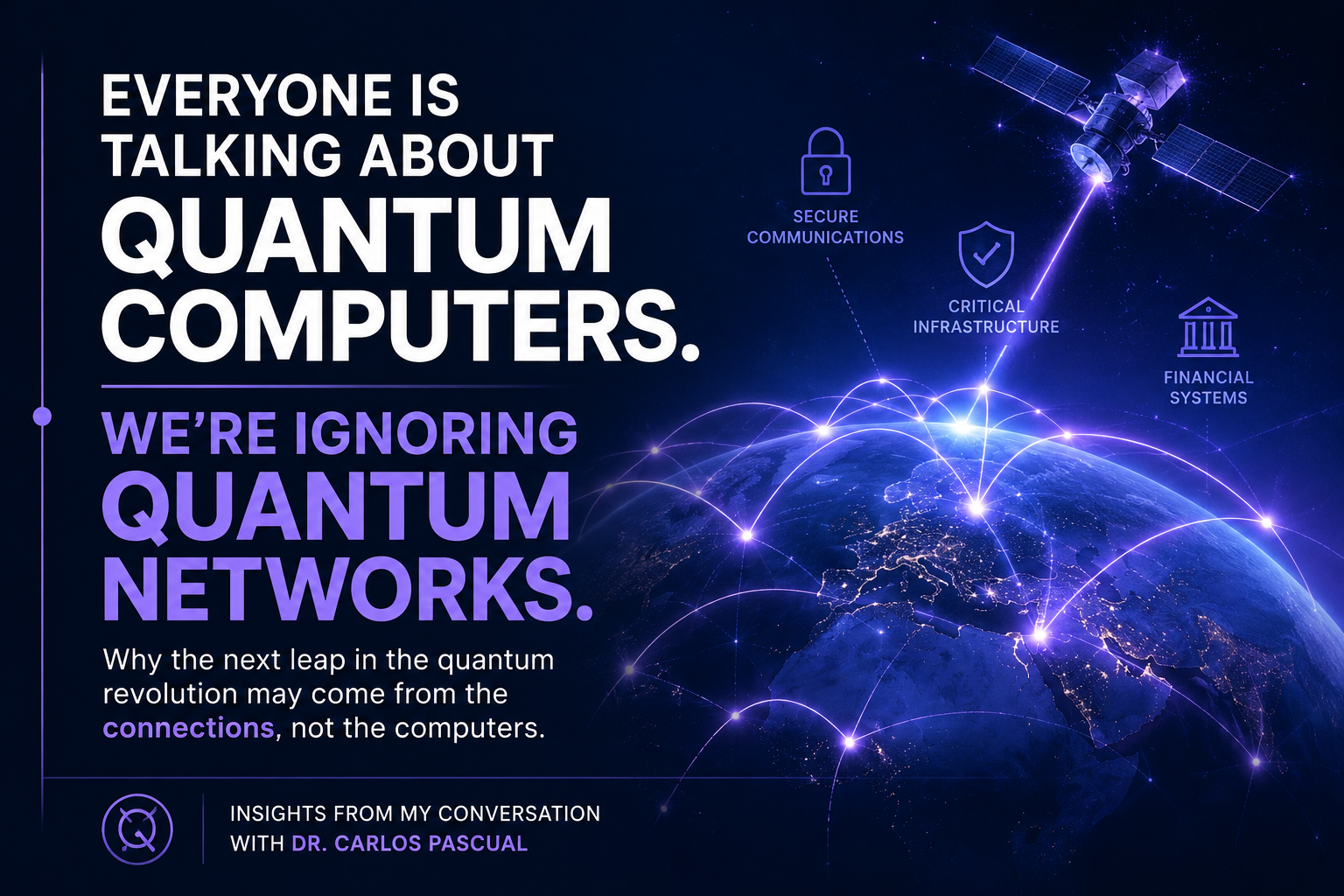
Quantum cryptography doesn’t just make encryption harder—it makes it impossible to break without detection. The key is something called Quantum Key Distribution (QKD), which utilizes the peculiarities of subatomic particles to transmit secret information.
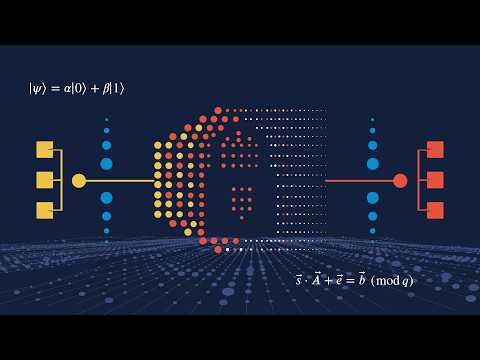
A qubit, the smallest unit of quantum data, isn’t stuck as a 0 or a 1. It’s both, until measured. Two qubits can also be entangled, meaning what happens to one instantly affects the other, no matter how far apart they are.
In QKD, two parties share a cryptographic key encoded in photons. If anyone tries to eavesdrop, the very act of listening changes the photons’ state. The intrusion leaves a quantum fingerprint—a cosmic alarm bell that says, “Someone’s here.”
Think of it like whispering a secret that evaporates the moment a stranger leans in. It’s privacy guaranteed not by complexity, but by the laws of physics themselves.
The Quantum Arms Race
This quiet revolution isn’t happening in isolation—it’s unfolding on a global stage.
China has invested over $15 billion in quantum research and constructed a 2,000-kilometer quantum communication line between Beijing and Shanghai. The European Union has invested over $10 billion in its quantum initiatives, and the United States, through its National Quantum Initiative, has committed approximately $3 billion to research and cybersecurity pilots.
But the story isn’t just about nations. Behind the headlines, corporations are preparing, too—adopting what’s called Post-Quantum Cryptography (PQC). Unlike QKD, PQC operates on today’s classical computers, utilizing algorithms specifically designed to withstand quantum attacks.
The National Institute of Standards and Technology (NIST) has already selected its first quantum-safe algorithms:
- CRYSTALS-Kyber for secure key exchange,
- CRYSTALS-Dilithium and Falcon for digital signatures.
These will slowly replace RSA and ECC across browsers, VPNs, and cloud systems. Quietly, the skeleton of the internet’s security is being rewired.
Rethinking Trust in a Quantum World
So, what does all this mean for us—not just for cryptographers and policymakers, but for everyone who lives part of their life online (which is nearly everyone)?
It means the next decade will redefine trust. Critical infrastructure banks, power grids, hospitals—must modernize before quantum computers mature. Waiting could mean catastrophic exposure.
It also means privacy might evolve into something more profound: a human right upheld not just by laws, but by physics itself. And that’s a hopeful thought—that science can become a guardian of human dignity.
For innovators, this shift sparks opportunity: new kinds of secure blockchains, quantum-resistant communication networks, and flexible systems that can adapt as standards evolve. Cybersecurity is no longer just about defense—it’s about resilience, creativity, and anticipation.
If you’re quantum curious, the best way to start isn’t with equations, but with questions:
- Where does your organization’s encryption live?
- Are your vendors exploring quantum-safe solutions?
- How long must your data remain private—one year, or one lifetime?
Awareness is the first safeguard. The more people understand these shifts, the better we can shape them—toward transparency, equity, and shared security.
The Quantum Takeaway
Quantum computing may be the most paradoxical invention of our time: a machine that both breaks and builds trust. But in that paradox lies possibility.
We’re moving from security by secrecy to security by science—from codes built on impossibility to systems grounded in the laws of nature.
Quantum technology might shatter today’s encryption, yes—but it also gives us the tools to rebuild something far more substantial: a digital world where privacy is not a privilege but a principle.
The question now isn’t if the quantum era will arrive, but how ready we’ll be when it does.