As the sun dips below the horizon, casting shadows across my desk, I find myself wrestling with the weighty pages of research unleashed by Google Quantum AI and a young startup, Oratomic. These documents—quiet in their delivery but loud in implications—reveal a shift that promises to redefine the rules of digital security as we know it. The fusion of quantum computing with artificial intelligence is not some distant possibility but a current reality, accelerating timelines and challenging our previously held assumptions.
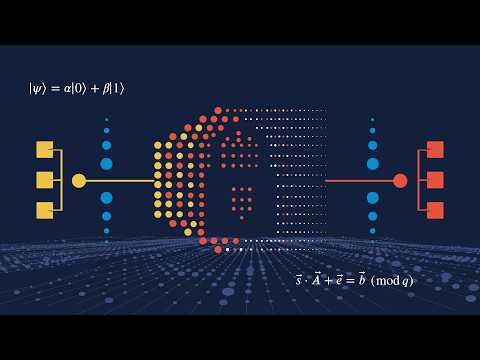
Traditionally, encryption has been our fortress. Every email sent, bank account accessed, and personal message shared relies on cryptographic walls so robust that even the most advanced classical computers cannot breach them within a human lifetime. However, this new research indicates that quantum computing, with AI as its unlikely ally, might be tearing down those walls far earlier than expected.
Based on content from Julia McCoy
Take a look at the leap that AI has enabled: Google’s Quantum AI team showed it could significantly reduce the resources required to crack ECDSA-256 encryption by a staggering 20x. Meanwhile, Oratomic proposes a different quantum architecture using neutral atoms that could dismantle the RSA 2048 encryption—a cornerstone of the internet’s security—with a mere 10,000 qubits, not the millions that technologists had assumed were necessary. It’s a dramatic recalibration of our security timeline, underscored by the fact that Cloudflare, which protects 20% of global websites, moved its deadline for post-quantum preparedness from 2035 to 2029.
But why does this matter to you, the reader who may not obsess over qubits and superpositions? It matters because the concept dubbed “harvest now, decrypt later” is not fiction. It’s a strategy bad actors have likely already adopted. Encryptions intercepted today are cautiously stored until the keys can be unlocked by future quantum capabilities—making the private suddenly public in a generational sweep.
At this precipice, the convergence of AI and quantum isn’t just a discussion about security. It’s a dialogue about potential, about duality,—how the same force threatening the encryption could become an ally against cancer, a partner in drug discovery, or a guide into new realms of scientific exploration. Nvidia’s recent open-source AI models are already accelerating quantum computations, hinting at a landscape where coding and crystallography converse fluently.
What can be done in this period of teetering transition? There is no need for panic; rather, let us act deliberately:
- Implement a password manager to ensure your online credentials are unique and robust.
- Ensure two-factor authentication is active on sensitive accounts to guard low-hanging fruit even if encryption breaks.
- Engage with and understand the emerging players in the post-quantum space—not for financial gain alone, but also for intellectual positioning as new paradigms unfold.
The kinetic energy of AI and quantum promises shifts beyond immediate encryption concerns, spanning innovations in medicine, materials science, and climate solutions. Imagine drug discoveries transpiring not over decades but within months. This emergent technology offers both solace and concern, illustrating why remaining informed and tactfully equipped is crucial.
Thus, amidst chaos, a certain clarity arises. The future isn’t a mere extension of the present; it’s a radical restructuring requiring not just adaptation, but anticipation as a virtue. Let these cascading breakthroughs spur us towards thoughtful engagement—a chance to be first movers armed not only with speed but also profound wisdom. The echoes of a new era are here; let us walk forward with deliberate steps, aware of the shadows and the illumination that lies ahead.
For those interested in diving deeper into these convergences of AI and quantum, and their implications across various domains, join our discussions at First Movers AI Labs—a platform intent on leading beyond the headlines into the heart of future impacts.
—