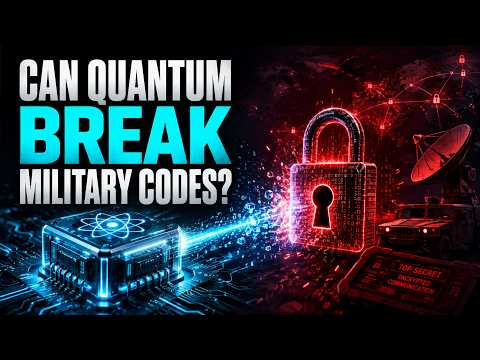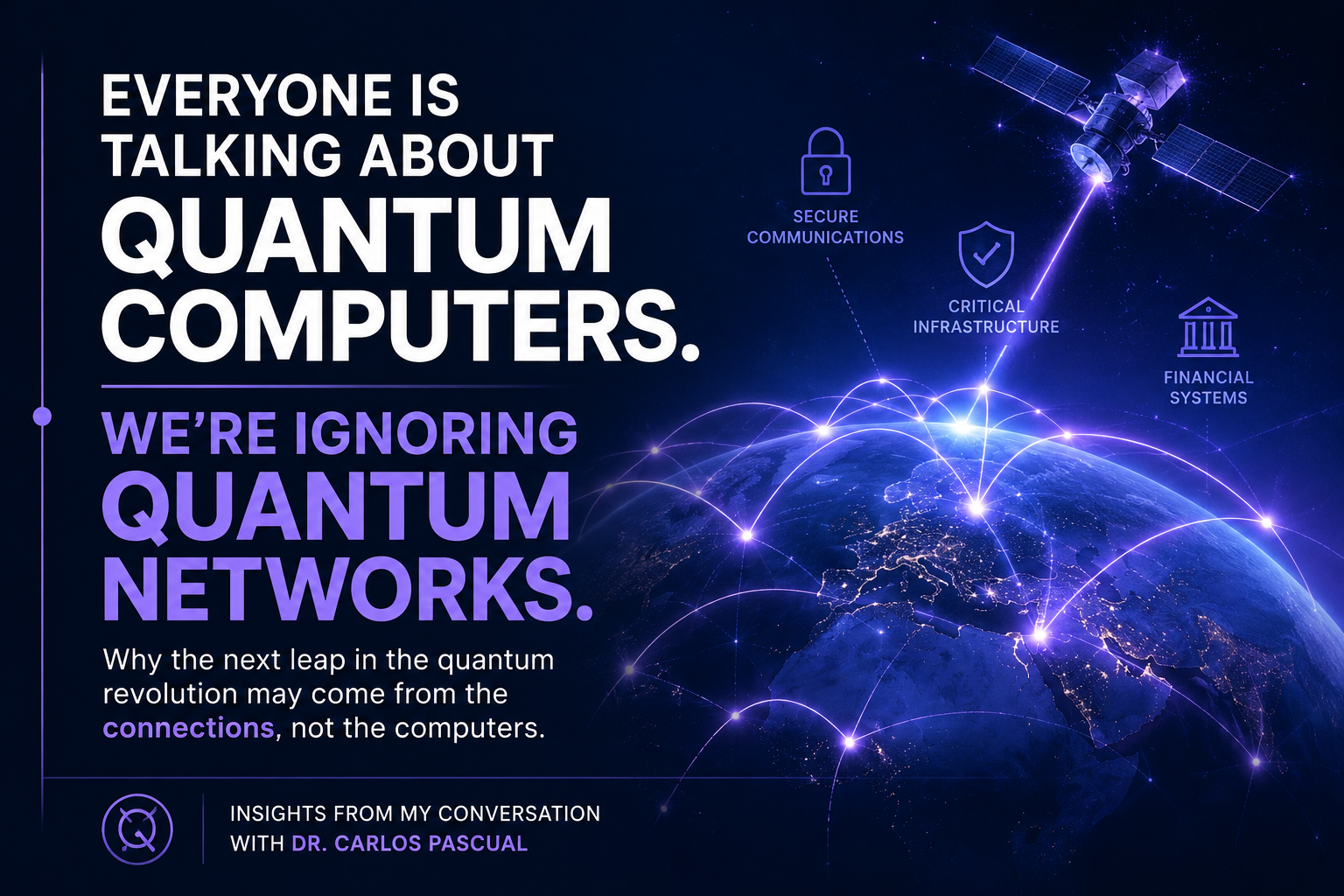
There’s a storm brewing in the world of digital security, and most people don’t even know the clouds are gathering.
Right now, every time we send a payment online, log into our email, or send a private message we really don’t want leaked, we’re placing our trust in encryption. This encryption depends on math, but not just regular “high school math homework” math. We’re talking big, tangled, deliciously complex equations that would take traditional computers eons to crack.
It’s the kind of math that creates invisible vaults around our most sensitive data. But here’s the problem: there’s a new kind of computer quietly making its way into the scene, and it doesn’t play by the rules.
Enter: Quantum Computers.
If regular computers are like precise librarians following a Dewey Decimal system, quantum computers are like jazz musicians simultaneously improvising, vibing, and rewriting the sheet music as they go.
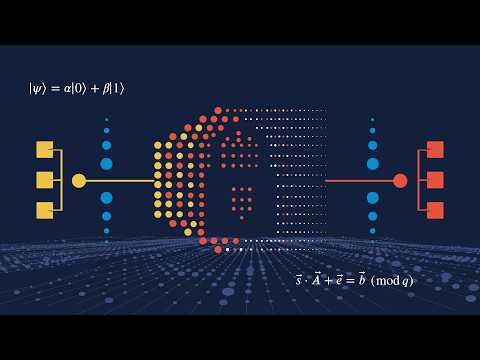
These machines operate using the bizarre rules of quantum mechanics. They don’t just solve problems; they explode through them in parallel universes of possibility. One algorithm in particular, Shor’s algorithm, gives quantum computers the potential to shred through our current encryption systems like a hot knife through butter. Stuff that would take a traditional computer a billion years to break? Quantum computers might chew it up in a matter of minutes.
Suddenly, all those encrypted messages, saved passwords, financial records, and even top-secret government data could be laid bare.
This is not science fiction. Cryptographers have been ringing the alarm bell for years, warning that we need to redesign our systems before quantum computing gets strong enough to tear the digital fabric apart.
And at the heart of the issue is something almost deceptively simple:
Randomness.
Why Randomness Is Everything
Good encryption is built on secrets. And good secrets come from unpredictability. Not just “I flipped a coin and it landed heads twice” unpredictability. We’re talking truly random, chaos-born, can’t-be-guessed-no-matter-how-many-spreadsheets-you-make kind of unpredictability.
Here’s where things get messy. Most computers don’t actually know how to be random. They’re machines. They follow instructions. So when we ask them to generate a random number, they’re really just running a complicated formula called a pseudo-random number generator (PRNG). It looks random to the naked eye, sure, but if you know the formula or can reverse-engineer enough output, you can predict what’s next.
Which means someone could potentially crack the encryption built on those predictable “random” numbers. Especially if that “something” is a quantum computer.
So, how do you generate true randomness?
The Lava Lamp Loophole
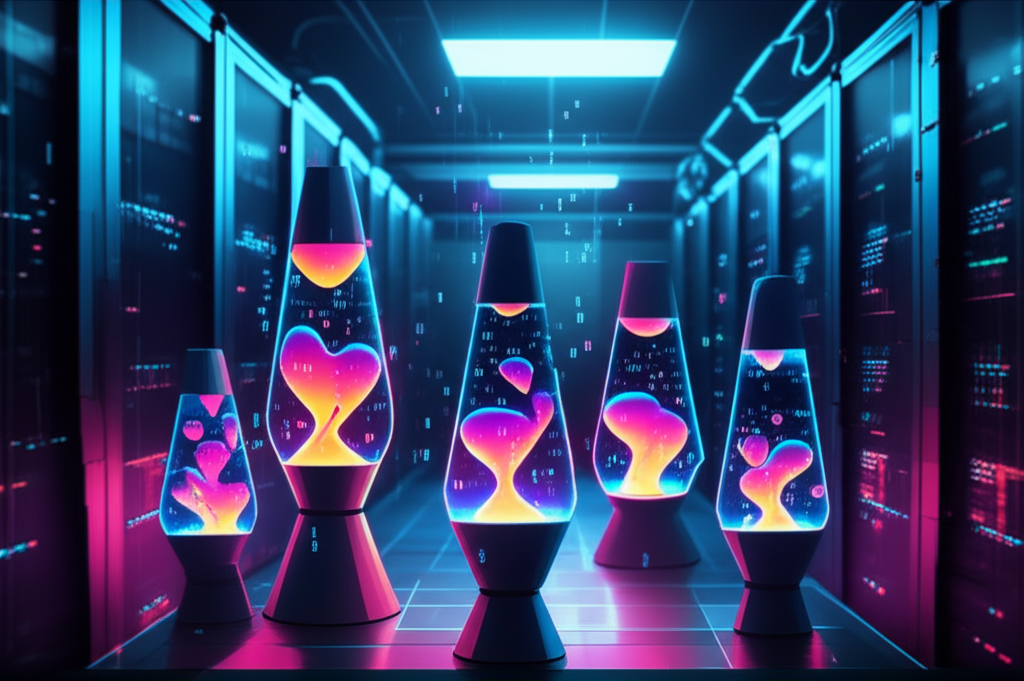
You might think that the future of digital security will come in sleek titanium boxes or buzzing racks of next-gen chips. But in one San Francisco office, it’s glowing blobs of lava that are holding the line.
Yes. Lava lamps. Like the kind your eccentric aunt had next to her beanbag chair in the ‘70s.
Cloudflare, one of the biggest names in internet security, has an entire wall of lava lamps in its lobby. But these aren’t just for aesthetic vibes or ironic decor. Cameras are constantly filming these lava lamps. The footage, a chaotic, slow-motion ballet of colored wax, is converted into raw data. That data serves as input to true random number generators (TRNGs).
Here’s why this works: the movement of those wax blobs is affected by heat, fluid dynamics, ambient light, and a dozen micro-variables that no algorithm can perfectly model. Even if you filmed the same lamp twice, no two frames would be exactly alike. It’s real-world entropy. Pure unpredictability. Something even quantum computers can’t reverse-engineer.
That randomness becomes the seed for encryption keys, unique, impossible-to-replicate combinations that secure everything from login credentials to financial transactions.
And it’s beautiful. Poetic, even.
From Chaos to Code
If you’re imagining some wacky steampunk setup with lava lamps hooked to wires, buzzing sensors, and someone in the corner whispering to the blobs, well, you’re not totally wrong. But the process is surprisingly streamlined:
- Cameras record the lava lamp movement in real time.
- That footage gets broken down into numerical data.
- The random numbers, always different, are used as encryption keys.
Each flicker, each swirl, is a security measure. A silent guardian. And no two moments are ever the same.
Of course, lava lamps aren’t the only game in town. Other sources of physical randomness, such as cosmic rays, radio static, or even radioactive decay, are being used in similar ways. But there’s something magical about a glowing lamp silently protecting you from a cyber-heist.
And yes, this is cheaper and more accessible than many of the fancy “quantum-proof” cryptographic systems being developed in labs. Sometimes, good tech is just good vibes.
What Comes Next?
Picture it: government data centers filled with ambient noise sensors, banks lined with quantum-safe randomness machines, and lava lamps quietly pulsing in a glass-walled server room.
In the future, defending our digital lives won’t just come down to stronger firewalls or more complex algorithms. It’ll come down to creativity. To use what the natural world gives us, randomness, chaos, light, and motion as shields against machines that think in dimensions we can barely grasp.
Quantum computers are coming. But that doesn’t mean we’re doomed. If anything, it just means the defense game is changing. And maybe the best weapons in this next chapter won’t look like weapons at all.
They’ll look like art. Like noise. Like lava.