For years, quantum technology has lived in a strange limbo between promise and practicality. On paper, it offers everything we want: highly secure communication, computing power that exceeds today’s limits, and entirely new ways of sensing and transmitting information. In reality, it has been held back by one stubborn, unglamorous requirement: extreme cold. We’re talking about machines that need to be chilled to temperatures just a hair above absolute zero to function correctly.
That’s not exactly “plug it in and scale.”
But now, something genuinely important has shifted.
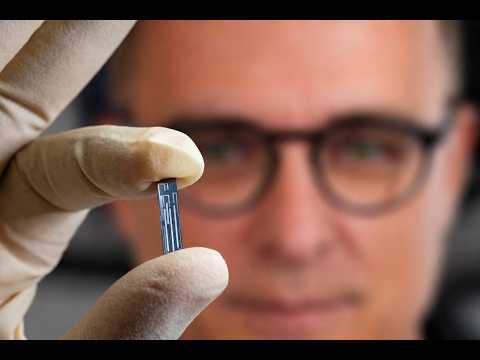
Researchers have demonstrated a nanoscale optical device capable of entangling light and electrons at room temperature. No cryogenic refrigerators. No football-field-sized cooling infrastructure. Just quantum behavior happening under everyday conditions. And that single detail quietly changes the trajectory of the entire field.
To understand why this matters, it is helpful to revisit what entanglement is. At its core, entanglement is the strange and powerful phenomenon in which particles become linked so deeply that the state of one instantly affects the other, even across distances. Einstein famously called it “spooky action at a distance,” but today it’s less spooky and more foundational. Entanglement is the engine behind quantum communication, quantum cryptography, and many future quantum networks.
The catch has always been fragility. Quantum states are incredibly sensitive. Heat, vibration, and environmental noise can easily destroy them. That’s why most quantum systems today live inside cryogenic environments cooled to millikelvin temperatures. These systems work, but they’re expensive, complex, and impractical for widespread deployment.
This new device challenges that assumption head-on.
By carefully engineering interactions between photons and electrons at the nanoscale, researchers have shown that entanglement can be generated and sustained without freezing the system. That’s not just a technical achievement; it’s a philosophical one. It suggests that quantum systems don’t have to be isolated from the real world to function within it.
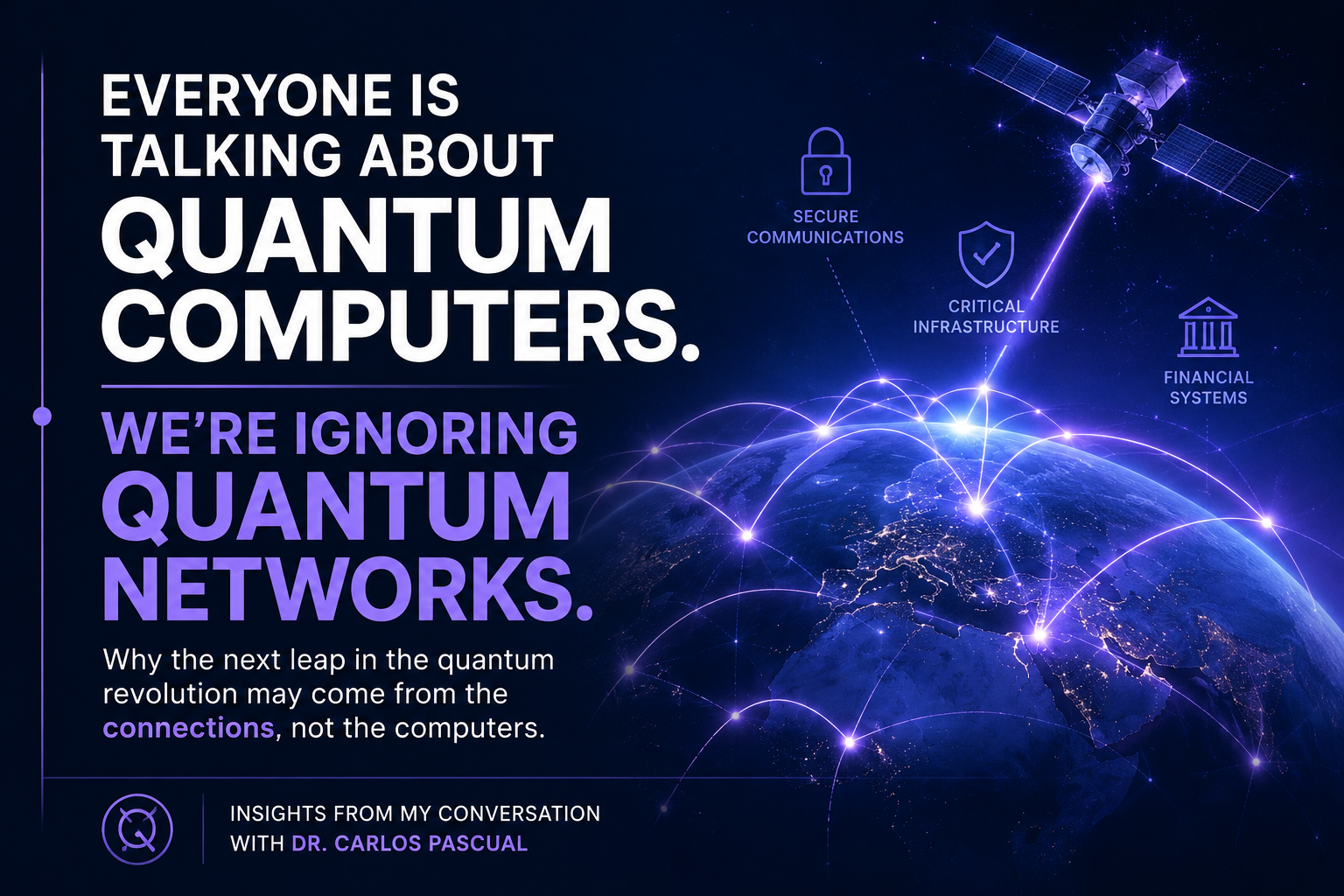
The immediate implications for quantum communication are hard to overstate. Take quantum key distribution (QKD), one of the most mature quantum technologies today. QKD allows two parties to exchange encryption keys in a way that makes eavesdropping physically detectable. It’s already being tested in government networks and financial systems, but deployment has been slow and costly because of cooling requirements.
Room-temperature entanglement changes the economics entirely. Suddenly, QKD systems can become smaller, more robust, and more deployable. They move from specialized infrastructure projects to something that can realistically integrate into existing networks. That’s how technologies actually scale—not by being perfect, but by being practical.
The same applies to quantum cryptography more broadly. As we move closer to a world in which classical encryption becomes vulnerable to future quantum computers, the need for quantum-secure communication grows more urgent. A device that can generate quantum signals without cryogenics lowers the barrier to experimentation, innovation, and adoption. It accelerates timelines across the board.
But communication is only part of the story.
Room-temperature quantum devices enable sensors that can operate outside pristine laboratory environments. Think medical diagnostics, environmental monitoring, navigation systems, and industrial inspection tools that leverage quantum sensitivity without requiring exotic infrastructure. They also hint at more modular quantum networks, where quantum repeaters and interfaces can be distributed across real-world environments rather than confined to research facilities.
Even quantum computing feels closer—not because this replaces cryogenic qubits overnight, but because it expands the ecosystem around them. Hybrid systems that mix room-temperature quantum components with cryogenic processors suddenly look more realistic. And that’s often how breakthroughs actually land: not as replacements, but as enablers.
There’s still work ahead. Scaling these devices, integrating them into larger systems, and ensuring reliability over time are non-trivial challenges. But the most rigid conceptual barrier, the idea that quantum must always be cold, isolated, and inaccessible, has cracked.
And that matters.
Because the future of quantum technology isn’t just about physics, it concerns whether these tools can leave the laboratory and enter the world. Whether they can be built, deployed, maintained, and trusted at scale. Room-temperature entanglement brings quantum computing a step closer to being infrastructure rather than spectacle.
This isn’t the end of the cryogenic era, but it may be the beginning of a more inclusive one. A future where quantum technology isn’t defined by how cold it has to be, but by how useful it becomes.
And that’s the kind of progress worth paying attention to.