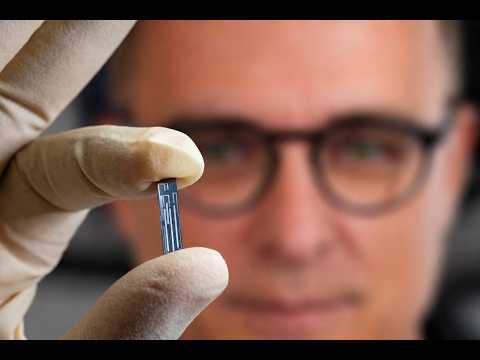
Quantum computers, as they stand now, bear the marks of their limitations, often constrained to just 100 to 1,000 qubits. Yet, the practical applications we dream of demand a sea of hundreds of thousands, if not millions, of qubits. While traditional scaling—a solitary expansion of a single massive quantum system—remains a tantalizing goal, Cisco introduces an alternative narrative: a scale-out approach that interlinks multiple quantum computers through innovative quantum networks.
Based on content from David Bombal Tech
In a conventional network, connecting computers directly—think of it as an intricate web of point-to-point connections—quickly turns impractical. The ‘N-squared problem’ rears its head as systems multiply. A system of four requires 12 connections, ten demands 90, and suddenly the unwieldy 9,900 connections surface for a network of 100 systems. Cisco’s quantum switch deftly sidesteps this issue by acting as a central hub, preserving the delicate dance of quantum information across its pathways.
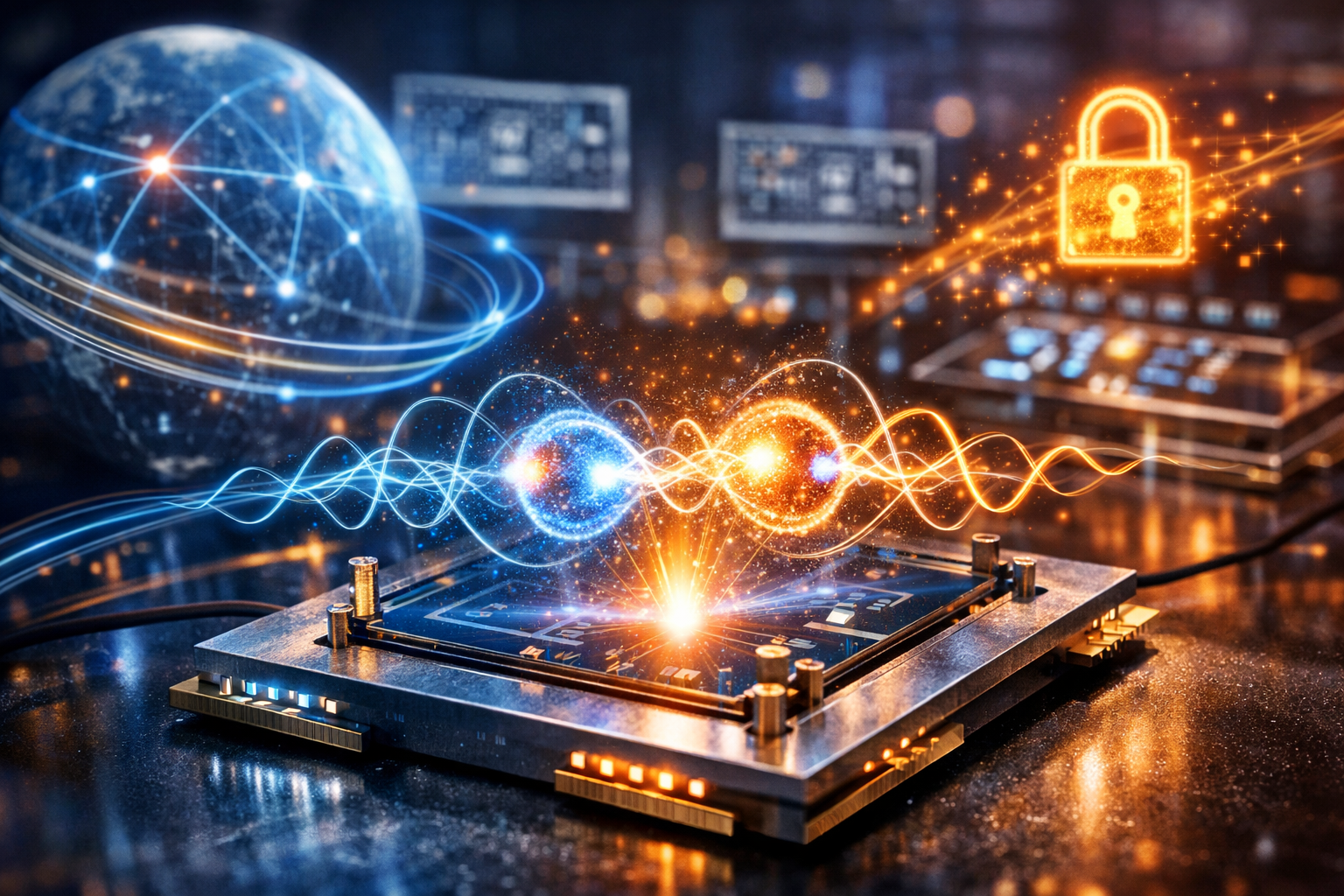
But what truly sets Cisco’s breakthrough apart is its ability to traverse the vast complexities of different quantum encoding modalities at room temperature, utilizing existing fiber infrastructure at telecom frequencies. The switch’s conversion engine is a cornerstone achievement, bridging the gap between diverse quantum systems—those initially silent to each other—by translating across polarization, time bin, frequency bin, and path domains. Envision a world where quantum systems, irrespective of their native encoding languages, communicate seamlessly across a unified network. The potential extends far beyond theoretical intrigue; each layer of Cisco’s switch reinforces its promise as more than a mere proof of concept.
This evolution in quantum networking bears profound implications, particularly in the realms of encryption and cybersecurity. Popular encryption methodologies, like RSA, face existential disruption in a world where powerful quantum computing could become a reality. Moreover, the switch opens up future possibilities for high-frequency trading, quantum sensors, and distributed quantum computing, each of which relies on the fragile states of entangled photons within this nascent network.
Yet, this is merely the prologue to a lengthy narrative. Cisco’s Universal Quantum Switch marks a crucial milestone, not a conclusion. The path towards true quantum networking is paved with ongoing challenges—technical, practical, and philosophical—that demand careful thought and collective endeavor.
Why should this matter to us, those living in bits and bytes? As technological citizens ensconced in a digitized world, the ripple effects of quantum computing are set to permeate numerous layers of societal and industrial fabric. We stand at the cusp of transformations that could redefine cybersecurity, heighten computational capabilities, and perhaps even reroute the economic and industrial strategies of entire governments and enterprises.
Ultimately, as we watch these developments unfold, one question lingers on the edge of excitement and uncertainty: How will we adapt to the resurgence of possibilities ushered in by quantum networking? These whispers of an advanced quantum era echo with the potential to redefine what’s possible, challenging us to push boundaries while delicately preserving the world we know.
—