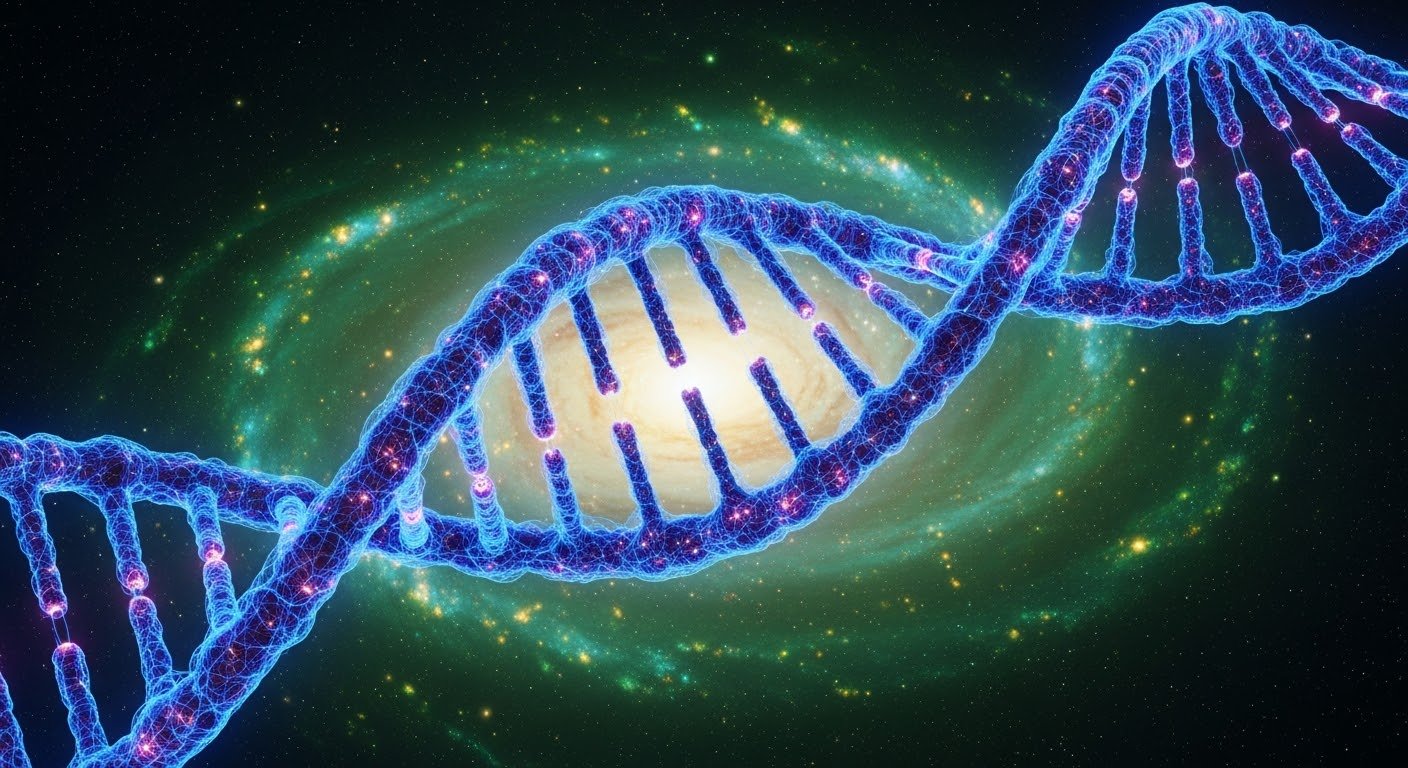
We often tell the story of technology as a one-way transformation. Machines get smarter, data grows larger, and humanity scrambles to keep pace. But what if the real evolution is mutual? What if the deeper question isn’t how technology will change biology, but how biology is already evolving technology?
Life has always been the original engineer. From the spiral of DNA to the branching of neurons, nature has been solving problems through balance, adaptability, and cooperation for billions of years. Every cell is a quiet symphony of feedback loops and energy flows, processing information with elegance that even our most advanced algorithms can only imitate. Now that quantum computing and artificial intelligence are merging, scientists are turning to life itself for the next wave of inspiration.
Learning from Life’s Logic
Classical computing is rigid by design. It thrives on precision and control, reducing the world to zeros and ones. Biology, on the other hand, thrives on variation. It welcomes uncertainty and transforms randomness into creativity. Evolution itself is a form of experimentation written into the fabric of existence.
Many researchers now believe that the next generation of AI will not be purely digital but biological in spirit. They are studying how living systems make decisions, adapt, and even sense their environment. IBM has explored neuromorphic chips that mirror the structure of the human brain, using self-organizing networks that learn and evolve. These systems do not just calculate. They observe, remember, and adjust in response to experience.
In nature, adaptability is not an upgrade. It is a survival mechanism. Every living thing is a conversation between its inner state and its surroundings. A forest breathes in carbon and breathes out oxygen, shifting with the seasons. A single cell reacts to environmental change with an almost intuitive intelligence. Quantum biology reveals that many of these processes occur at the edge of physics, where particles exist in overlapping states of possibility.
That delicate balance between order and uncertainty is the same dynamic that underlies thought and consciousness.
Entanglement and Interconnectedness
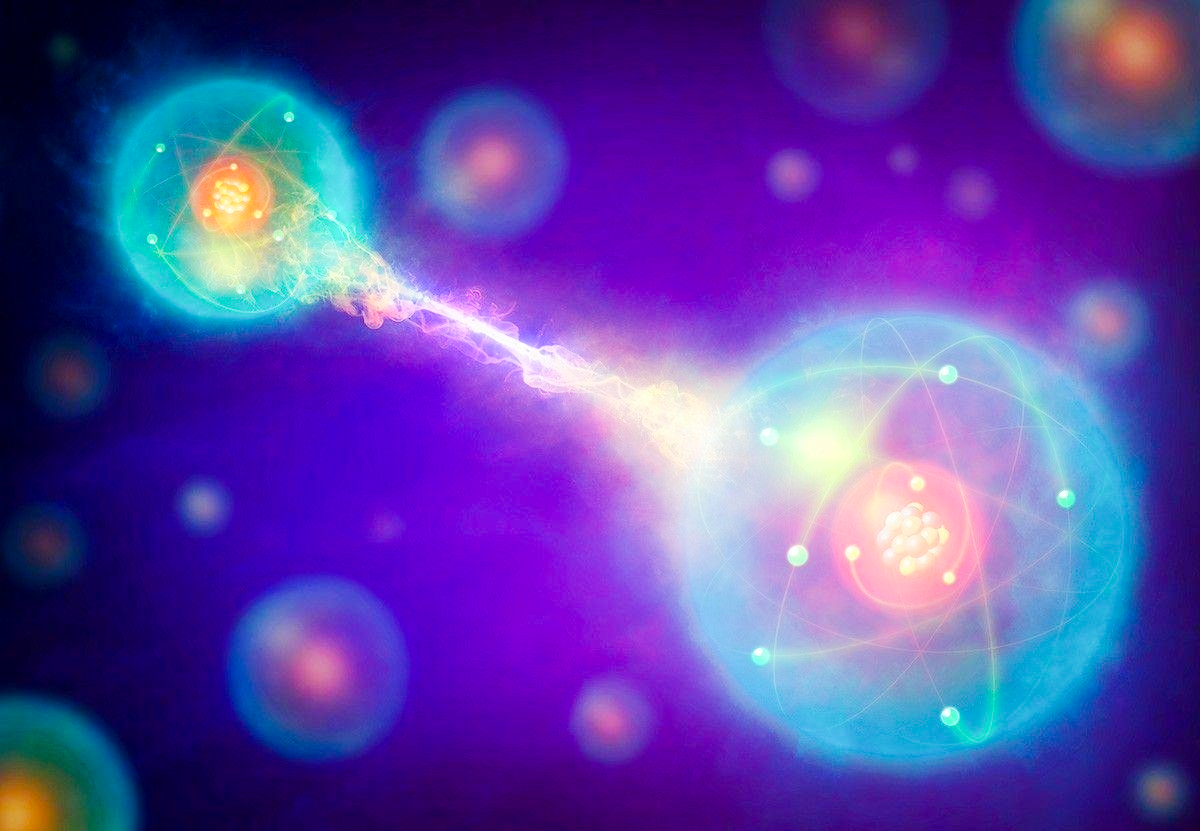
Quantum entanglement has always carried a touch of mystery. Two particles can become so deeply connected that changing one instantly affects the other, no matter the distance between them. What if that is not only a law of physics but also a reflection of how life itself operates?
Biology is full of entangled relationships. Mycorrhizal fungi connect trees in underground networks, allowing forests to share nutrients and warn one another of danger. The bacteria in our gut influence our immune system, our mood, and even our creativity. Every living being is both an individual and part of a vast web of mutual influence.
This is where empathy begins. It is the ability to sense and respond to another’s state, to feel connection even across distance. In that sense, empathy is the biological version of entanglement. It shows that survival depends not only on competition but also on communication and care.
If quantum computing represents a new way of processing complexity, empathy represents a new way of understanding it. To create technology that truly understands life, we may need to design it to sense relationships rather than detect patterns.
From Pattern Recognition to Emotional Intelligence
Artificial intelligence already excels at pattern recognition. It can identify a tumor on a scan, compose music, or mimic a human voice. But recognizing a pattern is not the same as understanding its meaning. Seeing a face is not the same as identifying a feeling.
This is where the idea of quantum empathy takes shape. It describes both a technological aspiration and a human quality. The goal is not to give machines emotions but to design systems that can interpret context and ambiguity with the grace that living beings naturally possess.
In nature, emotion functions as data. It signals how a body is responding to its environment and helps guide choices that protect and sustain it. An empathetic AI would interpret human signals—tone, pause, rhythm, silence—as part of a living system rather than background noise. It would treat communication as a dance of mutual adjustment rather than a one-way transfer of information.
Some researchers are pursuing this vision through affective computing, in which algorithms learn to interpret emotion from voice, expression, and movement. The next step is moving beyond imitation. The real challenge is to create systems that practice empathy rather than perform it.
Creativity, Consciousness, and the Quantum Mind
It is tempting to ask whether a machine could ever be conscious. Perhaps that is the wrong question. Consciousness may not be something one possesses but something that emerges through interaction. Sound becomes music only when vibration meets air, the ear, and awareness.
Quantum biology suggests that even the most minor units of life operate in a space between possibility and realization. Photosynthesis, for instance, may rely on quantum coherence to transfer energy with astonishing efficiency. Some scientists even propose that brain structures could sustain quantum effects that contribute to awareness itself. These ideas are still speculative, yet they invite us to rethink the boundaries between physics and perception.
Creativity may work similarly. Every new idea begins as uncertainty before it becomes form. The sudden shift from confusion to clarity feels like a leap across the probability distribution. Machines may never replicate that spark, but they can help us study and respect it.
Designing with Empathy
The goal is not to make technology more human. It is to make it more humane. When we model AI and computing systems after the patterns of life found in nature, like adaptability, cooperation, and diversity, we create tools that serve connection rather than control.
Quantum computing could one day help us design materials that repair themselves, simulate ecosystems before damage occurs, or discover new medicines with greater precision and less waste. Yet its deeper gift is philosophical. It reminds us that the universe is not a machine to be mastered but a living system to be understood.
If the first quantum revolution taught us that reality is relational, the second may reveal that empathy is our most advanced form of intelligence.
Biology does more than provide blueprints for more intelligent machines. It reminds us that accurate intelligence is the ability to connect, to sense, and to care.
Stay Connected
Follow our journey and be part of the conversation:
🔗 Find us on LinkedIn
📬 Join our mailing list
📺 Subscribe to our YouTube channel