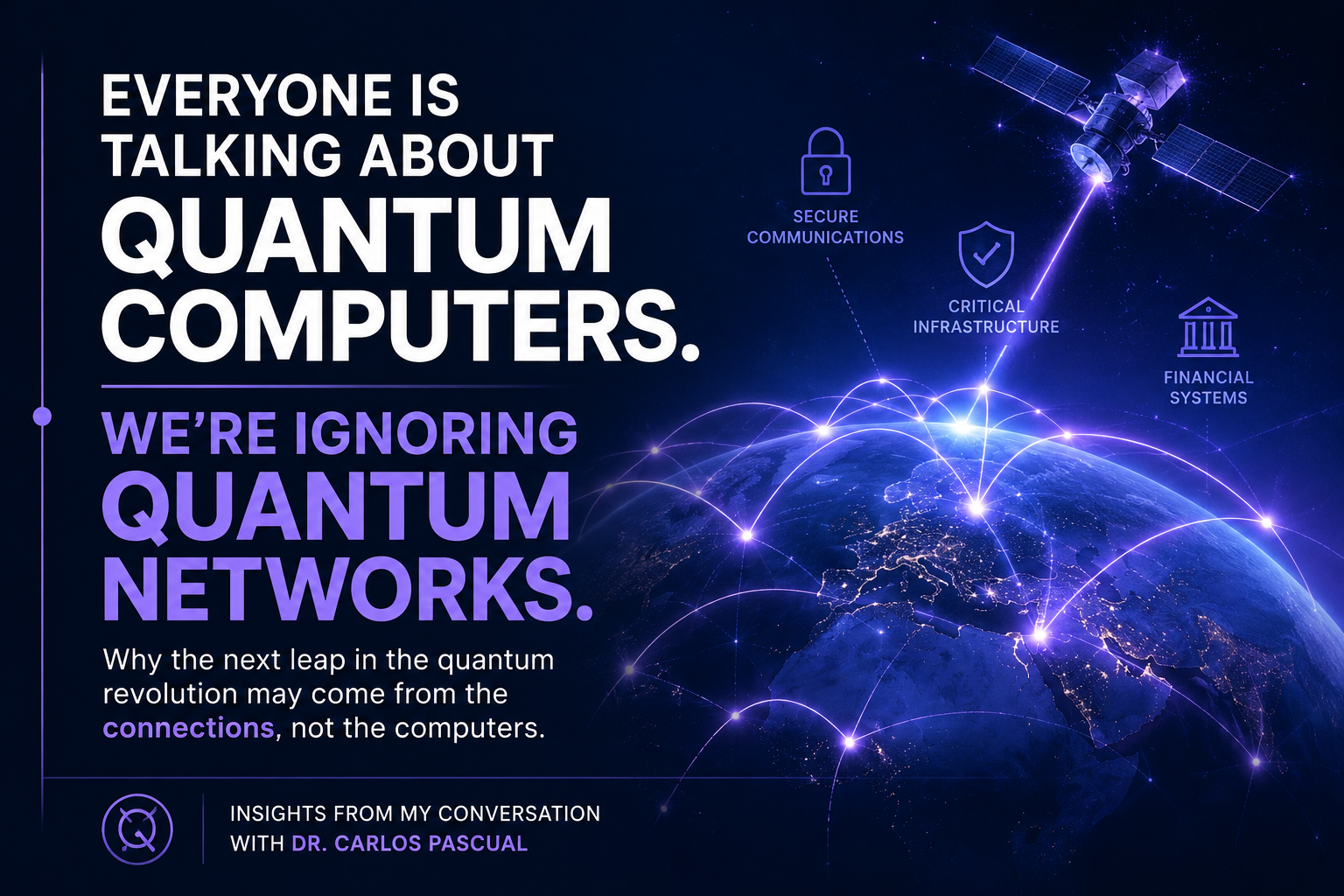
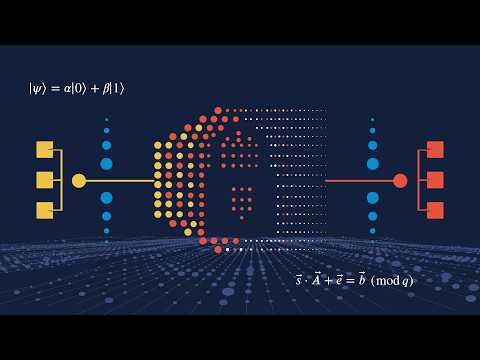
The digital world is built on trust—trust that your bank login is safe, that your private messages stay private, and that sensitive national data remains secure. But this trust rests on encryption methods designed decades ago, long before quantum computing was on the horizon.
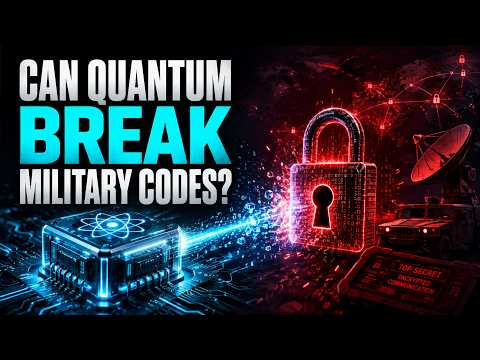
Today, a new reality is emerging: quantum computers could one day break the encryption that protects nearly everything we do online. This possibility has sparked global concern, prompting governments, cybersecurity experts, and technology companies to prepare for a new era.
Quantum cryptography—security rooted in the laws of physics rather than mathematics—is quickly becoming one of the most important technological frontiers. Here’s why it matters, how it works, and how it will protect your digital world.
The Impending Crypto-Apocalypse
Traditional Encryption vs. the Quantum Threat
Most modern encryption—especially what keeps websites, banking systems, and emails secure—relies on mathematical problems that are extremely hard for classical computers to solve. For example, the widely-used RSA system depends on the difficulty of factoring very large numbers.
A classical computer might take thousands of years to break that code.
But a sufficiently powerful quantum computer could do it in hours or even minutes.
The Rise of Shor’s Algorithm
The threat comes from Shor’s Algorithm, a quantum algorithm discovered in the 1990s but now approaching real-world feasibility. If a large, stable quantum computer becomes available, Shor’s Algorithm could rapidly break RSA, ECC (elliptic curve cryptography), and many other security systems we rely on today.
This isn’t a theoretical problem—the danger is immediate.
Why the Urgency?
Even though powerful quantum computers don’t exist yet, attackers can already steal encrypted data and store it until quantum machines arrive. This strategy is known as “Harvest Now, Decrypt Later.”
As a result:
- Governments are transitioning to post-quantum standards.
- Corporations are upgrading systems to withstand future attacks.
- All major security agencies warn that the time to prepare is now, not later.
Quantum cryptography presents a powerful solution—one that doesn’t rely on mathematical difficulty but on the foundations of quantum physics itself.
Quantum’s Secret Weapon: The Laws of Physics
To understand why quantum cryptography is so powerful, you need a quick tour of two key quantum principles.
Superposition and Entanglement
Quantum mechanics allows particles—like photons (particles of light)—to exist in multiple states simultaneously. This is called superposition.
Particles can also be connected at a deep level, where measuring one instantly affects the other, even across long distances. This is entanglement, one of the most mysterious and fascinating aspects of physics.
These properties form the backbone of quantum security.
Photons as Information Carriers
In quantum cryptography, information is encoded on photons. But here’s the twist:
observing a quantum particle always changes it.
This is not just a theory—it’s a measurable, physical truth.
If someone tries to spy on quantum information, the system instantly detects the disturbance.
The No-Cloning Theorem
One of the most important quantum rules is the no-cloning theorem, which states that you cannot make an identical copy of an unknown quantum state.
In classical computing, you can copy files and data endlessly.
In quantum systems, copying is impossible.
This single rule makes quantum information tamper-proof. No hacker can intercept or duplicate a quantum key without being detected.
Quantum Key Distribution: The Unbreakable Lock
How the BB84 Protocol Works (Simple Explanation)
Imagine two people—Alice and Bob—want to exchange a secret key.
- Alice sends Bob a stream of photons, each encoded with random quantum states (like polarization directions).
- Bob measures the photons using randomly chosen measurement settings.
- They publicly compare which measurement settings were correct—without revealing the photon values.
- The matching results become their secret key.
This process is called BB84, one of the earliest and still most widely discussed quantum key distribution (QKD) protocols.
What Happens If Someone Tries to Eavesdrop?
If a hacker—traditionally named “Eve”—tries to intercept the photons:
- She must measure them to read the information.
- Measuring them alters their state.
- Alice and Bob instantly see mismatches in their results.
This makes quantum eavesdropping detectable in real time.
The Power of the One-Time Pad
Once Alice and Bob share a perfectly random secret key, they can encrypt messages using a one-time pad, the only mathematically unbreakable encryption method known.
When paired with QKD, the result is ultimate communication security.
Beyond Keys: The Growing Quantum Security Landscape
Quantum cryptography isn’t just about sharing keys. It is opening the door to an entirely new ecosystem of secure communication.
Quantum Random Number Generators (QRNGs)
True security requires true randomness.
Classical computers simulate randomness, but quantum processes generate fundamentally unpredictable numbers.
Banks, military systems, and cloud providers are already deploying QRNGs for stronger encryption.
Quantum Secure Direct Communication (QSDC)
This emerging method lets people transmit information directly via quantum channels—no key exchange needed. It’s still experimental, but the potential is enormous for ultra-secure communication networks.
Post-Quantum Cryptography (PQC)
While QKD uses physics, PQC uses classical math redesigned to withstand quantum attacks. The U.S. National Institute of Standards and Technology (NIST) has already selected new PQC algorithms to replace vulnerable systems like RSA.
Quantum cryptography and PQC will work together to secure future communications.
Securing Tomorrow: Practical Applications and Future Vision
Real-World Applications Today
Quantum security is already being tested or implemented in:
- Financial networks
- Government communication systems
- Power grids and critical infrastructure
- Satellite communication links
- Healthcare and defense networks
China, Europe, the U.S., and Canada are investing heavily in quantum-secure networks.
The Future: A Quantum Internet
Researchers are working toward a quantum internet, a global network where quantum states transmit information securely and instantly detect intrusions.
Such a network could:
- Enable secure voting systems
- Protect smart cities
- Secure autonomous vehicles
- Safeguard sensitive scientific and medical data
A New Era for Privacy and National Security
Quantum cryptography has the potential to redefine digital trust. Instead of relying on complexity, we will depend on the unchanging laws of physics.
For individuals, this means more privacy.
For organizations, it means stronger protections.
For nations, it means new strategies in cybersecurity and intelligence.
Quantum cryptography isn’t just another upgrade—it is a necessary evolution in a world where quantum computers are rapidly becoming a reality. With physics on our side, we can build a digital future that remains secure, trustworthy, and resilient.