The Unbreakable Code?
Picture this: a world where your private messages, financial records, and even your most top-secret memos are wrapped in a layer of protection so strong that not even with infinite computing power could anyone crack it.
For decades, encryption has been like a race between lockmakers and locksmiths: we build stronger locks, and they find cleverer tools. However, in the age of quantum computing, the game board itself is transforming.
Enter quantum cryptography, a realm that once belonged to science fiction and the realm of physics PhDs, now quietly weaving itself into the infrastructure of everyday life. The looming event, known as “Q-Day” (the future moment when quantum computers become powerful enough to break current encryption), has become cybersecurity’s version of a ticking clock.
Quantum computers could theoretically shatter RSA or ECC, the bedrocks of modern encryption, in a matter of hours. Even more unsettling: some attackers are already stockpiling encrypted data today to decrypt it later, a strategy known as “harvest-now, decrypt-later.”
It sounds dramatic because it is. But here’s the hopeful twist: a new kind of defense is emerging, one that isn’t based on mathematical difficulty but on the very laws of physics.
Quantum’s Secret Weapon: Nature Itself
Most of today’s cryptography rests on math problems so hard that computers can’t easily solve them. Quantum cryptography flips that script, anchoring its security not in mathematics but in the physical behavior of light itself the strange and beautiful world of quantum mechanics.
The key player in this scenario is Quantum Key Distribution (QKD). Imagine two people trying to share a secret, not through whispers or codes, but through single photons of light, each carrying its own quantum “mood.”
Here’s the magic: if anyone tries to peek at those photons, their quantum state changes instantly. It’s like sending a note that self-destructs the moment someone other than you reads it. This is thanks to something physicists call the no-cloning theorem, the universe’s way of saying, “You can’t copy me without consequences.”
The result? If someone tries to eavesdrop, both sender and receiver immediately know. It’s security that doesn’t rely on human cleverness, it depends on nature’s own rules.
That’s why QKD is often referred to as “unconditionally secure.” To break it, you’d have to break physics itself.
From Lab Dreams to Real Networks
What’s especially thrilling is that quantum cryptography isn’t just living in research papers anymore—it’s being deployed in the real world.
Banks are leading the charge, of course. Institutions like HSBC have already tested QKD for foreign exchange transactions, utilizing quantum-secured channels to safeguard billions of dollars in transactions. The financial sector now holds the largest share of the QKD market, no surprise, since data there is pure gold.
Telecom providers are also getting quantum-ready. In London, BT’s metro pilot showed that quantum and classical data can share the same fiber optic lines, proving that quantum-secure communication doesn’t have to start from scratch. It can evolve in tandem with existing infrastructure.
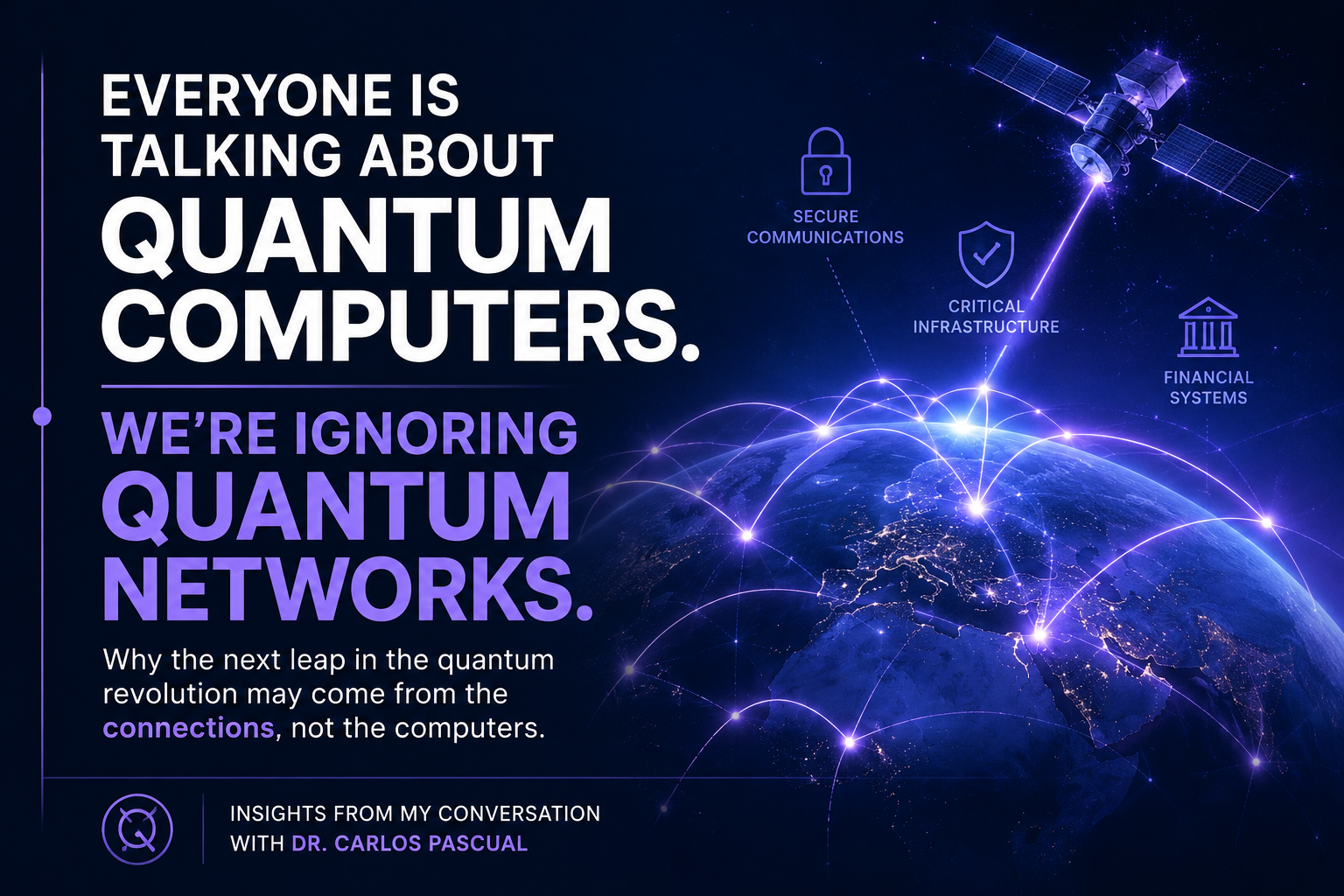
And then there’s the space frontier. The Canadian Space Agency’s QEYSSat mission, expected around 2026, plans to test QKD between satellites and Earth. Because fiber-optic signals fade after approximately 200 kilometers, satellites serve as the bridge to truly global quantum security, linking continents with photon-based trust.
Analysts estimate that the Quantum Key Distribution market will surge from approximately $446 million in 2024 to $2.49 billion by 2030—a growth rate of more than 33% per year. It’s the scaffolding of a new kind of internet: one where trust is verified not by math, but by matter itself.
The Ethical Tightrope
Of course, “unbreakable” encryption brings more than technical marvels it stirs up moral and political storms, too.
If no one can spy, even for good reasons, how do we catch criminals or ensure accountability? How do we balance privacy with public safety when communication becomes literally untappable?
On one hand, quantum cryptography could protect human rights, secure medical data, and end mass surveillance as we know it. On the other hand, it could create dark corners where harmful activity hides.
Governments are already grappling with these questions: how to maintain oversight without becoming overly intrusive, and how to share this technology fairly so it doesn’t become another form of digital dominance.
As ethicists often remind us, technology isn’t inherently good or bad; it’s a mirror. It reflects the values of those who wield it. The challenge is to build quantum networks that serve transparency, inclusion, and justice, not just power and profit.
The Here-and-Now: Quantum-Safe Begins Today
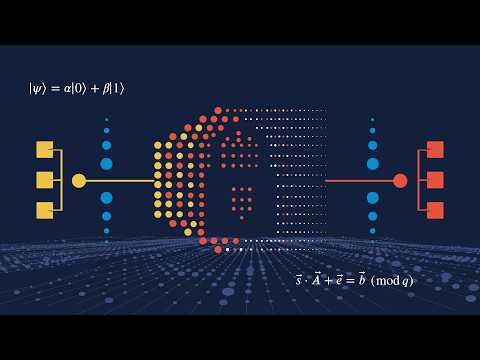
The fully quantum internet is still on the horizon, but post-quantum cryptography (PQC)—algorithms designed to resist quantum attacks—has already arrived.
In 2024, the U.S. National Institute of Standards and Technology (NIST) standardized its first set of quantum-safe algorithms:
- FIPS 203 (ML-KEM): A lattice-based method for encryption
- FIPS 204 (ML-DSA): A lattice-based digital signature algorithm
- FIPS 205 (SLH-DSA): A hash-based backup for signatures
These algorithms are being rolled out in hybrid modes—layered with current systems like TLS and SSH—to keep today’s data safe while future-proofing it for tomorrow.
Soon, these protections won’t just shield governments and banks; they’ll live quietly inside your phone, your smart home, and your hospital records. The migration is already underway, and experts agree: crypto-agility—the ability to update and adapt your security systems is now a survival skill in the digital age.
A New Definition of “Secure”
Quantum cryptography isn’t just a technological revolution; it’s a philosophical one. It forces us to redefine what it means to trust, to protect, and to connect.
In the next decade, we’ll witness two intertwined revolutions:
- The hardware race to build powerful quantum computers.
- The cybersecurity renaissance to defend the world from them.
From orbiting satellites to encrypted video calls, we’re stepping into an era where the boundary between technology and physics blurs—and where the idea of “unhackable” becomes, for the first time, real.
Q-Day will come, but it doesn’t have to be a disaster. If anything, it’s a wake-up call, a reminder that even as machines grow in power, our most outstanding defense still lies in human ingenuity and the simple, persistent desire to keep each other safe.