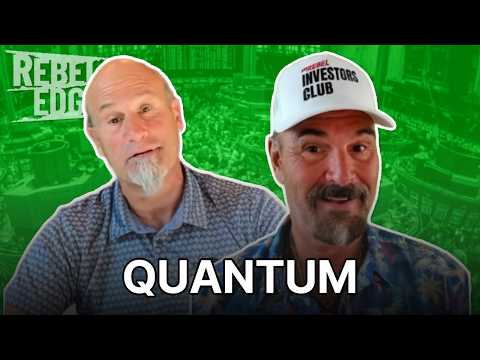
Quantum computing, a term once relegated to the domains of theoretical physics and science fiction, is turning sharp heads on Wall Street once more. At the epicenter of this renewed interest is D-Wave Quantum, freshly invigorated post-Nasdaq listing, strengthened by its recent partnership with telecom giant AT&T. It’s a curious marriage of nascent technology and established infrastructure—the sort that rings bells in financial circles and asks us to consider: what now?
Based on content from Rebel’s Edge
In the world of classical computing where tasks are neatly sequential, quantum computing proposes a realm where computations happen in parallel universes of possibility. It’s the kind of revolution that doesn’t announce itself loudly but seeps through the cracks of conventional wisdom with unapologetic potential. A sentiment echoed on “Rebel’s Edge,” where Jon and Pete Najarian deliberated how D-Wave’s recent market activities might just be the precursor to a metaphorical Big Bang in the tech stock cosmos.
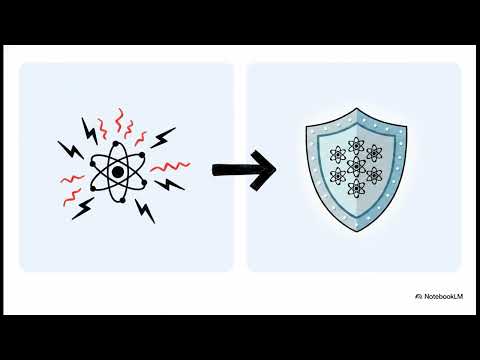
Consider this: a computational task reduced from an hour to a mere 15 seconds is akin to squeezing infinity into a teaspoon. Such efficiency leaps aren’t just impressive; they border on alchemy. Or so it seems until one peeks beneath the veil of qubits and entanglement to find the ingenious mechanics at play. It’s introspective — understanding how we leverage quantum phenomena could redefine operational efficiencies across sectors.
But the revolution is quiet and the noise muffling its potential is not merely the buzz of financial hype. There lies a tapestry of skepticism, uncertainty that shadows every technological leap with the question — is it just another bubble waiting to pop? History has shown us how fervent promises can deflate under the weight of practical application, leaving a whiff of disillusionment behind.
Elsewhere in the financial landscape, seemingly unconnected narratives unfold; Workday sees a rebound that has Pete watching with hawk-like precision, eyeing patterns that hint more at resilience than mere reprieve. Then there’s Tom Lee, whose unwavering Ethereum strategy through BitMine speaks to a belief in an ecosystem as volatile as it is promising. And as we pivot towards Baker Hughes’ robust earnings and an auspicious outlook for energy, the linkage between these industry-specific triumphs subtly hints at an underpinning economic confidence.
Yet, it’s a confidence couched in volatility. The markets — a restless beast conditioned by optimism and trepidation alike — continue to oscillate. Even as headlines speak of improvement, the swings tell tales of an undercurrent of doubt. Here, the VIX, that perennial barometer of investor sentiment, reveals turbulence beneath surface calm.
Returning to quantum computing, the juxtaposition of innovative strides and financial uncertainty parallels a complex plotline where each twist exposes new possibilities. On “Rebel’s Edge,” unusual options activities are discussed, batting around the notion that there’s more than meets the eye in market movements. These choices made in silence, hinted at in ticker scrawls, may hold secrets to potential pivot points we are yet to fully understand.
And amid discussions of quantum and market dynamics, tales from the sporting world – whether the crack of an MLB bat, the silent elegance of golf, or the electricity of an NFL training camp – remind us of life’s varied rhythms. They echo the unpredictability inherent in both game and commerce, forming a symphonic backdrop that underpins our structured analyses.
Where are we heading, then? Perhaps it’s less about finding the next winner and more about understanding the terrain. Quantum computing isn’t an island; it’s a new horizon beckoning us to reevaluate our navigation charts. And while we may not yet comprehend all it has to offer, our curiosity and caution should guide us as we sail onward. What’s next, you might wonder? It’s an open-ended query as expansive as the universe of possibilities quantum computing itself proposes. But perhaps, therein lies the point.
—