In the hushed corridors where technology and science converge, a quiet but profound shift is occurring. Quantum computing, a domain long saturated with a flavor of science fiction, is stepping out from the shadows of experimental research and hinting at its presence in the commercial world. As the quantum wave gains momentum, so too does our curiosity: just how close are quantum computers to transforming industries like artificial intelligence, cybersecurity, healthcare, and finance?
Based on content from Micro Learning
At its core, quantum computing leverages the strange, counterintuitive properties of quantum mechanics. Unlike classical computers that use bits as the smallest unit of data — existing firmly as a 0 or a 1 — quantum computers use qubits, which can exist in a superposition of states. This potential for parallel computation introduces possibilities for solving incredibly complex problems that traditional computers find insurmountable.
However, the pathway from theory to practice is thick with obstacles. Chief among these are engineering challenges: commercial quantum computers must overcome issues like quantum error correction, scalable qubit architectures, and the need for ultra-low-temperature cooling systems. Such hurdles place quantum computing tantalizingly out of immediate reach, though developments in the field suggest we’re inching closer than ever before.
In our modern narrative where technological advances often promise to overshadow their predecessors, it’s natural to question whether quantum computers will render current machines obsolete. But the truth is more nuanced. Quantum technology will not replace classical computers — at least not soon. Instead, it will propel them forward as quantum processing units (QPUs) coexist with CPUs and GPUs, working synergistically to tackle specialized, complex calculations with incredible efficiency.
The reality of quantum’s current state is a dynamic landscape of maximal creativity and chaos. Different schools of thought and modalities — from superconducting to photonic and ion-based systems — are battling for preeminence. It’s a cacophony of innovation that organizations like the Quantum Economic Development Consortium (QED-C) are striving to harmonize, aiming to establish a set baseline from which standardization and industry coherence can grow.
Beyond computing, quantum technologies promise advances in areas like ultra-secure networking and hyper-accurate sensing. The potential of quantum properties, such as entanglement, ensures communication that is not only faster but fundamentally unhackable — revolutionizing cybersecurity as we know it.
That said, this potential disruptor in the realm of cryptography has spurred a race against time. Shor’s algorithm, a quantum-based capability to efficiently solve factoring problems that underpin current cryptographic codes, looms over us, compelling the development of quantum-safe encryption before our existing securities are rendered obsolete.
But the leap from promise to prevalent utility requires more than just cracking cryptographic codes; it demands a working environment as extreme as the calculations themselves. Superconducting qubits operate at temperatures near absolute zero, necessitating sophisticated cooling systems that trade lower computational power consumption for significant refrigeration energy expenditure — a trade-off that remains a bottleneck in quantum development.
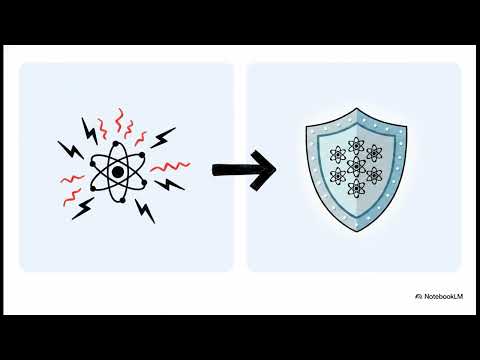
Moreover, tackling the issue of quantum error correction necessitates ingenuity in both hardware and software. To stabilize qubits and ensure trustworthy outputs, researchers group multiple error-prone physical qubits to form logical qubits, thereby ensuring calculations are less susceptible to errors. While strides are being made, with milestones such as IBM’s 128 entangled qubits, the path to achieving reliable, commercially-viable quantum computations is demanding and labor-intensive.
So, when does quantum computing finally arrive? The consensus remains elusive. While a survey by the QED-C reveals a split perspective—some experts anticipate usable quantum systems within 3 to 5 years, others predict a timeframe exceeding 5 years—there’s an undeniably palpable acceleration in progress. A mere few years ago, this timeline stretched 10 to 15 years into the future, evidencing an undeniable propulsion in the realm of quantum advancements.
As quantum computing proceeds from research labs into data centers, the question shifts: What will be the state of classical computing by then? As the reach for quantum capability continues, conventional technology carries on its march forward, possibly solving some of the same challenges we once thought reserved only for quantum solutions.
In this unfolding narrative of quantum ambition, a future still hovers, half in shadow, half in light. As we edge closer to the next epoch of computing, the innovations, both classical and quantum, invariably underscore what it means to challenge the limits of human capacity, inviting us to consider what new frontiers await just beyond the horizon.
Our storytelling today is not yet the grand saga of fully realized quantum dreams, but it certainly is a quiet, meaningful prelude. Thank you for joining this exploration — a journey not simply about computing but about what it means to persist, question, and transcend.
—