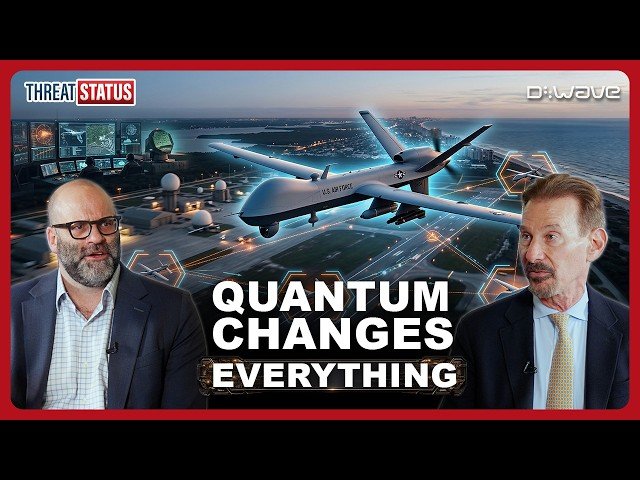
As someone who’s deeply invested in the intersection of technology and practicality, the rapid evolution of quantum computing from a fringe scientific concept to a cornerstone of national security strategy grabs my attention like few other topics can. At a recent conference, the practical applications of quantum technologies in enhancing America’s defense capabilities were discussed, shedding light not only on the current landscape but also on the near future of this groundbreaking field.
Quantum computing is often portrayed as something out of a science fiction novel, but the reality, particularly in 2026, is quite different. These systems are not just theoretical experiments but are being designed to tackle real-world problems with speeds and efficiencies that classical computers can’t match. The conference I learned about was not a gathering of abstract theoreticians but a hands-on, practical exploration of quantum computing’s role in national security, spearheaded by D-Wave Quantum and a host of other pioneering entities.
This video is from The Washington Times.
One striking example of quantum computing’s application is in national defense. A collaboration between D-Wave and various partners has piloted a project that leverages quantum solutions for optimizing complex, data-intense operations. This initiative is not just about pushing the boundaries of what’s possible with computing; it’s about delivering practical solutions that could one day be used in scenarios like missile defense optimization—tasks that require incredible speed and precision.
But why focus on quantum computing for these tasks? The core advantage lies in the nature of quantum bits, or qubits, which, unlike classical bits that are binary, can exist in multiple states simultaneously. This ability allows quantum computers to process vast numbers of potential outcomes at once, drastically cutting down the time needed to solve complex problems. Imagine trying to find your way out of a maze: while a classical computer might try one path at a time, a quantum computer can go down multiple paths simultaneously, finding the exit much faster.
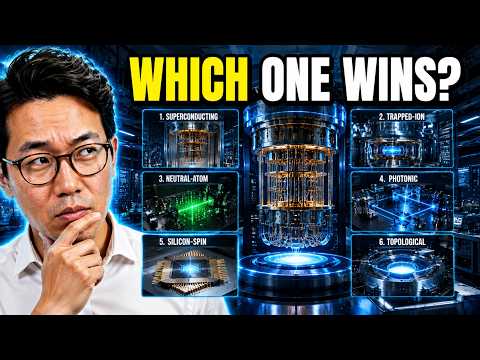
The technological muscle behind these operations, as explained at the conference, relies on two main types of quantum systems: annealing and gate-model. Annealing systems, like those developed by D-Wave, excel at business optimization problems such as scheduling and logistics—areas crucial for military and governmental operations. On the other hand, gate-model systems are adept at solving equations fundamental to understanding physical phenomena, thus contributing to fields like materials science and pharmacology.
The promise of these technologies extends beyond just computational speed. Remarkably, they are also more energy-efficient. In an era where energy consumption is a growing concern, the ability of quantum systems to solve problems in minutes—problems that would otherwise take classical supercomputers years and exponentially more power—is a game-changer. A quantum computer like D-Wave’s can operate with just 12 kilowatts of power, compared to the gigawatts that might be required for traditional computing solutions over an extended period.
Looking toward the future, advancements in quantum computing will undoubtedly continue at a brisk pace, driven by the need for more powerful and precise technologies. The involvement of D-Wave in both annealing and gate-model systems positions it uniquely as a versatile player capable of addressing a broad spectrum of computational challenges.
Reflecting on this glimpse into the quantum computing landscape at the conference, it’s clear that the implications for national security and beyond are profound. As these technologies continue to evolve and scale, so too will their potential applications, possibly reaching into even more sectors than we can currently predict.
In a world that moves at the speed of technology, keeping pace with advancements like quantum computing is not just advisable; it’s imperative for maintaining security and competitiveness on a global scale. The insights from this conference serve as a vital checkpoint on the fast-evolving quantum roadmap, reminding us of the incredible potential and critical challenges that lie ahead.
Stay curious,
Frank
Tags: Quantum computing, national security, D-Wave, technology conference, AI, quantum technology, defense technology