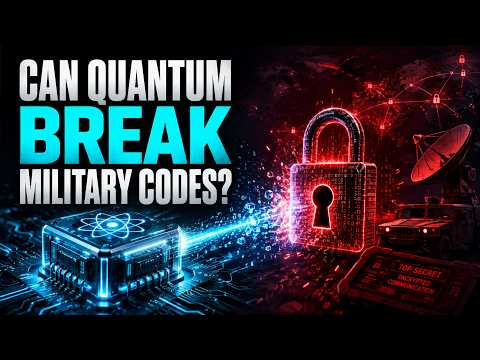
n the quiet corridors of global tech giants—Google, Microsoft, IBM—a singular, deeply rooted concern echoes: quantum computing. The weight of this concern is not just theoretical but existential, bearing down on the very bedrock of the digital systems we rely on today. It’s a story less about distance and more about impending reality, known in guarded circles as Q-day. On this day, quantum computers could emerge as an unstoppable force, cracking the encryption enigma that underpins digital security.
Based on content from Aperture
I
To unravel the essence of this threat, we must first pause and appreciate what encryption truly is. Imagine all your emails, your bank details, every whispered secret of your online life held secure behind complex math. This intricate web of encryption isn’t hidden; quite the opposite. It is sophisticated in its complexity, practically unbreakable by contemporary standards—a fortress by design but not by imperial secrecy.
Herein lies the vulnerability: Shor’s algorithm. Crafted in the mid-90s by mathematician Peter Shor, this algorithm transformed what seemed impossible into mere computational effort—at least for a quantum computer. Where today’s fastest supercomputers falter, taking eons to unravel encryption through brute force, a quantum computer promises this within hours, diving into the vast ocean of possibilities all at once, not one drop at a time.
But Q-day is not just a day of broken locks; it’s a wake-up call, an invitation to rethink the very foundations of trust in our digital age. While the physical world seems unaffected, all nuances of online security could dissolve overnight. What follows this hypothetical collapse is a realm where every message could be read, every transaction becomes transparent, every identity vulnerable.
To ignore this possibility is to deny the rapid advances in quantum computing—mainly symbolized by Google’s Willow chip and Microsoft’s Majorana 1. The former, with its 105 cubits, demonstrated not just capability but a glimmer of reliability. In the realm of the quantum, where potential becomes tangible only at the peak of precision, these chips promise more than progress—they suggest inevitability.
Some might argue that the idea of Q-day spreads undue fear. After all, mechanical roadblocks remain: quantum computers are still a realm of error margins and intricate calibrations. Yet, the trajectory is clear: from theoretical to practical, from hypothetical menace to tangible threat.
The layers of encryption that previously felt impenetrable are now whispered vulnerabilities in backroom discussions, with potential socio-political upheavals shadowing the technical marvel. Some governments and agencies are not waiting for this day to arrive unprepared. Initiatives, like those prompted by the US’s NIST, envision a migration to post-quantum cryptography—new strategies and solutions needed not tomorrow, but now, to avoid a digital dark age.
As someone observing this saga unfold, you might wonder—how is this shaping our world behind the news? The most insidious aspect is not just what quantum computing might break, but the data seeping through cracks today. Harvest now, decrypt later is a mantra for adversarial powers, gathering data in troves with the confidence that quantum tools will eventually reveal all.
Reflecting on quantum computing is not merely an academic exercise but a confrontation with what’s technologically feasible versus what’s ethically permissible. How do we safeguard future privacy amid such vulnerabilities? What checks exist for a technology potent enough to rewire reality? These are questions of grave importance, pointing us towards a dance between foresight and innovation.
As we stand on the brink of this transformative frontier, the choices we make—whether through policy, tech development, or personal data management—will determine the era that follows. Will we brace for Q-day with preparedness, or remain entranced by the support of our fragile, current systems? In this unfolding narrative, the pivotal chapters are yet to be written, their insights yet to be learned.
—