
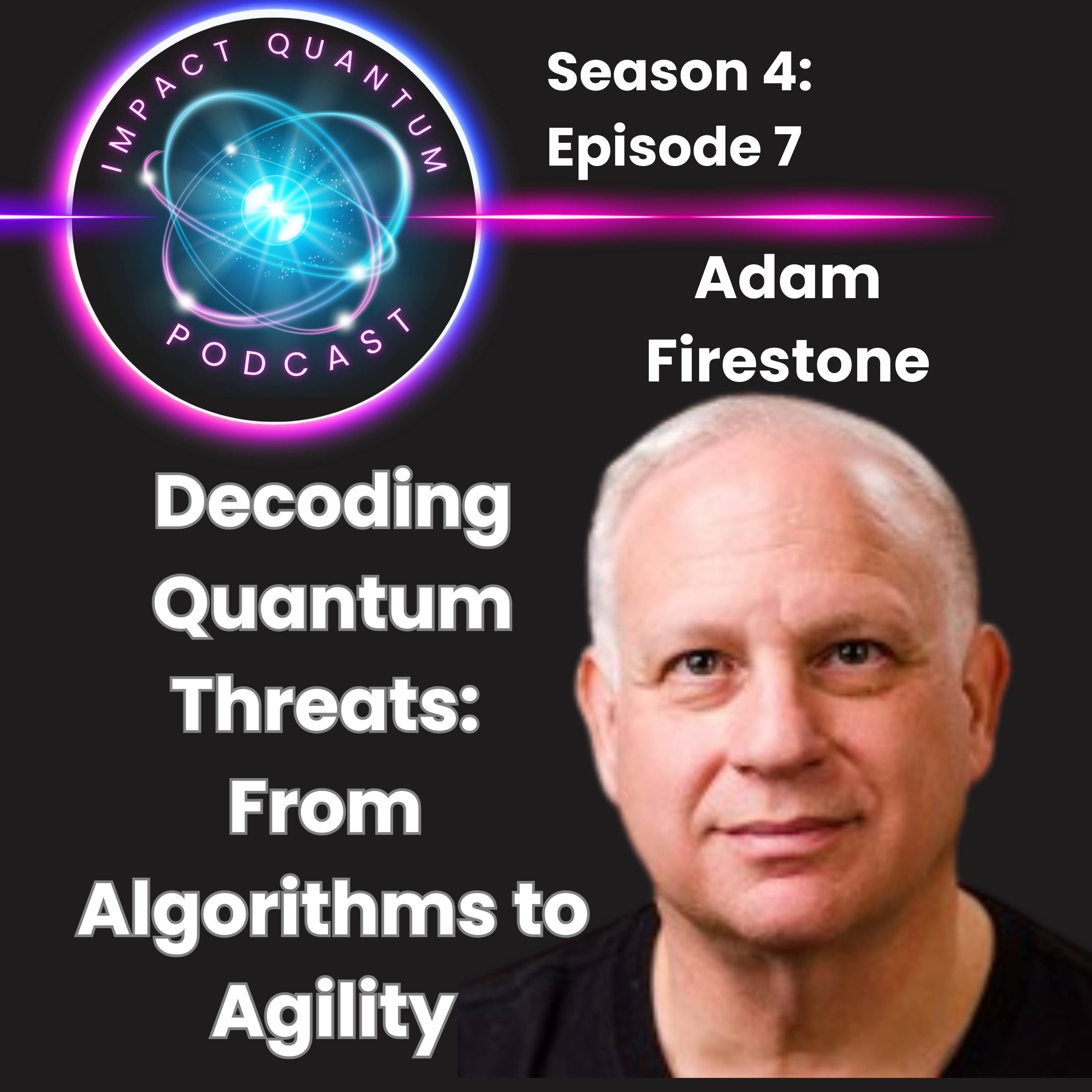
In this episode, hosts Frank La Vigne, Candace Gillhoolley, and Ska Guy dive deep into the rapidly evolving world of quantum computing and security with special guest Adam Firestone, CEO and co-founder of Sixera. Adam Firestone breaks down how quantum computing isn’t just changing security—it’s completely upending it, exposing vulnerabilities that many organizations overlook.
We explore the pressing threats posed by quantum computing, including the “harvest now, decrypt later” phenomenon that’s challenging industries to rethink how they protect sensitive information. Adam Firestone walks us through Sixera’s approach to solving the quantum architecture problem, breaking down why new algorithms alone aren’t enough and how decentralization and protocol innovation are key to keeping data truly secure.
Whether you’re a tech startup, a law firm, or just quantum-curious, this episode demystifies the business impact and the practical steps companies should be taking now—not ten years down the line. Plus, we learn about Adam Firestone’s journey from Army officer to systems engineer, tech author, and quantum security pioneer. Tune in for real-world insights, startup wisdom, and a refreshing discussion about making breakthrough technology as easy and intuitive as possible.
Links
- Adam’s LinkedIn – https://www.linkedin.com/in/adamfirestone/
Time Stamps
00:00 “Secure Expertise Exchange Process”
04:13 “Insecure File Transfers Persist”
09:22 “Post-Quantum Cryptography Standardization”
12:33 “Decentralized Info Security Solution”
15:29 Adaptive Software Solutions
19:58 “Quantum Awareness Growing Rapidly”
23:36 “Data Vulnerability and Cybersecurity”
25:20 “Simple, Familiar, Trust-Building Design”
30:38 “From Underdog to Innovator”
33:24 Startup’s Misstep: Grand Solution Pitfall
35:39 “Quantum Computing & Collaboration Impact”
41:09 “Enabling Tasks Through Technology”
41:54 Decentralized Unified Communications Roadmap
45:09 “From History to Modern Tech”
48:22 “Publishing Revolution with Amazon”
51:57 “Building Influence Through Platforms”
55:07 “Connect with Adam Firestone”
Transcript
And so the first thing we said to ourselves is, aha, we gotta solve the
Speaker:architecture problem. The other thing we said
Speaker:was, wait a second, there is this looming elephant in the room. The
Speaker:800-maybe-800 pound gorilla in the room. And that's the emergence of
Speaker:quantum computing. Quantum computing doesn't just change
Speaker:security, it breaks it. Let's talk about what comes next.
Speaker:Welcome to Impact Quantum. The universe dances its
Speaker:snug as a rock. Quantum pot shad. Turn
Speaker:it up fast. Can it, Frank. Blowing my mind at last.
Speaker:Hello and welcome back to Impact Quantum, the podcast. We explore the emerging industry
Speaker:and field of quantum computing where you don't need to have
Speaker:a PhD or study particle physics. You just need to be curious.
Speaker:And with me is the most quantum curious person I know, Candace Gooley. How's it
Speaker:going, Candace? It's great. Thank you so much, Frank. I'm really excited
Speaker:about today. We're going to be speaking with Adam
Speaker:Firestone, who is the CEO of and co
Speaker:founder of six Arrow. He's also
Speaker:called, calls himself Quantum Secure Innovator.
Speaker:I have lots of questions. It's very exciting. Yeah, I'm very
Speaker:interested. So. So welcome to the show, Adam. How's it going? Thanks.
Speaker:I am glad to be here. It's going great. I can't complain. I mean, I
Speaker:could complain, but nobody would listen. So that is the
Speaker:true. That is a true statement of wisdom. It doesn't matter. No one would care.
Speaker:No one will listen. No one would care. So tell
Speaker:us about. And it's pronounced six, zero, six
Speaker:arrow. Okay. I wasn't sure if you're going for
Speaker:like a Cicero type thing or it. Is really
Speaker:pronounced six character URL that was available without a
Speaker:surcharge. I like it. Which people don't realize. The struggle
Speaker:is very real. Right, Candace? Absolutely. No, it's true.
Speaker:It's really true. So that's going to register a domain name.
Speaker:And it was like it was available, but it was also the surcharge was like.
Speaker:Was it $2,000? Yes. It was insane. Right?
Speaker:Well, that's cool. I'm guessing that the license
Speaker:plate is. Probably available too, but probably I haven't looked into
Speaker:that yet. So I'm curious
Speaker:about this. How do you participate in like
Speaker:quantum security? Like what? Or quantum
Speaker:safety? Like what does that look. So maybe I'll take a step back and give
Speaker:a general. The way we see the world.
Speaker:I think the best way to start is to say that, look, we solve a
Speaker:problem and we're not. You know, I like
Speaker:the word quantum is cool. It gets People's attention, We like that a lot. But
Speaker:at the end of the day, we are solving a business problem. And the business
Speaker:problem we solve is what we think the most fundamental business activity
Speaker:is. And that's the ability to move information from outside the organization,
Speaker:into the organization and from into the organization, inside the organization,
Speaker:outside the organization. We have called
Speaker:this very creatively into, out, out to, in. And what happens is
Speaker:this. Unless you are the person who makes their
Speaker:living by making decorative wrought iron gates with a map torch in your backyard
Speaker:out of leaf springs, you steal from wrecked trucks in the
Speaker:middle of the night, you get paid in cash, and you advertise by
Speaker:word of mouth. This applies to you, right? So everything in the world,
Speaker:what happens is somebody or something sends you something that
Speaker:is valuable to them and they send it to you because you have some level
Speaker:of unique expertise. You take that expertise, you apply it to their problem,
Speaker:you create a value add product and then you push it out.
Speaker:And in that set of transactions, we have two hops across
Speaker:organizational boundaries, and that's great,
Speaker:and that's fine. And those hops
Speaker:presuppose that you can move that information in a secure manner.
Speaker:In a secure manner, meaning that only the right people see it,
Speaker:that the information isn't changed by someone
Speaker:without authorization along the way, and that you can rely
Speaker:on it when you get it to work with it.
Speaker:And so, to give you an example, you have
Speaker:a great new idea and you put it together in an invention disclosure statement,
Speaker:and you send this to your patent lawyer, and you send it to your patent
Speaker:lawyer somehow. So it leaves your domain, goes to your patent lawyer's domain,
Speaker:your patent lawyer does magic to it and creates a patent out of it and
Speaker:then pushes that out again to the Patent and Trademark Office and a copy back
Speaker:to you. So we're making cops all over the place through the wild, wild west
Speaker:of the open Internet. And we have assumed to
Speaker:date that there are many ways we do that, right? We assume we can use
Speaker:MFT Managed File transfer. We assume we can use electronic file sync and
Speaker:share tools. We assume we can use shared portals or
Speaker:secure portals, like the kind you might use to send your stuff to your
Speaker:accountant for your taxes, and that all these
Speaker:magically will keep things secure. Except we've got a whole lot of evidence over the
Speaker:last, I don't know, 40 years to include some really high
Speaker:profile cases recently that none of this actually is secure,
Speaker:right? Things are constantly getting breached. Not only are things constantly getting
Speaker:breached, credentials are being stolen, you know,
Speaker:right and left in the in the millions. And part of that, that's
Speaker:what we. Know about target ceasefire. Way worse.
Speaker:Well, let's assume it's all happening by a
Speaker:factor of 10. The mechanics of the problem are still the same
Speaker:and there's two sets of mechanics, so. So bear with me. I promise I'll get
Speaker:done with this soon. No, no, no. This is fascinating. Along for
Speaker:the hall, man. I got my rook sick on too. So
Speaker:mechanics number one are
Speaker:maybe the architecture that we rely on
Speaker:for the Internet client server is
Speaker:not securable. It's robust, it'll
Speaker:get the information there. It is ubiquitous, it is
Speaker:relatively inexpensive. But maybe it's not securable
Speaker:and maybe it's not securable on a number of bases. Maybe it creates
Speaker:one big target, right? Whatever server that is, maybe it, it relies
Speaker:on humans who can be suborned
Speaker:to administer it. And there's an entire class of attacks against the
Speaker:humans that have nothing to do with technology.
Speaker:Maybe it makes things so difficult when we try to secure the insecurable
Speaker:that the people who are charged with doing their jobs get so
Speaker:frustrated at five o' clock on Friday night when they have to get this, whatever
Speaker:this is out the door to the right people on the other side that they're
Speaker:using their personal Gmail accounts. We could go on and on about, about the
Speaker:issues. And so the first thing we said to ourselves is aha,
Speaker:we gotta solve the architecture problem. The
Speaker:other thing we said was wait a second, there is this looming elephant in the
Speaker:room, the 800-perhaps-800 pound gorilla in the room. And that's the
Speaker:emergence of quantum computing. Now quantum computing has many,
Speaker:many, many, many promises, right? I mean we could actually might have whatever
Speaker:weather forecasts that are accurate. We ability to do
Speaker:really neat things in healthcare like customized
Speaker:medication schedules, early indications
Speaker:and treatments for cancer, all sorts of great things.
Speaker:Optimizing delivery schedules and resource usage. Quantum
Speaker:computing can do a tremendous amount for us. And the reason it can do that
Speaker:is because quantum computing more or less to simplify
Speaker:it down and probably oversimplify it, so bear with me, is
Speaker:it's incredibly massively parallel. It affects a
Speaker:massive parallelization of computing. And the way I describe it to folks
Speaker:is do you remember doing mazes as a kid? You'd have a book of mazes
Speaker:and you'd run your pen down. You guys probably did it in pen. I was
Speaker:never that good. I did it in pencil. But you'd run your pencil down from
Speaker:the beginning and if that didn't work, you'd start again. And you start again and
Speaker:you did this surreally. Imagine being able to do all of that
Speaker:at the same time. All possible solutions to find the right
Speaker:one. That's the promise of quantum computing.
Speaker:Unfortunately, that runs smack into the
Speaker:technology that underpins the Internet today. And that technology is
Speaker:classical asymmetric cryptography. It's a lot of words, but.
Speaker:Or a lot of syllables. Anyway, so classical asymmetric
Speaker:crypto is things like rsa. It's things like elliptical curve. It is
Speaker:the thing that allows that a lock icon on your
Speaker:browser to appear because there's a discussion back and forth
Speaker:between your browser and the server. It's the thing that allows your debit
Speaker:card and credit card to be secured to you. It's the thing that allows your
Speaker:keyless remote entry to your car to work. It is
Speaker:ubiquitous. It is everywhere. And everything we do in the
Speaker:connected world relies on it. Literally everything.
Speaker:This technology in turn, relies on something called trapdoor
Speaker:functions. Trapdoor functions are a type of math where it's really easy to calculate
Speaker:the output output, but really, really hard. Think 10,000
Speaker:to 100,000 years. Hard to figure out what the original inputs were
Speaker:without. Without knowing what they were to begin with. And those form our
Speaker:keys. And great, okay. Unfortunately,
Speaker:quantum computing solves those in an efficient manner. Now,
Speaker:efficient maybe an hour, maybe a day, we don't know. But it certainly isn't
Speaker:100,000 years or 10,000 years. And so the security and
Speaker:integrity of everything we expect and rely upon in the Internet is
Speaker:at risk. And we said, aha, opportunity, great.
Speaker:And so we looked around and one of the first thing we
Speaker:noticed was that there are new post, relatively new
Speaker:post quantum algorithms that have been standardized, right? So nist has
Speaker:standardized ML chem, which is FIPS 203. They've
Speaker:standardized MLDSA, which is FIPS 204,
Speaker:and SLHDSA latitude digital signature
Speaker:algorithms, which is FIPS 205. And there's another one in the wings called
Speaker:HQC. HQC should be standardized sometime in
Speaker:2017. ISO is working on a couple of algorithms in terms of
Speaker:standardization. One is classic Macaulays, one is Frodo
Speaker:Camp. Okay, great. But then we
Speaker:started to look a little more deeply at this and we
Speaker:realized that if you solve the algorithm problem and
Speaker:only the algorithm problem, you haven't solved the quantum problem.
Speaker:Why is that? So? The reality is, right now,
Speaker:we're on three different computers. One of them may be a Mac,
Speaker:one of them may be a PC, one of them may be something else. And
Speaker:natively, those devices speak different languages.
Speaker:Fortunately for the Internet, and for all of us, we have universal translators that
Speaker:allow us to talk together. I'm kind of a sci fi geek, so
Speaker:I apologize for the reference. You're in good company.
Speaker:Those universal translators are things called Internet protocols.
Speaker:And the reason why Internet protocols are so powerful is
Speaker:because they're standardized and widely adopted. So for example,
Speaker:when you see the little lock icon in your browser, your browser doesn't
Speaker:know who it's talking to. Your browser doesn't know the server,
Speaker:but it knows how to speak TLS and it knows how to negotiate a
Speaker:TLS session with the server. And because TLS
Speaker:is standardized, TLS 1.2 or TLS 1.3 is TLS's,
Speaker:TLS's TLS and we're good to go. That's
Speaker:great. Except the post quantum
Speaker:Internet security protocols don't exist,
Speaker:right? Not only do they not exist,
Speaker:standards time is kind of like somewhere between normal people time
Speaker:and geologic time, right? It took us 10 years to go
Speaker:from TLS 1.2 to 1.3. And that's when everyone was
Speaker:pulling in the same direction. We now have a
Speaker:situation where there is a looming threat, right? Quantum computers, our latest and
Speaker:Greatest guess is:Speaker:to cryptographically relevant quantum computers are going to appear.
Speaker:And we have a standards body, the ietf,
Speaker:who's doing this internally. And
Speaker:there are a number of things they are arguing internally about.
Speaker:People far smarter than me, like Dr. Daniel Bernstein have written about
Speaker:this. What that does is it applies friction.
Speaker:Friction means we don't get standardization
Speaker:until a later date. If we don't get standardization
Speaker:until a later date, proliferation and broad adoption are also
Speaker:similarly delayed. So how the heck are we going to talk to each other in
Speaker:a secure way? And again, we looked at this and said that's a problem.
Speaker:But the flip side of the problem is opportunity, right? So
Speaker:we built two things. Thing one is a
Speaker:platform that allows us to extend to a whole bunch of stuff. I can talk
Speaker:about that in a little bit if you're interested. The thing we built on top
Speaker:of the platform, the narrow end of the wedge as we enter the market we're
Speaker:a startup, is something called Portal 6. What Portal 6 does is it
Speaker:allows organizations to conquer and and address
Speaker:that out to in to out problem by addressing
Speaker:not just the quantum problem in terms of algorithms, but the
Speaker:quantum problem in terms of algorithms and a mechanism that obviates the
Speaker:protocol problem and also the architectural problem at the
Speaker:same time, by adopting a decentralized approach to
Speaker:information Movement and networking. And so
Speaker:that's who we are. It's what we do. We've been around about a year,
Speaker:and yeah, we're about to enter the market, hopefully
Speaker:with our first pilots sometime either later this month or next month.
Speaker:Oh, interesting. Very fascinating
Speaker:stuff here. What
Speaker:would you say
Speaker:has been your biggest challenge in terms of conveying your
Speaker:message? Right. I liked your whole spiel. I liked your whole spiel. I
Speaker:loved it. But that would have been one heck of an elevator ride.
Speaker:It's really hard. And your point is really, really well
Speaker:taken. And so the answer is here, read
Speaker:on white paper. But people don't want to read. The elevator
Speaker:pitch is. Look, you face three huge problems. Actually four if we
Speaker:count credential leakage. You face four huge
Speaker:problems. The world is telling you they've got one of them
Speaker:solved. All four are fatal.
Speaker:I'm glad we've solved one of them. But the other three are going to kill
Speaker:you. We can help. And then now
Speaker:you've got their attention. Right? Well, I use a first aid analogy. If you're
Speaker:familiar with the acronym MARCH in first aid.
Speaker:Massive bleeding, airway, respiratory, circulatory
Speaker:and hypothermia or head injuries, right. Any of those
Speaker:can be fatal. That's just the order you check the list in.
Speaker:And, and so for our, from our perspective, if you are
Speaker:not addressing all of it, right, architecture,
Speaker:credential leakage, algorithms and
Speaker:protocols, you're not addressing the problem, your patient's still going
Speaker:to die. And we seem to be stuck in a do loop right
Speaker:now inside the community where we are focused on only the algorithms,
Speaker:right? And algorithms alone don't get you very
Speaker:far. Algorithms have to be integrated, they have to be
Speaker:employed, and they have to be put into, into protocols, you know, for
Speaker:comfort. Organizations that do their own bespoke software, all of that
Speaker:matters for the majority of organizations in the
Speaker:world that use somebody else's software. You know,
Speaker:think about your Microsoft 365 account, right? How many organizations just
Speaker:use that as the basis for their software? And they're good to go.
Speaker:For organizations that do that, we are in this position of
Speaker:having to wait for vendors to fix all the problems.
Speaker:And what we think we can do is provide a solution that will grow with
Speaker:you, that is available immediately and will grow with the organization even as these
Speaker:other solutions roll out.
Speaker:Go ahead, Candice. She has something profound. She's going to say, yeah,
Speaker:don't set me up like that. I'm just really kind of
Speaker:interested. You know, everybody, I mean, everyone
Speaker:needs this kind of Security in their system.
Speaker:So how do you determine, you know, what
Speaker:sectors you're trying to go after in what you know
Speaker:and what kind of priority otter to have as opposed
Speaker:to not, you know. Right, that's a great,
Speaker:that's a great question. And it really is about a go to market
Speaker:analysis. So right now we've got some really cool
Speaker:stuff. So I'm going to walk right out into a Global
Speaker:50 law firm, sit myself down in their IT department and they're
Speaker:immediately going to fall over themselves trying to buy my stuff.
Speaker:Probably not, because that's not how that works. Right.
Speaker:So you take a page out of Startup101 and
Speaker:Startup101 says, I'm going to get myself a set of pilot
Speaker:customers that prove out the point. I'm going to look at two or three or
Speaker:four sectors that really could use this. And if we think
Speaker:about professional services, for example, right, Lawyers, what do lawyers do?
Speaker:I give you what is the most important thing in the world to me so
Speaker:you can do something important for me with your expertise, that is create something and
Speaker:push it out. Well, if that sounds like out to in into out. How about
Speaker:accountants? How about financial services? How about consultancies?
Speaker:We can go down the list. There are a whole lot of those
Speaker:organizations out there. And if we start with organizations that are
Speaker:small, let's say, and small is interesting. So let me go into
Speaker:that for a second. Let's say 10 people, maybe 100 people
Speaker:max. One, we're getting legitimacy. Two, we are able
Speaker:to, in real time to continually improve the product. And three,
Speaker:there is a concept of internal and external seats in our product.
Speaker:So you have a law firm, 20 lawyers, right. So you got
Speaker:20 seats, but each lawyer has 100 clients.
Speaker:So you need the ability to create these secure communications,
Speaker:secure information exchanges, we call them sixes. Secure information
Speaker:exchanges. You need the ability to create sixes with
Speaker:at least some significant subset of that 20
Speaker:times 100 of those 2,000 seats. And so by
Speaker:starting small one, we gain legitimacy, we gain the ability to come back
Speaker:to larger clients over time. And at the same time we are
Speaker:exposed to many, many, many other people because the attorney or the,
Speaker:or the accountant or the, or the financial analyst or whoever
Speaker:is now working with some other group who sees
Speaker:the tool and says, I would like some of that, please. And so
Speaker:it's, it's a virtuous cycle that feeds back into itself and
Speaker:continuously allows us to go after bigger and bigger organizations.
Speaker:Interesting. This reminds me of the
Speaker:conversation we had yesterday. Frank with the harvest now
Speaker:decrypt later. Yeah,
Speaker:that's a good thing. And then so, folks, I mean,
Speaker:obviously I encourage listeners to go back and go back and watch that,
Speaker:listen to that. But harvest now to later kind of defined
Speaker:in a sentence is, I know that in a couple of years
Speaker:I'm going to have, as a nation state, I'm going to have access to some
Speaker:of the tools that will crack this existing encryption. I'm going to start hoarding data
Speaker:now because storage is cheap. And honestly, if I'm a state actor,
Speaker:money ain't. I will quote Jay Z, bling bling. Money ain't a thing. Right.
Speaker:And so what's
Speaker:Adam, does that, does the fear of harvest now
Speaker:decrypt later, does that scare a lot of people as much
Speaker:as it should? So not as much as it should, but
Speaker:certainly more than it did when we started on this journey.
Speaker:We had to really explain Quantum and the threats posed
Speaker:by the ongoing attack. Right? The attack is happening. This
Speaker:conversation is being, is being recorded. And that's great. Maybe they'll hit the
Speaker:like button when they decrypt it and they read it.
Speaker:But now all of a sudden, Quantum
Speaker:is really starting to hit the news cycle and we're starting to get a
Speaker:whole lot of interest and people are really starting to,
Speaker:to twig to it. It takes less and less effort to explain where we're coming
Speaker:from and why we're doing what we're doing as time goes by. And by the
Speaker:way, that's part of the whole, the gestalt behind why we
Speaker:think, for example, we're a great investment. Because there will come a time,
Speaker:if you guys remember Y2K, I'm probably the only one old enough to
Speaker:do that. Don't argue with me.
Speaker:And if you remember the, the craziness, you
Speaker:couldn't spend money fast enough in about
Speaker:1998. Right. In about
Speaker:'re going to be in a position:Speaker:2028, where organizations will not be able to spend
Speaker:money fast enough to get anything called post Quantum.
Speaker:And so we are, we'd like to think really far out ahead of that
Speaker:wave. Yeah, I can
Speaker:easily see that. Like, you know, you're starting to see
Speaker:feature lists of, you know, this is post Quantum safe. Or, you
Speaker:know, my concern is, you know,
Speaker:the unlimited
Speaker:funding led to excesses which ultimately added fuel to the fire of
Speaker:the.com boom. And it's not hard to see the parallels
Speaker:of the AI boom and that, that
Speaker:fear kind of doing that and kind of like the aftermath, like, I don't know,
Speaker:like that's the kind of thing, that's the sort of thing that also kind of
Speaker:keeps me up at night. Right. Well, I like to think that we are
Speaker:serious about our technology. We're also serious about the value we provide.
Speaker:We're serious about our cryptography.
Speaker:I am by training
Speaker:and avocation a systems engineer. Right. I build stuff, it's what I do. I figure
Speaker:out what, what the problems are, what the solutions are, deliver
Speaker:those solutions to people who need them. And we don't
Speaker:build fluff on top of that. We don't gold plate it
Speaker:and we don't lie about what we're building. There are some
Speaker:serious concerns that the cryptographic community has
Speaker:about where we're going in terms of post quantum capabilities.
Speaker:And those concerns are things we're aware of and we build in or
Speaker:we will be building in mitigation
Speaker:mechanisms so that no matter where it goes,
Speaker:the, the products are able to deflect and
Speaker:still support the user base. That's a
Speaker:good way to put it. Like, and not, not saying like that you would take
Speaker:advantage of it. But like I just wonder like, you know, let's, if we can't
Speaker:learn from history, you know, as an industry.
Speaker:Right. You know, George Santano. Right. I mean those who do not learn from history,
Speaker:doomed to repeat it. There's a lot of people who are doomed to repeat it.
Speaker:Yeah. Sabotru. So when you're, when you're working with businesses
Speaker:who are now getting excited about Quantum because they're hearing about
Speaker:it on the news and AI plus Quantum, what, what is the biggest
Speaker:misconception that you come across
Speaker:that they have about. I think there's, there's quantum can do. There's a couple of,
Speaker:couple of places things intersect. So one of them, one of them
Speaker:is, is the idea that it's all
Speaker:solved because algorithms.
Speaker:Another is really, what does this mean to me?
Speaker:And the idea that anything you do, from
Speaker:your mobile device to your laptop to your desktop,
Speaker:talking internally to the server, talking to different parts of your organization
Speaker:that may be distributed, any and all of that is
Speaker:subject to harvest and therefore attack is something
Speaker:people have a rough time wrapping their heads around. People have a rough time
Speaker:wrapping their heads around the concept of all data. Right. I think, you know,
Speaker:one of the things we have done historically in cybersecurity is we have
Speaker:categorized and classified data as to. This is really important.
Speaker:This is not so much important. The problem is given the
Speaker:scale of data movement, it's really
Speaker:hard to separate that out. You know, you have an employee who's Ordering
Speaker:lunch on doordash. You have another employee who's moving some really
Speaker:sensitive stuff. It's coming over the same wires, the same pipe.
Speaker:How do I, how do I separate those out? Our philosophy
Speaker:is you shouldn't be, you should be applying cryptography in a blank
Speaker:way to protect your information so that it doesn't matter
Speaker:what information it is, it's all protected. And that
Speaker:reduces a level of, a burden level on, on, on defenders,
Speaker:because you just assume everything is going to be protected
Speaker:over the course of its life cycle.
Speaker:So I think that's part of it. The other part of it is, what do
Speaker:I do? People don't know where to start.
Speaker:And so one of the design principles in
Speaker:our first product is it's going to be boring.
Speaker:It's going to look like stuff you've seen a million times that you
Speaker:intuitively know how to use. And all the special stuff
Speaker:is hidden. It's all under the hood. And as a result,
Speaker:we don't create a daunting factor for either
Speaker:employees or CIOs. It's a web based
Speaker:product for a reason initially, right? I don't want
Speaker:CIO Frank to come to me and say, wait, what, you want me to
Speaker:move all my data? I have to buy three more servers, I have to
Speaker:install software on everyone's machine? No, they'd have to go to a browser,
Speaker:open a tab, and if you do that, all of a sudden, you've made
Speaker:adoption really, really easy, relatively painless. And then
Speaker:when you want to move into future iterations that might be a little
Speaker:more invasive,
Speaker:you've established trust with people, you've established a track record
Speaker:as opposed to coming in and demanding that the world change just to accommodate
Speaker:you. And I think that's, that's not a winning strategy.
Speaker:No, it's a good way to put it.
Speaker:That's a good way to put it. It's funny that you say boring, right? Make
Speaker:it boring, right? Because that's true, right?
Speaker:From the sales cycle point of view. You want to have the sizzle and
Speaker:the amazement and all that, but realistically, enterprise software at its best is boring
Speaker:because they don't want drama, you don't want surprises, right?
Speaker:And you don't want to have to train your employees. You don't want a barrier
Speaker:to entry. You want this to be, I mean, it's one of the things I
Speaker:say is, hey, that's a really nifty iPhone you have. That's a really
Speaker:nifty Android you have. How long was the user manual?
Speaker:What user manual exactly? Right. And that's, that's the goal.
Speaker:That's what you're trying to achieve. You're trying to achieve a seamless
Speaker:and almost transparent, completely transparent
Speaker:adoption and make it simple, painless, easy,
Speaker:and to have it continually grow because
Speaker:that level of simple and easy makes it the gotta have
Speaker:application. Right. I mean, that makes sense.
Speaker:What? Yeah, no, like
Speaker:I actually just got a Kindle and this is the user
Speaker:manual for it. It's got a color Kindle and this
Speaker:is the user manual. Exactly. All the stuff they couldn't get away with
Speaker:because it's all regulatory notices. Right. There is a manual,
Speaker:apparently on the actual device, but.
Speaker:No, that's true. Right, because let's say shipping cost, it says a lot. Right. Plus
Speaker:the only thing worse than the manual, I mean then no
Speaker:manual is an inaccurate manual. And the
Speaker:problem is nobody reads the manual. Right. I mean, you know, I spent, I
Speaker:spent a bunch of time in the army. Right. And RTFM was a, was a,
Speaker:was a watchword. But the reality is nobody reads
Speaker:anymore. So you've got to create something that's intuitive and easy to
Speaker:adopt. So. Right. So let's go back because
Speaker:now I'm all excited about what shaped you into
Speaker:where you are today. I mean, you're a seven time patent
Speaker:owner, you've written. You actually you
Speaker:told me in the green room that you've just released another
Speaker:book. Yep. Okay. On
Speaker:tech, startup life and advice to give,
Speaker:which is incredibly exciting. So why don't you walk
Speaker:us back a little bit. To you, in university,
Speaker:what were you focusing on and what kind of major path go
Speaker:towards Quantum. Wow.
Speaker:I was born a long time ago at a very young age.
Speaker:So in university I, I was an ROTC cadet. I was one of three
Speaker:ROTC cadets and I graduated.
Speaker:And six days later I show up at Fort Knox to become an armor officer
Speaker:and do all sorts of stuff. And through
Speaker:that path and after I got out of the regular army, one of the things
Speaker:I constantly noted was we were training to fight
Speaker:in a way that would have been totally familiar
Speaker:to Patton's 3rd Armored at Bastogne in
Speaker:World War II. And I was wondering why this was. And then I got out
Speaker:of the regular army, went to law school
Speaker:and I practiced law for a while and I kept wondering,
Speaker:why are we doing this stuff by hand? It wasn't at Quantum
Speaker:yet. And so I got frustrated. Right. I mean,
Speaker:getting frustrated as a lawyer is probably something common to many
Speaker:lawyers. And I stopped doing that after a while and I
Speaker:went and I moved down from New York to Northern Virginia.
Speaker:And one day I walked into a job fair, a big defense
Speaker:contractor and it was mobbed. I mean there's all sorts of people there, right?
Speaker:And there was one table that was not mobbed, and that one table was
Speaker:not mob because it didn't have a fancy display, it had a whiteboard with a
Speaker:bunch of acronyms on it. So I walked over because I figured they looked lonely.
Speaker:And I said, hey, my name's Adam Firestone. Here's my
Speaker:resume. As you can tell from there, I'm not qualified for anything you have on
Speaker:that board, but you want to hire me and this is why. And
Speaker:they did. And so I spent almost 20 years at that company.
Speaker:Last thing, I mean I clawed my way up and I taught myself and
Speaker:got had the opportunity to take a lot of training work with a lot of
Speaker:really smart people and an IR transformed
Speaker:into a systems engineer. I had the opportunity to work and take some classes
Speaker:at some really, really top notch organizations.
Speaker:Wound up teaching systems engineering in the organization's
Speaker:in house university before I left. And I guess the last
Speaker:thing I did was I pretty much single handedly redesigned
Speaker:the mission planning and command and control systems for a small little
Speaker:system you might have heard of called Tomahawk.
Speaker:But I got the security bug when I was, when I was there, right? Because
Speaker:security was S.E.P. somebody else's problem. You built your
Speaker:stuffs and then the information assurance people
Speaker:would poke at your stuff and then probably let it onto their
Speaker:network and that was it. And that sort of seemed disconnected and
Speaker:disjointed to me. So I had the opportunity to go and
Speaker:do some interesting middleware work, open source and
Speaker:middleware, which is really cool, and do some really cool travel to South Asia, which
Speaker:was also really cool. And in the process of doing
Speaker:that, I really got a fantastic introduction to the idea of
Speaker:integrated security. The idea that we can build it
Speaker:in and build it right. In fact, I'm also the editor in
Speaker:chief of, of United States Cybersecurity Magazine. And my, my
Speaker:tagline is Build it Right America, because that's really where I, I
Speaker:got that bug. And I said great, security is great. What security? I
Speaker:know threat intelligence. So I went into threat intelligence, which by the way, spoiler alert
Speaker:is neither. And, and I got
Speaker:this, I got disillusioned and I said maybe security is,
Speaker:is protecting the information with cryptography. I got my first patent when
Speaker:I was working in threat intelligence that was in a multi level security system.
Speaker:And then I moved into this pure play
Speaker:cryptography world and second patent there post Quantum
Speaker:symmetric cryptographic algorithm, which is kind of pointless because
Speaker:AES is good. But, you know, it was another patent.
Speaker:And I learned a whole lot about it, but I really learned that
Speaker:you've got to put it together for people. You've got to hand
Speaker:them something they can use on day one. Because at
Speaker:the end of the day, nobody cares about your cryptography.
Speaker:They just don't care about components. They care about the ability to do their jobs,
Speaker:which was the right answer. And they care when
Speaker:there's a leak or an issue. Right, right. But day to day
Speaker:and convincing people to buy it. So then we go
Speaker:and I said, what should I do next? And one of my co
Speaker:founders, who is still one of my co founders, sat down and we said,
Speaker:okay, the whole problem is we talked about that
Speaker:architectural problem, we should do it this way.
Speaker:And we created a company and we started to do it this way. And we
Speaker:got acquired really early by a larger company,
Speaker:cloud company. We built out a grand
Speaker:solution that solved everything. And that was the worst thing you could
Speaker:possibly do because, Frank, as you pointed out, it takes half an hour
Speaker:to explain a grand solution
Speaker:and you can't sell that. And then eventually there was this
Speaker:realization on everyone's part that our focus on
Speaker:decentralization was fundamentally at odds with a cloud
Speaker:organization's focus. Right. I mean, it just doesn't work. Right.
Speaker:So we left and we sat down and said, okay, so we learned a whole
Speaker:lot about what not to do. Let's do that the right way.
Speaker:And we were joined by a classmate of mine from university,
Speaker:became our third co founder, and the rest is kind of history.
Speaker:And so we put together Sixero and we have been fortunate to
Speaker:work with some really, really good people. It's a small team right now, and
Speaker:when we close this round, the team will grow, but not by a whole lot.
Speaker:Really focused on being efficient, being lean, and putting product
Speaker:out there as rapidly and efficiently as possible.
Speaker:So the quantum thing happened over time.
Speaker:Among other things that I have done or did do or am doing
Speaker:is I taught at a couple of universities. So I taught cryptography and
Speaker:systems engineering at Georgetown at the graduate level. I
Speaker:taught at the George Mason University Business School and I
Speaker:taught undergraduate at George Mason cybersecurity
Speaker:engineering. For all of those areas,
Speaker:quantum was an issue, and it was a looming issue that became
Speaker:more and more imminent. And that's when I really got familiar with the,
Speaker:the threat and I really got familiar with what are the solutions. And I was
Speaker:part of the original, yay, we have algorithms. And then, you know, you took a
Speaker:deeper dive into that and you said, wait a second, I'm a systems engineer. What
Speaker:are my actual requirements? My actual requirements include the ability to
Speaker:converse, the ability to move information in real time,
Speaker:and holy smokes, this, this data in transit problem
Speaker:doesn't go away with just the algorithms. And so
Speaker:quantum. I'm interested in quantum computing. I write about it a lot in
Speaker:my substack and. But I'm really interested in the ability
Speaker:of the world to continue to be the world that we know
Speaker:after the advent of quantum computing. It's really about
Speaker:preserving our ability to innovate and work together and work
Speaker:collaboratively as an economy, as a country, as a global.
Speaker:As a global set of partners. That's a good
Speaker:way to put it. I don't know if you. There's a YouTube channel called the
Speaker:Y Files and
Speaker:he has one on post Quantum, like the post the Q Day, I think is
Speaker:what it's called. And normally he covers like crazy
Speaker:conspiracy stuff. That's normally like kind of what he covers. But
Speaker:like, you know, when he, when he did the one on what a post Quantum
Speaker:kind of world would look like, it was kind of like, that was the one.
Speaker:I'm like, yeah, I can't debunk anything in that. Right. I mean, he did
Speaker:play up some things for, you know, dramatic effect. But aside from that, I mean,
Speaker:everything else looked like it was pretty legit and pretty alarming.
Speaker:Right. Like, so I highly recall. We'll put a link in the show notes. It's
Speaker:a cool show anyway. There's like a talking goldfish. And it's funny.
Speaker:It can be alarming. It can be. And it's
Speaker:fascinating because there are so many people and so many players with so many
Speaker:agendas. I mean, there's, there's like James
Speaker:Bondi spy stuff as well. And, and there's
Speaker:suborning of, or. Or accusations
Speaker:of suborning of standards bodies. And, and why are we using
Speaker:this instead of that? And this seems to be, you know,
Speaker:somebody else's agenda. And, you know, okay,
Speaker:those are real, right? Those are real concerns by really smart people.
Speaker:And so you can do a number of things. You can throw up your hands
Speaker:and say, voila, or you can push the I believe button. Just accept what
Speaker:someone says because they're saying it. Or you can take, I think, the route we
Speaker:took, which I like, well, I'm probio interested in. And
Speaker:that was. We said, if this is true,
Speaker:what do we need to be able to do to
Speaker:mitigate that problem? There's a phrase that I
Speaker:absolutely despise but has gained traction. That
Speaker:is important. And that phrase is crypto agility. And you
Speaker:may have heard that phrase, I get a stomachache every time I hear it. I
Speaker:get a worse stomachache every time I say it. Not because
Speaker:it isn't important, but because it sort of
Speaker:glosses over the fact that we should have been building our systems,
Speaker:all of them, in such a way that everything is
Speaker:modular, that everything is replaceable, that everything is
Speaker:maintainable, and. And the fact that we had to come up with this as an
Speaker:industry, we had to come up with this marketing phrase, crypto
Speaker:agility, which nobody knows what it means anyway,
Speaker:bugs me. It's more popular cousin, which is also
Speaker:about as same on the cringe level, is digital transformation.
Speaker:See? Yeah, yeah, yeah. There's a visceral reaction when you hear that. It's like, ugh.
Speaker:And every time I say it, I throw up in my mouth a little, you
Speaker:know? But the core of the discussion for
Speaker:us was when we build things,
Speaker:we build things in a very, very careful way. The system is
Speaker:extraordinarily carefully architected to allow
Speaker:us to swap things in and swap things out. We are not
Speaker:tied into any one technology to any one way of doing things.
Speaker:We know what we want to accomplish, but the tools and the mechanisms
Speaker:we accomplish that with, we can change as we need to change.
Speaker:And so with respect to cryptography and all the spy
Speaker:stories and the. And the clashing and the gnashing of teeth and. And all that.
Speaker:And I mean, you remember the rock versus Disco wars? Yeah,
Speaker:yeah, okay. That was nothing compared to the hybrid
Speaker:versus PQC wars, right. That are going on
Speaker:right now. And. And so our response is
Speaker:we provide customers the ability to say,
Speaker:hey, this matters to me. I want this
Speaker:type of crypto or that type of crypto or this type of crypto. And so
Speaker:it becomes something that we can manage to give them the
Speaker:ability to manage for themselves. Because prescriptive never gets you very far because
Speaker:you're going to make someone unhappy at some point.
Speaker:That's true. Quantum
Speaker:has a very long R and D Runway,
Speaker:generally. So how do you balance your
Speaker:visionary ambition with practical, near term
Speaker:commercial value? There are things
Speaker:people need to do. I need to be able to send
Speaker:Candace my magnum opus, right. So she can read Still Scrappy,
Speaker:which is the book that came out last week. And
Speaker:how do I do that? And I need to have a conversation with you. How
Speaker:do I do that? And I need to send you a text message or a
Speaker:chat. How do I do that? The set of things people need
Speaker:to do is finite. And if you think about the smartphone when it first came
Speaker:out, it didn't enable you to do anything different.
Speaker:It just let you do it in one place. The things you
Speaker:needed to do, I need to take notes, I need to take pictures, I need
Speaker:to call my friend, I need to send text messages. All of that
Speaker:was just done in one convenient package. And so
Speaker:if we look at the world as a set of I need to be able
Speaker:to. How do I enable people to do
Speaker:all those things based on the set of constraints that emerging technology
Speaker:is placing on them? And so what you do is
Speaker:you start with. Remember that narrow wedge I mentioned earlier? You
Speaker:start with a narrow wedge, I'm going to allow you to move files from point
Speaker:A to point B, period, full stop. Right? It's just a data in
Speaker:transit solution. We're not a file system, so on and so forth. But
Speaker:maybe in the future I'm going to add on voice and maybe in the future
Speaker:I'm going to add on video. Maybe in the future I'm going to add on
Speaker:tap chat and it's going to be all decentralized and it's going to be
Speaker:a complete unified communications platform. And I build it out over time
Speaker:based on levels of staffing,
Speaker:levels of investment, levels of sales and so on and so forth. But you have
Speaker:a roadmap and you adhere to that roadmap until the
Speaker:market slaps you in the face, at which point you say, okay, I get the
Speaker:picture. Let me pivot companies that can understand where the market
Speaker:is today and what the pivot points are. And the indicators of the
Speaker:pivot points are the companies that survive and thrive. Did that answer your question?
Speaker:Way better than in my imagination. Really good
Speaker:job, by the way. Thank you. Of answering said question.
Speaker:So what else can I say? Tell me about this book. I think I still
Speaker:scrappy, I think was in my Amazon recommendations feed.
Speaker:I should be scrappy. Good on you, man. I don't know,
Speaker:I remember seeing that title somewhere. So maybe it was from LinkedIn or whatever.
Speaker:I consume a lot of content and
Speaker:the upside is I appear really smart. The downside is I lose
Speaker:kind of like the origin of it. Like, so I'll be like, I remember hearing
Speaker:this somewhere and like I have a lot of those moments. And
Speaker:there's actually an SAT word. Maybe we should have that as a, as a
Speaker:feature for season four. Candace, The SAT word of the day. I love
Speaker:SAT words. I love SAT words.
Speaker:Cryptonisia, which means
Speaker:you don't remember where you heard something or something like. I think that's what
Speaker:it is. You remember something, but you don't remember where you learned it from.
Speaker:Kryptonisia is when I try to forget about RC4. Anyway.
Speaker:So tell us about the book. So there are two books, actually.
Speaker:The origins are. Why
Speaker:would it be it. I had been both involved in
Speaker:the previous company, and there were a bunch of things I saw that
Speaker:operationally that didn't make sense to me. And then I
Speaker:was advising another company, and I liked
Speaker:those guys. Oh, man, did I like. They were just good folks,
Speaker:but they approached everything as if it was de novo, as it was brand new,
Speaker:as if this had never happened before, ever.
Speaker:And I, you know, you do your advisor thing and you say, hey, maybe you
Speaker:could. Here's a way. And you know, you get ignored because it's never
Speaker:happened before. And we have to figure this out from the beginning. And they
Speaker:kept inducing friction into their processes as a result
Speaker:of that. So I started to write a blog
Speaker:anonymously. And the blog was just my way
Speaker:of. It was cathartic. I was getting it all out of my
Speaker:system. And at some point I looked back and I said, holy smokes, I got
Speaker:a whole bunch of stuff here. And this stuff is actually pretty good.
Speaker:And I put together a book called Scrappy but Hapless.
Speaker:And I like Scrappy but Hapless. Really. I think it's a
Speaker:really good book. It's not as disciplined as I would
Speaker:have liked it to be because it evolved from a series of blog posts.
Speaker:And the blog posts eventually matured to the point where each post
Speaker:longer. I went from basically:Speaker:to:Speaker:And of course, nobody's going to read that, right? I was posting
Speaker:for me, it was anonymous. I had violated every rule
Speaker:that Medium has about how you get readership.
Speaker:And what I had realized was the evolution kind of happened on its
Speaker:own. There are three parts to the posts I'm most happy with in that
Speaker:book. And part one is a historical story.
Speaker:It could be anything from the history of East Germany or something in
Speaker:East Germany or something that happened in the ancient world. And
Speaker:then there's a thread that connects it to modern tech companies and
Speaker:how companies navigated the same sort of problem, because the problems don't
Speaker:change. Who's navigating them changes. And then the third
Speaker:part was a fictional vignette about a mythical startup
Speaker:called Scrappy but Hapless, or sbh. And there's a
Speaker:cast of characters. There's Mallory, the CEO. Carlos, one
Speaker:of the lead engineers. Alex. Alex, another lead engineer.
Speaker:Teresa, the chief commercial officer, Marie, the
Speaker:cto. And what that has done is. It's two
Speaker:things. One, it's the dessert, right? It's the reward for getting through the rest of
Speaker:the chapter. But two, it really puts it in context for
Speaker:people living in a startup universe about
Speaker:each specific problem. And so the first book is
Speaker:good. Like, it is not necessarily
Speaker:important to read it in any particular order because all the chapters stand alone.
Speaker:But I learned a lot. And by the time I figured it out and published
Speaker:the first book, I had about half the material for the second book already
Speaker:written. And so the second book really
Speaker:refined that. And so still scrappy.
Speaker:The subtitle is how the Threads of History Inform and Influence Tech
Speaker:Startup Leadership. And it does the same thing. And
Speaker:it really is a manual for doers. It's a.
Speaker:You're not alone. You haven't done this has been done many, many times.
Speaker:Learn from history. Learn from the ability of other people
Speaker:to solve the problem, then pick that up and run with it. And of course,
Speaker:then there's the scrappy but hapless stories, and they're fun and they're endearing,
Speaker:and you get to like and really identify with the characters.
Speaker:And I think on my radar at some
Speaker:point is a scrappy but hapless novel about tech startup using
Speaker:those characters. So they're. They're both on Amazon
Speaker:and you know, hardcover, softcover, ebook, whatever.
Speaker:And yeah, so. And it also,
Speaker:you know, there's a day to day involved with being a CEO of a tech
Speaker:company. Right. And. And so that day to day, in many cases, wound
Speaker:up in the books in one. In one way or another.
Speaker:Interesting. That's interesting. It seems like there's a lot of good information to, like, glean
Speaker:from that book. I'm definitely gonna pick up a copy.
Speaker:Cool. That's fantastic. So you've got to think that being. Being an
Speaker:author and completing it, which is one of the. I work for a
Speaker:tech book publisher for years, and I've been in publishing for
Speaker:years, and the hardest thing in the world is to actually finish a
Speaker:book. I will tell you, Candace. Oh, my gosh.
Speaker:One of the things I realized through the whole journey was
Speaker:how incredibly awesome
Speaker:publishing has become. So publishing used to be the
Speaker:world of gatekeepers, right? There might
Speaker:be a million people writing things, and maybe 50 of them get a book out,
Speaker:right? And when you get a book out, one, they change it. So it's not
Speaker:you writing the book anymore. It's some editor or group of editors writing the book
Speaker:and then it's on some schedule where you've had great grandkids
Speaker:by the time the book comes out.
Speaker:What Amazon has done with Kindle Direct publishing is
Speaker:level the playing field. And it used to be that, you know, it all looked
Speaker:like Sam's Dot stuff way back when. That was just yuck. Right? The
Speaker:quality was meh. Not anymore. I mean,
Speaker:oh my goodness. The ability to communicate,
Speaker:the ability for everybody to get their message out there
Speaker:has never been more available. And
Speaker:I think it's fantastic. I think the ability of everyone to say
Speaker:this is my world. Let me describe it for you. Not everyone's going to sit
Speaker:down and write a book, but you can and you can then publish it
Speaker:and it's virtually free. Yeah,
Speaker:no, and I'm a big fan. Candice, how many books have we put
Speaker:together this year? We did two last year. We did one or two.
Speaker:Yes, we did one last year. Right, exactly. And
Speaker:it's true, you have this information and you're compelled to get it
Speaker:out there and to talk about it. It's very
Speaker:exciting that it's true. We ourselves have used the
Speaker:Amazon Direct to Kindle Publishing. But you're right, I mean,
Speaker:I'm sorry Candice cut you off. No, no, go ahead. Too many monster energy drinks
Speaker:today. The.
Speaker:The gatekeepers. Right. Like you know and I know Candace worked for a big
Speaker:publishing and if you're really curious, you can look her up on LinkedIn, see who
Speaker:it was. But
Speaker:those books, I've written one book for a big. Not
Speaker:that company the candidates work for, but a different one. And I mean it
Speaker:was a 13 month cycle and that was fast. Right.
Speaker:And if you look at like writing a book about an
Speaker:AI topic or security topic, I mean 13 months is an
Speaker:eternity, right. Thirteen months ago,
Speaker:from the AI space, deep seek wasn't a thing. Right.
Speaker:Thirteen months ago, Willow was just about to be announced. Right. Like
Speaker:I don't know how the publishing industry, at least traditional publishing industry
Speaker:is going to keep up. But Kindle Direct, man, I mean it's just if
Speaker:you want to get now you do have to do some sifting because you're right.
Speaker:Like the quality is way better today than it used to be. But you do
Speaker:have to do some sifting. But I tell you man, some of the best,
Speaker:smartest people I know have books out there because they're free from
Speaker:publisher input, which isn't always positive
Speaker:and they're the time
Speaker:to production is just phenomenal. Right.
Speaker:You can finish a book On Tuesday and it can be published by Friday.
Speaker:Yes. I mean it's, it's. Or Thursday. I mean, it's, it's
Speaker:wild. Yeah, well, they always tell you like it could take five days, but they
Speaker:always like trick you and like they do it in 48 hours. Yeah, I,
Speaker:I wrote one of the chapters. I think it's in still scrappy. Is. Is really
Speaker:about. It is. It's. It's about the importance of a personal platform for
Speaker:founders of a startup. And so
Speaker:book publishing is one of them. But platforms like Substack,
Speaker:oh my goodness. Learning how to use LinkedIn,
Speaker:absolutely critical. I write on a tech topic,
Speaker:usually about a thousand words a day, and I publish. Published
Speaker:it every morning at 6am on both LinkedIn and Substack.
Speaker:And that has been really, really important and
Speaker:effective about creating recognition and creating
Speaker:a voice and trust within an overall community.
Speaker:And again, we have never. The
Speaker:ability to move information so that it creates a
Speaker:personal platform that is influential and effective for a business has
Speaker:never been better than it is today. And I can't
Speaker:emphasize podcasts like this. I can't emphasize
Speaker:how important it is for founders to take advantage of those things.
Speaker:Yeah, well, we love hearing that.
Speaker:You guys are doing a tremendous service. Right. For both a
Speaker:founder like me and potential buyers and potential. I mean, what
Speaker:it really does is it helps get the word out and it helps
Speaker:unify the community in a way that you could not
Speaker:do 10 years ago. No,
Speaker:it's true. Like, I mean, and you look at like what, what
Speaker:podcasting has done just in general. Right? You're
Speaker:right. If I wanted a radio show. Right. There were a lot of gatekeepers.
Speaker:Right. And
Speaker:you would have to be beholden to sponsors. Right. Like, we love
Speaker:sponsors. We are actively seeking sponsors as we record this. Just putting it out
Speaker:there. But our production costs are so low.
Speaker:Season 3 was not sponsored by anyone. Right.
Speaker:I think up through season eight of Data Driven also. Well, we had one
Speaker:sponsor, but it was largely. The production costs are so low. And
Speaker:I think you're right. If anyone, it's really,
Speaker:it's not so much the cost. Right. Because realistically, anyone who's a professional, an
Speaker:IT professional is going to have a laptop. They're going to have post
Speaker:pandemic, they're going to have a camera and a microphone. That's good enough.
Speaker:Right. It's really
Speaker:just time is really the only production cost. Candice and I have this discussion all
Speaker:the time, like, let's do this, let's do this. And we try to figure out
Speaker:the most time efficient way. Right. Because to do
Speaker:something and the, the. Democratization
Speaker:of information that things like that
Speaker:enable is so valuable. I mean, I know that there's a
Speaker:lot of about, about
Speaker:who says what when on what social media platform, but at the end of the
Speaker:day, I'm a firm believer in the idea that in the marketplace of ideas, the
Speaker:best ideas will win out. And, and the ability to
Speaker:contribute to that marketplace is, is not only valuable
Speaker:again for founders and for, for purchasers and for people in the community,
Speaker:but I think it's valuable to the nation as a whole. Yeah,
Speaker:that's a good way to put it. Agreed. Agreed.
Speaker:So where can everybody find out more about you
Speaker:and what you're doing? So there's
Speaker:the Sixera website and that's
Speaker:www.63ro.com.
Speaker:There is LinkedIn. So, you know, feel free to look me
Speaker:up. First name, last name, Adam Firestone. Pretty easy to find.
Speaker:And I think with those two entry points, we can
Speaker:take you just about anywhere. If you join and you follow me on
Speaker:LinkedIn or you connect with me on LinkedIn, the daily tech
Speaker:stuff that I publish will come straight to your inbox or straight to your
Speaker:feed. Cool. Awesome. Excellent.
Speaker:And with that, we'll play the outro music. Excellent.
Speaker:Quantum podcast, they're breaking the mold Science and sky beats
Speaker:it's bold and it's gold.
Speaker:The multiverse is skanking, skanking in time Black holes
Speaker:are wailing in a horn line so fine From Planck scales to planets they're
Speaker:connecting the dots Candace and Frank, they're the cosmic
Speaker:hot shots.
Speaker:Quantum podcast, turn it up fast Candace and Frank,
Speaker:blowing my mind at last Quantum podcast, they're breaking
Speaker:the mold Science has got beats it's bold
Speaker:and it's gold.






Leave a Reply