
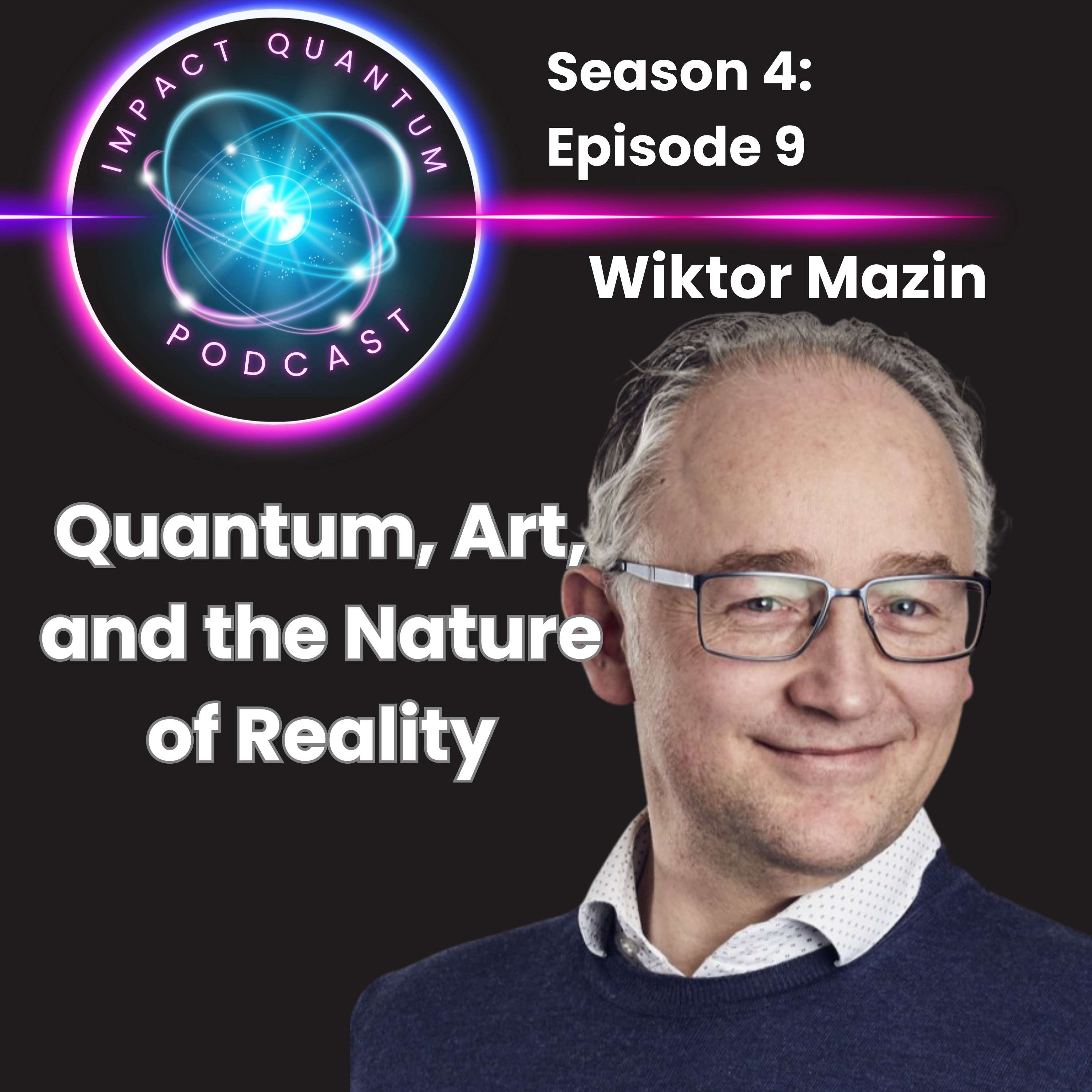
In this exceptional episode, we dive deep into the intersection of science and creativity as Wiktor Mazin showcases how quantum fractal art can help us visualize the abstract phenomena of quantum mechanics. You’ll hear how fractal mathematics and quantum state vectors come together to create mesmerizing patterns, making the invisible beauty of quantum physics tangible and relatable.
From snowy Baltimore anecdotes to discussions about coastlines and Romanesco broccoli, the team explores how fractals—both in nature and mathematics—reflect the underlying complexity and elegance of the quantum world. We also see how quantum-generated randomness can influence color choices, and how music and poetry are woven into the fabric of fractal art for a truly multi-sensory experience.
Whether you’re a scientist, artist, or simply curious, this episode promises to break the mold by blending visual learning, emotion, and aesthetics into one mind-expanding mixdown. Be sure to check out the visuals (and funky glasses!) on YouTube, because this is truly an episode that must be seen and heard.
Links
- Watch on YouTube – https://www.youtube.com/watch?v=BiJW419ItPc
- Wiktor’s Instagram – https://www.instagram.com/wiktormazin_quantum_art/
Time Stamps
00:00 “Art: A Universal Human Trait”
03:31 “Understanding Vectors and Bloch Spheres”
07:03 “Quantum Fractals: Math Meets Art”
12:22 Quantum Complexity and One Constant
15:23 “Fractal Math and Bloch Sphere”
18:40 “Beauty in Quantum Imperfection”
21:56 “Quantum-Generated Fractals and Colors”
24:34 “Connecting Quantum to Nature”
27:54 Quantum Bird Navigates Balance
34:38 “Quantum Fractals and Coherence”
37:47 “80s PBS Math Lectures”
39:01 “Quantum States Through Creative Expression”
46:24 “Echoes from the Quantum”
51:00 “Quantum Arts and Complexity”
55:24 “Infinity: Art Meets Quantum Fractals”
56:53 “QR Code & Chaos Upstairs”
Transcript
This is probably the most visually and auditory stunning
Speaker:version of our episode that we've ever done. Uh,
Speaker:absolutely. This has to be— this has to be seen. Yeah, yeah, seriously, like,
Speaker:if you're listening to this, you're missing a lot of the, the
Speaker:feel. Welcome to Impact Quantum.
Speaker:Hello and welcome to Impact Quantum, the podcast where we explore the emerging
Speaker:industry of quantum computing. And, um, you don't need
Speaker:to be a PhD, you just need to be a little bit curious.
Speaker:And with me on this journey is the most quantum curious person I know,
Speaker:Candice Gooley. How's it going, Candice? It's great, thank you for
Speaker:asking. I'm really excited. We have something different for today.
Speaker:Yes, and very cool. It's going to be very cool.
Speaker:We have, we have a gentleman by the name of, of Victor Mason. He's
Speaker:a PhD. He is a pioneer of
Speaker:quantum fractal art, and we're going to learn more
Speaker:about that today. So hi, how are you? How are you doing
Speaker:today? I'm good, thank you. Been looking forward to this. Thank
Speaker:you for having me here today. And how are you guys doing? Doing
Speaker:well, doing well. We, we just got a foot of snow, and, uh,
Speaker:down here in Baltimore, and we're not used to that like they
Speaker:are up in Montreal. And my grandfather was from Montreal, so
Speaker:whenever we got snow, he'd be like, "Ah, this is like a spring day."
Speaker:So, um, but, um, with that
Speaker:in mind, um, I'm very excited to hear about this because I think art
Speaker:is one of those things that's, uh, uniquely human, you
Speaker:know, AI-generated images notwithstanding, but, but that's a whole
Speaker:other rabbit hole. But I think it's uniquely— it's not only
Speaker:uniquely human, but I also think it helps people process really
Speaker:weird abstract ideas. Whether we're
Speaker:talking about cave paintings where they show like, hey, look, this is how we hunt
Speaker:the animals. And I mean, this is something that's very much
Speaker:uniquely human. And, you know, up
Speaker:until:Speaker:we were the only ones that we knew of that, that used art. And art
Speaker:is one of those things universal across all cultures. And whether
Speaker:it's cave paintings in Lesotho, or caves,
Speaker:caves paintings, or, you know, rock paintings, all all the way up
Speaker:to modern art. And what's really exciting is
Speaker:that you've kind of taken this really weird abstract aspect
Speaker:of mathematics, which is not everyone's cup of tea,
Speaker:um, and you've made something beautiful out of it. I think that's cool because
Speaker:I think everyone can appreciate beauty. Obviously what
Speaker:constitutes beauty is, is very subjective, but the fact that you,
Speaker:um you know, everyone can appreciate beauty, I think is universal.
Speaker:And if I can add to it, what I think also been missing for me
Speaker:at least, I've been in the quantum field for like 5 years, I'm gonna explain
Speaker:that. Where are the visuals? Mm-hmm. Where's the beauty
Speaker:in quantum? I see a lot of papers, nice, nice,
Speaker:nice papers. It's not that, but you know, how can you see
Speaker:quantum? You can't see that, right? So every, every person
Speaker:has their own idea or something, you know, abstract. And I'm trying
Speaker:to make that a bit concrete. We find that we haven't found
Speaker:some kind of a logic way of how to visualize that.
Speaker:That's a great way to put it, because I first saw, um, the thing that
Speaker:made it click for me was I saw a vector graph where they were
Speaker:basically— and that's kind of— it was like a 2D block sphere, right? Block spheres
Speaker:are helpful too, but if you don't know the concept— but, but like,
Speaker:the, you know, when I saw that, because I'm like, how could How could 0
Speaker:1 be something else, right? Because going back to
Speaker:kindergarten, you know, 0 1 is still 1. Like, what is that?
Speaker:And then the presenter, um, was like, no, no, no, you're
Speaker:adding vectors. And I was like, oh, that makes a lot
Speaker:more sense, right? And then when you see a Blox Sphere where it's
Speaker:like, wait, it's really more complicated than even just the 2D map—
Speaker:the 2D map was the first thing that got my head around it. And then
Speaker:when I saw the Bloksphere and like the 3D— and, and maybe it goes up
Speaker:to more dimensions than 3, for all we know, um, or for all
Speaker:I know anyway. You have the PhD. Yeah, I would love
Speaker:to see this because I'm fascinated by it. You know, in the virtual green room
Speaker:you did kind of, you know, there's a preview of it and I'm like, this
Speaker:is awesome. Because I remember, I remember
Speaker:when fractals— not when they first come out, I don't know when they first came
Speaker:out— but I remember in the '90s I was in university and they were like,
Speaker:no, this is mathematically generated art. And I'm like, that's crazy. You zoom in, it's
Speaker:the same thing. You zoom in again, it's the same thing. You zoom out infinitely,
Speaker:it's the same thing. It's a bit like a, a coastline, right?
Speaker:A coastline from space is this jagged kind of— and you
Speaker:zoom in, it's still jagged. And it's kind of the— I
Speaker:don't know, for me, like, it was the, the mystery of
Speaker:nature almost. Yeah, exactly. And that's why I think it connects good with quantum, where
Speaker:we are saying, right, we're working with the fundamentals of nature, with particles.
Speaker:We're working with nature-based So if you can connect that to
Speaker:some nature math, which I think fractal math is,
Speaker:then suddenly, uh, things are coming together. Yes, that's a good
Speaker:way to, to poke at it. I'm excited. I've seen some of your work,
Speaker:so I want to, want to share with the audience. And if you're watching us—
Speaker:if you're listening to us, not watching us— be sure to check out the YouTube
Speaker:link that we'll send. So let me share
Speaker:the presentation. Okay, please, for
Speaker:sure. Include the
Speaker:sound. Okay. Okay, so you hopefully see some
Speaker:nice images. Yes,
Speaker:yes, yes. So, uh, as I said, uh, um, as
Speaker:I said, this is a personal project of mine, like independent of
Speaker:my work. But, but let me start, uh, by asking,
Speaker:so I, uh, I alluded to this before,
Speaker:but, uh, but the way I normally present this, then I say, imagine you could
Speaker:see quantum mechanics. I mean, imagine you could
Speaker:see quantum states, and I'm gonna explain that later, come alive in art
Speaker:so you can discover just how intricate and beautiful quantum
Speaker:phenomena can be. So I studied at the
Speaker:Technical University, uh, of Denmark like 30 years ago at the Department
Speaker:of Physics. I studied something called chaos theory. Perhaps you heard about the
Speaker:butterfly effect, soothing patterns and fractals. And then I
Speaker:was quite amazed that you could create these
Speaker:beautiful patterns with, with very simple recursive
Speaker:math. It was a very simple equation, and I'm going to show
Speaker:that. So if we fast forward a bit, then around 5 years ago, I started
Speaker:to upskill in quantum computing because I wanted to learn. So I
Speaker:became a Qiskit advocate. Which means I know a little bit about
Speaker:quantum computing. I'm not super duper expert in all areas. I know a little bit,
Speaker:but I was very interested in how you can program a
Speaker:quantum computer. And then, you know, one day I was upskilling
Speaker:and suddenly I, I, I still can't remember exactly how, whether it was
Speaker:a dream or how it came to me, but, but suddenly it like
Speaker:hit me. Why hadn't anybody cobbled these complex
Speaker:numbers, the complex amplitudes that you use in quantum mechanics
Speaker:and quantum computing with the complex numbers you use to
Speaker:create fractals. And ever since I got that idea, I combined these two
Speaker:domains, and that's how I ended up with these, I think, amazing
Speaker:patterns that I'm, that I'm real thrilled to, to share with you
Speaker:here today. So if it's okay, I'm going to just tell a little bit about
Speaker:the math connection between fractals and quantum computing
Speaker:and show how these states the quantum states can be visualized
Speaker:and also how they can be combined with music. And
Speaker:I'm also thrilled to present, I think, a first-of-its-kind
Speaker:short film, the jazz quantum fractal film. But I'm going
Speaker:to show you guys this, and I'm very eager to hear what you think
Speaker:about it. So first of all,
Speaker:what are fractals? And Frank, you already said that there are coastlines,
Speaker:and you— and that's exactly right, but Just, just to zoom out
Speaker:a little, a little bit. Some people know fractals, some people do not, but
Speaker:they're like complex geometric patterns that
Speaker:exhibit self-similarity at different scales. You have the coastlines, just as
Speaker:you said, Frank, you have the Romanesco broccoli where each
Speaker:floret is— where each floret is like a miniature copy of the whole. You
Speaker:have the cactus here, the Agave cactus with the fractal spiral
Speaker:patterns, and you have snowflakes. I really love snowflakes where each snowflake's
Speaker:like intricate design shows the fractal beauty— one of nature's
Speaker:smallest scales. And then when we zoom out to like the largest scale at
Speaker:all, then in galaxies you see these
Speaker:fractal spiral patterns. So, so also on the largest scales you see
Speaker:patterns that resemble fractals. So now we
Speaker:have some idea of, of, of where to find fractals. So let's have
Speaker:just a short look, just two slides here, uh, on the math
Speaker:part of it. So, so there are many different ways that you
Speaker:can create fractals, and I showed it here to the left. So one of the
Speaker:ways you can create fractals are something called
Speaker:the escape time fractals or Julia set fractals.
Speaker:So with Julia set fractals, you iteratively
Speaker:or recursively update this famous function, and I call it
Speaker:famous after Mandelbrot. Perhaps some of you have heard about,
Speaker:uh, Mandelbrot. And this equation is really like this— from a math point
Speaker:of view, it's like a very simple equation: z is equal to z
Speaker:squared plus c, nothing else, just
Speaker:this nice three-term math equation. And c,
Speaker:this last c, this is, this is the part that I've been focusing on, and
Speaker:I'm gonna, uh, explain that. So, and it's known
Speaker:with this function that if this absolute value of z
Speaker:stays below 2 after a finite number of iterations, then we say that that point
Speaker:is within the Julia set, and then we color accordingly. I'm going to
Speaker:show you some, some examples of that. But just, but just, uh, like,
Speaker:hold on, that come to the complex numbers are important when you
Speaker:are creating fractals. They are essential. Now, in quantum mechanics, on the other
Speaker:side, on the right side, in quantum computing,
Speaker:the quantum states— this is supposed to be some kind of a Bloch sphere. I'm
Speaker:going to show you the real one afterwards. Then, then
Speaker:you use some— then you represent quantum states with something called
Speaker:a state vector. And a state vector is
Speaker:made up of complex amplitudes, which
Speaker:mathematically are complex numbers. So now we see that there can
Speaker:be a link— not, not that there is, but there can be a link
Speaker:between the complex numbers that you use in quantum mechanics and quantum
Speaker:computing and the complex numbers that you use
Speaker:to create fractals. And just, um, I, I had the
Speaker:question sometimes, what are complex numbers? Um, so
Speaker:they're complex— that— so there are numbers that consist like of two parts. There's a
Speaker:real part like this a, and there's an imaginary
Speaker:part, this bi, where i is this imaginary unit. And
Speaker:you— and to simplify this a bit, so you use complex numbers in
Speaker:math when you cannot— when ordinary numbers are not
Speaker:enough. Signal analysis, quantum physics, and some fractal math. That's
Speaker:where you use complex numbers. That's— yeah. So in
Speaker:that kind of special occasions, complex numbers
Speaker:really make sense. So that formula there is a
Speaker:b × i, right? That's like the— that's how you normally,
Speaker:uh, would write a complex number. A real number a, b is a
Speaker:real number, but i
Speaker:is this imaginary unit. Okay, exactly. And the Mandelbrot
Speaker:equation is this one: z
Speaker:z² C. And C is a constant?
Speaker:Yes, that's a constant. Exactly. Just checking. Exactly. Last time— the last time I
Speaker:did any kind of math like this academically was,
Speaker:uh, um, Kurt Cobain was still alive. So
Speaker:for me, it's been also a long time ago, so, you
Speaker:know, I had to refresh and, and look some things up.
Speaker:So, but the thing that really got me, uh, interest, uh,
Speaker:that really that bothered me, but that intrigued me for
Speaker:some time, was that this equation z
Speaker:z² c, this c is just one complex number, is
Speaker:a constant, this one constant. But normally
Speaker:when you deal with quantum computing and, uh, and quantum mechanics, and
Speaker:when you use one qubit, just one qubit, the most simple
Speaker:quantum circuit has just has one qubit. But one qubit,
Speaker:then you already need two complex numbers to describe a quantum state
Speaker:or like a state vector with just one qubit. So I was wondering this
Speaker:in the beginning, how can you then make sure you
Speaker:use all the quantum information instead of just compressing
Speaker:any number of complex numbers into just one constant? How, how
Speaker:can you do that differently? So it turns out— well, if I zoom out,
Speaker:uh, just a second— so how many complex numbers at all can
Speaker:you take into account? It turns out, you know, that we
Speaker:are looking at, at an exponential growth here. So if you have
Speaker:1 qubit, you have 2 complex numbers. With 2 qubits, you have 4. 3,
Speaker:you have 8. 4 qubits, you have 16, and so forth. So you
Speaker:can see easily that's gonna explode to a huge number. But one way you can—
Speaker:is that one of the ways that you get all this, like,
Speaker:mathematical firepower from a quantum computer over a conventional system? Yes. I'm sorry,
Speaker:I didn't mean to cut your flow, but I was
Speaker:just like, oh, okay, got you. Right, but only up to
Speaker:a certain limit, then my computer simply breaks down because it's, it's just the
Speaker:number. If you just have, I don't know, 10, 15
Speaker:qubits, the number gets so high that my memory, uh, you know, crashes. So
Speaker:only up to a
Speaker:certain limit I can do this way. Okay, so one of
Speaker:the ways— there's something called UAC mating. And there you— and, and I had to
Speaker:look the math up again. There's something called a rational function
Speaker:math where you have a numerator and a denominator. So basically this
Speaker:equation you saw before, this Mandelbrot equation you saw here,
Speaker:basically I split up in two parts with one of the complex numbers in
Speaker:the numerator and the other one in the denominator. As you
Speaker:hopefully see, uh, the first equation I have here. And what I very much
Speaker:like about this field, I mean, nobody has really looked a
Speaker:lot, into this. So you can define the function any way
Speaker:you like, any way you like. So like
Speaker:a huge canvas, they're just waiting to be, uh, explored. So I show you—
Speaker:here's an alternative way that you can make use of
Speaker:both complex numbers. Again, a rational
Speaker:function but defined slightly differently. And as I mentioned before, you know,
Speaker:with 2 qubits you have 4 complex numbers:
Speaker:C₀, C₁, C₂, C₃. With 3 qubits,
Speaker:you have these 8 complex numbers going from C0 to, uh, to
Speaker:C7. So one of the ways you can try to
Speaker:incorporate all this quantum information is by expanding this rational function. And this is
Speaker:one way that you can do it, and there are
Speaker:really many different ways. And each time you play around and you find a
Speaker:new way to express that math,
Speaker:you get a new visual expression. Of the fractal math. So this
Speaker:is really like, how do you define the fractal math
Speaker:that makes use of the quant—
Speaker:um, of these complex numbers? So the Bloch sphere, Frank,
Speaker:you hopefully see the Bloch sphere to the left, right? So here you see the
Speaker:Bloch sphere that you normally use to visualize like a
Speaker:1-qubit, uh, state vector. And here you see 3
Speaker:different fractal equations and they are
Speaker:coming alive in this case from a superposition state. Hopefully it's
Speaker:kind of clear that this state vector like travels along, uh,
Speaker:the equator here. So in this case, for each 6°— for each 6° it
Speaker:could have been anything, but in this case for each 6° I take
Speaker:a snapshot and I get the state vector, I get the two
Speaker:complex numbers for each
Speaker:6°, and then I generate these three different, fractal, uh,
Speaker:math, uh, animations. So in the first animation, I compress the two numbers,
Speaker:I divide them, so just have one complex number. So
Speaker:this is like kind of the Mandelbrot version,
Speaker:the very first animation you see here. And these two other, uh,
Speaker:animations, I make use of both complex numbers by using
Speaker:this rational function I showed you before, like this Julius Zettmating, one
Speaker:way of doing it and the other way of doing it. So hopefully
Speaker:it's clear that depending on
Speaker:the kind of math you use, you get different visual expressions. Uh, does
Speaker:it make sense somehow? Yeah, yeah, and it makes— it's interesting. What happens if
Speaker:you're just— right now you're along the
Speaker:equator, like, how does it— the visual change when you
Speaker:go, uh, in different directions? So you will get a different
Speaker:kind of— I'm not sure it's going to be that different, Mhm. But, but, uh,
Speaker:no, from all the time I played around, as long as you
Speaker:are off the axis and get more into some different parts of
Speaker:the space, you do get some different visual, uh, expressions. You do.
Speaker:But this is, this is just here to illustrate that really
Speaker:depending on where you take the snapshots, you get a different
Speaker:expression. But yes, but you would get a
Speaker:different kind of, uh, of, of, uh, of, uh, fractals. So, uh,
Speaker:some of these, uh, initial art—
Speaker:quantum artwork here called the Qubit Carousel— was
Speaker:actually exhibited in:Speaker:York. So here, uh, you see a slightly
Speaker:younger version of myself here in front of three
Speaker:noisy 7-qubit fractal pieces, because the criteria to exhibit
Speaker:at this exhibition was that the art was
Speaker:created using real quantum computers. So
Speaker:let me, uh, explain what I mean by that.
Speaker:Uh, so here in the middle,
Speaker:the middle image, this mostly yellow fractal, this has been
Speaker:created from a— I would call this an ideal or
Speaker:perfect fractal because it has been created
Speaker:with an ideal or noiseless simulator, quantum simulator, no noise, this would be
Speaker:the result you would be
Speaker:if you ran exactly this quantum circuit. So it turns out that every time you
Speaker:take a circuit and you send it off to a quantum
Speaker:computer, and we know we are in the
Speaker:NISQ era, so quantum hardware is imperfect, it's noisy. So every time
Speaker:you get a result back, you get a new noisy
Speaker:and, yeah, a new noisy and imperfect outcome back.
Speaker:So what I did here, I actually took 8 such images that I got back,
Speaker:and again, it depends on fractal math, but I use the same
Speaker:kind of fractal math. And hopefully
Speaker:you see that these images are variations of the
Speaker:ideal one you see in the middle. So, so from
Speaker:an artistic point of view, I really do believe
Speaker:that noise can be so much more beautiful than the
Speaker:ideal result that we are looking at here in the
Speaker:middle. So if it's okay, I become slightly philosophical, you know, that makes me like
Speaker:think, you know, perhaps we shouldn't strive for
Speaker:perfection as imperfection can be so much more beautiful. So all these small
Speaker:things, you know, getting out from, from playing around with quantum computers, looking at
Speaker:the ideal result, and then what happens when you get noisy
Speaker:results back, all the beautiful variations that you
Speaker:can get back. That's amazing. Yeah, if you have
Speaker:any questions, comments, please, please, uh, your comment about noise is interesting because there
Speaker:used to be a tool that was a plugin for
Speaker:Photoshop, uh, when I was in university
Speaker:called, um, Kai's Power Tools Convolver. And it was basically, you have— you start with
Speaker:the ideal, then like each one of them kind of would mutate in like different
Speaker:directions and you would click it and you would basically get— because you were strategically
Speaker:picking what type of noise, you were able to get a very different
Speaker:and very, I think, much more improved version of your graphic that you were
Speaker:building,
Speaker:uh, by adding noise strategically. And I thought that was interesting. But also I kind
Speaker:of like it from an artistic point of view because all
Speaker:the focus, uh, for all the hardware companies, right, is how
Speaker:can we get rid of the noise. Right? So, and here I, I, and then,
Speaker:and it makes sense because we want to trust the results, we want to have,
Speaker:we want to have as precise and accurate
Speaker:results as we can.
Speaker:But from an art point of view, hmm,
Speaker:I like noise. Um, so I use Python, I program this in
Speaker:Python and Qiskit and PennyLane.
Speaker:I use different programming, uh, language, but primarily Python. So, uh, so instead of
Speaker:using a default Python colormap, to the left here you see two fractal
Speaker:images with different colors. And to the left— so, so my wife
Speaker:one day asked me, why don't you let a
Speaker:quantum computer choose the colormap? I was like, yeah, why not? Actually,
Speaker:that's a good idea. We all heard about these quantum computing random
Speaker:generated numbers, so why not let a quantum computer generate the numbers? So
Speaker:to the right You see the same
Speaker:patterns, exactly the same patterns, but just with different, uh,
Speaker:quantum computer random generated color maps. The patterns aren't the same,
Speaker:but hopefully you see that the visual expressions are very different. So that's
Speaker:another dimension that you can add to our— let the quantum computer—
Speaker:you can set up the code, sure, but then
Speaker:let the quantum computer choose what kind of colors to, to, to, to propose, and
Speaker:then you can choose
Speaker:between
Speaker:the colors. So it's kind of human quantum human interaction. Okay,
Speaker:um, so in, in, in, in, uh, this piece
Speaker:here, I implemented an alternative version of an algorithm that's
Speaker:called the Bernstein-Vezzerani algorithm. That's not that important here, but what
Speaker:it— that enables is that you can enter any date
Speaker:or word, and then you can get a quantum state And as soon as
Speaker:you have the quantum state— I love quantum states because then you have the complex
Speaker:amplitudes, you have the complex numbers, and then I can generate the
Speaker:fractals. So I could take any words, any words. I could take Impact Quantum, I
Speaker:could take your names, I could take my name, any name, and then see what
Speaker:kind of a quantum fractal you would get out of that. So here I, you
Speaker:know, last year we had the International Year of Quantum Science and
Speaker:Technology. So this is the kind of fractal that I I
Speaker:entered these words and then I got this, uh, fractal piece. And so, um, so
Speaker:I'm trying— so I try to figure out, is there anything called
Speaker:quantum colors? So I look it up. So here I, I found something. I thought,
Speaker:you know, with a little bit of imagination,
Speaker:it could look like a particle cloud. Okay, I mean,
Speaker:it's subjective, but I'll try to color here
Speaker:with the quantum colors, the 3 quote colors and 3 anti-colors. So I love playing
Speaker:around not just with the technical stuff, but
Speaker:how can I also somehow connect it with a small
Speaker:story. I'm gonna, uh, expand on that, especially on this one.
Speaker:Oh wow. So this, this is one of my latest artworks.
Speaker:So here I entered the words, the four, uh, the four seasons,
Speaker:uh, where did I put that? Yeah, the, the four seasons. And I combine
Speaker:it with photos. So, uh, I live here in Denmark, so I
Speaker:taken some photos during the different seasons in Denmark. And my wife and I, we
Speaker:love going to Sweden. So one of these photos, the last ones, is actually from
Speaker:a park, uh, in Sweden. And then I
Speaker:use AI to overlay. So what I think is, uh, what's
Speaker:important to me is, you know, just not
Speaker:just everything is quantum, but how, how can we somehow tell the story
Speaker:try to connect it to the world that
Speaker:we live in because it easily gets
Speaker:so, uh, uh, abstract when we talk about, uh, quantum. So as, as, uh, so
Speaker:I wanted to, as, as here to explore different ways by combining these
Speaker:visuals. And I also like to add like a slightly poetic
Speaker:angle. This is really what I love about, you know, letting this be
Speaker:a side project. I can try to express, you know, creativity in a much different
Speaker:way than I can in my day job. And this is what
Speaker:I love about being, you know, a technical person, but here, whatever comes to your
Speaker:mind, you know, whatever you would like to express, you can
Speaker:do that in this creative way. So I tried
Speaker:here to, to combine these visuals as I said, with
Speaker:slightly poetic, uh, angle exactly to relate the quantum principles
Speaker:to the seasonal cycles of nature and try this way
Speaker:to bridge the quantum world with the world we know it. So
Speaker:if you— if it's okay with you,
Speaker:I will just read the text on this.
Speaker:Yes, please. Yeah, so, um, I call
Speaker:it the Haiku of Continuizy Quantum Fractal
Speaker:Symphony of the Seasons. So quantum
Speaker:fractals fall spring to winter, states unfolding, fractals shape the
Speaker:year. So, and you're held
Speaker:in 4 quantum states. First, blooming, then we have,
Speaker:uh, blazing, then we have blazing, right? And, um, sorry, just need to
Speaker:go back. Then we have, uh, softening, and then we
Speaker:have, uh, resting. And each season, that's like a fractal
Speaker:that's unfolding each pattern, a moment in the spiral of
Speaker:time. So across this cycle, quantum phenomena
Speaker:echo through the shifting forms. We have spring
Speaker:rising in coherence, and summer that's bright with
Speaker:resonance, and autumn that's dissolving, uh, through entanglement, fate,
Speaker:and winter that's settling into quiet, quiet decoherence. So a
Speaker:year shaped by
Speaker:the transitions of light and state unfolding in self-similar breath. Okay,
Speaker:so that's cool. That's
Speaker:a, you know, that's something everyone can, can can relate to, um, the, the
Speaker:changing of the seasons. That's cool. Exactly, exactly. And that's what I
Speaker:try to convey and also somehow connect it to the smallest,
Speaker:you know, to the quantum nature, but also make it
Speaker:more, uh, tangible, something
Speaker:that we can see and relate to. So now this 5-qubit fractal I'm, I'm, I'm
Speaker:very fond of— my wife and I are very
Speaker:fond of this one because in my view it looks hopefully
Speaker:both like a yin and yang symbol, like this wave in the
Speaker:middle, but also the bird. With a little bit of
Speaker:imagination, perhaps you see the bird's head
Speaker:here, right? The eyes, some feathers, the mouth up here. So, so we call— or
Speaker:I call this piece the quantum bird
Speaker:in the dance of yin and yang. Bridging Opposites in Balance. And, uh, allow
Speaker:me here to again read the caption from, from my Instagram
Speaker:post here. So, in the infinite space
Speaker:of the quantum realm, a bird takes flight,
Speaker:navigating a path shaped by the entanglement of unseen forces.
Speaker:And encircled by yin and yang's eternal dance,
Speaker:it bridges the dualities and the interconnectedness of opposites—
Speaker:light and dark, Chaos and order, known and unknown. And the bird
Speaker:emerges as a symbol of unity, reminding us that
Speaker:even in contrast, there's a balance. Through quantum
Speaker:entanglement and cosmic balance, it finds its way home. The
Speaker:one funny— funny, I don't know— funny thing about this is I live
Speaker:in Europe, and I, and I, uh, read some time ago
Speaker:that there's something, you know, that, uh, birds think— some birds can navigate
Speaker:based on quantum principles. I know you had
Speaker:an earlier podcast episode about quantum biology.
Speaker:So that's the European Robin is said to navigate
Speaker:using quantum entanglement in its eye by sensing the Earth
Speaker:magnetic field. He use that when it migrates. So
Speaker:this is also kind of slowly— not slowly, but whenever the
Speaker:opportunity is there, trying to connect
Speaker:again what happens in the quantum world with a slightly,
Speaker:uh, philosophical angle, but also to nature again. To,
Speaker:to nature as we know it. So I like
Speaker:this, uh, connecting things from sitting something, you know, on my computer,
Speaker:seeing what happens when I get back, you know, from, from, from
Speaker:the quantum, uh, technology I'm using, and then relating
Speaker:it again out to what happens, uh, in
Speaker:the wider world. So yeah, this is
Speaker:like a whole journey, if that
Speaker:makes sense. In some way. Um, it's amazing, right? It's fantastic. I'm just—
Speaker:I'm, I'm really enjoying listening to your explanation as
Speaker:to why we're seeing it how we're
Speaker:seeing it. Um, I, I— please continue. I think it's fantastic.
Speaker:So I also turn my attention to, you know, fractal
Speaker:animations because, as you said, Frank, Fractals are known for— you can
Speaker:zoom in or out and you see the same patterns, they're repeating. So
Speaker:here I want to show you like what I call like a,
Speaker:like a short journey I call into the mind of a quantum
Speaker:computer from this fractal art perspective. And why do I call it that? I
Speaker:call that because it's based on a 7-qubit, on a 7-qubit
Speaker:quantum circuit. So 7-qubit, if we translate that to
Speaker:the complex numbers, that's 128 complex numbers I use in this kind of
Speaker:math. But this quantum circuit has been run
Speaker:on real quantum hardware. It's not a simulator, real
Speaker:quantum hardware. So I'm gonna play and let's see, uh, how well it
Speaker:goes through here in this recording. But I'm gonna play this, this
Speaker:recording, you will see this fractal zoom. So we're
Speaker:gonna zoom into this mind of a quantum computer, into
Speaker:this fractal. And I call this work like
Speaker:quantum
Speaker:horigan thoughts. So let me show you. This, uh, video. That
Speaker:was cool. Yes, it was fantastic. What impressed me is like you had the
Speaker:sense of volume, like you were
Speaker:traveling through something, through the image. Yeah, thank
Speaker:you. Yes, yeah, so, and it's really, uh, again, this post-processing. I have this fractal,
Speaker:so how can I do it to, uh, what can I do to make it
Speaker:more alive so it's not just still images? And I think this is
Speaker:one of the ways where you also where I also make use of
Speaker:the unique properties that fractals have, that
Speaker:you can keep zooming in. So, and so I also want to show you
Speaker:this one. So I also started to look at 3D
Speaker:animations. And here I want to show like two
Speaker:short 3D videos, which I
Speaker:call like sensory journeys into quantum fractal universes. And
Speaker:I would, I would encourage you to pay
Speaker:attention to these fine details because the fractal's fine details
Speaker:become even more clear when we look at them in 3D. So let's have
Speaker:a look at this piece, at this piece, or, uh, these two
Speaker:short pieces that I call, that I call
Speaker:Echoes of the Quantum: A
Speaker:Slow
Speaker:Journey
Speaker:into
Speaker:the Fractal Landscape. So let me play this. [MUSIC] [MUSIC]
Speaker:Oh, that's some hippie trippy stuff. That's very cool. That was very cool. I,
Speaker:uh, the second animation with the fly— it looked like a flower.
Speaker:Yeah, yeah, that's what I
Speaker:thought. It had a very, very real organic feel to it. Mm, that was cool.
Speaker:Thank you. That was, that was
Speaker:the intention. Yeah. Yeah, that was fantastic. So thank
Speaker:you. So now I've also been, uh, wondering, you
Speaker:know, whether can these quantum fractals, can they be used to, uh, you know, to,
Speaker:to capture the attention, you know, of, of, of people who do not
Speaker:have a quantum physics background or don't know anything about quantum computing. And
Speaker:start to get them interested, just
Speaker:to start to get them curious about
Speaker:certain topics, about certain quantum topics. So I put together this,
Speaker:uh, animation, uh, recently, and, and let me show you
Speaker:this, um, this video about coherence, right? So coherence is when
Speaker:you have a quantum state, and when the quantum states are coherent, then
Speaker:you can do all kinds of calculations why they are coherent.,
Speaker:but due to different kind of environmental noise or errors,
Speaker:they can quickly decohere, and then you lose the ability
Speaker:to make calculations in that time. So
Speaker:here I try to visualize, uh, the, uh, coherence
Speaker:using three different fractals. And instead of always using entanglement like
Speaker:between two particles, I thought, okay, let's expand
Speaker:this a bit into three particles. So Let
Speaker:me
Speaker:show
Speaker:you this, uh, this, this piece
Speaker:here, uh, on, on, on coherence. That was
Speaker:interesting. Mm-hmm. That was cool. I think this also can, can help visualize kind
Speaker:of like some
Speaker:of the weird things that are going on in, in
Speaker:quantum physics. Yes, right? Because, yeah, because
Speaker:how do you even try to explain stuff like that, right? Right. And especially,
Speaker:especially if you're a visual learner, right? Like, if you're a visual learner, like,
Speaker:this stuff is hard to get
Speaker:your head around because it's so counterintuitive
Speaker:to how we experience everyday physics, like everyday reality. So no, that's
Speaker:cool. I agree. I wish when I was studying
Speaker:at the university back then, we only had the
Speaker:books, right? Big books, a lot of, uh,
Speaker:text, almost no visuals, a lot of formula. It was tough, right? It
Speaker:was pretty tough if, if, if, if you guys, uh, remember that time.
Speaker:If there have been visual learning, much more YouTube back then, or different ways of,
Speaker:of learning some of the hard stuff, I think that could be, uh, For some
Speaker:of us, it would
Speaker:have been much more easy to grasp
Speaker:the concepts. Yeah, there was a, there was a series of mathematical lectures that was,
Speaker:uh, I think it was a
Speaker:guy at Stanford. This was on PBS
Speaker:in like the '80s, and accompanying his lectures about these very weird,
Speaker:uh, very— I didn't say abstract, but they were basically Maxwell's formula was the one
Speaker:that that I remember the most, where he kind of
Speaker:shows that the lines of force and all that, and very rudimentary computer graphics, you
Speaker:know, for the time, but,
Speaker:you know, cutting edge at the time, right? But, um, it helped me understand
Speaker:it, right? And I remember, and I still think back to
Speaker:like, you know, those crazy, like, you know,
Speaker:probably done on Amiga graphics or, you know, something like that. Like, but,
Speaker:uh, no, you're right, like, it helps you get your
Speaker:head around things. That's interesting because the, the visual cortex is there,
Speaker:you might as well use it for learning, right? Like,
Speaker:yeah, exactly. I, I just feel that,
Speaker:you know, with the representation
Speaker:that you're showing, you've, you've added like an emotional and an
Speaker:aesthetic kind of resonance
Speaker:to something that could really just be seen as engineering.
Speaker:When did you start thinking about, thinking about the
Speaker:emotional and the aesthetic resonance of, of, of, of these quantum equations? That's a good
Speaker:question, Kenz. I think when I got the idea that I
Speaker:suddenly, not suddenly, but then, you know, that I could visualize these
Speaker:quantum states using fractal sense, then suddenly, you know, it like became even
Speaker:more apparent to me. You know, how long time I've been looking too much
Speaker:at these books, as I said, in the
Speaker:past. So I was really missing the visual component,
Speaker:component. And also instead of everything having to be scientifically correct in papers,
Speaker:all that, I was really missing to, you know,
Speaker:to express the, the creative side. So I was kind
Speaker:of, how can I do this differently? How can this appeal? I'm trying to imagine
Speaker:how it could appeal, you know, to somebody who's
Speaker:not in the field. How can I try to
Speaker:make these very, um, theoretical concepts something a bit more tangible? So,
Speaker:um, besides my, uh, besides my, uh, academic,
Speaker:uh, educations, I also have an education as a psychotherapist. So I do like
Speaker:to— how can you connect this to people in a different way?
Speaker:Because I think that can make such a much more powerful connection instead of
Speaker:just seeing some formulas or
Speaker:some papers. So I'm trying to bring different
Speaker:parts of my past into play because I think
Speaker:that creates something, uh, unique that hopefully some people can relate to.
Speaker:Interesting. I think that's an interesting, like, kind
Speaker:of cross-discipline, uh, because one of the things that, you know, you know, Candace
Speaker:kind of said it
Speaker:like it looked very hippie dippy trippy, right? Like, I paraphrasing,
Speaker:right? It— there's a psychedelic feel to this, uh, with fractals
Speaker:in general. Like, and what does that say about our systems of
Speaker:perception? Or is it our systems of perception, or is it something
Speaker:fundamental in the universe? Because you have a lot of
Speaker:these things, you know, popping up,
Speaker:whether they're mandalas in the Eastern tradition, whether it's, uh,
Speaker:you know, um, you know fractals in kind of modern Western
Speaker:math, or, you know, you mentioned yin and yang, like these things, common themes
Speaker:tend to pop up. And I'm a believer, like, you know, if
Speaker:not everyone's going to agree on everything, but if you have people who don't agree
Speaker:on everything agree on
Speaker:a handful
Speaker:of things, that says something very true and fundamental. Agree. Yeah. So
Speaker:So I, I, I very much like when you combine art
Speaker:forms. So, uh, it turns out also that you can
Speaker:take any sound or any piece of music and you can
Speaker:transform this— let's call it classical sound
Speaker:data— you can transform that into a quantum
Speaker:state using something called the, the quantum Fourier transform signal, uh,
Speaker:analysis, quantum Fourier transform. So you can take this, this piece of
Speaker:normal music or sound into a quantum state. And then, as you see, when you,
Speaker:when you have a quantum state, I like that a lot because then I
Speaker:can turn it into fractals. So one of our good friends
Speaker:here in Denmark is called Christine Dahl, and she's like
Speaker:a professional jazz musician. She has won several prizes in Denmark, in
Speaker:Germany, and in Norway. So together with
Speaker:a colleague, we created this prototype film,
Speaker:and it features these quantum fractals that are generated based on
Speaker:segments of one of Christina's tracks called
Speaker:Souls of the Wind, and then it's combined with some AI-generated images. So there's
Speaker:the details, uh, you can read about the details in this article, but I want
Speaker:to show you like 2 minutes of
Speaker:what I believe, like, the first— the world's first jazz pornographic film. So it's okay
Speaker:with you? I'm just going to play like 2 minutes of this jazz. Oh sure,
Speaker:yeah, no, I'd love to see this because that was my next question. How does
Speaker:this relate to sound, right? Because there's also auditory
Speaker:for auditory learners, but also too, like, there's
Speaker:a lot of harmonics could
Speaker:be involved in here.
Speaker:So,
Speaker:so
Speaker:be
Speaker:prepared
Speaker:for some Nordic jazz. Yeah, 2 minutes. [MUSIC] [MUSIC] Sam.
Speaker:[MUSIC] Mm, that's cool, you
Speaker:know. And, and, and
Speaker:by using, using
Speaker:music and using these visualizations, again,
Speaker:you are really substantially making something understandable using like
Speaker:all the senses. I, I just— I'm, I'm just
Speaker:totally blown away. Thank you. I, I really hope that many
Speaker:other people will also get into this
Speaker:so we can show different aspects of
Speaker:quantum, right? More the creative sides, the visual, the auditory. So
Speaker:I think there's a little room for
Speaker:a lot more going on in this, uh,
Speaker:in this field. Wow. That is cool. So last summer,
Speaker:then I presented my artwork at the, at the,
Speaker:at United Nations Quantum for Good Summit in
Speaker:Geneva, Switzerland, together with McKenna McGrew. And
Speaker:she's a quantum information scientist and quantum musician. So together we
Speaker:formed, um, this, this band that we called Echoes from the Quantum,
Speaker:and we showcase quantum fractals and quantum music based on
Speaker:the same quantum states. So she composes music based on quantum
Speaker:states, and I create the fractals based on the same quantum states.
Speaker:So, uh, I'm just going to play here like 4
Speaker:sections of, of this quantum music, around 30 seconds each. And for each
Speaker:section, then you will see a quantum fractal with some text again, where
Speaker:I again try to relate what goes on, uh,
Speaker:or try to describe what goes
Speaker:on
Speaker:in the quantum world from a, a artistic point of view.
Speaker:[MUSIC] See, first I was really excited by the huskies and, and the, the,
Speaker:the sound that they made. I thought that was
Speaker:really, really exciting. But then, um, you just showed us one. What was the last
Speaker:one that you showed us? Oh yeah, the living cell. The living—
Speaker:like, and the complexity of this— of the,
Speaker:of the quantum cell. Oh my God, that one blew me away. Yeah, same here.
Speaker:And I was like, based on one qubit, and I was like, I wonder how
Speaker:we would hear that. And then when you get to the ones that are multiples,
Speaker:like, oh, I hear it now. I can't put my— I can't explain it.—
Speaker:I can't explain it in words, but I'm like, I heard
Speaker:it. I— you can hear the different
Speaker:nodes, for lack of a better term. You, you
Speaker:can almost hear it. So the sound— I'm not a sound expert, but
Speaker:McKenna, she's really a sound expert, so she can explain this much better than, than
Speaker:I do. But I just want to say that this Quantum
Speaker:Cell, my wife and I got so, uh, so fond of this one that we
Speaker:actually printed it out and we have it hanging on the wall,
Speaker:like in a like, uh, what do you
Speaker:call it, like a gallery print, like
Speaker:80 times 80 centimeters. It's really astonishing to, to look
Speaker:at. Nice. So, so this is cool. This is
Speaker:probably the most visually and auditory stunning version of our episode that we've
Speaker:ever done. Uh, absolutely. This has to be— this has to be seen.
Speaker:Yeah, yeah, seriously. Like, if you're listening to this, you're missing a
Speaker:lot of the the feel. Plus you, you
Speaker:might— you're not seeing my funky, my funky glasses. I'll go to
Speaker:the YouTube, right? And, and, and, and, and look
Speaker:at it afterwards, right? So, but also I just
Speaker:have a few more, uh, slides, two more slides. So, so
Speaker:what Makeda and I also did, we look into complexity in quantum arts. So
Speaker:that means that we're going from simple arts, and by simple art
Speaker:I mean this is based on quantum circuits that are easy
Speaker:to simulate on a classical computer, on a normal computer,
Speaker:to the more complex art, which means art that is based on
Speaker:quantum circuits where you have different
Speaker:gates in them that make it more difficult to simulate classically. Without
Speaker:going into much— too many, uh, technical details, there is
Speaker:something to do with Clifford gates and non-Clifford gates, but
Speaker:let's not go into these technical details right now. But what we showed uh,
Speaker:in an article where I can provide, uh, the link,
Speaker:of course, is that the artistic complexity can be measured
Speaker:by something called the Shannon entropy, right, which is a
Speaker:measure of the amount of complexity and unpredictab— unpredictability you have
Speaker:in a system. And we could see, we
Speaker:could measure that the Shannon entropy is notably higher in
Speaker:the more complex art compared to
Speaker:the more simple art both with the visuals but also with the audio.
Speaker:So if you have a look here at these, uh, three fractals here, um,
Speaker:you have the same fractal math in all the columns from three
Speaker:different ways of making these fractals. In the
Speaker:top row, you see these nice symmetric ordered fractals
Speaker:as we know them, very symmetric, very symmetrical. And this is
Speaker:based on the simple classical systems what we can do on
Speaker:a normal computer easily. But then when we get into
Speaker:the more complex math, you start to see, uh, on more these more
Speaker:complex circuits— sorry— then you see how the math
Speaker:or how the fractal images also changes. And it's really a matter of,
Speaker:of preference whether you like the more
Speaker:ordered one or the more distorted, the more irregular ones. So I'm
Speaker:just curious here, are there any— or which of these do you like? Uh, I
Speaker:kind of like the upper middle one. Just because it
Speaker:has that pop
Speaker:art feel. I don't know. I also like the lower right one. Yeah. Mm-hmm. And
Speaker:imagine this is just one set of colors, and imagine you can
Speaker:add all kinds of different color maps to it. So you mentioned that
Speaker:these are simulated. Have you, have you tried
Speaker:to generate these on, on real quantum hardware? So these ones are simulated, uh, due
Speaker:to, uh, to the time that we had
Speaker:to do this, but I could also had used the hardware. You're right. Well, like,
Speaker:how would it— would it— would you get a different result?
Speaker:Would it be like a slightly different result, or— yeah, so I would expect
Speaker:it, because every time you run a hardware, you
Speaker:get this noisy result back, right? Uh, yeah, yeah,
Speaker:yeah. So I would expect the result perhaps to become even
Speaker:more distorted, but how much? Each
Speaker:one, each one gives you a new noisy result back, but I would expect it
Speaker:to become— I don't know if you could tell the difference
Speaker:between running the top one on a
Speaker:quantum computer and getting
Speaker:the results back versus the
Speaker:lower row where you already use complex, uh, circuits.
Speaker:Does one type of— I'm sorry, does, does one type of
Speaker:quantum computer generate a different result? So like, would an annealing circuit generate something
Speaker:different than, say, photonic or trapped ion— and Candace, I know I'm leaving out
Speaker:like two more other types— like, does the
Speaker:type of hardware you're running it on
Speaker:change the visual, or— because these are base quantum phenomena, it
Speaker:shouldn't matter. That's a very good, uh, question, Frank. I really, uh, look
Speaker:forward to getting access to different kind of hardware so I can
Speaker:test it out, right, and see like
Speaker:how big is the difference on different hardware. Versus the ideal one, right? How
Speaker:different are we from the ideal on different hardware? Do they
Speaker:make different visuals? That could be a great thing to,
Speaker:to look into. Hadn't had that opportunity yet, but, uh, definitely worth exploring.
Speaker:Well, hopefully somebody in our audience can make that happen for you. So, right,
Speaker:so, so the final piece I want to show today, uh, is
Speaker:called Infinity, as you see here. And this I've done
Speaker:in collaboration with, uh, with a British contemporary artist, Michel-Jacques Pearce, who's like a who's
Speaker:like a— I would call traditional painter, but that's not, uh, but,
Speaker:but she paints, she paints, right? So, and we have created several pieces
Speaker:of art inspired by each other. So to the left you
Speaker:see her painting, uh, called Infinity, and here to the right you see
Speaker:my quantum fractal art version of that one. And the reason why I want to
Speaker:close with this one is that I got so lucky that
Speaker:last year in Nature, the science journal Nature, they discovered my
Speaker:quantum fractal piece, right? And they featured it in a Nature
Speaker:review article that
Speaker:was commem— that was commemorating the 100th anniversary of quantum mechanics. That's fantastic. So that
Speaker:was kind of cool, just sitting and playing around,
Speaker:and suddenly, you know, perhaps this can capture some
Speaker:of the
Speaker:complexity in some visual abstract way, you know, dealing with quantum
Speaker:computers. So, so, so So, so I just want to say thank you, you know,
Speaker:for, for joining me and for, you know, for, for having me
Speaker:here. So, so hopefully you have an idea about what quantum fractal
Speaker:art is, and also you have some idea at
Speaker:least that quantum states can also be visualized as these intricate
Speaker:and beautiful patterns, and that it can all be combined with music also. And
Speaker:for those not watching this— watching this, it's, uh, that was a QR code for
Speaker:your Instagram, which we'll make sure we have in the
Speaker:show notes, because your Instagram is very fascinating. Yeah, it's
Speaker:good. Um, very cool stuff. Um, want to be respectful of your time, plus I
Speaker:do have kids
Speaker:home from school and I, I, I can hear them decohering from here. Um,
Speaker:you had your own visualization. I got my own visualization there. Yeah, I hear—
Speaker:I, I, I, um, you know, I'm in the basement and the playroom is
Speaker:upstairs and I slowly hear the chaos going from like this
Speaker:noise level to like— yeah, there's a lot of quantum noise happening upstairs.
Speaker:Uh, but thank you very much. This has been probably the most fascinating— and we
Speaker:have a lot of fascinating guests, right? I'm not throwing shade at any of
Speaker:our previous guests, Candace. No, I know. Wow, this is really cool. This
Speaker:is different. Very different and very cool. And I appreciate what you're doing because I
Speaker:think you're doing, you know, the Lord's work, you know what I mean? Like, you're
Speaker:bringing— you're, you know, a lot of people think of art and science
Speaker:as two very different realms, but, you
Speaker:know, and then they are, but there's a significant overlap too. Exactly. Well, I want
Speaker:to thank you again for, for allowing me time for this because I
Speaker:know this was a different topic. I've listened to all the podcasts, so that's, you
Speaker:know, curious at all, would you
Speaker:be open to this kind of, uh, outside— Oh, absolutely. This is amazing. Yeah, no
Speaker:problem. And I know Candace does a lot of work with neurodiversity
Speaker:and things like that, um, and, and, and has experience in that space. And I
Speaker:would suspect that there's— I don't— I mean, I, I just see an overlap there
Speaker:too, right? In terms of how different people learn, different
Speaker:learning styles and things like that. I think, I think
Speaker:there's an enormous, um, a lot of directions this
Speaker:could go. Yeah, exactly. Awesome. Well, thank you again so
Speaker:much for your time, and, and we'll, we'll connect everyone to your
Speaker:Instagram. Thank you.
Speaker:Thanks a
Speaker:lot. Awesome. Thanks for having us, and we'll play
Speaker:the
Speaker:outro music. They're connecting the dots. Candace and Frank,
Speaker:they're the cosmic hotshot. Quantum Podcast, turn it up
Speaker:fast. Candace and Frank blowing my mind at
Speaker:last. Quantum Podcast, they're breaking the mold. Science and ska beats. It's bold and it's
Speaker:gold.






Leave a Reply