
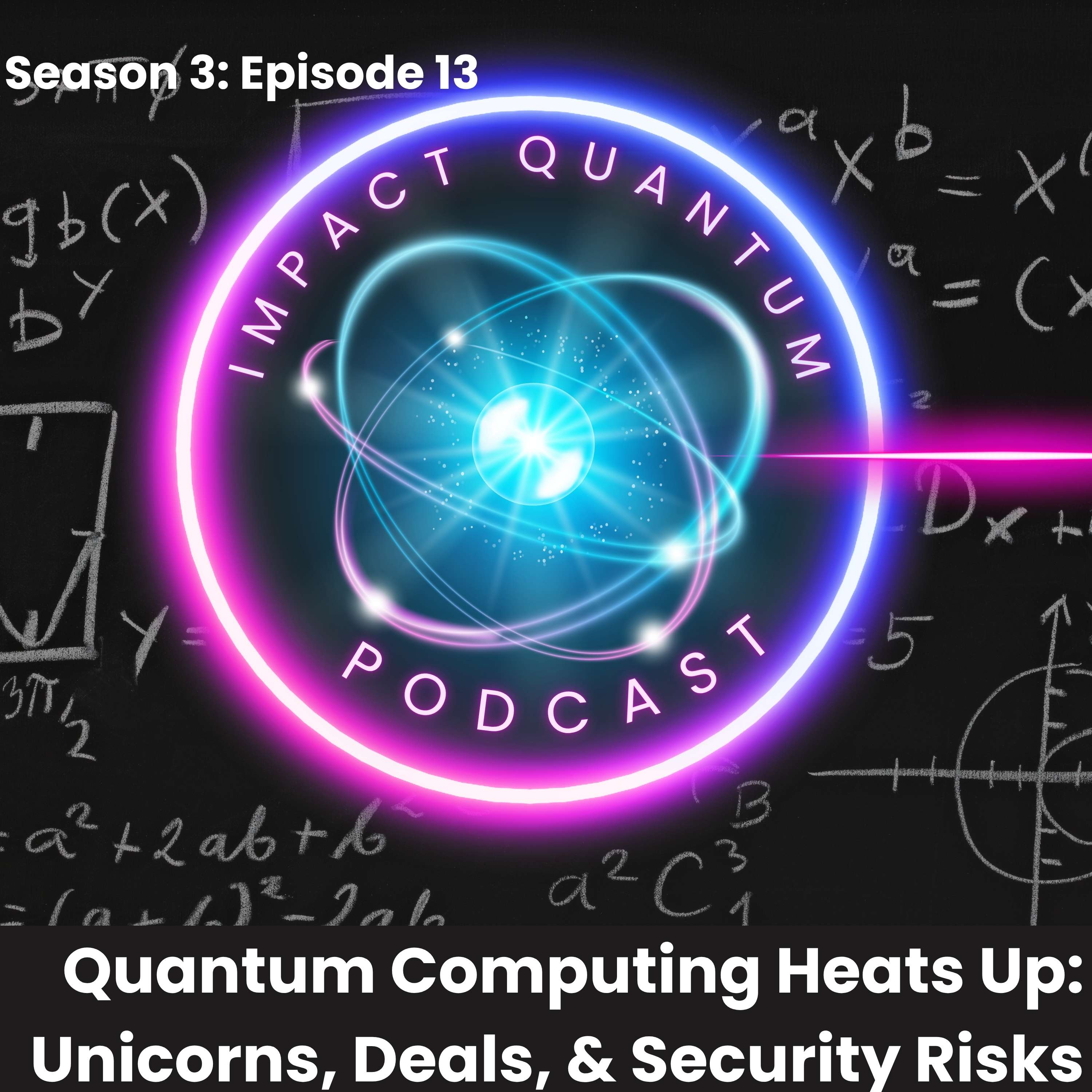
Welcome back to Impact Quantum, the podcast for the Quantum Curious! In this special recap episode, hosts Frank La Vigne and Candice Gillhoolley return from a brief, doctor-approved hiatus to take stock of the whirlwind developments in the quantum computing universe. From billion-dollar buyouts—like IONQ’s acquisition of Oxford Ionics—to IBM’s bold promise of a large-scale, fault-tolerant quantum computer by 2029, the quantum ecosystem has never been more electrifying.
Frank and Candice reflect on just how much the show—and the quantum landscape—has evolved, touching on everything from the international race for quantum supremacy and the looming threat to RSA encryption, to the latest breakthroughs in quantum error correction and the rise of “quantum tweezers.” With Canadian pride, global perspectives, and a healthy dose of friendly banter, they remind listeners why quantum is no longer a far-off dream—it’s knocking at our door.
If you think quantum computing is decades away, this episode will convince you it’s time to update your calendar (and maybe your encryption protocols). Tune in for insights, laughs, and a sneak peek at what’s coming next from the #1 rated quantum computing podcast. Stay curious, stay entangled, and enjoy the ride!
Show Notes
00:00 Quantum Insights: Diverse Perspectives
05:06 Cryptography’s Urgent Career Relevance
09:53 Exploring Quantum Computing Curiosity
12:39 Quantum Computing: Early Stages Discussion
13:59 Early Days of Quantum Computing
17:54 “Quantum Tech Secret Timeline”
20:34 “Quantum Season Preview”
25:34 Canada’s Quantum Ambitions
27:55 Global Medicine Supply Chain Dependence
32:33 “Stay Curious, Stay Entangled”
33:17 “Bailey Signing Off”
Transcript
Welcome back to Impact Quantum, the podcast for the Quantum Curious,
Speaker:where the only thing collapsing faster than a qubit is our free time. Trying
Speaker:to keep up with the news. Frank and Candace return from a brief
Speaker:doctor approved hiatus to take stock of the quantum ecosystem,
Speaker:which is now flush with unicorns, billion dollar buyouts, and
Speaker:IBM's bold starling ambitions. The
Speaker:timeline to a fault tolerant quantum computer just got terrifyingly
Speaker:real. They reflect on how far the shows come from physicists
Speaker:and founders to photons and post Quantum Panic and why your
Speaker:RSA encryption might already be on borrowed time. We touch
Speaker:on quantum tweezers, Canadian pride, and the global race to
Speaker:stay relevant in a world where the mainframe mindset is making a very
Speaker:cold, very superconducting comeback. So if you're still
Speaker:thinking Quantum is decades away, darling, update your calendar.
Speaker:Welcome back to Impact Quantum, the podcast for
Speaker:the Quantum Curious. And we took a week or
Speaker:two off due to a number of sidetracks that happened in
Speaker:our personal life. I had some health challenges, as did Candace,
Speaker:but we're all on the med
Speaker:now. How's it going, Candace? It's going great. Thank you so much for
Speaker:asking. And yeah, taking a beat and
Speaker:now coming back. I'm excited because it is a very
Speaker:exciting time. The quantum news just keeps
Speaker:getting bigger and crazier and like, it just became like this.
Speaker:We do have other shows that are still in the can. We are going to
Speaker:get those out, but I thought it would be good after about 12 episodes to
Speaker:kind of take a beat. Now, fortunately, the universe thought of that idea. I can't
Speaker:say it was really our idea, but,
Speaker:you know, it forces kind of take a beat and kind of like see where
Speaker:we are. And you know, I think, I think we had a pretty good
Speaker:exploration of not just, you know, having quantum physicists on the
Speaker:calls, right, or on the show, but also kind of like, you know, what
Speaker:this looks like from a business perspective, from a student perspective, from an
Speaker:entrepreneur, from a startup founder, that sort of thing. We've had a
Speaker:pretty good smorgasbord sampling. I don't
Speaker:know what the word would be of people that, you know,
Speaker:that really proved out our thesis. Right? Our idea was like, you know,
Speaker:the quantum ecosystem is going to need
Speaker:everybody. It's going to be a village. Oh,
Speaker:absolutely, it's going to be a village. And you know, when,
Speaker:when everyone gets to see what the other players are
Speaker:doing and thinking about and creating, I think that,
Speaker:you know, it gets everybody excited in different ways. You're either
Speaker:competing or you're like, wait, A second. I want to what's going on?
Speaker:And work with certain other players to say, hey, why don't we
Speaker:create a solution that, you know, combines the
Speaker:most, you know, cutting edge hardware with
Speaker:significant software. And for example,
Speaker:that's what happened this week when IONQ
Speaker:decided to buy
Speaker:Oxford Ionics, you know, for a,
Speaker:a billion dollars. So, I mean, there are
Speaker:now Quantum unicorns, right? I mean, there might
Speaker:have been before, but I mean you can,
Speaker:I think it's, it's very cliche to say, like we're on the cusp of
Speaker:something very. Big here, you know,
Speaker:but we kind of are like, you know what I mean? And that's why it's
Speaker:still true though. It's true though. It can be cliche, but true. You
Speaker:know, I actually gave a talk at my team
Speaker:meeting, like internally in our kind of our AI team, talking
Speaker:about what the impact of Quantum is going to be, you know, in this space.
Speaker:And it was a lot of people very curious about it. So,
Speaker:you know, it's, it's something I think
Speaker:is coming faster and more furiously than I think we anticipated.
Speaker:And to your point, you alluded to like there's a bunch of news this week,
Speaker:like a ridiculous amount of news. Yeah, like, it's absolutely
Speaker:crazy. I mean, you know, you, you, you told me about
Speaker:IBM, which was like huge. And
Speaker:do you want to, do you want to dig into that a little bit about
Speaker:Star. That is that they, they have unveiled a
Speaker:path to build the world's first large scale
Speaker:fault tolerant quantum computer with a target
Speaker:of bringing the Starling system online by
Speaker:2029. And that is an
Speaker:aggressive timeline. You know, like we've seen really,
Speaker:I mean, all the major players keep on saying, you know, it's going to be,
Speaker:you know, 10 plus years from now and
Speaker:until we really have something significant and this is now putting it, you know,
Speaker:within grasp of, you know, of four, four or
Speaker:five years, that's really. That'S really
Speaker:within a decade. And I don't think people realize, you know,
Speaker:and this came up in my internal call at Red Hat was,
Speaker:you know, hey, you know, was this something that I'm gonna have to worry about
Speaker:in my career? And then one guy on the call who, who has a
Speaker:history in, in cryptography kind of space, he's like, yeah, absolutely.
Speaker:And I was like, you know, if you had asked me this, say like November,
Speaker:yeah, you know, It'll hit the:Speaker:It may not affect you because, you know, depending on your Age. Right. And where
Speaker:you are in your career. But after Willow
Speaker:kind of was announced and the subsequent
Speaker:announcements or you know, even before
Speaker:this week, I was like, yeah, it's gonna, it's gonna matter. Right? It
Speaker:matters right now like if you're dealing out like SSL certificates and kind
Speaker:of PKI type stuff, you have to reissue your certificates
Speaker:with new types of encryption. Like you have to start now.
Speaker:Ideally you would have started a year ago, but if you haven't started yet, you
Speaker:need to start now. Oh absolutely. And now that IBM has also
Speaker:released like their, you know, quantum ized
Speaker:new timeline, it's, it's really exciting. You
Speaker:know, talking about the Starling as you know is as a
Speaker:kind of the first stage in:Speaker:then focusing on then the Blue Jay, hopefully in
Speaker:before:Speaker:continuing to build the cubics, the qubits,
Speaker:excuse me, the qubits. And,
Speaker:and really working on some of the major problems that you have
Speaker:when you're working in the quantum system. Like we learned about error
Speaker:correction and they did something, did some
Speaker:breakthrough work emphasizing the use of something called
Speaker:a quantum low density parity check
Speaker:codes. And this apparently is the key
Speaker:enabler for fault tolerance. So it's super exciting
Speaker:when they also talk about the problems so like out there.
Speaker:So like, you know, what's, oh my God. Why this is working or why it's
Speaker:not. And, and being very honest about the real
Speaker:barriers that we have, you know, in quantum computing.
Speaker:Yeah. And I think that once you get past the error correction business, I
Speaker:think a lot more doors are going to open up. But also there was a
Speaker:paper basically saying that Google researchers have proven that
Speaker:RSA can be broken with as little as a few thousand
Speaker:messy qubits. So okay,
Speaker:that was like. And, and obviously like some people said oh, less than a thousand
Speaker:but. And there's a lot of hype and then when you kind of peel back,
Speaker:well, maybe 10,000. But I mean just the fact that we're. Things
Speaker:are some problems are not going to be that
Speaker:dependent on error correction being figured out than others I think is also very
Speaker:telling. Right. We are really in the early stage here
Speaker:and the potential for disruption is
Speaker:going to happen. I think the only question is that going to happen in this
Speaker:decade? And I think probably,
Speaker:but it'll definitely hit in the next decade.
Speaker:I think there's a definite, I don't know, there's like a definite shift
Speaker:to optimism that I haven't seen in this
Speaker:long time. You know, I think:Speaker:2018, that timeframe was a bit of a false start.
Speaker:But then the pandemic happened and then chatgpt and Generative
Speaker:AI kind of took all the oxygen out of the room in the hype cycle.
Speaker:And I know, like, research doesn't really tied to the hype cycle
Speaker:directly, but it takes away a lot
Speaker:of venture capital money. Right. It takes away a lot of
Speaker:attention and resources, you know,
Speaker:that are very, I think, quantifiable. Right. Whether it's VC money, whether it's, you
Speaker:know, these top PhD researchers, are they trying to figure out what you're going to
Speaker:listen to next on Spotify or are they working on a quantum computer? Right. Like.
Speaker:Right. And also it's about, it's about that trust issue too, right?
Speaker:Like when, when something is, is, is evolving
Speaker:at like this supersonic rate that you're just
Speaker:not used to. Right. And you can understand, you
Speaker:know, if you're, if you're along that, you know, along that path,
Speaker:you understand why it's happening and why it's exciting.
Speaker:But to be able to explain that to other
Speaker:people is really the hardest part of it all.
Speaker:Because it all comes down to the communication, really
Speaker:explaining, saying, this is why we're doing
Speaker:this, because this is what it can do. And.
Speaker:Right. That's kind of our mission. Yeah, Right. And it comes
Speaker:down to communication, you know, constantly and saying to people,
Speaker:you know, be curious and want to understand
Speaker:this from wherever you come into it. Right.
Speaker:You know, if you're an academic or, you know, or you're,
Speaker:you know, or you're on the C suite of a new commercial venture,
Speaker:or you're just, you know, in the middle and
Speaker:it, you know, it's exciting to you, but your,
Speaker:your job is not quite there yet. And you're wondering maybe should
Speaker:you, or can you, you know, break
Speaker:in and start understanding why, you know, what's going on
Speaker:with quantum computing is so incredibly exciting.
Speaker:And there's so many different things yet to explore.
Speaker:Like, we've talked about all these different qubits on the show. And
Speaker:you know, there's so many different, different fields, at least
Speaker:I see that you can come to it from. And it's a very
Speaker:exciting sector. Well, yeah, and it's not just one
Speaker:type of system, right. There's photonics, there's trapped ions, there's
Speaker:cat cubits, there's typological. And I know I'm leaving some out.
Speaker:You know, it's not just a simple. It's not like electronics where it's
Speaker:basically electrons. Right. You're, you're right. Putting
Speaker:electrons in these little, like, you know, mouse mazes
Speaker:effectively. Why don't you, like you. You've explained it in terms of a
Speaker:transistor. When transistor radio came out, right. It just
Speaker:kind of changed how, you know, within,
Speaker:within like the Industrial Revolution and, you know, you know,
Speaker:how it just changed how people thought about communication
Speaker:and then brought us to, you know, the analog computers. And we've
Speaker:been there for a very long time and, you
Speaker:know, and we've gotten comfortable. Right.
Speaker:And, you know. Yeah. With the, with the, you know,
Speaker:accent of the mobility aspect, which makes it harder for
Speaker:older people, you know, in, you know, in our world because
Speaker:it's just so much faster and
Speaker:that's, that's, that's just harder. Right. But we're, we're on the cusp of
Speaker:something that is going to be a totally different
Speaker:mainframe mindset, right? Well, yeah, I think, I think for the
Speaker:foreseeable future, these quantum computers are probably going to be in the data
Speaker:center. They're probably going to be accessed like a mainframe was. You're not going to
Speaker:have a. You're not going to have a Q phone. Right.
Speaker:Least not right away. You're not. Probably not for a while. You're going
Speaker:to be able to go and, you know, order a, you know, a QPU
Speaker:and drop it into your desktop PC. Right.
Speaker:It sounds so cool. I love it. I mean, I can't wait.
Speaker:I mean, but it's probably some time away for that'll be a thing. But
Speaker:I mean, in the meantime, you know, I was talking to somebody
Speaker:who also works at Red Hat, and again, you know, this is, this
Speaker:podcast is completely independent of that company, though I am very conscious
Speaker:that, you know, IBM owns Red Hat and IBM is a
Speaker:massive player in the quantum space. They're probably in the lead, I
Speaker:would say by a country mile. But I would
Speaker:also, you know, I was talking to him, I showed him, like, he should probably
Speaker:look into it because he's kind of, like, curious about it. I encourage him to
Speaker:look into it and his first reaction was, you know,
Speaker:wow. We're really just at the algorithmic level right now, right. So when you
Speaker:develop something on a quantum computer, you are really like, down in the
Speaker:weeds, like in a low level. It's not like I can go and, you know,
Speaker:create a react native app on, in like Visual Studio
Speaker:code or whatever, right. Like, it's not. The frameworks aren't really there
Speaker:yet, like the ui, you know, that sort of thing. Like, there's
Speaker:no Pandas you know, there's no
Speaker:numpy, like, you know what I mean? Like, you are really, you are really
Speaker:kind of in exercises that you wouldn't really
Speaker:do unless you were taking Introduction to Computer Science. You
Speaker:are really slinging the code at the algorithmic level. Right. It was. It's
Speaker:still very basic. I think that's going to change. But,
Speaker:you know, it's a time when,
Speaker:you know,
Speaker:traditional computers were also at that point where you needed
Speaker:electrical engineers and you needed vacuum tubes. You needed all these
Speaker:crazy things to just make them work. They had to be in the
Speaker:basement or like enlarged, building onto themselves. We're really at that
Speaker:phase here of quantum computing. And it's not a stretch of the
Speaker:imagination to say, like, you know, this will evolve just
Speaker:like traditional computers have.
Speaker:And, you know, we'll look back and, you know, we'll. In my
Speaker:case, in your case, you know, we told our grandkids, I remember when the first
Speaker:quantum computer came out, it filled up a whole building and it needed liquid nitrogen,
Speaker:the stick with coal. But you got like, you know, the new Apple Q Phone
Speaker:26 and, you know, running iOS like, you know,
Speaker:200 by then. Right. All these
Speaker:numbers are fresh in my head because the Apple developer conference was this week, so.
Speaker:Aha. Aha. There you go. You know, and I also,
Speaker:and I know a lot of our guests that we've had and a lot of
Speaker:experts in the field kind of look down upon, you know, quantum emulation.
Speaker:I think quantum emulation is going to be more of a thing than people
Speaker:will admit. But, you know, again,
Speaker:it's so early. It's really, it's so early in the game, it's hard to say
Speaker:who's going to be right, you know. Right. We talked to,
Speaker:you know, a photonic startup founder and I was like, I really. And I wasn't
Speaker:just buttering his bread. Right. You know, I really think
Speaker:that, you know, photonics is probably going to win
Speaker:as a. As a foundational kind of. I almost say substrate,
Speaker:but like foundational layer. I think it's going to win because it's probably going to
Speaker:be the first to hit like something closer to room temperature.
Speaker:Okay. I think now I could be wrong. Right. And I.
Speaker:What's fascinating about this is every time I think I got a handle
Speaker:on how these systems work and how qubits work, I'm always
Speaker:learning something new, like, oh, I was kind of wrong,
Speaker:like. No, no, but seriously, I mean, and, you know, for me,
Speaker:from where I first began to where I am now and then, remember,
Speaker:we There was, there was some. It was, something had
Speaker:come out from Caltech, I
Speaker:believe it was like a week or two ago, and they talked about using
Speaker:like, these tweezers, these qubit
Speaker:tweezers. Oh, yeah, you were, you, you had sent like this
Speaker:thing. It was like a text message and you were like, you got to hear
Speaker:about these cubit tweezers or clean quantum tweezers. And I'm like,
Speaker:oh, she's having a really pretty crazy fever dream.
Speaker:But it's really, I mean, that it's so exciting, all the, the
Speaker:new technology that they're using and theoretical
Speaker:and now putting some things into practice. Right? Like, yeah, like
Speaker:the gentleman that we spoke to from Israel near
Speaker:Alfasi, and he's, he's sitting in front of one of those kind of
Speaker:crazy rooms that you're talking about where their
Speaker:first kind of quantum computer, you know, they're
Speaker:working from it, right? And, and, you know, and people, I mean,
Speaker:using just quantum algorithms now. It's already in our world,
Speaker:you know, so, you know. Well, it's already. If you're
Speaker:a, A CISO or chief information Security officer
Speaker:or any, you know, you really
Speaker:need to take this threat seriously. Right. And, you
Speaker:know, the Quantum Night guys don't pay us.
Speaker:But. No, but you really should look at what their
Speaker:solutions are, because whether you use them or use somebody else, if you're not
Speaker:moving your infrastructure today over to some kind of quantum
Speaker:safe encryption, you are going to be sol as.
Speaker:As the acronym is when this does come out.
Speaker:Oh, absolutely. Right. If not, if not sooner. Right. Because it's probably going
Speaker:to exist. I think it's safe to say that this will exist
Speaker:a bit like the Manhattan Project did, like in the 40s, right. Where, you know,
Speaker:it happened a couple of years before the public knew
Speaker:general. So if IBM is saying:Speaker:unreasonable to think that by:Speaker:which is next year, six months away. If you really want to be technical,
Speaker:it's not out of the question to think that a state actor, whether it's a,
Speaker:you know, one of, you know, the good guys or the bad guys. And I
Speaker:realize this podcast is global, so, you know, there's going to be. Your good
Speaker:guys are not going to be the same bad guys as mine and vice versa.
Speaker:Right, right. That's fair. It's not unreasonable to think that
Speaker:this is, you know, either about to go online or, you know, sometime in
Speaker:the next 12 months. And, you know, moving all these certificates around is not a
Speaker:trivial lift. So, like, seriously, like, you know, For God's sake, do something
Speaker:about it. And it's also interesting that, you know, Red Hat Enterprise Linux 10
Speaker:that they announced a few weeks ago at the big Red Hat conference,
Speaker:you know, it supports, you know, quantum safe
Speaker:encryption algorithms when you generate certificates. Right.
Speaker:Like, you should really start doing this like now.
Speaker:Right. Like, because that's the thing that's really going to hit. I think it's going
Speaker:to impact people first. Right. It's not going to be foreign, it's not
Speaker:going to be curing cancer or solving, you know, climate issues or energy
Speaker:production or whatever. It's going to be. People are going to
Speaker:break your RSA encryption. I mean, Right. That's, they're just going to go for
Speaker:your data. Right. And that's going to be done at the nation state level, at
Speaker:the criminal level. And I mean, go, go back and listen to the two episodes.
Speaker:We have the Quantum Knights guys because they're very interesting guys and
Speaker:very smart guys and very good to have them on again. But I
Speaker:mean, seriously, like, if you're, if you're not, if you're in any
Speaker:kind of position of authority over any organization and you don't have a plan
Speaker:to migrate this, you, first thing you need to do is have a
Speaker:plan to mitigate this threat. Yeah.
Speaker:You need to make a call and get someone to consult for you and tell
Speaker:you really what's going on. Right. Because I think that's
Speaker:the thing that people need to, even if they're not in the quantum space,
Speaker:need to really upgrade their encryption tech to be
Speaker:resistant against this. Yeah, we need some more, we need some more of
Speaker:the encryption people and we need some more photonics folks.
Speaker:Right. You know, for what we're, you know, going
Speaker:into, going into the next part of our season.
Speaker:Right. That's for sure. No, exactly, exactly.
Speaker:Speaking of the next part of our season, we do have some episodes kind of,
Speaker:you know, in the can and we just have to edit and get them cut
Speaker:down and, you know, we'll get
Speaker:those out and I'm looking forward to it. I think we're going
Speaker:to have a, it's going to be an interesting year in Quantum. I think it
Speaker:started, it started off a little rough with Jensen kind of talking smack,
Speaker:but about the technology and then that kind of,
Speaker:that kind of hullabaloo and then it really has bounced back with all these
Speaker:announcements and innovations. Right. I think so. I think that
Speaker:it was, it was, it was kind of like a wet towel moment and.
Speaker:Right. Those that were working on it were like, we're Just not going to listen
Speaker:to that. You said wet towel. I think you said
Speaker:what? Towel moment. I'm like, is that some kind of Canadian. No, no kind of
Speaker:Canadian slang. I don't know about. I just felt that he kind of depressed people
Speaker:and he did, but there. Were a lot of other people. Like, you know,
Speaker:the best way to, if I wanted to buy a Quantum company, like, the best
Speaker:way to do that would be to like depress the Quantum stocks
Speaker:and then by saying something and then, I don't know,
Speaker:there's conspiracy theorists, I guess, around every corner.
Speaker:Yes. But the truth is there's a lot going on that
Speaker:people don't understand. That's why you
Speaker:join our mailing list. You should, you should listen
Speaker:to the podcast. We are completely approachable
Speaker:and we'd love to hear from you.
Speaker:So, Frank, is there anything else that we
Speaker:want to say? We have, we formally announced in the show that we're like the
Speaker:number one, according to Feedspot, number one rated quantum computing podcast out there.
Speaker:That's right. That's true. I'm really excited. I'm really excited. I wish
Speaker:I had a. I wish I had a little applause. We should get, have a
Speaker:little applause. That's right. That's right. I need to set up my soundboard again.
Speaker:Yeah, there we go. Yeah. Super excited. I'm really, I'm really
Speaker:happy to, to see what we believe to be true, that
Speaker:people are curious, people do want to understand
Speaker:and people who understand and are in that world, you
Speaker:know, are communicating what's exciting about what's going
Speaker:on. I think that's great.
Speaker:And I think it's such a. There's these rare moments in
Speaker:tech. They happen about
Speaker:once a decade. And I think quantum AI is currently, I think the darling of
Speaker:the:Speaker:bly social media, mobile, the:Speaker:2010s was probably cloud and big data.
Speaker:But I really think Quantum is going to be the it girl
Speaker:of the, of the:Speaker:I'm really excited about it. I'm excited. We're trying to learn about it and
Speaker:we're, we're doing it in a fun way. Did you want to
Speaker:announce here that you have a state of Quantum in Canada report?
Speaker:Oh, that's right. Folks could download from your profile. I will be
Speaker:posting it shortly. I will be posting it shortly. Thank you, Frank,
Speaker:for reminding, reminding me, telling the audience we're very excited. Well,
Speaker:that's the other thing too. We've, we've kind of discovered as we've been interviewing people,
Speaker:like, this is a global phenomenon, right. It's like it's not just Silicon Valley,
Speaker:right, where or the west coast of the United States, whether it's, you know,
Speaker:Seattle with Amazon, Microsoft and I guess
Speaker:Vancouver as well with the wave and such. But I think this is
Speaker:a global phenomenon. We talk to people in Israel, we talk to
Speaker:people in Europe, we talk to people in the US and you know, there's
Speaker:obviously a lot of quantum activity in China. There's Singapore, Japan.
Speaker:This is someone in Africa. In Africa, yeah, yeah, there's actually a
Speaker:quantum institute. I think it's a, it's either
Speaker:in Cairo or in Nairobi.
Speaker:So I mean, this is a global phenomenon. And I
Speaker:think that's really, I think one of the perils of Silicon
Speaker:Valley is the fact that they are very geographically
Speaker:focused. And I think that that
Speaker:makes people, you make assumptions, I think, based on your geography because it's your
Speaker:day to day experience, right. Whether it's, you know, you're in
Speaker:Montreal, right. Like you were telling me what the kids do, they have boots and
Speaker:then they have inside shoes and like that's a whole thing. And I
Speaker:vaguely remember my grandfather talking about that. You know, whereas if you're
Speaker:in Florida, it's pretty much flip flops year round. Right, right,
Speaker:right. You know, and here like in, you know,
Speaker:Baltimore, ish, You know, there's,
Speaker:you know, we have, we have all four seasons and each, each one of
Speaker:them is kind of aggressive. So
Speaker:particularly the pollen this year, which was my. Oh, the pollen is
Speaker:crazy here this year. Like we actually had to wash off our,
Speaker:our air conditioning unit outside our house because, wow, not enough
Speaker:air was getting through it with all the pollen that landed on it. Right. Wow.
Speaker:Like, oh, yeah, it's crazy sauce. But you know what, like you
Speaker:adapt. But I think what you're saying about the global interest
Speaker:is important. I think that Canada
Speaker:really wants to be Canadian strong and not
Speaker:rely or be thought to as having
Speaker:to rely on other countries for
Speaker:cutting edge technology. And so it's very
Speaker:exciting that they kept on mentioning quantum,
Speaker:quantum, quantum over and over again at the G7.
Speaker:And it was me, as, you know, born American,
Speaker:New York, born and bred. Been living in Canada now for 15
Speaker:years or so, dual citizen. But it
Speaker:made me really proud to see that, you know, Canada
Speaker:was really stepping forward and showing that this is something
Speaker:that they want to focus their time and energy and resources on.
Speaker:Yeah, I think that's one of the, you know, the last X number of years
Speaker:we've been focused on globalization this, globalization that. And
Speaker:globalization works well when everybody can hold hands and sing Kumbaya.
Speaker:Right. The human history
Speaker:is not known for its moments of history where
Speaker:the world holds hands and sings Kumbaya. Right.
Speaker:Partnership is super important. Don't get me wrong. I'm not saying it isn't,
Speaker:but like, you know, a little bit of self sufficiency never hurt anyone. Oh,
Speaker:100%. Like when, when, when the, you know, when the,
Speaker:when the epidemic hit and everyone. I
Speaker:was watching the. I literally was in Punta Cana on vacation
Speaker:for first time vacation abroad with my children and my husband.
Speaker:And we were watching on the news how in
Speaker:China they were locking people in their rooms. Yeah.
Speaker:Because of this, you know, was soon to be Covid. Right.
Speaker:And we were. And we were coming home
Speaker:back to, you know, Montreal with that going
Speaker:on in the world. And it was very soon after that where
Speaker:everything kind of shut down. It was a very weird time. But I remember
Speaker:at that moment being really pissed
Speaker:that Canada didn't have the resource to make their
Speaker:own vaccine. And we were not even,
Speaker:not even vaccines, but like, you know, Advil. There was like an
Speaker:Advil shortage or something like that and a lot of other medicine shortage. I'm like,
Speaker:why? And it turns out that a lot of this stuff is made in India,
Speaker:in manufacturing plants in India. And when you shut down borders and you shut down
Speaker:all this stuff, right. Suddenly you don't realize. I think
Speaker:what made a lot of people realize is how dependent we are
Speaker:on supply chain. So if there's any kind of conflict
Speaker:or whatever, or any kind of disruption, whether it's from a pandemic or,
Speaker:you know, hurricane or whatever, just how
Speaker:out of luck you'll be. Sol as it was, I said earlier, right. Like, right.
Speaker:Oh, 100%. Which was very alarming. I'm like, wait,
Speaker:you can't. Who makes Advil, you know, in the US like, and if you
Speaker:also too, like, you know, recently, you know, we're recording this in June
Speaker:and it wasn't what, but like three, four weeks ago that India
Speaker:and Pakistan had a actual shooting conflict.
Speaker:Right, right. And like, really, like, I mean, if that,
Speaker:God forbid that, you know, thankfully that did not escalate, but,
Speaker:you know, it's. That's scary. Not hard to imagine if it
Speaker:did. That could very easily slip in the wrong direction.
Speaker:A lot of things in the world right now could easily slip in the wrong
Speaker:direction. Absolutely. Kind of a miracle we made it this far.
Speaker:Well, you know, but. But cooler heads
Speaker:tend to prevail every once in a While, and, but, but in any case, like
Speaker:regardless of where you stand on, you know, what country kicked off water, what started
Speaker:what, like doesn't matter who's right, who's wrong if you can't get
Speaker:the medicine you need. Right, right. Or anything you need. Like,
Speaker:it's just, I don't know, like I think and I picked
Speaker:up a bottle of Advil like the other day at the store and
Speaker:you know, on the side it said it was manufactured, you know, in India. And
Speaker:I was like, well, you know, good for, good for the Indian economy. But God
Speaker:forbid if, if it hits the fan again. Right, right.
Speaker:Like have we learned nothing? And you know, apparently,
Speaker:apparently no. Well, yeah, because isn't the egg problem still happening
Speaker:in the States? No, the egg problem is mostly abated.
Speaker:Okay. Like I got a, a big case of eggs the other day at
Speaker:like Costco or whatever and. Right. You know, I didn't have to take a mortgage
Speaker:out or anything like that. And we didn't have an egg problem here like
Speaker:that. We don't have as many varieties. That's like the deal. Basically,
Speaker:you, you to survive, you learn to accept not having so many of their
Speaker:varieties. Like I could never walk down an entire aisle
Speaker:at like the Stop and Shop and it would just
Speaker:be salad dressings. Right,
Speaker:right, right, right, right. Well, a lot of, a lot of the egg shortage was
Speaker:because there was a small outbreak of some kind of bird flu. Right.
Speaker:Right. So they had killed off a lot of, they kind of, you can
Speaker:argue that maybe they overdid it, but now that it's recovered so quickly,
Speaker:maybe they maybe was the appropriate response. Right.
Speaker:Okay. You know, yeah. But things like egg prices though.
Speaker:Well, you know, are now, they're very
Speaker:political. Right. So like if there was another outbreak again, like will, will the decision
Speaker:be made on science or politics?
Speaker:I don't know. Usually if it's science versus politics,
Speaker:politics usually wins. We've gotten, we've gotten
Speaker:very political here. But no, I mean, but I mean like it's,
Speaker:I think we did kind of. You're a bit off topic, but that's what we
Speaker:do. But no, I mean
Speaker:I can totally see why after the events the last, well say five, six years,
Speaker:people have realized, you know, look, love partnering with other countries,
Speaker:etc, but you know, it's a good
Speaker:time to re examine being self sufficient. I
Speaker:think it's important, I think it's important to be able to. If you know, you're,
Speaker:you're, you need to provide for your, for your society,
Speaker:you need to protect your society. But I, you know.
Speaker:Well, I. I don't want to be. I. I was just. We. We talk about
Speaker:the health care system, but we're going to take. I'm going to stop myself. Yes.
Speaker:Don't get me started. So. But no, this was great. I mean, really,
Speaker:there was so much that went on in the past couple weeks. I'm just
Speaker:happy that we got to take a little chance to talk and. I'm glad we're
Speaker:both feeling well enough to. To chat again and we're gonna. I thought this would
Speaker:be a good kind of point and let us know, you know, in the comments
Speaker:or. Or just through ever. Whatever feedback. You know, if you
Speaker:think like a catch up show every few weeks because we did that in the
Speaker:beginning or like maybe every 12 episodes or something like
Speaker:that. I don't know. Let us know. Yeah, I'd love to hear from you.
Speaker:Cool. All right. With that, we'll let Bailey finish the show.
Speaker:Nd that's a wrap on this catch up voyage through the ever expanding
Speaker:quantumverse. If your classical brain is spinning, don't
Speaker:worry, you're in good company. Minds distributed across several
Speaker:dimensions and still can't keep up. Remember to
Speaker:subscribe, rate and review impact Quantum, preferably with
Speaker:glowing praise, but we'll settle for constructive quantum criticism.
Speaker:Join our mailing list, send us your questions, or just shout into
Speaker:the void. With enough entanglement, we might actually hear you.
Speaker:We'll be back soon with more guests, more insights, and more
Speaker:proof that the future is arriving whether you're ready or not.
Speaker:Until then, stay curious, stay entangled, and for
Speaker:heaven's sake, update your encryption. Bailey signing
Speaker:off.






Leave a Reply