
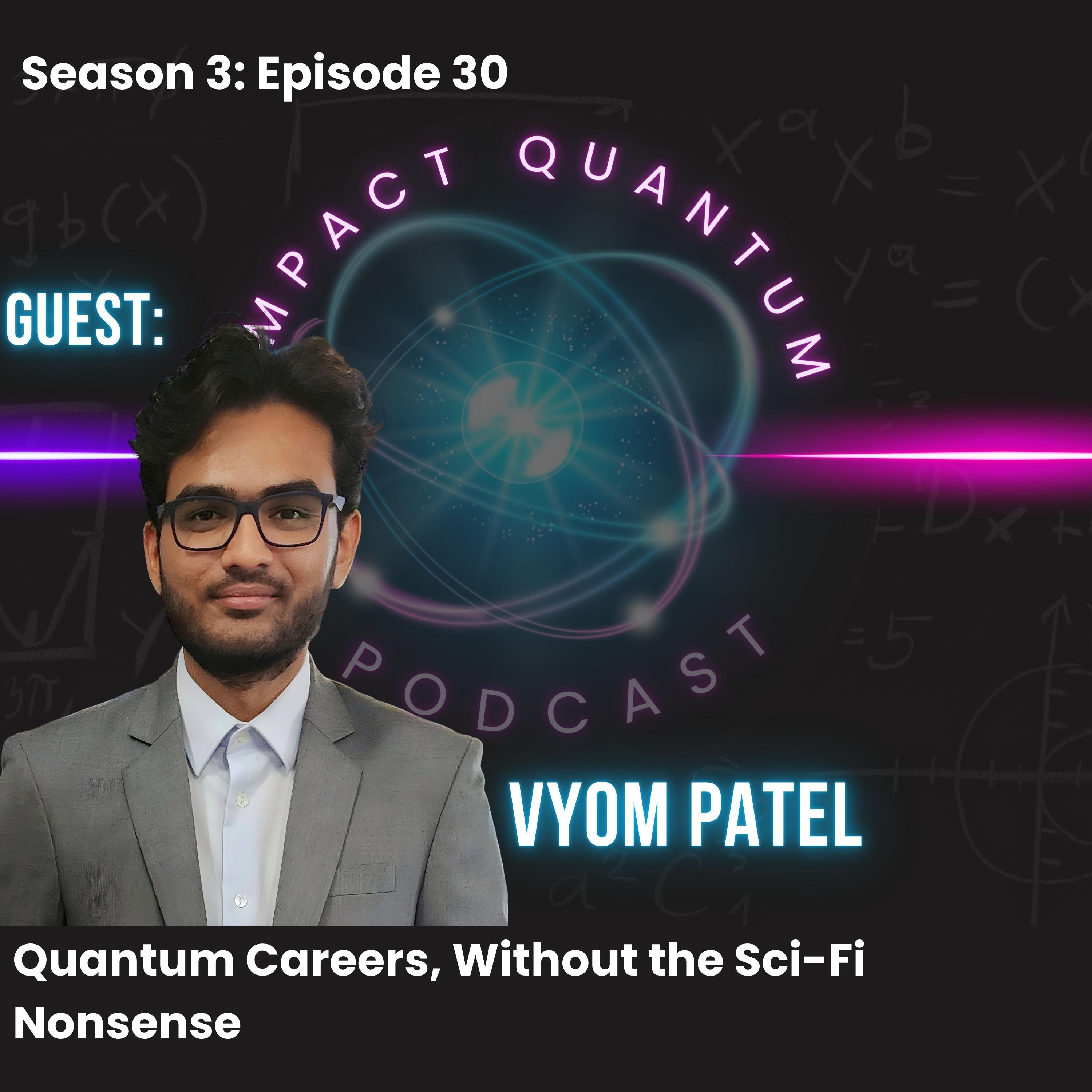
On this milestone 30th episode of Impact Quantum Season 3, hosts Frank La Vigne and Candace Gillhoolley are joined by Vyom Patel, a master’s student at the University of Waterloo—often described as the MIT of Canada.
This episode dives into Vyom’s journey from machine learning to the cutting-edge challenges of quantum algorithms and quantum error correction. Together, they unpack the common misconceptions around quantum computing, reveal the importance of strong mathematical foundations, and discuss the very real risks and rewards of working in a nascent, rapidly evolving field.
Vyam shares how he filters through the hype, stays up-to-date with the latest research, and why mentorship (both giving and receiving) is crucial in this space. Whether you’re just quantum-curious or already obsessed with superposition, this episode promises insights, laughter, and plenty of motivation to get quantumly curious yourself!
Links
- Quantum Computing Since Democritus – https://www.amazon.com/dp/0521199565?tag=datadrivenm0e-20
Time Stamps
00:00 “Exploring Quantum Computing’s Interdisciplinary Appeal”
04:10 Quantum Computing: Curiosity and Claims
08:19 Trusting Academic Sources First
11:44 Efficient Paper Skimming Techniques
16:52 Quantum Computing for Differential Equations
20:03 Quantum Matrix Encoding Challenges
24:10 Foundations of Cryptography and Error Correction
27:15 The Future of Quantum Education
29:23 “Foundations Key to Tech Progress”
34:04 Math Mentorship and Research Program
37:13 “Demystifying Quantum Mechanics for Beginners”
40:57 Quantum LDPC Codes Appeal
43:17 “Evolution of Error Correction”
46:26 Quantum Computing Race: Architecture’s Future
49:19 Future Plans: Technical Blog Creation
Transcript
Welcome back to Impact Quantum, the podcast that explores the cutting
Speaker:edge of quantum computing without requiring you to own a lab
Speaker:coat or a PhD. I'm Bailey, your dryly
Speaker:delightful British AI guide to all things quantum. And
Speaker:today we're marking a milestone. This is episode 30 of season
Speaker:three, which means we've officially hit quantum stability,
Speaker:or at the very least, podcasting coherence.
Speaker:Bravo. Us. To celebrate, we've got an absolute
Speaker:treat. Vayam Patel, a master's student at the University
Speaker:of Waterloo, known by those in the know as Canada's answer to
Speaker:MIT Viam's here to share how he journeyed from machine
Speaker:learning to quantum algorithms, what makes error correction
Speaker:more thrilling than it sounds, and why foundational maths
Speaker:might be your best ally in this emerging field. He's
Speaker:brilliant, articulate, and suspiciously well read for someone still
Speaker:in grad school. So grab your beverage of choice, settle
Speaker:in, and let's get quantumly curious with Vayam Patel.
Speaker:Hello, and welcome back to Impact Quantum, the
Speaker:podcast. We explore the emerging industry and field of quantum
Speaker:computing, where you don't really need to be PhD or
Speaker:super into the physics side of things. You just need to be curious. And with
Speaker:me, as always, is the most curious, quantum curious person I know. I always
Speaker:got to make sure. Candace, you're not the most curious person I
Speaker:know. You're the most quantum curious. Is that that one word
Speaker:changes the whole thing. Yes, absolutely. Absolutely.
Speaker:And I am. I'm super curious and I'm really excited. And every time we
Speaker:talk to someone new, no matter what they do, I learn
Speaker:something more. And I love Get a new perspective.
Speaker:I love it. I really, really do. And it just shows you how there's.
Speaker:There's just so much space in this field for all kinds of folks,
Speaker:and I think that's great. So today we
Speaker:have Viom Patel. He is a student at the
Speaker:University of Waterloo in Canada. They like to call that
Speaker:the MIT in Canada. So you understand
Speaker:that's. That's smart school. And we're really
Speaker:excited to talk to him today. How are you? How are you today?
Speaker:I'm doing good. Thanks for inviting me. Yeah, I look forward
Speaker:to. To our conversations. Awesome.
Speaker:So we're talking in the virtual green room a bit. The thing
Speaker:that fascinates me, because you're. You're still a student, you're obviously very early in your
Speaker:career, and you're already at
Speaker:Waterloo, right? The MIT of Canada. Right.
Speaker:You could be anywhere. You could be studying anything. Right. What made you pick
Speaker:quantum computing? Because I think that's really. I think that
Speaker:that's really the question, right. That gets to the heart of the matter of, you
Speaker:know, obviously you believe in the field and so. So what made you pick
Speaker:quantum computing? The short
Speaker:answer, which I'll start with is that I find it,
Speaker:it's right at the intersection of mathematics, or I
Speaker:should say rather, yeah, applied math and computer science
Speaker:or computational math in a way. So my bit of a
Speaker:background, I did my undergraduate, I started off as a computer science
Speaker:major and then I added math as a second major
Speaker:and I got interested, very interested in the intersection
Speaker:of these two disciplines. So earlier in my undergrad I was
Speaker:working and doing a lot of machine learning research, which was also yet
Speaker:another field which is at the intersection of two. But then near the
Speaker:end of my program, I found I was more attracted
Speaker:towards quantum computing because I found there were more opportunities to
Speaker:sort of work at this interdisciplinary
Speaker:area. So that was sort of the key motivation.
Speaker:Okay, interesting. What in particular attracted you
Speaker:to quantum.
Speaker:I should say at the first time when I heard about it, I
Speaker:think the whole claims of quantum advantage or quantum supremacy
Speaker:or the so called exponential speed up, I think that attracted
Speaker:me the most. Again, having this computer science mindset. There
Speaker:were a lot of claims about you can solve something super,
Speaker:super fast in an exponentially faster way. And
Speaker:second thing was just doing Manda grad. It's a very common
Speaker:curriculum in computer science courses. You take a course on theory
Speaker:of computation where you formally define what it means
Speaker:to compute. And we had one lecture on quantum
Speaker:computing and they sort of described in how a lot of
Speaker:the conventional ways that we are used to thinking about
Speaker:computing, they are just completely different when you move to the quantum
Speaker:computing side of things. So that also made me extremely curious
Speaker:about this new exciting field. And that's what I ended up
Speaker:going for my graduate school. Oh, very cool.
Speaker:I think it would be really interesting to ask you this, and I
Speaker:ask this every episode that we have and I think
Speaker:it's great because we just get so many different answers.
Speaker:What is the biggest misconception about
Speaker:the industry that you're hearing
Speaker:that you would like to address? I
Speaker:think the most common misconception that is often
Speaker:portrayed in, in communication in the news outlets are quite a
Speaker:bit is this whole idea of you can first is that,
Speaker:oh, people simplified a lot. So there's, there's
Speaker:this notion of, oh, in quantum mechanics or in the quantum computing side of things,
Speaker:you can just try all possible solutions to this
Speaker:problem that you're trying to solve in parallel. You just solve
Speaker:for all possible solutions and then you Pick the best one. That
Speaker:is simply just not true. There are
Speaker:just very, very specific instances where that might be true.
Speaker:But for the most case, we are not solving for all possible
Speaker:solutions at once. I think that's the most common
Speaker:misconception which we hear quite often.
Speaker:Okay. Again, I like the
Speaker:answer. It's different, it's not necessarily what I'd heard here before, and I like it.
Speaker:I think that's great. What's the most exciting risk
Speaker:you've taken with your career
Speaker:pursuing in quantum computing?
Speaker:I would say that the field is
Speaker:in its nascent stage. Even though there is so many big groups,
Speaker:research groups, working in this area, it has not been
Speaker:concretely proven from, even from a theoretical
Speaker:standpoint that using quantum computing for
Speaker:the problems that we are usually interested in is going to sort of give us
Speaker:a speed up. That's one part. The second
Speaker:part is the hardware is also not there yet.
Speaker:Companies have been telling it will be there in the next five years, but
Speaker:I think they've been always studying that. And we have made
Speaker:tons of progress, extremely great progress in the past two or three years.
Speaker:But again, these are the two big things. One is the theoretical guarantees
Speaker:on whether we will see a speed up, and second is the practical
Speaker:realization. So if these things don't pan out in, let's say, the
Speaker:next decade, then I would say that would be the
Speaker:big risk. Short term or medium term risk. I would
Speaker:say from a career perspective, because at the end of the day, if you're
Speaker:looking to find a job and if the, if the field does not
Speaker:progress as, as, as some of the other fields did,
Speaker:then that would be sort of a biggest risk.
Speaker:So how do you tell the difference between hype and
Speaker:true innovation? Because you have to admit, we're hearing new things every week.
Speaker:We're hearing new things every day sometimes. So how do
Speaker:you tell the difference?
Speaker:I think I'm fortunately in a
Speaker:position that I have been surrounded at,
Speaker:at the University of Waterloo with some of the best researchers in this field.
Speaker:So I got the, got the opportunity to take very
Speaker:advanced courses with them. And the courses were
Speaker:designed in a way where they, they go back all the way to the
Speaker:fundamentals and they would teach you a lot of these things from a
Speaker:rigorous standpoint. So when some big news come out for
Speaker:me, I almost always just ignore it,
Speaker:unless there is a link to the paper which is being published. Because if
Speaker:I can see the results in the paper, I
Speaker:just cannot believe news or a blog post. So that's
Speaker:sort of like the filter one for me. And once I find the
Speaker:papers, then if it's one of the big, one of the big companies
Speaker:like Google or I nowadays, they are doing exceptionally
Speaker:good research. So you can get some good idea by reading the
Speaker:introduction and conclusion of the paper. Even though the paper might be 50 pages,
Speaker:you don't need to be an expert and read through all the 50
Speaker:pages. If you just get an idea by reading sort of the abstract
Speaker:intro and conclusion. So that would be like my first two
Speaker:filters and passes. And then if I do find something that
Speaker:aligns with what I think might be, oh, this could be interesting, then
Speaker:I'll just skim through the paper. So that's sort of my process. So I think
Speaker:the last part skimp through the paper. That would require
Speaker:some technical background, which I was fortunate enough to have. But even if you are
Speaker:not necessarily an expert, I think my first filter is, is there like
Speaker:a technical paper which was released with this, with this news
Speaker:announcement. One of the things you mentioned,
Speaker:and I'm just curious, like, there's obviously a lot of papers getting published.
Speaker:Right. How do you keep up? Right. I mean my, my hack for keeping
Speaker:up is I feed all the PDFs and each research
Speaker:paper gets their own notebook. Lm right. So I can kind
Speaker:of like have a podcast explainer. So while I'm driving around, driving the
Speaker:kids around, I can. Well, you don't. Maybe you don't have kids. So. But like
Speaker:there's just so many demands on my attention and time. I find using
Speaker:AI, you know, everyone's all freaked out about AI is going
Speaker:to make students cheat. I use AI to help me
Speaker:learn. And I would imagine, I would imagine that
Speaker:it's probably more widespread. Most certainly. We didn't really have
Speaker:AI when I was in university. Actually, that's not true. We had something called
Speaker:Prologue, which was this. Yeah, you're laughing. Yeah,
Speaker:like, you know, but I mean, cut us a break, you know, like the, the
Speaker:ice age had just ended and, you know, we just invented fire.
Speaker:Right. I
Speaker:love it, I love it. I've used Prologue. I enjoyed my time,
Speaker:but that enjoyment lasted three months for the, for the course that I
Speaker:was taking. Yeah, that's sounds about right. Yeah. Yeah. I remember
Speaker:my final project to this day and I'm like, that was an awful
Speaker:lot of work to parse the binary tree. Yes. Yeah.
Speaker:Sorry, go ahead. Oh, yeah, I was just going to mention.
Speaker:Yeah, I think for keeping up with the papers. Yeah, I think
Speaker:so. My filter. Well, again, because I work in one
Speaker:or. I'm mostly interested in one or Two parts of the quantum algorithm side of
Speaker:things. I, I have this daily ritual. Just every
Speaker:morning with the coffee I just go to cite. Usually there's less than
Speaker:20 papers uploaded on the archive
Speaker:for quant ph. Sometimes it might be 30, but usually I just
Speaker:skim through them and if the topics are more algorithmic I just open again,
Speaker:read the abstract intro and conclusion and from there I can figure out if I
Speaker:need to dive a bit deep. I did try
Speaker:NotebookLM at some point when it first came out.
Speaker:Unfortunately it did not work for me. It was
Speaker:just not accurate enough even to give a high level summary.
Speaker:I have not tried it since this was a few months
Speaker:ago, I would say six to eight months ago. So maybe things
Speaker:have changed quite a bit since then. But I think, yeah, I
Speaker:just, for me I'm very, it's very easy and fast for me to just skim
Speaker:the abstract and then just know whether this is worth my time.
Speaker:That's cool. So is that how you keep up then essentially on
Speaker:the industry trends and the new tech?
Speaker:Because if you feel, if it has a white paper then it's fairly substantial.
Speaker:Yes. Although I think, I think because I still
Speaker:like a grad student working research, I think I would prefer if it was
Speaker:not necessarily a white paper but like a proper technical paper that
Speaker:gets published in a peer reviewed journal. So sort of
Speaker:that's like published. Being published in a journal obviously takes
Speaker:time, but usually pretty much everyone uploads their papers
Speaker:nowadays to arXiv. So that's the open source website where you can
Speaker:just go and filter by quant ph and all the papers published. And
Speaker:even though the, even though the tag is supposed to be for quantum
Speaker:physics, I think nowadays it's mostly just filled with quantum computing related
Speaker:papers. Right. And for those following at home it's
Speaker:spelled. If you want to check this out, it's AR X I V X. Yeah.
Speaker:Yes. I
Speaker:don't want people searching around being like I couldn't find that site you mentioned.
Speaker:Yeah. Cir8 is also an alternative. Most papers from
Speaker:archive get posted to cite. The nice thing about cite is that
Speaker:you can write quick comments on if you have some questions about the new
Speaker:result. It could just be high level and the authors themselves would
Speaker:usually respond. So that's a very quick way to sort of interact with them.
Speaker:So I usually use cited as well. And there is a way where the most
Speaker:like interesting papers people will like cite them and they will just
Speaker:climb to the top of the top of the sorting algorithm. So
Speaker:that's quite nice.
Speaker:So what Are some long term goals like that
Speaker:you have for what you want to do after you
Speaker:finish with grad school? Where, where do you want to
Speaker:situate yourself in the, in the quantum ecosystem?
Speaker:Or is it even too early even ask that question? Oh, that's fair.
Speaker:Sorry I cut you off. Yeah. I think
Speaker:for me I've, I've realized that I find
Speaker:two areas quite interesting. So broadly speaking, they are
Speaker:quantum algorithms and quantum error correction. Now of course, like that's,
Speaker:that's way too broad. So specifically quantum algorithms
Speaker:for problems that arise in solving differential equations.
Speaker:So differential equations are one of the most common ways where a lot of these.
Speaker:Weather prediction is the most obvious example. But also
Speaker:nowadays there's a lot of simulation work going on and
Speaker:designing the aircraft, simulating the flow around the
Speaker:aircraft wing. These are very computationally challenged, challenging
Speaker:problems. So my sort of interest through my research
Speaker:project went into this field quite a bit and this is a
Speaker:fairly, I would say new field on
Speaker:applying quantum computing to like cfd or
Speaker:numerical PDEs in general. So that's one very specific area that
Speaker:I'm interested in. And the second being error
Speaker:correction. Again, error correction is a way too broad of a field. Where
Speaker:I see myself fitting in is
Speaker:translating a lot of these academic papers
Speaker:to code implementations. I think that's a big
Speaker:missing part. That also helps me a lot
Speaker:accelerate my research because every time a new idea comes in, but if I cannot
Speaker:quickly prototype and test it out, it's very hard to gauge whether
Speaker:this is applicable or not applicable. I think I've gotten
Speaker:used and good at implementing a lot of these latest
Speaker:algorithm papers that come out. So that's
Speaker:somewhere that's a nice intersection that I would like to be
Speaker:in the short or medium term, I guess.
Speaker:Okay, cool. So what, what do you think, what is
Speaker:the. Do you, do you have a. So you're a post grad student
Speaker:PhD or, or somewhere else or. I'm a
Speaker:master's student currently. Okay. Yeah, second year.
Speaker:Cool. What areas do you think you're going to focus on
Speaker:in your research? I think
Speaker:short term I would still be focusing on
Speaker:applying the quantum computing, quantum algorithms to
Speaker:problems as I mentioned, and differential equations specifically. So
Speaker:I think that's the short term focus again because
Speaker:it's a fairly new field. I think there is a lot to be done and
Speaker:a lot of the conventional. Because what we are trying to do right now and
Speaker:when I say we, like a lot of researchers in this community is we are
Speaker:used to thinking of solving these differential equations in a
Speaker:classical way. So we are just trying to map these classical
Speaker:ways of thinking to quantum computing. And then we have realized that
Speaker:it does not always work out. In fact, it almost always does
Speaker:not work out. So we have to go back to the fundamentals. We have to
Speaker:rethink the way that we've been thinking about solving these problems
Speaker:classically. Because on a quantum computer even some simple
Speaker:things are not allowed, like nonlinear simply computing,
Speaker:like X squared. On a classical computer you just make two copies and multiply them
Speaker:together. On a quantum computer it's not possible
Speaker:really. Like I'm simplifying things, but that's sort of the idea.
Speaker:So this pushes you down to go back to the fundamentals, sometimes
Speaker:rethink the way of mapping your problem and then bring
Speaker:it back to the quantum computing side of things. Things. So I think I enjoy
Speaker:that process a lot and I think I would in the short term would like
Speaker:to continue working in that field if, if, if given the
Speaker:opportunity. Now this may be me being a software
Speaker:engineer by training and comp. Sci major by training. And
Speaker:I think that's really going to be a big growth area. Right. The writing the
Speaker:code. And at a, at a very
Speaker:fundamental level is going. You're right. Like it's going to be different. Right. There are
Speaker:new ways to approach problems. You have to kind of drop
Speaker:your old way of thinking. I think the quote Yoda, where you have to unlearn
Speaker:what you've learned. So
Speaker:I think it's interesting because
Speaker:that means that there's going to be a lot of code that will need to
Speaker:be rewritten. Right. And not like you know, hello world type stuff.
Speaker:I mean core underlying algorithms for
Speaker:search and you know, all of those things
Speaker:are going to be, have to be recoded from the get go. And you know,
Speaker:that's not exactly, it's not exactly exciting work in one.
Speaker:Right. You know, bubble sort is not really
Speaker:the most fascinating algorithm in the world, but it's kind of
Speaker:where everybody starts I think with quantum computing. I think we're going to have to
Speaker:revisit a lot of our underlying assumptions
Speaker:around computer science. Yeah, that is
Speaker:true. I think in fact a lot of my, a big part of my research
Speaker:area was to like there's this notion of
Speaker:block encoding. It's fancy way of saying how do you encode
Speaker:classical information onto a quantum computer? Now
Speaker:classical information is on quantum computer you're only allowed very
Speaker:specific operations. Technically they're called like unitary operations.
Speaker:Most of the classical operations that you would want to do are not unitary. So
Speaker:you have to make them unitary somehow. Right. So a lot of these
Speaker:algorithms is, they assume you know how to do that. And then the algorithm starts,
Speaker:then the paper starts. But some for, for someone like me who's
Speaker:interested like in the next, in applications in the next five or
Speaker:10 years, I'm like, how do I, like how do I do that first part,
Speaker:which is assumed to be true. So a big part of my,
Speaker:my thesis and my research area was basically that how do I encode
Speaker:this matrix, classical matrix, onto a quantum computer?
Speaker:And turns out this is an unsolved problem. So I
Speaker:focus on very specific structured matrices that I, that we
Speaker:see a lot very commonly in numerical analysis or
Speaker:numerical mathematics. And my, and the approach that I
Speaker:took is like, I had to go back, dig through these. Apparently the
Speaker:turns out you can automate a lot of this if the code is written in
Speaker:a way such that it identifies these repeating structures in the matrices.
Speaker:And the way I was able to do it is I was, I had to
Speaker:go back to the old circuit design
Speaker:books from the second year of computer engineering or computer
Speaker:science and like rethinking how to add two numbers together,
Speaker:how to, and how to do these things on a quantum computer.
Speaker:So tracing back through all of the existing sort of literature,
Speaker:that's sort of where we are now. So, like, we are very early. But
Speaker:it's also exciting that in a way that what. There's
Speaker:so much, so much things, so many things that needs to be figured out.
Speaker:But it's also for me, like an exciting path coming from like a computer
Speaker:science background as well. That's true. Because when you, when you're in
Speaker:computer science, a lot of these basic fundamental problems have largely
Speaker:been solved. Right? Yeah, like bubble sort. Right, I'll pick on
Speaker:sort. Right. But like with quantum computing, no, I mean, we're still early
Speaker:enough where they're naming things after the researchers who find them. Right. So the Shores
Speaker:algorithm, Grover's algorithm. Right. I
Speaker:don't know. Like, you know, maybe there'll be Patel's algorithm. Right. Like, I mean, it's
Speaker:totally, it's totally within. But you know, in traditional computer
Speaker:science, I think those days are probably over. But in quantum
Speaker:computing science, like, I mean, I say that in jest, but
Speaker:it's totally possible. Right? Like, yes. Yeah. You know,
Speaker:I think that's exciting. Right. Like, we really are in the frontier. And, you
Speaker:know, the frontier is exciting, but it's also kind of like, oh, no one's done
Speaker:these fundamental things yet, you know.
Speaker:Yeah, definitely. There's a lot more opportunities to Sort of do,
Speaker:like, you could just come up with a completely different
Speaker:sort of background, slash, mindset. And all of a sudden you just have like, just
Speaker:thought of something that no one else has before. And because we are so early
Speaker:in this field, it would be like, oh, you just stumble across a
Speaker:new algorithm and yeah, maybe, like eventually, as
Speaker:you mentioned, maybe it gets named after you. Right.
Speaker:It's totally, totally believable, which is exciting. Yeah,
Speaker:it seems like. No, no, I'm just kind of amazed by the skill set
Speaker:you're talking about, you know, with the
Speaker:computer science and then talking about math and
Speaker:then, you know, I'm, I deep research.
Speaker:Like, what do you think are the, the necessary, the
Speaker:necessary skill set to have when
Speaker:working on, you know, like, for example, you were talking earlier about error
Speaker:correction. Like, I'm just kind of curious for people who have some of those
Speaker:skills, but maybe not all of those skills, how they could, if they could kind
Speaker:of break in and be involved, what kind of skill set do you think
Speaker:you really need? I think for. It's
Speaker:really important to get the foundations
Speaker:strong. Luckily, the existing curriculum,
Speaker:existing undergraduate curriculum is actually very well suited
Speaker:for this. Unfortunately, I would say that
Speaker:a lot of it is taught in a very. So to give concrete
Speaker:examples, let's say undergraduate mathematics. So
Speaker:error correction, that's a great example. All undergraduate curriculum
Speaker:programs, they would go through these courses on linear algebra,
Speaker:abstract algebra, where they would cover group theory and brings in fields.
Speaker:Now group theory and rings and fields. It's not necessarily like a new topic.
Speaker:They also form the foundations of cryptography. And we have been using
Speaker:cryptography for like six, seven decades now. Turns out
Speaker:the same foundations behind cryptography, the group theory and rings
Speaker:and fields. That's exactly what 90% of error
Speaker:correction is. And to me, this was
Speaker:surprising because I took this course, an advanced course in my grad school,
Speaker:but when I took the course, I realized, oh, this is just 90%
Speaker:flashbacks to third year. But hey, it's been three years now, so I
Speaker:need to go back and get to know a lot
Speaker:of the fundamentals. But I would say like linear algebra
Speaker:would be sort of step zero. And luckily that's covered in
Speaker:most of the undergraduate curriculums and STEM programs.
Speaker:So math, physics, computer science, engineering, and then if
Speaker:you want to get into some specific fields, such as correction, I think having
Speaker:a math background definitely helps. Working in
Speaker:algorithms, I think having somewhat of a computer science background
Speaker:could help. So yeah. And physics, again, if you're
Speaker:interested in error correction from a hardware, hardware side of things,
Speaker:physics background can Also definitely help quite a bit as well.
Speaker:And yeah, and I would like to mention like before starting my grad school I
Speaker:did not have any background in quantum computing at all. So it was
Speaker:a very new field for me as well.
Speaker:So yeah, all that I know I've essentially just learned in the
Speaker:past 2ish years, I would say.
Speaker:So, yeah, like I come from the, a very common journey
Speaker:that many people in this community who are new, they
Speaker:also come from different backgrounds, they don't have a formal training in
Speaker:quantum computing. But I don't think that's, that's an
Speaker:issue. I think that's. That, that is. Okay.
Speaker:That'S a good point. Right. This is, this is a relatively new field. It's been
Speaker:around in one form or the other since the 90s, right.
Speaker:You're Candice little known fact. Candace's dad was an IBM
Speaker:researcher working on this in the 80s and
Speaker:90s. Right. So like this is not, in some ways it's not
Speaker:new, but in a lot of ways it's new to a lot of people. Right.
Speaker:So you're going to find I think a lot of people just like, you know,
Speaker:when I was early in my career, there were not a lot of computer science
Speaker:people like in industry, right. Who had comp. Sci majors. Right. A lot of
Speaker:them were people who had other degrees, be they science, even a
Speaker:couple of history majors that had learned to
Speaker:code. Right. As much as I hate seeing that phrase because it was
Speaker:so abused.
Speaker:But you know, they had, they kind of realized like, you know, I
Speaker:can. And I started my career on Wall street. Right. So there were a lot
Speaker:of also finance types that figured out that, hey, you know, I could be a
Speaker:stockbroker, yes, I will make a lot of money, but I will have an ulcer
Speaker:and a receiving hairline by the time I'm 29. Or I can kind of have
Speaker:a more leisurely pace and do
Speaker:coding for the, you know, write applications for the. Yeah. For the
Speaker:traders and things like that. So, you know,
Speaker:I also think that because this is a relatively new field, very, very much in
Speaker:its infancy, you're going to see a lot of people that you're not going to
Speaker:have kids go to, you know, kids. Right. You know, you're not going to have
Speaker:people go to school and come out with a quantum, you know, a degree in
Speaker:quantum computer science just yet probably
Speaker:in about 10, 15 years. I think that'll be a thing because it always starts
Speaker:off with grad, you know, grad, grad school type programs and then
Speaker:eventually it filters down Into a thing. Yeah, but I'm very glad you said that
Speaker:because that was my advice to, to my oldest child
Speaker:is taking physics and calculus and math and things like that.
Speaker:Because those are hard subjects, right? Well, it's not like those are hard
Speaker:subjects. And because it's hard, very few people are going to do it,
Speaker:right? And because very few people are doing it, market
Speaker:forces being what they are, there's not going to be a lot of people doing
Speaker:it. And our entire society or entire civilization relies on
Speaker:a lot of the fundamentals of physics and
Speaker:mathematics. And it's alarming in a lot of ways that a lot of people
Speaker:don't know it. Right? So, you know, you will automatically be
Speaker:kind of whatever that looks like, Right. I used to say learn to code, kids,
Speaker:learn to code. But I think, you know, the last, you know, developments over the
Speaker:last, you know, couple of years have really been like, yeah, maybe you should focus
Speaker:on more than just code, right? Yeah, yeah,
Speaker:definitely. In fact, I think so. It's
Speaker:sort of like a two sided coin in a
Speaker:way because when I first got introduced to quantum computing, it was through one of
Speaker:those IBM summer schools, which I think was a great
Speaker:way to bring a lot of people into this field.
Speaker:But to your point, I think there is a big
Speaker:misconception that you could just.
Speaker:Don't get me wrong, I think it's a great way to just start learning through
Speaker:being able to write these code, to generate circuits, simulate them.
Speaker:But that's it. Like you, all you're doing is just following a
Speaker:tutorial and quantum computing. Like even though someone
Speaker:might make it sound that anyone can get in and it's very easy, all you
Speaker:need to do is basics of coding. That is not, simply not
Speaker:true. If you want to make any good progress, you would need to know
Speaker:the foundation, which as you mentioned, math, physics and even computer
Speaker:science. When I say computer science, I don't mean just coding, right? Like
Speaker:we are in the era of GPT. So I don't think coding
Speaker:is, is, is that much required now. But I think what
Speaker:you do need is strong foundations in algorithms or like these,
Speaker:and these are covered in undergraduate curriculum. I think time
Speaker:has come that if this feel as it progresses, I think more
Speaker:people will start hopefully focusing back on foundations,
Speaker:which I think is very important because without that you are
Speaker:essentially just writing code, but you don't really
Speaker:know what you're doing. In a way it becomes very hard
Speaker:to make progress in the field, especially when
Speaker:you want to work on the state of the art applications or
Speaker:even research In a way, I think that's. A good
Speaker:way to put it because I think in popular culture, or
Speaker:we've confused computer science degrees with learn to code. Right. Yeah,
Speaker:those. I mean, it's a subset of a much larger thing. Right. You know,
Speaker:how computers actually operate. Right.
Speaker:And I understand why it's easy to
Speaker:get those confused, but I think we do ourselves a disservice if we continue to
Speaker:do that. Right. Because it'll be like, you know, a lot of computer science major
Speaker:departments are. They're seeing shrinking enrollment. Right. Because of the
Speaker:chat kind of situation. But
Speaker:there's a lot more to it. Right. Like, somebody still has to understand
Speaker:how networking works. Right. How the packets work. Right.
Speaker:One of my favorite phrases, Candace is probably sick of hearing it. Right. Someone has
Speaker:to rack and stack them. Right.
Speaker:And so, yeah, no, I mean, computer science, if
Speaker:listeners take nothing away from this other than that you're a smart guy
Speaker:and Candace is sick of my jokes, it's that
Speaker:computer science is more than about coding. Right. It's an entire
Speaker:academic discipline heavily rooted in math, but kind of, you
Speaker:know, branched off for very specific problems. So. Yeah.
Speaker:Yeah. Let me ask you this. Has the idea of
Speaker:mentorship affected you
Speaker:in your path, your learning journey so far? Have you had
Speaker:a mentor that's really inspired you? Are
Speaker:you interested in being a mentor to other people? I'm
Speaker:curious about that. 100%. I think I have
Speaker:the. I have the usual story of. You will hear this
Speaker:from most math majors. You had this one professor
Speaker:in there in their undergraduate. In my case, I was fortunate enough to
Speaker:have Professor Steven Ryan from University of Saskatchewan. He
Speaker:taught me. Yeah. I took vector calculus in my second year.
Speaker:Ever since I took that course with him, I just, like, became. Not just
Speaker:me, everyone else in the course as well. They just became fans. But
Speaker:lucky for me, I got to be more than fans because I
Speaker:got a chance to do two summer research programs with
Speaker:him. I graded his vector calc for two years
Speaker:straight. And I also. He was the one who sort of.
Speaker:He knew that what I. What my backgrounds are and what my interests are.
Speaker:And I was. I was this close when I got my
Speaker:grad school offers because I was 50. 50, but leaning more towards machine learning.
Speaker:He was the one who said, I've known you for the past three years. I
Speaker:think quantum computing would be the right field for you. And if you don't think
Speaker:you're convinced, do a summer research project with me. And he knew
Speaker:my background. He's just one of them, one of those people. And he I did
Speaker:a research project with him over a summer and I knew right there that,
Speaker:oh yeah, this is the field that I, that I want to be.
Speaker:And yeah, without him, I don't think I would have been able to
Speaker:like, make it to grad school at Waterloo at
Speaker:all. And I have taken. Tried. I think I see
Speaker:him as like, yeah, inspiration. And also he was a great
Speaker:mentor. And I've been trying in different
Speaker:roles to sort of be a mentor to
Speaker:other students if I can. So in grad school you get a chance to work
Speaker:as a ta. So that's one very common,
Speaker:common way to interact with first, second year students. But at
Speaker:Waterloo, they have a faculty of math, which is very unique
Speaker:to Waterloo. So it's not a department, it's a college of mathematics. So
Speaker:computer science is actually part of college of mathematics at
Speaker:Waterloo. So that's very rare. So math is sort of one of the biggest
Speaker:strong areas at Waterloo. So in the college of math they
Speaker:have a program called directed reading program and directed research
Speaker:programs. And the idea there is grad
Speaker:students, masters, PhDs and sometimes even postdoc.
Speaker:They act as mentors and they can propose reading projects.
Speaker:And the undergraduates, from year one to year four, you
Speaker:will get paired with one or two students and you have four months, essentially a
Speaker:term, and you will assign, you will do readings together. You will assign
Speaker:the students the readings and they would read it. You would meet every
Speaker:week and you. They would sort of ask questions. So this gives them the
Speaker:ability to learn something new which is not part of their
Speaker:curriculum, but also it gives me the ability to sort of share
Speaker:some of my experiences and knowledge with them in
Speaker:a mentorship sort of role. So I think I've been.
Speaker:So this is the second term I'm doing it. I did
Speaker:that last term as well, but it was the same topic getting first years
Speaker:or second year students into quantum computing. And then this
Speaker:year, this term I'm doing it again. So I think that has
Speaker:definitely been a big part of my
Speaker:undergraduate slash grad research curriculum.
Speaker:Interesting.
Speaker:Is there a book or a podcast
Speaker:or simply an idea that
Speaker:you've come across in the past year that has really
Speaker:changed the way you think about something or
Speaker:affected you in a way that you want to.
Speaker:Did you'd want to talk about?
Speaker:Yes, I think the one book that comes to mind,
Speaker:it's called, it's a fairly famous book. It's called Quantum
Speaker:Computing Since Democritus. It is by Scott
Speaker:Berenson, who is like, no one is
Speaker:going to. I think everyone would agree that he is one of the, if
Speaker:not the most smartest researchers in quantum
Speaker:algorithms, quantum complexity theory in the world. Like
Speaker:period. He has, he has worked under so many great people
Speaker:and the work that he's been doing for the past three decades is just phenomenal.
Speaker:He maintains his own blog post where
Speaker:like a lot of the questions you asked in the. During this conversation is about
Speaker:how do you know if a new news article is worth
Speaker:reading or not. I go to his blog post
Speaker:because he is one of those people who would just go and he would
Speaker:lay out the truth as it is. And he is someone
Speaker:that you can just trust without like just blindly trusting.
Speaker:But he wrote this book in:Speaker:which was based on the lectures that he gave as a postdoc at University
Speaker:of Waterloo from:Speaker:which is at first pass when you read it.
Speaker:And if you try to do the. There are many exercises
Speaker:I could barely do that. These are not like math
Speaker:heavy exercises. These are very thought provoking exercises. So if you're not
Speaker:used to thinking the way that the book that the book is written,
Speaker:it would be very hard. But the, but this book sort of just
Speaker:opened my mind in a way like what does it even mean to
Speaker:compute something? How and why quantum mechanics
Speaker:is so different than classical computing. And he takes an
Speaker:approach where you don't need to know any quantum mechanics. All you need to know
Speaker:is if you know, if you come from either a computer science background, that's what
Speaker:he, that's the background he comes from, or if you come from a pure
Speaker:math background, you can still know everything that all the
Speaker:foundations of quantum mechanics. In this book, it's, it's mostly
Speaker:not math. There's, there's very less math, but it's written
Speaker:in an extremely thought provoking way. And like every, every year I try
Speaker:to come and read again and I'm pretty sure I still don't understand
Speaker:all of it. But he talks about everything. He had, yes chapters
Speaker:on what it means, the implications of quantum mechanics to. Through
Speaker:something like time travel. And
Speaker:this is not like the sci fi time travel. This is like
Speaker:concrete formal implications.
Speaker:If time travel were true, can you solve things that a quantum
Speaker:computer cannot solve? And he has mathematical arguments to sort of
Speaker:go through this. So I would highly recommend that book, I think to
Speaker:anyone. Not only if they're interested in quantum computing, but in
Speaker:general, I would say. No, that's, that's a good point. There's a lot,
Speaker:I'm sorry, I should. Say just for our readers. Again, say the name of the
Speaker:book again. Yeah, it's Quantum Computing Since
Speaker:Democritus by Scott Aaronson. In fact, if you just
Speaker:Google Scott and some blog, it will take you to the blog post. One
Speaker:of the things on the title of his blog post says if you don't take
Speaker:anything from this blog post, take away this. Quantum
Speaker:computers do not solve everything in parallel. That's, that's in like the,
Speaker:in the title of his blog post. It's like that's the biggest because
Speaker:I think he also ran across the same thing. It's like many people
Speaker:have this misconception, so he's also out there trying to sort of do
Speaker:his. To do his part.
Speaker:Go ahead, Frank. Oh, no. So, Leah, there's a lot of interesting things that
Speaker:they're. The retro causality was something I
Speaker:heard about, which kind of implies, if not time travel, kind of a reverse
Speaker:load of time. But I, I'm. I'm out of my depth
Speaker:beyond saying those sentences. But it's an interesting concept,
Speaker:right? Like the way we perceive what we call reality
Speaker:may not be the final word on how things actually work.
Speaker:Right. Yeah. Which is very fascinating. Like, I'm. I'm a
Speaker:philosopher at heart. So when I hear there's certainly
Speaker:aspects of.
Speaker:Aspects of a lot of
Speaker:these kind of quantum computing and kind of
Speaker:quantum physics, things that really kind of bridge those worlds of hard science and
Speaker:kind of philosophy. Right? Yeah,
Speaker:yeah. And this book will definitely, like take you to philosophy as well.
Speaker:So. Yeah. Highly recommend. Cool. I'm gonna order
Speaker:it. What would
Speaker:you say is the most recent innovation that we've
Speaker:all heard about? If it's willow
Speaker:or. I always pronounce it wrong, Frank. I pronounce it
Speaker:magero, which is the weight loss drug. Yeah, that's what it is.
Speaker:Majorana. Majorana, right. I think it's named after
Speaker:somebody who's German or Spanish. So the J becomes a Y. Yeah.
Speaker:Okay, so out of all like this, so much out there.
Speaker:Right. Yes. What to you is the most exciting
Speaker:right now? To me, I think
Speaker:there is this subset of error correcting codes known as
Speaker:QLDPC codes, quantum LDPC
Speaker:codes, which are. Which have very nice
Speaker:theoretical properties. That has great implications on
Speaker:error correction. And it makes the resources. Because
Speaker:at a high level, the way error correction works is you have a lot of
Speaker:noisy qubits and you reduce and you essentially use
Speaker:like 100 noisy qubits to maybe simulate two or three
Speaker:perfect qubits. That's the rough idea of error correction. And
Speaker:I think QLDPC codes, the rate, which is the
Speaker:number of noisy qubits you need to simulate a
Speaker:certain number of logical qubits that's quite
Speaker:high. So they are quite appealing to me. IBM
Speaker:is sort of taking this approach for error correction. So
Speaker:that to me I think that's one of the most interesting
Speaker:areas that I'm looking. And qldpc, again,
Speaker:LDPC codes are not new. These are first discovered in
Speaker:1967 and they are used currently in
Speaker:5G communication in our mobile devices. So
Speaker:now the quantum version of these LDPC codes
Speaker:are sort of one of the things that many people believe is state
Speaker:of the art. Interesting.
Speaker:It's funny how it all comes back to a lot of research that's already been
Speaker:done for conventional computing. Right. And correct me, I'm wrong, error correction was also a
Speaker:big deal in early hard drives as well as CD ROMs. Right. And
Speaker:DVDs. Right. Because that's why if you scratch it, if you
Speaker:scratch a CD up to a certain point
Speaker:obviously, yeah, like it'll still solve it. Right. And
Speaker:I remember there's error, there's error correction, a lot of
Speaker:things like your credit card numbers, right. There's a lot like they have to match
Speaker:that to a thing. I don't know if that's for error correction or for other
Speaker:reasons, but even like barcodes, right, Barcodes. That
Speaker:last little. I, I used to work on an E commerce site and,
Speaker:and like I remember, I forget how I got involved with
Speaker:like we needed to replicate the algorithm from what was
Speaker:originally written and we need to rewrite it in Perl, of all things.
Speaker:And I remember that the last digit is
Speaker:actually a checksum which is kind of a. That's the dollar store
Speaker:version of error correction that you're talking about. Yeah, yeah.
Speaker:So yeah, error correction, like classical error correction is what
Speaker:enabled classical computers to function
Speaker:basically like the field of error correction, slash
Speaker:compression, slash information theory. It started in I think
Speaker:50s by Claude Shannon, by then pioneed by Richard
Speaker:Hamming and a lot of these classical error
Speaker:correcting scientists. But yeah, nowadays it's basically
Speaker:everywhere. In all wireless communications, in something as simple as a
Speaker:CD roam and hard drives, even the transmission over
Speaker:the Internet that has a certain notion of error correction
Speaker:inbuilt. So now a lot of these same principles are
Speaker:being translated over to quantum computing. And in fact most
Speaker:of the codes that are being sort of researched now, they, they had
Speaker:their origins, they are classical codes at the end of the day. But they,
Speaker:but they have been extended to work in this because in the
Speaker:classical codes you just have one sort of error, a zero changes
Speaker:to a one or one changes to a zero. But on a quantum computing you
Speaker:also have this phase which is you can have
Speaker:essentially a continuous phase along with the
Speaker:bit flipping between zeros and ones. So fancy way of saying you have
Speaker:more errors to correct. So your codes have to be much more complicated
Speaker:than just the classical error correcting codes. But that's a good starting point
Speaker:that most researchers build from.
Speaker:Cool. How would you describe what you
Speaker:do to a 10 year old? Ah,
Speaker:okay.
Speaker:Yeah, I think to a 10 year old they have
Speaker:probably heard that weather prediction is important
Speaker:or at least heard of predicting weathers of weather.
Speaker:So I would say yeah, I work on,
Speaker:I work on designing ways to that
Speaker:could help accelerate the process
Speaker:of weather, of weather prediction, whether it be more
Speaker:faster or more accurate. And the way I do it is
Speaker:using quantum computers. I think
Speaker:that should work.
Speaker:I appreciate that, thank you.
Speaker:How would you explain this to,
Speaker:how would you explain quantum computing to someone who is
Speaker:looking to invest in these companies?
Speaker:Oh, I'm just curious. Not, not like you're pitching them, but like,
Speaker:let's just say you had a friend who's a venture capital and over coffee is
Speaker:like, hey, I've been hearing about this quantum computing thing. What's the deal? Is
Speaker:it a thing? Is it not a thing? When will it be a thing? I
Speaker:know, I know. The when will it be a thing? Is a very controversial question,
Speaker:but needlessly controversial in my
Speaker:opinion. But it is what it is.
Speaker:Yeah, I think from an investing point of
Speaker:view it would most likely come back to
Speaker:the whole who gets there? Well, there are two
Speaker:questions. One is who gets there first. But the second is
Speaker:as of now, pretty much all companies are taking a different
Speaker:route. At the hardware level. Someone is doing
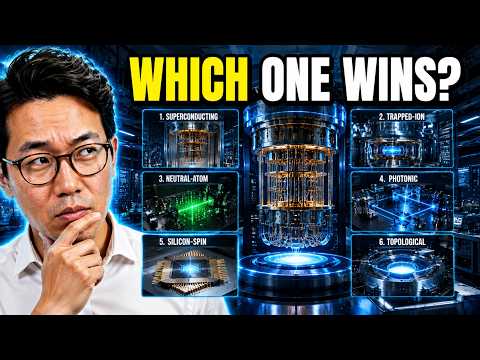
Speaker:superconducting, some Microsoft is doing topological
Speaker:qubits, then we have ion trapped. So everyone is sort of
Speaker:trying different architectures. So the question becomes like, yeah,
Speaker:it's not just about who gets there first, but it's also about once
Speaker:you get there, are you able to scale it up such that you can
Speaker:make bigger and bigger computers? Because that's what we need at the end of the
Speaker:day to make it useful for the applications that we
Speaker:have in mind. I think it would come down to
Speaker:can one identify from a
Speaker:technical point of view which one of these architectures
Speaker:are the most appealing and they have
Speaker:the most promising future? I
Speaker:think to me that's what it comes down to. And
Speaker:correct me if I'm wrong, but also each problem, each type of
Speaker:hardware is ideal for certain types of problems. And I think one of
Speaker:the temptations is because electronics, you know,
Speaker:silicon substrate and all that has kind of become the dominant form of
Speaker:computing and conventional or classical computing. Do you think it'll ever
Speaker:collapse into one type of hardware in the future?
Speaker:Not anytime soon, but. Or do you think it'll always be kind of like
Speaker:somebody gave me the example of a. Well, you know, it's a bit like car
Speaker:engines, right. Like, you know, there's, there's diesel, there's gasoline and there's
Speaker:electric. Right. And yeah, there are some other things like
Speaker:fuel cell and all that. But you know, most people have a
Speaker:gasoline, some people have diesel and electric. Right. But ultimately,
Speaker:you know, no one, while one does dominate, it never like
Speaker:fell into like one size fits all.
Speaker:Yeah, I don't think it will ever reach that point where it's
Speaker:just one type of architecture is going to dominate and everyone
Speaker:else is just gonna just, it's just going to follow that path.
Speaker:I think each hardware, each hardware architecture has its own
Speaker:pros and cons as usual. So I think it would
Speaker:still be sort of. We would get a whole suite
Speaker:of different architectures. One, maybe one architecture is more
Speaker:suited towards a particular applications, particular types of problem
Speaker:and then some other application might have some other properties.
Speaker:So I think, yeah, I would imagine it. I don't think that it
Speaker:would just all collapse down to a single architecture.
Speaker:Interesting. Where can folks find out more about
Speaker:you, your research and what you're up to?
Speaker:Yeah, I think the, the easiest way would
Speaker:probably be LinkedIn. I do plan on starting
Speaker:my own website pretty soon after I graduate. I
Speaker:think what I would like to do is start a technical blog.
Speaker:But this would not be a short, short block. This would be a detailed
Speaker:blog that you would need to sit down for two and three hours. But if
Speaker:you do, you can avoid reading these 30, 40 page
Speaker:papers because I think in my research I had to read
Speaker:so many papers and then after a point you realize that oh,
Speaker:this was, this could have been expl. In a much more simpler way.
Speaker:So I think that, I think that's my goal to write things
Speaker:in a way such that an undergrad with STEM
Speaker:background can, can get it. So yeah, I think LinkedIn would be a
Speaker:short term, short term sort of way to connect. But
Speaker:I think eventually in the next few months I will start my own
Speaker:website. So I'm hoping that I can get more people engaged there.
Speaker:Very cool. That's perfect. Honestly,
Speaker:I've already ordered the book on Amazon
Speaker:that we spoke. I think that sounds absolutely fascinating and I
Speaker:really appreciate hearing your perspective
Speaker:from the graduate school level to see you're
Speaker:jumping off into this whole realm and what do
Speaker:you care about? What's exciting? Where do you want to go with it? And I
Speaker:appreciate you sharing, you sharing your journey and your
Speaker:opinions with us today. And I picked it up on Kindle.
Speaker:There you go. Because I can get it now.
Speaker:And we'll make sure we put a link in the show notes and
Speaker:we'll let our AI finish the show. And that, dear
Speaker:listeners, wraps up episode 30 of season three, can youn Believe
Speaker:We've Made it this Far Without Collapsing into Quantum
Speaker:Decoherence? A huge thank you to Vyam Patel for
Speaker:joining us and proving that not all quantum researchers
Speaker:speak exclusively in equations. Whether you're here for the
Speaker:maths, the metaphysics, or just trying to sound clever
Speaker:at parties, we hope today's episode helped you inch
Speaker:closer to quantum enlightenment. If you enjoyed this
Speaker:conversation, and frankly, if you didn't, I'd question
Speaker:your taste in podcasts. Make sure to follow rate
Speaker:and review Impact quantum wherever you get your audio fix.
Speaker:Until next time, keep your state superposed, your
Speaker:entanglements professional, and remember, in quantum
Speaker:computing, as in life, it's all about finding the right
Speaker:algorithm. Cheerio.






Leave a Reply