
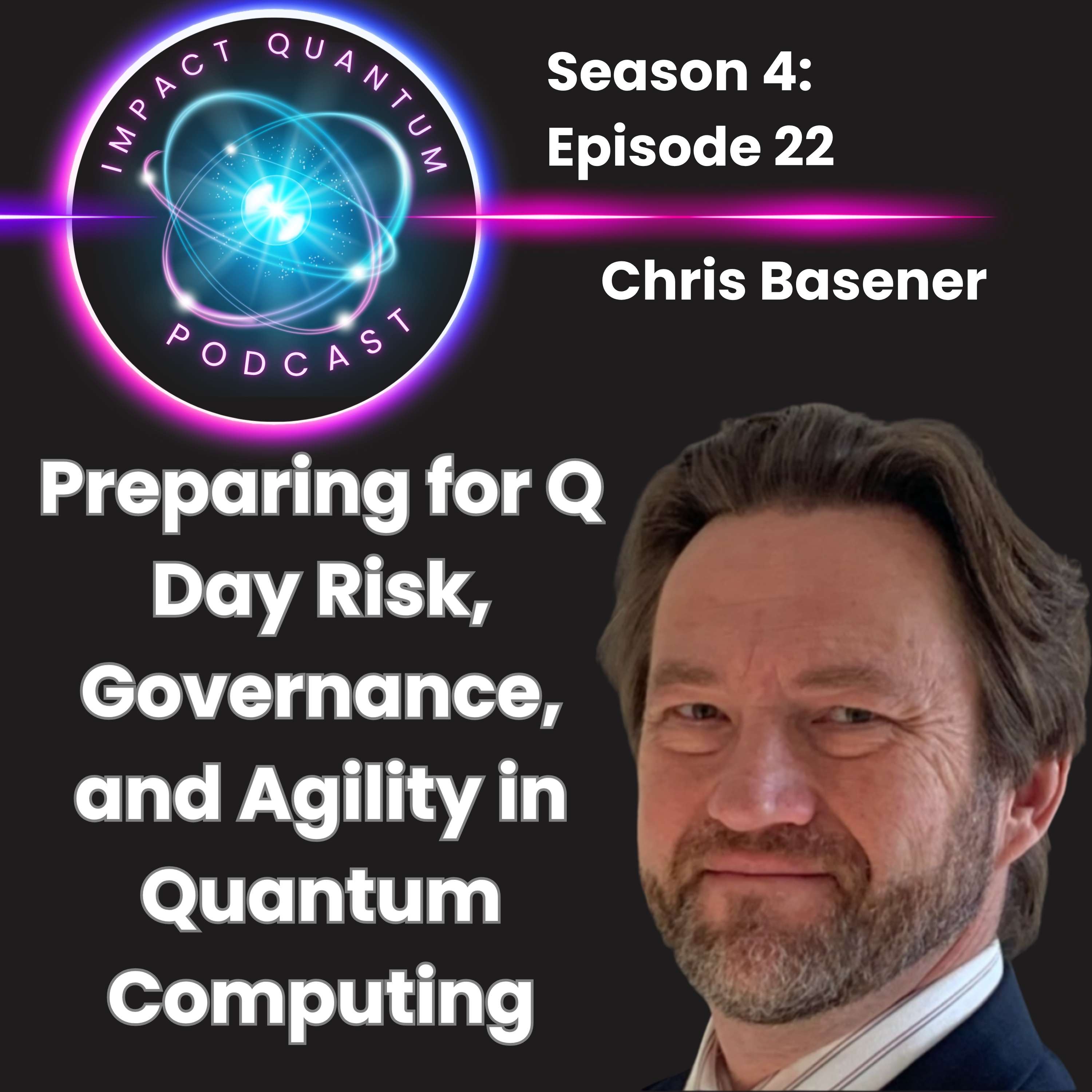
Today, we’re diving deep into the world of quantum computing and its far-reaching implications for cybersecurity, risk, and digital resilience. Join Frank La Vigne and Candace Gillhoolley as they sit down with Chris Basener, a leading GRC advisor specializing in post-quantum cryptography. Together, they unravel the challenges organizations face in preparing for the inevitable arrival of quantum computers powerful enough to threaten today’s encryption, discuss the realities and misconceptions surrounding post-quantum cryptography, and explore practical strategies for building long-term digital resilience.
We’ll explore the urgent need for cryptographic agility, the complexities of migrating to new standards, and why every organization—from banks to manufacturers—must start planning now, despite the uncertainty around when quantum threats will fully materialize. Plus, Chris Basener shares insights on talent shortages, project management for quantum readiness, and how companies can move from awareness to action. If you’re curious about the intersection of quantum technology, cybersecurity, and strategic risk management, you won’t want to miss this conversation!
Links
- Chris’ LinkedIn profile – https://www.linkedin.com/in/chris-basener/
Time Stamps
00:00 Quantum computing and cryptography risks
04:04 Understanding Mosca’s Theorem Basics
08:02 Quantum computing in finance
12:10 Concerns about quantum cryptography adoption
15:58 Importance of Strategic Planning
19:30 Challenges of Early Adoption
23:01 Building cyber resilience with agility
26:55 Challenges in Manufacturing Security
28:31 Importance of national security
31:49 Future risks of data security
35:30 Discussing hybrid algorithm security
41:15 Discussing cybersecurity frameworks
43:11 Securing funding through governance
48:47 Creating a post-quantum cryptography course
50:04 Post quantum cryptography course
53:42 Connecting on LinkedIn for courses
Transcript
It's not necessarily rocket science in terms of understanding it at
Speaker:a practical level, but there certainly are risks involved.
Speaker:I think perhaps another layer of complexity before we actually
Speaker:get to the answer is unlike previous IT
Speaker:issues such as Y2K, no one knows when
Speaker:there'll be a cryptographically relevant quantum computer. We read
Speaker:headlines, we know that there are companies that have quantum computers,
Speaker:but not large enough to break current cryptography
Speaker:using and running Shor's algorithm. So I think
Speaker:for all those reasons and perhaps more, there certainly is confusion
Speaker:in the industry. But to directly answer your question in context,
Speaker:many experts believe, and I certainly concur from everything I've read, that it's not
Speaker:really a question of if we're going to have a cryptographically relevant quantum
Speaker:computer, but it really. It's more of a matter of when.
Speaker:Welcome to Impact Quantum.
Speaker:Hello and welcome back to Impact Quantum, the podcast. We explore the emerging
Speaker:industry and field that is quantum computing. And with me
Speaker:is the most quantum curious person I know, Candace Gooley. How's it
Speaker:going, Candice? It's going great, really. Today is going to be fun. We could
Speaker:barely get out of the green room to start the call. We have so much
Speaker:to talk about. I'm very excited. Today we're going to be
Speaker:speaking with Chris Basener and he speaks to
Speaker:post quantum cryptography and he is called a
Speaker:GRC advisor. Chris, thank you so much
Speaker:for joining us today. Thank you so much for having me. It's
Speaker:such a delight to speak with people who are enthusiastic and curious
Speaker:and knowledgeable about future. So this is great.
Speaker:Very cool. I think quantum
Speaker:security aspect is the one that's going to get the headlines
Speaker:for the foreseeable future for real reasons
Speaker:as well as kind of hype and the good old fashioned
Speaker:fud, right? Fear, uncertainty, doubt. So what
Speaker:is the real risk, in your opinion about quantum
Speaker:and having a strategic defense against quantum algorithms?
Speaker:That's a great question and I'm glad you asked because there's so much out there
Speaker:and I'm not a FUD fan, quite frankly, I
Speaker:understand sort of why it's being used or
Speaker:perhaps in my view, manipulated, but the threats are certainly
Speaker:real. And the hard part is how do people parse hype
Speaker:from reality when quantum is not the easiest thing to
Speaker:understand? Now, it's not necessarily rocket science in terms
Speaker:of understanding it at a practical level, but there
Speaker:certainly are risks involved. I think perhaps another layer
Speaker:of complexity before we actually get to the answer is
Speaker:unlike previous IT issues such as Y2K,
Speaker:no one knows when there'll be a cryptographically relevant quantum computer.
Speaker:We read headlines, we know that there are companies that have quantum
Speaker:computers, but not large enough to break
Speaker:current cryptography using and running Shor's algorithm.
Speaker:So I think for all those reasons and perhaps more, there certainly
Speaker:is confusion in the industry. But to directly answer your question
Speaker:in context, many experts believe,
Speaker:and I certainly concur from everything I've read, that it's not really a question of
Speaker:if we're going to have a cryptographically relevant quantum computer, but it really, it's
Speaker:more of a matter of when. And you'll have experts opine it could
Speaker:be:Speaker:people say never. But given the progress that we've seen recently,
Speaker:that doesn't really seem to be feasible. So
Speaker:the risk is that we know that criminals are stealing data now
Speaker:and waiting for a quantum computer to decrypt it. The harvest now,
Speaker:decrypt later. Risk is nothing new. Right. It's been around for
Speaker:over a decade, it's recently gained more headline,
Speaker:but it's certainly not a new threat. So the risks are
Speaker:real and I think Mosca's theorem really sums it up. Well,
Speaker:Dr. Mosca has a theorem that I'm sure you've heard of.
Speaker:If X plus Y is greater than Z, well then that's problematic.
Speaker:So what are those variables? X is the
Speaker:time that data needs to be secure. That's going to vary by industry,
Speaker:of course it's going to vary by vertical, whether it's healthcare or
Speaker:insurance or banking or proprietary information for
Speaker:a company. But X stands for how long do we need to keep our data
Speaker:secure? Then the Y is how long will it
Speaker:take our organization to transition to using post quantum
Speaker:cryptography? And this is not our phones
Speaker:getting the latest operating device. Transitioning to post quantum
Speaker:cryptography, as you know, is a huge undertaking for large
Speaker:organizations. It may take a decade for the Googles and the
Speaker:Microsofts and the large enterprises of the world.
Speaker:So if Y is the time that it takes to transition to use post
Speaker:quantum cryptography, and X +Y is greater than Z, Z
Speaker:being the time that it will take for there to be a cryptographically relevant quantum
Speaker:computer, then you can see that we're in trouble. So the
Speaker:risks are real and I'm glad that you're educating your
Speaker:listeners to that. I think this past year has
Speaker:gone from what is quantum computing, what is post quantum cryptography?
Speaker:To oh, I think we need some of that.
Speaker:That's a very good summary of the last year and Ironically, like, the
Speaker:larger the organization, the more nurture they have.
Speaker:And the irony part is the more likely they need
Speaker:this type of protection. So I think it's, it's
Speaker:interesting. I think I'm glad people are starting to take notice because
Speaker:even if it does take 10 years, you're
Speaker:better off getting started today. And also too like that is an issue point, like
Speaker:Y2Q, right. Doesn't have a calendar date.
Speaker:Y2K did. You could easily figure out
Speaker:how much time you had. Whereas now, I don't know, maybe it's five years, maybe
Speaker:it's 50 years. Right. Or maybe it's five months. Right.
Speaker:We may never know when the actual first
Speaker:ever cryptographically
Speaker:relevant quantum computer will actually be fielded. Right. Because I would imagine
Speaker:that when somebody does it, they're going to keep it under his wraps as long,
Speaker:as long as they can. Exactly. And I think
Speaker:that's an important point. I don't think we're going to have the billboards in Times
Speaker:Square announcing that there's a cryptographically relevant quantum computer. It's
Speaker:too easy to think if a nation state that
Speaker:wants to create problems for their adversaries
Speaker:would destroy them. Right. Or steal money,
Speaker:steal national secrets. But I think it, that's
Speaker:too, too easy of a target. I
Speaker:think the reality will be more nuanced. I think we'll have
Speaker:multiple Q days. Right. I think we'll,
Speaker:I mean, it depends on who gets the first cryptographically relevant quantum computer, whether it's
Speaker:used for good or for nefarious purposes. Right. And I
Speaker:think if a nation that wants to cause problems,
Speaker:wants to cause problems, they're going to do that for a while. I mean, think
Speaker:back to World War II, when Enigma was broken. There was
Speaker:no announcement. They kept it secret, they kept it under wraps.
Speaker:They specifically carried out tactics
Speaker:so that the Germans wouldn't know that it had been cracked. So I think
Speaker:if we use history as our tutorial, the result
Speaker:is more nuanced, as you, as you mentioned.
Speaker:So let's just take a step back for a moment. I'm just curious to find
Speaker:out what first sparked your interest in cybersecurity and then
Speaker:quantum technologies. Yes, good question. So
Speaker:in terms of quantum, having been in the governance, risk and
Speaker:compliance space and project management space and working with
Speaker:financial institutions, I took a pause and I looked.
Speaker:Where are things heading? And I realized in the financial services sector
Speaker:particularly, and other verticals as well, that the future is
Speaker:really going to involve artificial intelligence
Speaker:and also quantum computing. And with that post,
Speaker:quantum cryptography, which is Not a quantum technology, but
Speaker:they're certainly interrelated. So I realized I
Speaker:wanted to be a front runner. I wanted to be an early adopter and I
Speaker:wanted to help other people. Because anywhere you
Speaker:look, people are writing that there is a talent gap in
Speaker:the field of quantum cybersecurity and post quantum cryptography
Speaker:and it's not getting solved quickly. People
Speaker:are definitely working to solve it, but
Speaker:perhaps not quickly enough, although we'll see on that point. So I took a
Speaker:course from mit, Quantum Computing Strategy and Impact,
Speaker:and it was a fabulous course. It helped to your point
Speaker:earlier about cutting through what's the hype, what's the reality?
Speaker:And it was very easy to understand and yet it was challenging. So
Speaker:for me, it was a great professional mix. Something that would challenge me, teach
Speaker:me, train me, and also be understandable and very
Speaker:practical to implement. So that's what sparked my interest
Speaker:in post quantum cryptography in terms of
Speaker:cybersecurity. That's a good question. I've done other things
Speaker:professionally, but I think perhaps at my core being a dad and a
Speaker:defender, I just wanted to help defend people. And I really enjoy
Speaker:reading regulations and drafting best policies in terms of
Speaker:policies and procedures that will help organizations
Speaker:and also really providing the right training. And so really that has been a
Speaker:great niche in terms of the post quantum cryptography area because it's going to take
Speaker:education for companies to learn. But what you train, the board of directors
Speaker:is different than what business heads need. So
Speaker:being able to differentiate that has been. And translate
Speaker:regulations into practical action has been a great skill
Speaker:set. That's a very rare skill set too. I mean,
Speaker:I, I live in the D.C. kind of Baltimore area and
Speaker:I've had some exposure to the policy crowd and some of
Speaker:them get it, some of them don't. And a lot of the people who are
Speaker:in elected
Speaker:positions don't get it. Like, you know, they, you
Speaker:know, whatever side of the aisle you're on is just interesting to see kind of
Speaker:the bubble that they live in. They live in a bubble. D.C. is a bubble.
Speaker:Right. You know, I think one thing to live
Speaker:in a bubble and it's one thing to, to live in a bubble and not
Speaker:realize that you're in a bubble or live in the bubble and expect that the
Speaker:entire world is in that bubble. And yes, it's not. That's where
Speaker:most of the problems in the world, well, not all the problems, but a lot
Speaker:of problems stem from that. I will just. That's what I'll say. Well,
Speaker:so what's one thing most People misunderstand, basically
Speaker:misunderstand about post quantum cryptography.
Speaker:That's a good question. A couple of
Speaker:things come to mind. It's not a quantum technology, right? We expect that
Speaker:someday there will be quantum cryptography that actually uses quantum
Speaker:physics. And when you see post quantum cryptography, it's
Speaker:natural to think post means it's something we'll use after there's a quantum
Speaker:computer. But really, post quantum cryptography is
Speaker:cryptography. Algorithms, keys, et cetera, the methods that we
Speaker:use to keep our data safe, both from a classical
Speaker:computer, the computers we're using currently, and also a
Speaker:cryptographically relevant quantum computer. So
Speaker:I think that's perhaps one thing, I think the other thing is because
Speaker:artificial intelligence has gained such hype in the
Speaker:boardroom amongst
Speaker:investors that that's been sort of the shiny object. And there's nothing
Speaker:wrong with using AI when it's done safely
Speaker:and securely. But it's gathered so much attention that I see
Speaker:companies that should be adopting post quantum cryptography, they should be
Speaker:thinking about it. It's not even on their radar.
Speaker:And I'm concerned that people will think I'm a doom
Speaker:and gloom guy when I'm really an optimist at heart. But when you look
Speaker:at the data, the talent shortages, when you look at the data of when will
Speaker:we likely have a cryptographically relevant quantum computer and you see the
Speaker:time that it will take to transition, even considering a hybrid transition, right.
Speaker:Using what we currently have alongside of post quantum cryptography,
Speaker:companies are going to be in real trouble. And I wish that weren't the case
Speaker:I mentioned earlier. I don't like the fear, uncertainty and doubt, but the
Speaker:reality is there is a talent shortage. The reality is it is
Speaker:coming, whether people like it or not. I can say gravity doesn't exist, but if
Speaker:I jump, I'm coming. And
Speaker:it's concerning because with the talent shortage, we
Speaker:only have so many hours in the day. Right. I think there are companies that
Speaker:are going to realize they need to do something, perhaps too late,
Speaker:they're going to want help and the
Speaker:employees, the consultants that know how to do it are going to be
Speaker:too busy and are just going to have to say, I'm sorry, I'd love to
Speaker:help you. If you contacted me three years ago,
Speaker:we'd be on board. But I just physically can. I need to sleep.
Speaker:Right, Right.
Speaker:Interesting. What do you think
Speaker:we go from here? Like, I mean, what, what, what would be your advice
Speaker:to not just organizations, but
Speaker:I think from the individual contributors point of view, right? Like
Speaker:someone's Getting out of school. Right. And they may have a degree in computer science.
Speaker:Right. And because, you know, four years ago when they started their education,
Speaker:that was the, that was the path, the glory and riches.
Speaker:However, you know, obviously I don't think that the
Speaker:era of the software developer is over. I think we're in that,
Speaker:I think we're in a honeymoon phase where AI could do all, AI could do
Speaker:no wrong. I think there will be kind of a, a snap
Speaker:back to reality. But the job market looks dismal for comp
Speaker:sci majors. What would be your advice to someone who
Speaker:is in that space right now?
Speaker:That's a good question. Well, I really think learning
Speaker:some of the technical aspects of quantum computing, learning how to
Speaker:code and IBM have some fabulous resources that are free
Speaker:on their website. And if,
Speaker:I think if one learns that, there's definitely a niche for them
Speaker:and it may not be the niche that they imagined. But I think you're spot
Speaker:on in terms of this being a honeymoon phase. I don't think
Speaker:AI is going to take everyone's job. It's certainly
Speaker:replacing some people. But it's often said, and although I'm
Speaker:concerned people might think it's a bit cliche, I think AI isn't coming after
Speaker:everyone's job, but it's certainly going to take jobs for people that don't learn how
Speaker:to implement AI into their own workflows or use it.
Speaker:So AI is like anything else, it's a tool, it can be used to help
Speaker:people. If it doesn't have the right guardrails, it can cause problems. We all know
Speaker:that that's not new. But I think to your point, if people can
Speaker:learn some of these quantum computing technologies and learn how to
Speaker:implement post quantum cryptography, there's definitely going to be a need.
Speaker:I'm also an all candor seeing sort of a gap between people like
Speaker:me who want to be early adopters and help people get started.
Speaker:Sometimes companies are hesitant to actually get started.
Speaker:Right. And with all the hype and the misinformation
Speaker:out there, some people are thinking, oh, we need to, we need to do an
Speaker:inventory first. Well, yes, you have to have a cryptographic inventory. You can't
Speaker:migrate what you don't know. But if you don't have the right people in place,
Speaker:if you don't have the right governance in place, if you don't have the right
Speaker:policies and procedures to drive your corporate objectives,
Speaker:what's your inventory going to do? Right. What if you don't have the right people
Speaker:that know what to do? And what if your inventory is incomplete? We found in
Speaker:large organizations, sometimes it takes some years to uncover all the
Speaker:cryptography because it's in everything. It's in software, it's in hardware, it's in
Speaker:libraries, it's everywhere.
Speaker:So I think taking a step back from the
Speaker:hype and not panicking to your question earlier about what do people do,
Speaker:but thinking strategically, how do I incorporate this into what I
Speaker:do, into something that I love doing to really help
Speaker:organizations, people, companies move forward in a way that's
Speaker:secure? There are some great possibilities out there. It
Speaker:might not happen as quickly as one hopes, thinks or dreams, but
Speaker:the opportunities are definitely going to be there. If you read data for projections
Speaker:from market share, it's definitely going to be there. And
Speaker:then the early adopters have a strategic advantage. Right. And I think in New
Speaker:York at least, I'm seeing the large banks assemble teams. JP
Speaker:Morgan Chase has been very vocal about having a team to help with this.
Speaker:And there are other banks as well. It's not a, that's not a paid advertisement.
Speaker:It's just an observation. But I think, but some banks have been. I think you're
Speaker:right. Some banks have been more aggressive about it than others. That's a fair blanket
Speaker:statement. Absolutely. But then the problem comes in. If you have smaller
Speaker:banks that don't have the bandwidth or the budget or the
Speaker:knowledge to know what to do, what happens then? When they're
Speaker:communicating with larger banks, the chain is only as strong as the weakest link. So
Speaker:I mean, that's something that the bank for International Settlements is working on.
Speaker:So there's some bright minds working on the issue.
Speaker:That's an interesting point too. Right. Because I think one of the things said there,
Speaker:I think governance is really kind of key here, right? I mean, arguably
Speaker:and I, in a perfect world, in an ivory tower, speaking of
Speaker:bubbles, every organization
Speaker:over a certain size, particularly in regulated industries, industries, already
Speaker:ought to have an inventory of their crypto graphic systems,
Speaker:right? They really should have that already anyway, whether or not
Speaker:Quantum is in the picture on the horizon over the. They should have that
Speaker:anyway, right? Because that's just good governance. But you're right, good governance
Speaker:is rare. Rarer than it should be.
Speaker:Correct. And to your point earlier, there have been some great industry
Speaker:leaders that have said, take these no regret moves. Right? Make sure
Speaker:your cryptographic inventory is up to date. It may not be up to date. Okay.
Speaker:It may not be perfect. None of us are perfect, none of our organizations are
Speaker:perfect. But make sure it's up to date. And then I
Speaker:think the other trouble is that some marketers are promising or
Speaker:over promising, right? They're selling snake oil. You know, our tool will catch all
Speaker:your cryptography. Well, anyone who's been in the field
Speaker:long enough knows that there's no one tool that's going to grab all your
Speaker:cryptography, right? You need, you're going to need
Speaker:a set of tools, right? You're going to need a toolbox, not just one tool
Speaker:to grab all of that. So it's good to have these
Speaker:deeper conversations because online you'll see splashes
Speaker:do this or that, as if it's a one size fits all
Speaker:or a silver bullet. So it's good to have these
Speaker:conversations. So how do you balance
Speaker:innovation and risk when advising
Speaker:organizations on quantum readiness?
Speaker:Good question. Well,
Speaker:we know from history that the early adopters can gain a strategic
Speaker:advantage, right? And I think it's about having
Speaker:the right people in the right room and having those
Speaker:conversations because different organizations will have
Speaker:different risk appetites, right? So what is their organization's
Speaker:risk appetite for innovation? And some people
Speaker:prefer not to be on the front, front line, right? They don't want to be
Speaker:the ones catching the risk bullets. They want to be, you know, second or third
Speaker:in line, which may be appropriate for the organization. So you're right,
Speaker:there's definitely a risk because some of the early
Speaker:adopters for post quantum cryptography, they've
Speaker:learned some hard lessons, but I give them kudos for being brave
Speaker:to be at the forefront. For example, some
Speaker:organizations are finding that when they implement post
Speaker:quantum cryptographic algorithms, the performance is slower than
Speaker:they anticipated. It's one thing to grab a paper and pen, although people don't calculate
Speaker:that way anymore, but essentially do the math, right? When we
Speaker:implement these algorithms, it's going to impact the latency in our system by
Speaker:X factor. But then they're finding when they actually
Speaker:implement it, it takes longer.
Speaker:What skills do you think aspiring quantum engineers
Speaker:should develop? First?
Speaker:Good question. My expertise is really in the governance, risk and compliance,
Speaker:not engineering. But there definitely is a need for the
Speaker:engineers. Learning how to code in quick sit
Speaker:or learning how to implement these algorithms
Speaker:is definitely important. And although
Speaker:it's slightly tangential to your question, I think that really brings up another
Speaker:point that enterprises are going to need a great
Speaker:team, right? They're going to need a project manager that knows how
Speaker:to lead a group and ask the right questions and get the right people in
Speaker:the room. They're going to need the engineers that can actually
Speaker:do the implementation and coding. They're going to need business leaders that
Speaker:understand what they're doing. It's really going to take a quantum village to raise this
Speaker:post quantum cryptography baby. But there are some
Speaker:great resources out there in terms of learning, and
Speaker:there's no shortage of companies that are trying to also add into that
Speaker:space. Okay, how real
Speaker:is Harvest Now, Decrypt later, and who
Speaker:should be the most worried?
Speaker:Good question. Well, it really boils down to risk
Speaker:analysis, right? How long does a company need to keep their data safe
Speaker:if. If they don't have data that needs to be secure? Once
Speaker:a cryptographically relevant quantum computer arrives, then
Speaker:as they say in Brooklyn, forget about it, right? I
Speaker:don't think that's applicable to too many companies. But the point is
Speaker:it's really a risk analysis. So it
Speaker:Harvest Now, Decrypt later is gaining headlines, as we spoke of earlier. But it's not
Speaker:a new concept, right? It's been. The concept has been around
Speaker:for at least a decade. Well, we
Speaker:all know that years ago that Internet traffic was routed
Speaker:out of the US into foreign countries, right?
Speaker:Publicly, I'm not sure that we've gotten a hard answer on what happened, but I
Speaker:think it's reasonable to presume that data
Speaker:was harvested there and they're waiting to decrypt it with a cryptographically
Speaker:relevant quantum computer. So the threat is real.
Speaker:It's happening now. And we know through ransomware
Speaker:that people's data is being stolen, companies
Speaker:are having breaches. So the real issue is not
Speaker:what are we doing about it. The issue is how are we going to be
Speaker:resilient, right? I mean, years and years ago the idea was what do we do
Speaker:if we're breached? And that's so outdated that if companies aren't
Speaker:thinking, what is our response plan when we are breached, right?
Speaker:If they're not building that cyber resilience in, they're going to be toast. Right? The
Speaker:same is true with quantum cryptography. The issue is not, okay, what is
Speaker:FIPS 203, the and 204 and 205, the post quantum
Speaker:cryptography algorithms? How do we get them into our system? Well, that's great
Speaker:getting them into your system, but the real idea, the real strength is
Speaker:going to come in cryptographic agility, the ability to swap out
Speaker:algorithms. Because when we look at the NIST standards, we're
Speaker:confident in them now based on what we know. But we also don't
Speaker:know when there'll be a cryptographically relevant quantum computer. We don't
Speaker:know if someone has developed an algorithm that will be able to reverse
Speaker:engineer and breach those
Speaker:cryptographic algorithms. So the idea is that we
Speaker:can swap algorithms quickly without stopping, without the rip and
Speaker:replace, without tearing out all of our equipment and putting in new equipment. The idea
Speaker:is to be able to swap algorithms quickly without a lot of
Speaker:downtime, et cetera, which is no easy task. But
Speaker:to the point about cyber resilience, cryptographic resilience is also
Speaker:an important topic because breaches are going to happen.
Speaker:And that sort of fades into a question you had earlier.
Speaker:What are some misconceptions post? Quantum cryptography isn't going to mean people
Speaker:can't be hacked. It's not going to mean that people can't be
Speaker:breached. It's not a silver bullet. It won't protect them from everything.
Speaker:It's a layer of protection. But segmented works and good
Speaker:cybersecurity practices are also still going to be important.
Speaker:So there's a lot at stake here, but glad you're
Speaker:educating viewers and asking good questions. That's how we, that's how we
Speaker:progress. Right. That's how we learn. And it helps us learn, too. I mean, honestly,
Speaker:I think we get more out of this than,
Speaker:than you would think. I mean, I certainly,
Speaker:it certainly does help you stop and think. Okay. I think you're, I
Speaker:think, kind of taking a step back. You're right. This is not just a technical
Speaker:problem, this is a process problem. Right. I'll use the G word
Speaker:again. Right. It's a governance problem too. Right. And these are all things that,
Speaker:honestly, having worked in data and data database systems
Speaker:that they're supposed to have governance on, even then the governance is
Speaker:perfect and it doesn't have to be perfect. I just think that
Speaker:you have to embrace the imperfection and work around it. Right. And
Speaker:be resilient to the imperfection. Right. Because there's no. I've never
Speaker:seen a perfect governance system. Right. I've worked in.
Speaker:You can look me up on LinkedIn, you can figure out where I worked. Right.
Speaker:There are companies that I've noticed that have had their data act
Speaker:together better than others. But whenever I,
Speaker:you know, think about it, it's like, well, you know, there's things they could have
Speaker:done better too, right? Like, it's, it's just, it's an ongoing process.
Speaker:It's not a one and done. It's not a. It's more like infinity and
Speaker:done. Right. Because you're never really done well. And this
Speaker:isn't mainly an as I'm listening and I'm thinking about it, this isn't
Speaker:mainly an enterprise issue. I'M sure the
Speaker:mid sized companies are also going to be at risk. Absolutely.
Speaker:Okay. And when you think about what industries,
Speaker:you know, have the smallest margin for delay,
Speaker:you know, what do you think? For example, what industries have the smallest
Speaker:margin for delay for their strategic readiness?
Speaker:Good question. Well, if you think about manufacturing, right, you think about
Speaker:what would happen to their business with downtime,
Speaker:could be catastrophic. You think of large companies
Speaker:and also those environments are really, really tough too because in
Speaker:manufacturing you have all these IoT devices, they don't have
Speaker:a lot of memory, so protecting them is not the easiest thing in the world,
Speaker:but it carries real risk. So I've had
Speaker:conversations with folks in those space and it's not an
Speaker:easy solution because think about it, downtime at a large manufacturing
Speaker:facility, that could be an expensive event, right?
Speaker:There are solutions for that. There are mitigating controls
Speaker:and there are efforts to
Speaker:make post quantum cryptography algorithms such that they work
Speaker:with those IoT devices that have smaller bandwidth, smaller
Speaker:memory, etc. But also think about
Speaker:banking, what would happen to. That's what I was initially thinking, you know,
Speaker:banking and healthcare. And then you came out with manufacturing and it just kind
Speaker:of blew my mind for a moment because I'm like, wait a minute, that might
Speaker:be more important. It's staggering.
Speaker:It's all important. But yeah, I know what you mean. And plus, you know, the
Speaker:old joke is, you know The S in IoT stands for security, right?
Speaker:Because those things are never really built, have never really been.
Speaker:I'm sure I'll get a comment on this. But security
Speaker:is not really a top priority historically in the IoT space.
Speaker:That's a really good point. And I think
Speaker:to add to that too, we think about financial impact in business because
Speaker:we all have to work, right? We all want to eat, we all have bills
Speaker:to pay. But it's also important, I think, to think about
Speaker:national security. I was having this conversation with a colleague recently
Speaker:through InfraGard and he said, this
Speaker:really is existential, isn't it? And I said, I'm not an alarmist. I don't
Speaker:want to sound like one, but you're absolutely right. Because when we think about national
Speaker:security, I mean, why have many governments said
Speaker:this is a firm priority? Because it's a national security
Speaker:issue, right? So again, the goal isn't
Speaker:panic. I don't want anyone to panic. You know, nothing's likely going to happen
Speaker:today or tomorrow. And as we know, acting out of panic
Speaker:doesn't often lead to good results. But if companies
Speaker:take where they're at and they get the right people in place and they
Speaker:plan, they will make progress. And to your point, that was well said,
Speaker:Frank. None of this is going to be perfect, right? But
Speaker:by taking steps in the right direction, by educating,
Speaker:by putting the right governance in place, by beginning
Speaker:to update their inventory, planning a migration, test
Speaker:piloting that, building resilience, they're going to make progress.
Speaker:Right? So progress, not
Speaker:panic. I like that. That's a good way to put
Speaker:it. That's a. There's a title episode right there.
Speaker:Go ahead. No, it's true. I. We hear. I'm like, oh, that's a good cold
Speaker:open. I'm like, there's the title. So
Speaker:what does Quantum risk look like from a board level
Speaker:perspective? Good question. So from a
Speaker:board, there are several risks, right? There's the risk of doing
Speaker:nothing. As we mentioned several times,
Speaker:early adopters often gain a strategic advantage. I think One reason
Speaker:that JPMorgan Chase has been so vocal is when
Speaker:the average user starts to think,
Speaker:oh, I, I see the risk now. And it doesn't even have to be real
Speaker:risk, right? It could be perceived risk. In our TikTok Instagram age,
Speaker:you know, someone puts out a video that goes viral and even if
Speaker:it's not 100% accurate, people are going to start to think, huh,
Speaker:is my data secure? Are my finances secure? They're going to start to make decisions
Speaker:based on what they see in marketing.
Speaker:So the risk is doing nothing. The risk is
Speaker:strategic. And I think down the road we're
Speaker:also going to see litigation for that. I mean, in the US
Speaker:there's, and it obviously depends on jurisdiction. This is to
Speaker:educate, not giving anyone legal advice. But we
Speaker:see how boards of directors now are being held accountable for decisions.
Speaker:And I think at some point there's going to be litigation that
Speaker:will say, okay, the risk of quantum computing was
Speaker:known enough that board ABC Inc.
Speaker:Should have known better and should have done something right. Doesn't necessarily mean that
Speaker:they did everything. But I think we're getting to a point now
Speaker:where the risks are well known and well communicated
Speaker:enough that board of directors that knows that and just puts their
Speaker:head in this proverbial sand. I think there's going to be a
Speaker:liability issue there down the road. But again,
Speaker:some countries, some companies, some cultures are better at looking forward than now.
Speaker:I think in some ways we've become such a
Speaker:culture that's so wrapped up in the moment that I think
Speaker:some people are having a hard time seeing this is something that,
Speaker:yes, the worst risk is probably down the road, but with harvest now,
Speaker:decrypt later, the risk is now, your data can be stolen now,
Speaker:but you have to think ahead far enough to plan for that and to
Speaker:mitigate against that. It's not just about getting my
Speaker:paycheck on Friday. It's about what you want the legacy of your enterprise to
Speaker:be. Because to the point earlier, I really think that there
Speaker:are going to be some organizations that
Speaker:don't do anything and they're going to be wiped out. But the early
Speaker:adopters, the people that really adopted and
Speaker:developed quantum computing technology and implemented the post quantum
Speaker:cryptography, they're gonna, they're gonna be the ones growing.
Speaker:So it's not easily solved, but it's also not
Speaker:neurosurgery. Right. So
Speaker:it's not the easiest thing, but not the hardest thing also too, I think, you
Speaker:know, I think that insurance
Speaker:companies are going to have a large impact on this. Right. And not just criminal
Speaker:life. I'm not a lawyer, I'm not a, you know, but, but you know, I've
Speaker:seen, I, I've seen what
Speaker:happens post a breach and then pre. A breach. Right.
Speaker:And I, I can't imagine all of that is
Speaker:organically driven. I get the sense that a lot of that is driven by insurance.
Speaker:Right. So I suspect that that's going to play a role too. Right.
Speaker:Like they're going to say, like, hey, if you don't, you're in this, this is
Speaker:your risk assessment. And if we want us to continue to insure you, you have
Speaker:to execute policies A, B and C, right? Absolutely. I
Speaker:can easily see that being a thing. I think you're, you're spot on.
Speaker:I, I haven't read anything about it. And that's not to say that it hasn't
Speaker:been written about, but I have had those conversations with people
Speaker:and I think that's definitely foreseeable.
Speaker:I think you're spot on. I think there will be a point where they say,
Speaker:look, you're not insured against this. We're not going to pay out
Speaker:for something you could have done, knew that you should
Speaker:have done, etc.
Speaker:Interesting. Are there some kind of like
Speaker:hybrid cryptographic models
Speaker:that companies could start to look at
Speaker:to be more technically prepared?
Speaker:Absolutely. I think at least in this country,
Speaker:in the U.S. by this country, I mean us. But there are regulations
Speaker:around the world that differ and there's advice that differs. But
Speaker:absolutely. I think the current recommendation is to take a hybrid approach.
Speaker:Right. And take post quantum
Speaker:cryptography and blend it in with what's currently used.
Speaker:Because the thinking is if we use a hybrid and a
Speaker:logic in the architecture, and this is important, Then
Speaker:if one of those systems is broken, the other one is still there.
Speaker:So using sort of a dual encryption system
Speaker:of wrapping one around the other. And again, I'm trying
Speaker:to keep it simple enough for everyone to understand, not too complicated.
Speaker:And that's also the struggle sometimes in communicating this. You want to make it
Speaker:understandable, but you don't want to water down the content. But
Speaker:so yes to your question, a hybrid approach is important. But here's the problem, though.
Speaker:If a hybrid or architecture is used, if a hacker
Speaker:or cyber criminal gets into the system, they can. It would be
Speaker:possible for them, I think, to manipulate such that
Speaker:the weaker algorithm is used if it's hybrid
Speaker:or if it's one or the other. But if it's a hybrid and
Speaker:if both are used, if one is broken, the thinking is, okay, well, if one
Speaker:is broken, then the other one should hold. But again,
Speaker:we don't know where. I think there are many organizations, many people doing their best
Speaker:to solve this problem. I think in retrospect, we're going to look back
Speaker:and say, oh, we should have done X, Y and Z,
Speaker:but, you know, it's too easy to play Monday morning quarterback. Right?
Speaker:But yes, hybrid. Hybrid approach is definitely important. And that's also what makes
Speaker:this a different project than others. I designed a course
Speaker:to train project managers how to succeed on post quantum cryptography migrations.
Speaker:And these migrations are going to take a long time. And the
Speaker:end goal is not even, okay, we have post quantum cryptography.
Speaker:It's that we have this agility, this ability to swap algorithms. And
Speaker:in the meanwhile, we're going to start with what we have. We're going to add
Speaker:post quantum cryptography in the mix. And in the end, we'll probably
Speaker:have only post quantum cryptography. And at some point down the road, we'll have quantum
Speaker:cryptography. So it's really different from a project management
Speaker:standpoint than most IT projects. Right? This is not going
Speaker:from Windows 10 to 11 or A1 and done.
Speaker:You know, like you said, it's infinity and done, infinity and never done. I like
Speaker:that. That's very quotable, by the way. Oh, thank you.
Speaker:So there are some nuances to this, that when we look at
Speaker:lessons learned from projects that have been worked on already, we can
Speaker:learn from other people's mistakes. And that's the beauty of being human and
Speaker:being wise. Right? We can learn from other people's mistakes. We don't have to make
Speaker:them all ourselves. We can make Our own, but we can learn from other
Speaker:people's. So is
Speaker:quantum preparedness the next Y2K
Speaker:level coordination problem, but
Speaker:slower and more complex to kind of
Speaker:understand and deal with? That's definitely
Speaker:correct. I definitely think it's slower and, and more complex for
Speaker:reasons that we talked about earlier. But you know, people are definitely
Speaker:thinking about this from a vendor perspective. Right. Because another lesson learned,
Speaker:and by lessons learned, I mean projects that I've been involved with, things that I've
Speaker:read. One issue, one bottleneck is
Speaker:going to be vendor readiness, right? There's. If you look at the enterprise environment
Speaker:today, even mid size enterprises, there's so many
Speaker:third party vendors, right? So one of the bottlenecks very well
Speaker:could be, okay, our enterprise is secure,
Speaker:but what about the third party vendors? We know from countless stories of
Speaker:breaches that that's often where it happens. And it's not a fingerprint. H
Speaker:Vac vendor, I think is what caused Target a lot of
Speaker:agitation and stress. You're exactly correct.
Speaker:So I've developed a quantum readiness questionnaire for
Speaker:vendors. It's not applicable to
Speaker:every industry in the sense that it's a, you know, a plug and play. But
Speaker:the idea is I developed a core set of questions for
Speaker:enterprises to start to think about and build their own
Speaker:vendor readiness questionnaire. Because there are some things you should ask. Right.
Speaker:If the vendor doesn't have a migration roadmap to post
Speaker:quantum cryptography, they're not doing it anytime soon.
Speaker:Right. If they, if they don't have executives that are on
Speaker:committees that are working on these standards worldwide,
Speaker:they may be less educated than someone else. I mean, I
Speaker:serve on several international organizations that are working on this
Speaker:issue. I work with the PKI
Speaker:Consortium, CSA Cloud Security alliance, their
Speaker:PQC working group. So
Speaker:I think by having experts that are working on these things, they'll
Speaker:be ahead. And then there are other practical questions to think about as
Speaker:well. Okay, if, if your third party is building their
Speaker:roadmap, are they requiring their suppliers to do it as well? I
Speaker:mean it comes to fourth party, fifth party risk as well. So I mean
Speaker:essentially it's good third party management. But Frank, to your point earlier, not all.
Speaker:There's no perfect governance, there's no perfect third party risk management program.
Speaker:But it's certainly important because that is going to be
Speaker:certainly an issue. So can, can a company,
Speaker:can a company even become.
Speaker:I just kind of think of a company, can a company become quantum safe if
Speaker:the vendors aren't. Absolutely. And that's definitely
Speaker:a risk. That's something that's being looked at now. And the
Speaker:importance I think here, if we talk about governance and project management
Speaker:is to make sure when we're working with vendors that it's
Speaker:in our SLAs, it's in our service level agreements, it's in our
Speaker:contracts that they are building quantum
Speaker:preparedness, that they are starting to integrate post quantum
Speaker:cryptographic algorithms. And that has to be in contracts. Right.
Speaker:It can't just be, you know, I, I pinky promise
Speaker:or you know, they told me they were so I believe
Speaker:them. There has to be some,
Speaker:some teeth to the words, right? That's exactly something
Speaker:to back up the thing. So you mentioned standards bodies. I know like
Speaker:there's ISO, there's Six Sigma. Is there, is there something kind of
Speaker:in the works about this? Like you know, you
Speaker:can get some kind of certification saying that you and your supply chain are quantum
Speaker:safe or quantum ready or I would imagine the
Speaker:wording around that would be very
Speaker:challenging. But I mean, is there something like, I mean, I
Speaker:would imagine something like this is in the works. Yes, you're absolutely
Speaker:correct. There are different companies that have put out
Speaker:frameworks, whether it's a maturity model,
Speaker:you know, the idea of just getting started to more mature. Like if we think
Speaker:about the NIST cyber security framework
Speaker:maturity levels, there are organizations that have adapted that
Speaker:there are definitely frameworks out there. And
Speaker:I think a lesson learned is there's no necessarily one right
Speaker:framework, but there's really the best match for your organization. So
Speaker:to your point, there are frameworks that are, that have been developed, there
Speaker:are others in the works. The ISO,
Speaker:I think ISO is going to come up with a standard. Currently
Speaker:when we look at the ISO standards, there are definitely standards and
Speaker:guidance when it comes to cryptography, but there's no mandate from ISO
Speaker:saying, you know, you have to use post quantum cryptography. But the same is true
Speaker:with hipaa, right? There's no requirement for HIPAA to use post quantum
Speaker:cryptography. They require cryptography.
Speaker:And at some point, again I think this is going to get muddled with.
Speaker:Okay, your standard essentially says use best practices, but you weren't using
Speaker:post quantum cryptography. Right. You technically
Speaker:click the compliance box but you miss the bigger security picture. But
Speaker:I do think that some of these other frameworks,
Speaker:standards, etc are going to be requiring it in the near future.
Speaker:So the best organizations are one that can look into the future,
Speaker:not a crystal ball. But just look at trends, where are things headed
Speaker:and start to adapt ahead of time. So
Speaker:more coming, I'm sure. So how do you help
Speaker:teams move from awareness of quantum risk to a
Speaker:funded timeline driven
Speaker:executive execution plan.
Speaker:The funded perhaps might be the hardest point, but
Speaker:I love the practical question. So
Speaker:as you mentioned, going from aware could mean
Speaker:educating your staff, right? So I think to get
Speaker:a fully funded program, it's good to, to have a plan in place, right?
Speaker:Boards don't want to fund something they don't understand. And if they don't
Speaker:understand how that impacts their enterprise, then they're less likely
Speaker:to fund it. And to Frank's point earlier about the importance of governance, I think
Speaker:something many people miss in governance is governance
Speaker:does, does not exist for the sake of governance, right? We don't have
Speaker:rules for the sake of rules. We don't have security for the sake of security.
Speaker:We have security to keep an enterprise safe, to accomplish their
Speaker:enterprise goals. And one thing I love about working in
Speaker:the governance risk and compliance space is when you look at
Speaker:governance within a corporation, if they're creating new
Speaker:policies and procedures that don't align with their corporate mission, that don't align
Speaker:with their current governance, then it's time to raise a hand and have a conversation.
Speaker:Or if they have a new initiative, this isn't really well aligned. The issue is
Speaker:alignment. So I think if a board of directors
Speaker:understands the risk at a level that they understand, that is
Speaker:you're in banking. If you don't do this, we're not going to be around.
Speaker:And they see the flip side, hey, if we're early adopters and
Speaker:this is communicated through our marketing team, we're going to gain market share through
Speaker:this. So let's invest. We're not
Speaker:throwing money for the sake of throwing money. We're investing. And then also
Speaker:thinking about, okay, what are the line items that we can take out once we've
Speaker:implemented post quantum cryptography, once we've migrated
Speaker:and secured our system in that respect, are there other things we can cut out?
Speaker:Just having an adult conversation about, okay, we need to do
Speaker:this, it's being, it's going to be mandated in
Speaker:some verticals. How do we do it in such a way that it
Speaker:helps us achieve our goals through security, strategic
Speaker:advantage, et cetera. And then I think they're more likely to say yes.
Speaker:That's a good way to put it. I
Speaker:think so. I'm just, my mind
Speaker:is like blown. I'm loving it. There's a lot, there's a lot to unpack
Speaker:here, right? It's not just a simple, I mean, not to go back to
Speaker:Y2K, but with Y2K, that that was simple either.
Speaker:But you knew what the problem was.
Speaker:You knew when it was going to be a problem. Right.
Speaker:There were definitely things
Speaker:here that are not quite so clear cut.
Speaker:Right. Obviously we don't know when this is going to be a
Speaker:thing. Also, to your point, there's
Speaker:multiple ways to solve this. With Y2K, it
Speaker:was do some kind of adjust how you stored the
Speaker:year and do windowing and things like that and
Speaker:migrate off the old COBOL systems. Right. But
Speaker:this is not quite so simple.
Speaker:Right. There's a lot more nuance. Right. There's
Speaker:arguably more moving parts,
Speaker:but Chris is offering real tools. Absolutely. I think
Speaker:that's the value here. Right. I think panic is the wrong
Speaker:answer. You know, sensible preparedness seems like the right answer. And
Speaker:that's the tools that you're offering. Is that a good elevator pitch?
Speaker:Absolutely. Well said. I really wanted just
Speaker:you to talk for a moment even more about the project management
Speaker:course that you created. It just really, I found that to be
Speaker:incredibly interesting because it was kind of like attacking the problem from a
Speaker:different angle entirely. Can you tell us a little bit more about
Speaker:why you created it, what you're hoping it's going to accomplish?
Speaker:Absolutely, please. Well, I, I love project management,
Speaker:right. Because we can all think back and look at projects that on paper
Speaker:shouldn't have succeeded, but the right project manager was involved, so it
Speaker:crossed the finish line. And I just,
Speaker:I enjoy working with people, I love coaching, I enjoy encouraging people and
Speaker:I enjoying taking actionable steps with a plan that can
Speaker:help achieve those goals. Right. Because a hope without a plan is,
Speaker:you know, just hope, not a goal. So
Speaker:when I started learning more about post quantum cryptography
Speaker:and I looked at project management standards, I thought project managers
Speaker:can be really great at adapting. Right.
Speaker:And I noticed a gap between what post quantum cryptography migrations are
Speaker:going to require and what's currently taught in most project
Speaker:management circles. So I thought, okay,
Speaker:and everyone has different expertise, right? So I thought, I want
Speaker:to help close this gap between what's going to be required on
Speaker:a post quantum cryptography migration. So I thought, okay, they're going to have to
Speaker:look at risk differently because unlike
Speaker:longer term projects, the risk is evolving so fast.
Speaker:With quantum, you know, it seems like almost every day there's a new
Speaker:headline, you know, Company X made this advancement,
Speaker:but I think later that's going to go quiet. Right. When things get closer,
Speaker:if some of these computing technologies are close to
Speaker:national security, I don't know that we're going to know. I think things might go
Speaker:Quiet. And so to get
Speaker:back to the question, I realized there was a gap and I wanted to close
Speaker:it. So I created a course that's a 12 week course
Speaker:and it's designed to teach project managers what is post quantum
Speaker:cryptography, how do we implement it,
Speaker:how do we use the phased approach and how do we use a hybrid project
Speaker:management approach? Because when you look at project management, a traditional waterfall approach,
Speaker:okay, let's plan everything ahead. That's great if you're building a bridge, that's great
Speaker:if you're building a house. But when you're working with something where the
Speaker:technology can change and is changing so quickly,
Speaker:that doesn't really work. And then
Speaker:combining frameworks from project management and technology together
Speaker:to think about, okay, we can't just start throwing
Speaker:code at something as far as developing the right algorithms and keys
Speaker:to be safe against a cryptographically relevant quantum computer.
Speaker:We need a phased approach. Okay, we need to design,
Speaker:then we need to build, then we need to test and we need to implement,
Speaker:then we need to validate. So taking, taking security and
Speaker:project management, putting them together and if they were to have a baby,
Speaker:that's what the goal of this course is. How do project managers in
Speaker:a secure way lead post quantum cryptography
Speaker:migration projects? Now, there are other, other professionals
Speaker:working on the issue. Dr. Greg Skulmoski out of Australia has put together
Speaker:some great books on project management and post quantum cryptography that I've
Speaker:read. And he's a great person by the way too. I, I've spoken with him
Speaker:and so there are other professionals working
Speaker:on it. But to your point, it's such
Speaker:a complex issue, it's not okay, I'm going to read this
Speaker:little article and then I'm going to be ready. So I
Speaker:developed this course to happen over 12 weeks and I'm
Speaker:in the first cohort now. And I
Speaker:think it's really going to help because when we look at other companies
Speaker:like Santander and we look at literature from the bank
Speaker:for International Settlements, we can learn lessons of what's
Speaker:been difficult for other post quantum cryptography migrations. And if we learn
Speaker:that now, before we start, we're going to be ahead of that
Speaker:proverbial curve. So it's been really
Speaker:fun, I've enjoyed it and
Speaker:I think it's definitely going to help prepare
Speaker:people. And I, there's been some interest too. Yeah, I
Speaker:presented in February to the Project
Speaker:management institute on projectmanagement.com. you know, it was an hour
Speaker:overview and you can't get anything that depth, in depth in an hour.
Speaker:But it was a stepping stone. So there is interest in
Speaker:the topic, which is exciting and it'll be exciting
Speaker:to, to see wins from this. Right. It'll be great to see companies
Speaker:that have migrated and when we look at big breaches,
Speaker:sometimes cryptography is the culprit. Right. So we, we can't
Speaker:say, oh, post quantum cryptography would have stopped every breach. That's just not
Speaker:realistic or true. It doesn't even make sense. Right.
Speaker:So my goal is not to over promise but to be realistic.
Speaker:But when we do look at breaches, there's one in particular
Speaker:that I can think of. It turned out the cryptography was so
Speaker:outdated anyway.
Speaker:Well, usually with cryptography it's usually key management is always the issue.
Speaker:Right? That's definitely an issue. And also size, you know,
Speaker:with a quantum computer, it's not that every piece of cryptography
Speaker:is going to be ruined. Mostly asymmetric
Speaker:cryptography is going considered vulnerable by
Speaker:Shor's algorithm. But Grover's algorithm is considered to
Speaker:weaken symmetric cryptography, but not totally break it. So some of
Speaker:that can be managed by increasing, increasing the size.
Speaker:So it's not a one size fits all approach. And then when we look at
Speaker:the FIP standards, the Federal Information Processing Standards
Speaker:for 203, 204 and 205, the Post Quantum
Speaker:cryptography standards, there are different levels, if you will, of strength
Speaker:for these keys. And some are most appropriate for national secrets, some are most
Speaker:appropriate for things that don't need to be as secret. So
Speaker:there are some nuances here that, that one can glean that
Speaker:to really make a difference in their organization.
Speaker:I mean everything you're saying, you're clearly about building
Speaker:long term digital resilience. Absolutely.
Speaker:And that to me that's kind of the
Speaker:summation of like what you're working towards and
Speaker:what you're trying to get the message out about. I think
Speaker:that's brilliant. I love it. This has been
Speaker:fantastic. I think that's a great place to stop. We can go on
Speaker:for another hour, but we'll be respectful of your time. So where can folks
Speaker:find out more about you and what you're up to and sign up for
Speaker:this course? Sure. So I'm happy to have folks reach out to me
Speaker:on LinkedIn. I created a group that's free to join
Speaker:specifically for project managers or folks similarly situated to learn about
Speaker:post quantum cryptography. So if they reach out to me on LinkedIn, I'm
Speaker:happy to connect and provide more information.
Speaker:The next cohort will start in April for the course
Speaker:but if folks connect with me on LinkedIn and
Speaker:I'm happy to send my email, give them an overview and if it's the right
Speaker:fit, talk about that. And make sure you tell them
Speaker:that Frank and Candace sent you. Absolutely.
Speaker:This has been fantastic. I've really enjoyed this conversation. Thank you.
Speaker:Me too. I learned quite a bit. Passionate about learning and
Speaker:interested and curious and knowledgeable. And that's just
Speaker:a fantastic mix. Awesome. Thank you.






Leave a Reply