
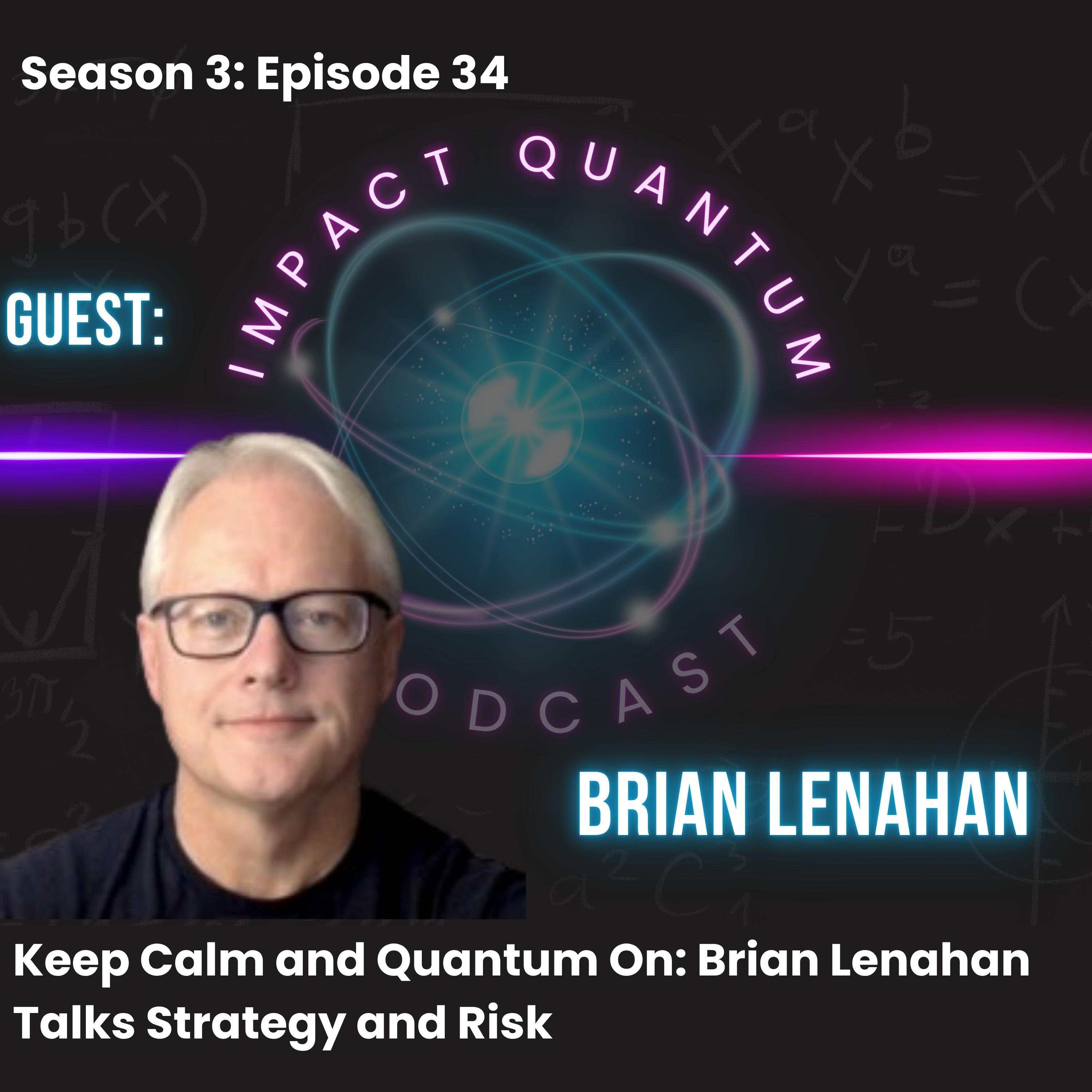
Welcome back to Impact Quantum—the show that proves you don’t need a PhD or a lab coat to dive into the world of quantum technology. In this episode, hosts BAILeY, Frank La Vigne, and Candace Gillhoolley are joined by returning guest Brian Lenahan, founder and chair of the Quantum Strategy Institute and prolific author on business adoption of quantum technologies.
Together, they explore how quantum computing is reshaping business risk, the surge in national quantum strategies (especially in Canada), and what real quantum readiness looks like for enterprises today. Brian Lenahan shares practical ways organizations can start building their quantum literacy—even if they aren’t physicists—and discusses the industry’s “anti-hype” movement. The conversation also covers the evolving landscape of quantum workforce diversity, policy, ethics, and the game-changing intersection of AI and quantum computing.
Whether you’re just curious about quantum or you’re strategizing how it fits into your business plans, this episode is packed with expert insights to help you navigate the quantum frontier.
Links
- Quantum Boost: Using Quantum Computing to Supercharge Your Business https://amzn.to/3JHANu4
- Quantum Excellence: How Leading Companies Are Deploying the Transformational Technology – https://amzn.to/3LdchBF
Time Stamps
00:00 “Quantum Tech Business Adoption Focus”
05:26 Prioritizing Risk in Quantum Security
07:56 Quantum Computing: Risk and Opportunity
10:03 “Quantum Tech: Insights and Strategies”
13:54 Quantum Adoption Timeline Challenges
17:20 Quantum Impact and Accuracy Challenges
22:57 Quantum Tech: Focus on Impact
27:07 Global Ethics in Quantum Technology
29:54 Hybrid Systems: Quantum Meets Classical
31:43 Quantum Tech: From Research to Demand
37:32 Quantum Computing via Cloud Platforms
40:36 AI Efficiency and Human Supervision
43:38 AI-Quantum Investment Scalability Challenges
47:23 “Big Pharma’s Research Challenges”
48:41 Solar Panel Efficiency & Storage Challenges
52:37 “Impact Quantum: Thanks Brian!”
Transcript
Welcome back to Impact Quantum, the show where we prove you
Speaker:don't need to wear a lab coat to talk Quantum. Today's guest,
Speaker:Brian Lenahan, has written the book, well, actually
Speaker:several books on helping businesses make sense of the coming
Speaker:quantum revolution. We'll chat about risk readiness
Speaker:and why quantum computing might just make your old IT strategy
Speaker:look, well, a bit classical. Now, here's some
Speaker:dubstep.
Speaker:Hello, and welcome back to Impact Quantum, the podcast where we explore the
Speaker:emerging industry and ecosystem of quantum computing, where
Speaker:you don't need to have a PhD, you just need to be curious. And one
Speaker:of the most quantum curious people I know is Candace Kahule. How's it
Speaker:going, Candice? It's great. Thank you very much. I'm very, very
Speaker:excited today to be here. We're going to be speaking today with
Speaker:Brian Lenihan, who is the founder and chair of the
Speaker:Quantum Strategy Institute. He's also a
Speaker:former guest and a former guest of season one, I believe.
Speaker:So we're super happy to have him back. Sorry, Candace, I didn't mean to cut
Speaker:you off. No, it's all good. And I want to say also, he's an author,
Speaker:and you've got to see the books behind him. He's got. He's the author of
Speaker:Quantum Boost and Quantum Excellence, and
Speaker:Very, very exciting. I'm very excited today to talk to you. Yeah,
Speaker:yeah. I've read Quantum Boost, and it's awesome. I haven't read Quantum Excellence. Yes. So
Speaker:it is on my bookshelf, so. Oh, thank you. That's great.
Speaker:Well, welcome back to the show. Thanks, Frank. You know, so
Speaker:much has transpired since season one of Impact
Speaker:Quantum, and I'm really looking forward to catching up.
Speaker:Yeah, definitely. There's definitely. We're in the virtual green room updating
Speaker:Brian on all of the personal developments in my life,
Speaker:including moving, adding another kid. And
Speaker:the reason why I mentioned that is because he sprained his foot yesterday.
Speaker:So it was quite the morning here.
Speaker:Never a dull moment at Chez Lavigne or Maison
Speaker:Lavigne. I'm not really sure how that would go, but,
Speaker:yeah, so you've been busy. You published. I remember we were talking to you
Speaker:just as your first book came out, and then you've had
Speaker:at least one book, and I think possibly up to three have
Speaker:come out since then. Yep, that's the right count.
Speaker:I'm up to about eight books that I have now published.
Speaker:You know, the focus originally, or the first four books was
Speaker:on artificial intelligence, then, you know, transitioned into
Speaker:the quantum space. And again, for Frank, as you know, the focus of my
Speaker:books and the focus of my work is really about the business adoption of
Speaker:quantum technology. There are lots of wonderful people out there who
Speaker:are PhDs or experts who are talking about the development,
Speaker:the research that goes along with quantum.
Speaker:My focus from day one has been how do companies
Speaker:think about quantum technologies? Could be sensing, could be communication, could be
Speaker:computing. And how do those companies think about quantum technologies
Speaker:and how they might adopt and take advantage of those in the future.
Speaker:Right, exactly. And where has the industry has
Speaker:really come a long way. We had one guest saying the pandemic really kind of
Speaker:slowed things down. I don't know if that's true or
Speaker:not, but I mean, it would explain a lot of the data points. But
Speaker:things are really heating up, particularly in the last. Certainly in
Speaker:2025, but certainly in the last month or two. I
Speaker:know Candace has been tracking a lot of stuff and doing a lot of reports
Speaker:for industry and countries of which. And you're in Canada, so is
Speaker:Candace. So Canada is really, really a big player in this
Speaker:space. Certainly is, yeah.
Speaker:You know, one of the ways that you can articulate that is
Speaker:how Canada just produced its national strategy around
Speaker:quantum as it relates to security. Next
Speaker:week, I'm going to be moderating a panel on that
Speaker:very topic in Vancouver because
Speaker:people are now thinking, in the past, I really
Speaker:didn't need to think about quantum computing as a priority on my
Speaker:IT agenda. But now
Speaker:countries like Canada are saying our government is preparing
Speaker:for the quantum future. Whether you agree with their timeline or not,
Speaker:they're preparing for the quantum future today. So what does that mean
Speaker:for business? What does that mean for CTOs and
Speaker:CEOs and how they think. Think about quantum computing, you know, for something
Speaker:that was five or ten years away, forever, you know, now what
Speaker:does it mean if the government's already preparing, what should they be doing?
Speaker:Exactly, because, you know, business always moves way faster than
Speaker:government. So for government to. Especially for Canada to
Speaker:be, you know, trying to implement its strategy and have
Speaker:some real players in industry, that's very exciting.
Speaker:It's very exciting, I find. What do you think the main driver of this?
Speaker:Is this national security related to
Speaker:encryption or is it kind of.
Speaker:People are saying that quantum is going to be a major industry driver for
Speaker:the next hundred years. So
Speaker:for me, there is no question about it. The priority is risk.
Speaker:So if you are an organization who
Speaker:understands the challenge that says your data,
Speaker:your client's data could be at risk and it could already
Speaker:starting to be harvested by bad actors,
Speaker:then you are starting to realize that we need some
Speaker:additional protection. So whether that's through
Speaker:fortified layers of post quantum cryptography and
Speaker:quantum key distribution and one tab and various other different
Speaker:solutions, or just simply trying to get an
Speaker:understanding of what quantum technology is about, maybe that
Speaker:means just hiring one person in your organization to start doing that
Speaker:investigation, but really the priority here is about the
Speaker:risk. There is all sorts of great work going
Speaker:on in optimization and in transportation, logistics,
Speaker:you know, finance. There's still lots of debate
Speaker:out there about the benefits truly accruing to
Speaker:some of the breakthroughs of the technology. That's one of the
Speaker:things that I've really focused on is the anti hype aspect. You
Speaker:know, make sure you do your research, make sure you have the resources in your
Speaker:organization in order to do that analysis. Don't simply rely on
Speaker:a large mainstream article about a breakthrough
Speaker:and the number of qubits not so relevant. What's more
Speaker:relevant is you and your team looking at your business priorities and
Speaker:determining where quantum fits in. Like it's ba
Speaker:it's the other way around. And so you ask, you know, sort of where
Speaker:the focus is for business. The focus is definitely on
Speaker:risk.
Speaker:Are you trying to sell quantum tech to people who still think
Speaker:AI is cutting edge? Then you need the quantum sales
Speaker:playbook, Selling outcomes, not qubits by
Speaker:Frank Lavine and Candice Gilhooly. It's the first real
Speaker:world guide to turning deep tech into actual deals with proven
Speaker:strategies for breaking through buyer confusion and closing
Speaker:revenue in pharma, finance, aerospace and more.
Speaker:Get your copy now for just $7.99 on
Speaker:Amazon. And if you run a quantum accelerator,
Speaker:Frank and Candice will give your startups free copiesno qubits
Speaker:required. Interesting. But also
Speaker:with that risk comes opportunity, right? We've seen IBM and
Speaker:HSBC make an announcement about how they're able to do better
Speaker:trading. Get an actual quantifiable return
Speaker:by using quantum computing. So it's
Speaker:kind of that weird mix, right? Like we don't really know
Speaker:where this strange quantum train is going to take
Speaker:us, but we know it's going to take us somewhere. And there's going to be
Speaker:risks that are going to be kind of, if
Speaker:you bury your head in the sand, you're going to be exposed yourself to every
Speaker:risk imaginable and even ones we can't imagine. Right? But also
Speaker:there's a big path forward because if a bank can get, let's
Speaker:say, 10% better returns on their options tradings
Speaker:by using quantum computing than anyone who doesn't
Speaker:Adopt it. So it's kind of that exciting mix of risk and opportunity.
Speaker:Those iterative improvements over time across trillions of
Speaker:transactions is really significant. And
Speaker:so you've got leaders like Philip and Tallora at HSBC
Speaker:who understands those opportunities,
Speaker:has the sort of background and wherewithal to be able to have
Speaker:the conversations with the C suite and the board to say, this is important.
Speaker:We need to be making these investments and we need to be doing it yesterday.
Speaker:And they were doing it yesterday in the sense that they've been doing this for
Speaker:a number of years, building up to this capability. And by
Speaker:far, you know, hsbc. And Philip and his team are one of the leaders.
Speaker:He's also got JP Morgan Chase and a number of others who have
Speaker:invested in quantum. Whether it's strictly optimization
Speaker:or building up those firewalls, as I talked about, I'm
Speaker:very excited about it. If someone said,
Speaker:can you take quantum computing off the shelf? We're nowhere near there.
Speaker:But if you want to get your team
Speaker:thinking about the future and your competitiveness, now is absolutely
Speaker:the time. So how would you define
Speaker:quantum readiness for enterprises today?
Speaker:So, you know, if you. Candice, if you'd asked me that question four years ago,
Speaker:I would have had the, you know, the comment that said, well, at least have
Speaker:one person on your team that's actually thinking through
Speaker:what quantum means. But we're well beyond that. You know, we
Speaker:now need to know that we've got partners who
Speaker:have good solutions, reliable solutions
Speaker:for any of those priorities. You need to understand
Speaker:what the government is starting to put out
Speaker:into the marketplace in terms of compliance measures
Speaker:or what they're doing for their department.
Speaker:So if every single department of a government unit has to have
Speaker:a plan for quantum technologies,
Speaker:then what does that plan look like and how does that relate to us?
Speaker:You know, there are so there's so much potential
Speaker:for an organization to spin their wheels on
Speaker:understanding what's truly a breakthrough in
Speaker:a technology. What's, you know, is it 56 cubics
Speaker:is good or 6,000 is good?
Speaker:And just like I posted on LinkedIn today, there
Speaker:are a number of Substack writers and LinkedIn writers who are very
Speaker:credible in their positions on
Speaker:quantum computing technology. And organizations are going to save a lot
Speaker:of time if they're reading those sub stacks and really getting
Speaker:a good idea of what's credible, what's not so credible
Speaker:and get a balanced view. So I've talked about the people, I've
Speaker:talked about the vendors, I've talked about the government, and I've talked about Some
Speaker:resources, but it's also the investment. There's
Speaker:lots of investment in the industry, but most of that investment in
Speaker:2025 has been national governments.
Speaker:You know, you look back to:Speaker:the venture capital world in:Speaker:investments from the government environment. And so
Speaker:organizations need to think about their own IT
Speaker:portfolios and how can they
Speaker:insert the quantum technology.
Speaker:So I think I've given them maybe five different ways that organizations
Speaker:can really sort of get going.
Speaker:Right. What do you think is drove the
Speaker:the flow of venture capital to
Speaker:and then away and it. Do you see that venture capital coming back to
Speaker:quantum? Well, Frank, I think you and I were both of the age of the
Speaker:AI winters, right? And we saw it so
Speaker:s or in the:Speaker:where promises were made around the technology
Speaker:that seemed to exceed their capabilities. And in fact they
Speaker:until really the:Speaker:see some real out of the lab into the commercial environment
Speaker:for AI. So a lot of that
Speaker:expectation setting back in
Speaker:call it:Speaker:years. And:Speaker:And so the challenge of
Speaker:not meeting those expectations necessarily for the venture capitalists
Speaker:who have a limited time sp for investment
Speaker:was sort of what drove the initial investment and then maybe a
Speaker:little bit of a lackluster investment in a couple of years
Speaker:after that. We're still talking about
Speaker:2030 as a Q day or Y2Q. So
Speaker:years to quantum where the day when quantum
Speaker:computers can decrypt traditional computers.
Speaker:And you know, we look at it, that's
Speaker:really only four years away. And so will
Speaker:that truly be which is well within planning periods for companies.
Speaker:And so, you know, will that truly date truly hit
Speaker:is a big question. Lots of different
Speaker:views across the spectrum. We have people who believe
Speaker:that it's well more than 10 years from today,
Speaker:whereas others we had a
Speaker:view from NATO that it was about three years away
Speaker:and that was last year. So, you know, and you
Speaker:think about digital transformations, for example, if you recall,
Speaker:big digital transformations took anywhere from two to 10 years.
Speaker:And if you're a company that's thinking about quantum, which
Speaker:is a much more complex technology potentially
Speaker:that that time frame for
Speaker:you is much short order for you to
Speaker:have started in order to reach those sort of timelines. So
Speaker:it's a very interesting dynamic. But there
Speaker:has not been that breakthrough moment. There hasn't been that
Speaker:chat GPT moment. You know, there hasn't been that sort of, you
Speaker:know, aha, I need to, because everybody else is getting it kind of
Speaker:moment. No, that's true. And like, people
Speaker:forget there are these, there were always
Speaker:like interesting events, interesting keynotes, right.
Speaker:Interesting things said at CES and whatnot. But
Speaker:there are some of them that really are
Speaker:world changing. Right. There was Netscape going public,
Speaker:right. I'm old enough to remember that. That actually
Speaker:went public about a month before I launched my website,
Speaker:franksworld.com believe it or not. So that was 30 years ago.
Speaker:It was like August ish:Speaker:There was the launch of the iPhone. Right. There was
Speaker:the chatgpt moment.
Speaker:Right. Like in every moment in, in, in
Speaker:the tech world kind of starts from that. You're right, we not
Speaker:really had that in Quantum. Right. I, I,
Speaker:I don't think the HSBC announcement, while big,
Speaker:is one of those generational moments, but I do
Speaker:wonder what, what a generational moment would look like. And I guess you really don't
Speaker:know it, what it is until you see it, right? Like that's right. Even the
Speaker:HSBC announcement, people would scrutinize it saying, well, it actually
Speaker:provides a benefit in this small pillar of business
Speaker:versus a broad thing. Whereas, you know, things like ChatGPT
Speaker:would work with the whole population of the world. You could simply do
Speaker:one sentence and you would start to generate. And of
Speaker:course it's changed the world of search because AI is now at the top
Speaker:of every search sort of facility, right? So people expect
Speaker:that there's that capability. We know
Speaker:that quantum computing is not going to be used for every single
Speaker:application. It's just not necessary. So what
Speaker:if you, let's say you call it:Speaker:10% of the applications are truly, truly difficult to
Speaker:solve, that you can then apply to quantum. So, you
Speaker:know, it's within the toolbox, but it's not the toolbox.
Speaker:No, that's a good point. That's a
Speaker:good point. So it'll be very interesting. Frank, you
Speaker:know, I've seen many of your impact quantum podcasts
Speaker:and you guys dive really deep
Speaker:into the subject matter and that's fantastic to see.
Speaker:More and more people need to understand a little bit what's behind the curtain.
Speaker:Just like when we started working in neural nets and machine
Speaker:learning and artificial intelligence. Just to be able to understand the
Speaker:bias or, you know, the, the damage that, you know, garbage
Speaker:in, garbage out can do. We don't necessarily
Speaker:need to see the transistors in our laptop to order,
Speaker:you know, to understand how it works or how to, how to
Speaker:actually use it. Same thing will apply to quantum computers,
Speaker:but at the same time, you know, if the
Speaker:accuracy level is not there, let's say you get
Speaker:99.999% accuracy on
Speaker:your technology. Well, again, on trillions of
Speaker:transactions or pieces of data, that last nine
Speaker:can represent a real error rate for
Speaker:you as an organization. So if
Speaker:they're looking at it from a, shall we
Speaker:purchase this sort of technology? Really, really key to think about
Speaker:those nines and, and where it applies to your business.
Speaker:So I'm kind of, how should enterprises start
Speaker:building their internal quantum literacy without
Speaker:over investing too early? Yeah, I'm with you. You
Speaker:know, it's so important that, that there's a champion within
Speaker:the organization who sees the potential or the risk. As you
Speaker:know, we talked about that actually has a voice
Speaker:at the table. And so
Speaker:it's very difficult building it from, you know, the, the ground
Speaker:up, you know, saying quantum technology is important for
Speaker:our organization. Well, what's quantum. I don't know how many elevator
Speaker:conversations I've had with C suite people that within
Speaker:30 seconds I had to be able to describe what quantum computing was.
Speaker:And so it's that which is a very difficult task to do for most
Speaker:people. Well, that's actually what I was going. That's another question that I'm going to
Speaker:follow up with. Like, how do you, how do you describe what quantum computing is
Speaker:to the layperson? Yeah. So whenever I'm talking to
Speaker:a C suite person or a cto, my first question is,
Speaker:what are some of your, what are some of your biggest technology problems? And so
Speaker:they would lay out those problems and I say, well, which ones are the most
Speaker:difficult? That'll be very, very challenging to ever solve.
Speaker:And so they give me those and I say, what if I had a solution
Speaker:that might be able to, to address those? And now
Speaker:we've got a conversation. Yes. So
Speaker:without saying, we put it without saying entanglement or
Speaker:superconducting or superposition or any of those
Speaker:sorts of key factors in quantum computing.
Speaker:So that's where I'm able to grab their attention.
Speaker:That would put it on the, on their, on the table. And so they need
Speaker:to be able to go back to their organizations and say, you know,
Speaker:when we think about the future, we think about the hardest problems we have to
Speaker:solve. What if we could do the, if we could actually address those
Speaker:problems either in real time or in short order, where
Speaker:we cannot do it today, no matter how great our
Speaker:supercomputers are? Okay,
Speaker:that's the way in. No, I Mean, and that's fair. Right?
Speaker:And I thank you for the compliment because, you know, Candace was trying to get
Speaker:me to reboot the show. What took you about six, eight weeks
Speaker:to do that? Right, right. So I was like, well,
Speaker:because I think you were, you started learning about quantum computing and you were
Speaker:like. And we kind of had this conversation back and forth about, like, well, if
Speaker:it did reboot the show, I'd want to change the focus from kind of the
Speaker:software engineer point of view, because I think that's too narrow to,
Speaker:you know, quantum. The quantum industry, we'll call
Speaker:it. Right. Whatever name it eventually gets. Right. It's going to look something
Speaker:probably something like a,
Speaker:like a chip industry and a software industry. Right? Like, so it's kind of,
Speaker:you know, they're going to need marketers, right? They're going to need recruiters. They're
Speaker:going to need more than just the physicists. And we were talking to somebody
Speaker:who pretty early on in our investigatory
Speaker:phase of restarting the show was saying, like, there's already
Speaker:enough physicists in quantum computing. Right. We don't, we don't need any more of
Speaker:them. Right? There's plenty already. Right. And then that really kind of
Speaker:sparked the idea, like, yeah, you know, you're right. Like, we're going to need, like
Speaker:you said, you're going to have to be in an elevator with somebody in the
Speaker:C suite and explain what this fixes
Speaker:or solves potentially in, you know, 30 seconds
Speaker:or, or less. Right. And you can't, by the way,
Speaker:you did a great job, by the way. That was great. I mean, that was
Speaker:great. Like, you know, and
Speaker:probably one of the better ones I've heard. I won't speak for Candace, but, like,
Speaker:I mean, you did a great job. Like, because as try
Speaker:as I might, you know, I, I, I am, I still think like a software
Speaker:engineer, slash data scientist slash technologist. Right. So, like, I would
Speaker:say, like, you know, my answer would be like, well, you know, all the computers
Speaker:we now are based on one type of technology. We've kind of hit the upper
Speaker:limit of that. This is a new type of compute
Speaker:computation that uses fundamental laws of physics
Speaker:and could solve problems that have been out of reach up till now.
Speaker:All I would say is that the
Speaker:people who are creating the technology fall in love with the technology
Speaker:and they want to tell you how great it is, you know, in terms
Speaker:of its qubit strength or in terms of its accuracy or in
Speaker:terms of the PhDs they have on board to the
Speaker:buyer, that's less relevant than what can it do for me?
Speaker:And so, you know, it's. To your
Speaker:point, it's changing. You know, there were
Speaker:750 vendors in the quantum space
Speaker:last year. The number will consolidate. We'll start to see
Speaker:more and more acquisitions and mergers within the space
Speaker:bringing different, different capabilities together.
Speaker:It's just necessary. And people building out those
Speaker:skills. You know, I've talked about the quantum strategist for years and years, that
Speaker:somebody inside your organization will understand your organization, but also
Speaker:understands quantum and its potential and bringing those two skills
Speaker:together. And, you know, I would be very
Speaker:surprised if you don't have
Speaker:the marketers or the human resource people or others
Speaker:lining up for the quantum industry. As you saw lots of
Speaker:tech layoffs and lots of change in the
Speaker:tech industry as a result of agentic AI and generative
Speaker:AI and all sorts of different AI agents.
Speaker:So that's dramatically changing the technology industry.
Speaker:But here we have another industry that's emerging
Speaker:and billions of dollars going into it. And
Speaker:increasingly, as the we go from
Speaker:10 different modalities down to a couple of different modalities,
Speaker:really sort of stabilizing in terms of what quantum computing will be based
Speaker:on in the future. So I think you're 100% right. I think this is an
Speaker:industry that's growing and growing in lots of different ways.
Speaker:So how can we attract and retain more diverse talent,
Speaker:both technically and cognitively, to the quantum
Speaker:workforce? Well, it's interesting, and in some ways
Speaker:I've been trying to do that with linking into
Speaker:LinkedIn influencers, for example, who have hundreds of thousands of followers
Speaker:or millions of followers in the AI
Speaker:and general technology space and making sure that they're aware
Speaker:of what's going on in the quantum space. That's just one possible way of
Speaker:doing it. Your podcast, obviously, is another
Speaker:way where people can sort of identify, oh, that's interesting. Why are they talking about
Speaker:quantum? And, you know, is there an opportunity there for me?
Speaker:You know, when I think about the conferences that are going on around the
Speaker:world, there are probably 50 quantum conferences on an
Speaker:annual basis. At least a lot of those
Speaker:appeal to the technical side. But over time, we're
Speaker:going to start seeing more move into the more commercial, mainstream
Speaker:side as the technology stabilizes. So I think there's
Speaker:a number of different ways, Candace, that people are becoming
Speaker:aware of it. And to
Speaker:me, that's just the amazing part of being part of this industry.
Speaker:To see it evolve. It is cool.
Speaker:Like, we never saw how
Speaker:the silicon industry evolved, right?
Speaker:And now we're here and working, we can kind of see how
Speaker:this industry will evolve. Right.
Speaker:It's kind of exciting. Candace, I
Speaker:think you're still on. I'm still on. Did we lose Frank? So
Speaker:why don't you grab the host until. No problem.
Speaker:Okay. I don't know what happened, so I will continue, no worries.
Speaker:And we'll cut this out so we'll be able to figure it out. So let
Speaker:me ask you about a little bit more about policy and ethics.
Speaker:How do you see the global
Speaker:geopolitics shaping the race for quantum supremacy
Speaker:or advantage? Well, so what's interesting to me is that they're
Speaker:so geopolitically, regionally dispersed.
Speaker:So you know, what I mean by that is there's essentially a
Speaker:North American approach or US driven approach to
Speaker:whether it's cryptography or it is
Speaker:the ethical approach. Similarly, Europe
Speaker:as a region has collectively got together
Speaker:and extended GDPR to quantum and
Speaker:started more quantum ethics
Speaker:committees. Because as you think about what are some of the ethical
Speaker:challenges? Well, you know, as soon as that first quantum computer is available,
Speaker:whoever created it probably won't tell the world about it because
Speaker:they'll be the ones collecting, you know, data from all over the place.
Speaker:And so, you know, how are governments going to react to those
Speaker:sorts of instances? So Europe as a region
Speaker:and then you've got, you know, China and Russia
Speaker:doing their thing. So, you know, it's, there is
Speaker:no one size fits all AI ethical responsible committee.
Speaker:And so it'll be very interesting to see the,
Speaker:the accountability or the teeth that comes in behind
Speaker:such policies. And so,
Speaker:you know, the quantum vendors who were out there today are part of those committees.
Speaker:They're thinking about, you know, how do they ensure that they
Speaker:evolve ethically and responsibly. But
Speaker:you know, I would say it's years and years away
Speaker:from any kind of maturation. You know, I think artificial
Speaker:intelligence still has an environment where there are
Speaker:policies, but less, less
Speaker:teeth, less focus on the,
Speaker:you know, dealing with bad actors.
Speaker:So it'll be very interesting to see what transpires in the next few
Speaker:years. But I don't think it'll be one size fits all. I think we're going
Speaker:to see lots of different policies around the world. Right. I
Speaker:see it as a Sputnik race as opposed to a massive
Speaker:collaboration. I feel that almost like every qubit,
Speaker:there's going to be a company behind that technology who's
Speaker:going to wave their flag that they got there first. And then
Speaker:it's kind of, it'll be very segmented in terms of addressing
Speaker:specific problems and giving them the solutions that they need that
Speaker:you can do with quantum, right? And there's
Speaker:been so much conversation about hybrid lately,
Speaker:these hybrid computers. I mean, to me, what do you think
Speaker:about that? Do you think that that is the natural next step?
Speaker:To me, 100 it is, 100%. And you know, if I
Speaker:think about simplicity, like payroll, you're going to continue to that on
Speaker:your classical systems, you know, you're gonna, you're gonna continue to do those administrative
Speaker:tasks, then they're cost effective, you know,
Speaker:they're simple. And the hybrid,
Speaker:the only complexity in a hybrid world is the interoperability
Speaker:of your quantum and classical systems. How
Speaker:real time is the data moving back and forth and is that the best
Speaker:sort of approach that your company can use in order to function?
Speaker:And what does that mean in terms of how you change
Speaker:your operations? If you can get real time data
Speaker:on portfolio optimization capabilities,
Speaker:are you inserting the human in the equation? Are you
Speaker:allowing it to flow through completely automated because you're
Speaker:making decisions in nanoseconds? How
Speaker:close is your cloud or
Speaker:your, your call center
Speaker:to the physical servers? You know,
Speaker:all those sorts of questions fit into a hybrid
Speaker:world, not even mentioning supercomputer capabilities, which
Speaker:today's there are continuously very relevant. You know,
Speaker:there are lots of things that a quantum computer, you know, they say
Speaker:can do, but really supercomputer can do it just
Speaker:as well and has been doing it consistently. And so, you know,
Speaker:the question of hybrid is just how not whether,
Speaker:you. Know, okay, okay, so I
Speaker:like that. How not weather. So what initially inspired the
Speaker:creation of the Quantum Strategy Institute
Speaker:and how has that mission evolved? Yeah,
Speaker:I am thrilled to say that it has evolved. So when we first
Speaker:started out, I was going to quantum conferences
Speaker:around the world and inevitably what I saw was there
Speaker:was lots of vendors, lots of researchers, but no
Speaker:end users. And so my question was back
Speaker:then, is this simply a technology that has no buyers?
Speaker:And so you might see MasterCard, you
Speaker:might see Boeing at those initial conferences,
Speaker:but very few. And so what I, I
Speaker:looked at that in terms of artificial intelligence maybe a decade
Speaker:prior to that, where again, it was great technology with no buyers. No
Speaker:one knew what they could do with artificial intelligence.
Speaker:And so back in:Speaker:talking to some other experts in the field,
Speaker:people from Nvidia, from Google, from
Speaker:World bank, from Standard Chartered banks, okay, you know,
Speaker:large organizations as well as some more entrepreneurial ones, and said, are
Speaker:you seeing this? And they said, absolutely, we're seeing this. I said, okay, if that's
Speaker:the case. Then how are these organizations going
Speaker:to understand in common language how they can
Speaker:use quantum technologies? And again, this was a very sort
Speaker:of philanthropic endeavor. We, you know, we don't charge for
Speaker:anything. Our website's available and what we do is we
Speaker:do full reports, we do articles, we do conference
Speaker:attendances, we do symposiums. And
Speaker:so the idea behind the Quantum Strategy Institute,
Speaker:its mission is to accelerate the adoption
Speaker:of quantum technologies around the world. And
Speaker:so the feedback that we've got since we started
Speaker:was that you have helped enable us, whether it's a country,
Speaker:a region, an individual corporation,
Speaker:to understand quantum technologies in those common language
Speaker:terms so that we can then start doing the next level of research.
Speaker:Okay, so because you're looking at
Speaker:all of this, so what strategic blind spots do you see
Speaker:in how governments and corporations are framing their
Speaker:quantum roadmaps?
Speaker:So I think a couple of different ways. One is
Speaker:the time perspective. So
Speaker:there are some countries who say that they want to have their government support
Speaker:set up completely for quantum
Speaker:security by:Speaker:that's too far out.
Speaker:And then there are 99% of organizations,
Speaker:I would say around the world who are small medium businesses
Speaker:who haven't even heard the word quantum and don't
Speaker:really know what that's all about. And so is it still,
Speaker:you know, the Max Planck, Albert Einstein,
Speaker:you know, quantum mechanics stage or where is
Speaker:it? And so I think there's two
Speaker:huge gaps, you know, in terms of one, understanding the timing and two,
Speaker:understanding that you need to be involved. And so
Speaker:I did this survey of all the countries around the world to find out how
Speaker:many, what the percentage of the population was small and medium sized
Speaker:businesses. And in most countries it's over 99%.
Speaker:Now that doesn't mean the number of employees but the number of businesses. And
Speaker:so I would suggest to you that the lion's
Speaker:share of companies around the world aren't even aware of
Speaker:this technology. And so that may
Speaker:translate into a have and have not kind of environment
Speaker:where if you're producing competitive results using
Speaker:quantum computers or protecting yourself using quantum
Speaker:quantum technology, it's going to be a very
Speaker:distinct group between haves and have nots.
Speaker:Do you think that that opens up the door though for a company like,
Speaker:say like salesforce.com made CRM
Speaker:available to every company effectively? Right. You know,
Speaker:do you think that there, there'll be an opportunity for something like a
Speaker:salesforce.com but for Quantum. Yeah, Remember what we're.
Speaker:If you look at the security side, for example, Right.
Speaker:And You're a company that can sort of pull a
Speaker:QKD or PQC sort of off the shelf.
Speaker:That sounds great. The problem is you've got to integrate it. So
Speaker:there's a, there's a next step that maybe
Speaker:Salesforce wouldn't necessarily get involved in potentially at
Speaker:this point in time, that they'll need a
Speaker:intermediary to make that happen.
Speaker:And some of the vendors do that themselves where they help to
Speaker:integrate. And so I
Speaker:think it's still quite far out.
Speaker:The opportunity absolutely makes
Speaker:sense if you have it as a package where,
Speaker:you know, not only can you get the software, but you can also get the
Speaker:integration and the maintenance that goes along with it and so on.
Speaker:So, you know, we're going to see even the next couple
Speaker:of years some incredible evolution, not only of the technology,
Speaker:but in the business scape. I
Speaker:can see that. No, I mean, like it wasn't so much that Salesforce would do
Speaker:it, but you know, if I'm a small company,
Speaker:Salesforce has really made it. So CRM is with
Speaker:within everybody's reach now. Right. And there's the HubSpot,
Speaker:there's a whole bunch of them. Right? Yeah. And the other idea is that
Speaker:most of what you do in terms of cloud computing is in terms of quantum
Speaker:computing is cloud based. And so you're
Speaker:going through their servers, whether it's Amazon Bracket or
Speaker:Microsoft Azure or some other sort of
Speaker:broad based platform to get access to your computing
Speaker:requirements. And so that obviously
Speaker:gives you the security that goes along with it in
Speaker:their servers and in the background. So, you know, the most likely
Speaker:scenario is not that you as an individual have a quantum computer on your
Speaker:desk or in your facility or
Speaker:nearby. Most likely you'll be using cloud computing in
Speaker:some way, shape or form. Interesting. What
Speaker:advice would you give students or professionals
Speaker:who want to future proof their careers around
Speaker:quantum without a physics background?
Speaker:Yeah, you know, it's a great question. I know. You
Speaker:know, before we started recording, we were talking about how I got into
Speaker:it, and I'm a banker by background
Speaker:and got into the AI world and then quantum. But
Speaker:again, just simply because I was curious and there's
Speaker:so many ways in:Speaker:learn about quantum technologies, whether it's simply on YouTube,
Speaker:you know, through LinkedIn, through some
Speaker:substacks. So you can very quickly get up to speed on what
Speaker:the overall technology is and decide where you
Speaker:might play. So not everybody has to be a quantum engineer. You
Speaker:know, they can be in marketing, they can be in hr, but at least have
Speaker:that fundamental understanding of what Quantum is trying to achieve.
Speaker:And the other thing is, you know, we're seeing
Speaker:a significant change at the junior levels in a lot of white
Speaker:collar organizations. You've probably talked about it, where those
Speaker:functions can be done via gentic AI and
Speaker:then all the more, all the oversight can be done at more
Speaker:senior levels. So whether that's a legal profession or
Speaker:otherwise. And so those opportunities are going away
Speaker:for, you know, college graduates or university graduates.
Speaker:And so they're looking for other where other places to go that
Speaker:could be in the trades or it could be in Quantum. And
Speaker:so using their, you know, base skills
Speaker:to understand, you know, computing as a whole,
Speaker:it's not so difficult to make that leap into the quantum
Speaker:space. No, that's a good point. And I
Speaker:think that people who are in college now or early in their career
Speaker:really need to reevaluate. You
Speaker:know, are we, are we overreacting in terms of
Speaker:relying on things like a genetic AI? Probably, but there
Speaker:probably will be kind of like the pendulum will swing back in the other direction.
Speaker:But I don't know how long that'll take.
Speaker:Well, yeah, I mean, you know, some of the best GPTs are only at
Speaker:about 85% accuracy. So what does that mean for you in terms of your
Speaker:organization? Well, it could mean sufficient level of
Speaker:efficiencies that you can correct for that 15%.
Speaker:And that's where a lot of companies are going saying, you know what, we can
Speaker:get these basic functions done, whether it's precedents
Speaker:in legal cases, judge
Speaker:decisions in legal cases. And that used to be what a
Speaker:entry level law student would
Speaker:bring to the table. And if that can be replaced and then
Speaker:we just simply have supervision from a human being. So,
Speaker:you know, when I think about the quantum world,
Speaker:we're just getting started, the Runway is long.
Speaker:And so there's a great opportunity for people who really want to
Speaker:be curious and study the space and
Speaker:take that leap into a new world
Speaker:of technology. Interesting.
Speaker:So you can see I have a pretty optimistic view of this.
Speaker:You know, I've been studying it for the last six years and
Speaker:you know, things always don't necessarily go as fast as people would like
Speaker:them to. But I think there's a level of persistence and
Speaker:it's or as an industry we're making enough progress.
Speaker:You think about what's happening in quantum sensing these days. You know,
Speaker:you got companies like Inflection who have been selling their quantum sensing products for a
Speaker:number of years and they improve over
Speaker:gps. So if you're in a military environment and
Speaker:Your, your, your planes are being jammed
Speaker:via gps, but you have quantum sensors on board.
Speaker:It's not an issue. You know, you have much more accurate
Speaker:penetration through the ground and you
Speaker:are in a position where you are, your pilots are much safer.
Speaker:You know, we started with MRIs and we're now, you know, in places where
Speaker:crops are being analyzed with drones
Speaker:with quantum sensors on board. You know, so part of
Speaker:the industry is already making substantial moves and
Speaker:start and are generating revenues. We're seeing a lot of activity
Speaker:in the quantum communication space where, whether it's 100
Speaker:kilometers or thousands of kilometers of communication,
Speaker:where the communication itself is protected.
Speaker:And so a number of companies are doing that. Quantum computing, which
Speaker:is always the most interesting, is probably the laggard of the three,
Speaker:but for good reason. Where you still got classical computers,
Speaker:supercomputers that are still doing the job.
Speaker:Interesting. What personally excites you or worries you
Speaker:the most about the convergence of AI and quantum quantum computing?
Speaker:So I guess the question for me is I see
Speaker:the value in the efficiency of both
Speaker:of those combining. My concern
Speaker:is in the accuracy of doing
Speaker:something faster, but multiple times
Speaker:in terms of the accuracy level. So if I'm
Speaker:making investment bets and I'm using AI and I know it's only
Speaker:85% accurate, but I'm doing it trillions of times
Speaker:in the span of a second. Where
Speaker:does that lead us in terms of our investment decisions?
Speaker:For a financial organization, you're going to put in all sorts of
Speaker:guideposts, you're going to put in ways that you can control
Speaker:that activity in some way, shape or form to protect yourself.
Speaker:So the question is, you know, can you
Speaker:scale that kind of combination within your organization?
Speaker:Do you have enough applications that actually, you know, bring quantum
Speaker:and AI together? You know,
Speaker:is it simply a national or a large
Speaker:corporate opportunity? Or
Speaker:does do you look five years out and say, well, it's an off the shelf
Speaker:opportunity for those small and medium sized businesses. So again,
Speaker:we're still talking about the biggest problems, you know, whether it's,
Speaker:you know, chemistry combinations or financial
Speaker:optimization. You know, organizations like Microsoft have
Speaker:said their focus is on life sciences and
Speaker:chemical combinations. You know, they think that is going to be
Speaker:the next large opportunity for
Speaker:scaling and so that's where they're making their bets.
Speaker:I was fortunate enough to go to be invited to Seattle
Speaker:when they did their majorana chip announcement and
Speaker:they were very clear about that. They believe that that is their, you know, major
Speaker:opportunity. And you can imagine with something that typically takes 12 years
Speaker:to investigate, you know, Chemical combinations for
Speaker:new drugs or, you know, new ideas. This is a great
Speaker:opportunity for them to employ quantum technology. Technologies.
Speaker:Interesting, because chemistry itself. Right. And biology and
Speaker:all that, they're all a lot of what we
Speaker:would perceive as randomness and on not
Speaker:understandable, are driven by quantum
Speaker:processes. Well, if you took the periodic table and you tried to create
Speaker:combinations for all of those individual elements, you know,
Speaker:it would take millennium, like. Right. You need to.
Speaker:You need to have a different computational
Speaker:capability in order to run those combinations
Speaker:and decide, you know, which ones are the most valuable. Now, that's
Speaker:a good point. Oh, wow, that's so fantastic. I've never
Speaker:thought of that before. We
Speaker:kind of. We kind of. It was kind of implied by something one of our
Speaker:previous guests, Alex Kahn, had said where he was talking about that.
Speaker:Realistically, I'm paraphrasing it. He said it way more elegantly.
Speaker:Right. I'll just put it right out there. He said way more elegantly. You can
Speaker:listen to the episode. But something to the effect of chemistry
Speaker:is inherently a quantum type of
Speaker:system. So it makes sense that this would work. Yeah. And if
Speaker:you think about the way that. Yeah, you think about the way the chemistry is
Speaker:done today. They combine elements, experiment, you
Speaker:know, fail experiment, fail, you know, and keep trying over and
Speaker:over again until they come up with something that's a good combination. Whereas,
Speaker:you know, if you could do that same sort of exercise in a much shorter
Speaker:period of time, you know, it would be much more effective.
Speaker:Yeah, that's a good way to put it. Yeah. I mean, and. And, you know,
Speaker:I don't know how much money, you know, big pharma puts into
Speaker:research and development. But, you know, there's probably at least
Speaker:10 to 20 things that don't make it out of the lab for everything
Speaker:that does make that lab. And each behind each of those 10,
Speaker:20 things, probably 100 different experiments. Right. So they can, if
Speaker:they can shorten that kind of failure window, I
Speaker:think that there'd be a lot of interesting things come out of it. Not to
Speaker:mention those combinations react differently with individual people.
Speaker:Right. And so, you know, how do you determine, you know, again,
Speaker:that you need a population database
Speaker:to run those possible scenarios against not just the chemical
Speaker:combinations. So, you know, it's a very interesting
Speaker:opportunity for that, for that industry. Yeah. Yeah.
Speaker:Well, in chemistry touches so many things, whether it's pharmaceuticals,
Speaker:life sciences, material science,
Speaker:a lot of things. If you. If you speed up that process, you're going to
Speaker:improve things a lot of way. You're going to improve a Lot of things. Right.
Speaker:Like whether it's, you know,
Speaker:tires that last longer, better energy storage, which I think is a better.
Speaker:Which is definitely something that's sorely needed.
Speaker:You know, as someone who's built kind of small scale solar panel
Speaker:systems and portable stuff,
Speaker:the batteries are always the thorn in my side. Right. Like it's really easy to
Speaker:slap up. The solar panel part's been more or less solved, but the
Speaker:energy storage from said solar panels is not, is anything but
Speaker:solved. And maybe you can even get more efficient
Speaker:solar panels out of it. Right. I forget, cutting edge now is what, 30,
Speaker:40% efficiency, which means we'll never get to
Speaker:100% efficiency. I'm well aware of thermodynamics, but
Speaker:you know, if we can get closer to 80 Gee, that would be nice. Yeah,
Speaker:right, yeah. And lots of
Speaker:organizations within the industry, in the quantum industry are working on
Speaker:solutions for batteries specifically. Right, right,
Speaker:right. Yeah. Because I think that could potentially be like
Speaker:the next major industry outside of quantum.
Speaker:Right. I think that this is going to empower kind of,
Speaker:if done right, this can empower like a golden age. This is me putting my
Speaker:optimism hat on. Right.
Speaker:Far enough away from Monday, close enough to Friday to be optimistic now. Right.
Speaker:That this really could help us
Speaker:develop better medicines, customized medicines combined with AI,
Speaker:I think if we solve that. Plus there's also a very real practical
Speaker:concern about AI right now. Right. You can't build enough data centers.
Speaker:And not every AI problem I think is suitable to be solved
Speaker:in a quantum way. But certainly a lot of the loss
Speaker:functions and finding the optimization issues
Speaker:would be better suited for
Speaker:quantum and well, potentially. And if you look at that, yeah, if you look at
Speaker:that compartmentalization, you know, large data, low
Speaker:complexity is an AI solution. You know,
Speaker:low data, high complexity is a quantum environment,
Speaker:you know, so to be able to look at how you can
Speaker:combine those two things is a big next step. And you
Speaker:know what? Maybe, maybe in a year or two you'll bring me back and we'll
Speaker:have another, another conversation. That'd be awesome. Well, hopefully we won't let it be two
Speaker:years this time, I promise. And well, remember
Speaker:for the, a big chunk of the time that between shows was, the
Speaker:show was like kind of defunct, but we realized that
Speaker:we could talk to you for another hour. But I want to be
Speaker:respectful of your time. So any, any final
Speaker:places. I know you mentioned substack a number of times. So where can folks find
Speaker:out more about you and what you're up to and your substack? Yep. So
Speaker:I'M thrilled that Quantum's Quantum's business has it's
Speaker:grown 50% over the last year. So
Speaker:many people are getting into, you know, the interest and
Speaker:enthusiasm for Quantum, but, you know, in a way that's not
Speaker:simply a archive paper.
Speaker:And certainly I continue on
Speaker:LinkedIn and through the Quantum Strategy
Speaker:Institute. It's wonderful that I get to continue
Speaker:working with existing businesses through my consulting practice,
Speaker:which keeps it real. So
Speaker:certainly if anybody would like to connect or understand
Speaker:what's going on, they can start with LinkedIn or Quantum's business
Speaker:and get what they need. Awesome. Excellent.
Speaker:Any parting thoughts you'd like to share? Listen, I
Speaker:hope you keep up with your Impact Quantum podcast.
Speaker:I've seen the evolution of Bailey. Oh,
Speaker:awesome. So that's been fantastic. And I just want to thank you for
Speaker:for having me on. Awesome. Our pleasure. Thank you so much
Speaker:for joining us. And speaking of Bailey, we'll let RAI finish the
Speaker:show. That's all for this episode of Impact Quantum.
Speaker:A huge thanks to our guest, Brian Lenahan, for
Speaker:sharing his insights on Quantum Strategy and for being a longtime
Speaker:supporter of the show and of yours truly. If you'd like
Speaker:to learn more about Brian's work, visit the Quantum
Speaker:Strategy Institute or connect with him on LinkedIn. Until
Speaker:next time, stay curious and stay Quantum.






Leave a Reply