There’s something unsettling about the idea that the ground beneath us is always moving.
Not metaphorically. Literally.
Bridges flex under stress. Highways settle unevenly over time. Pipelines shift by fractions of millimeters before larger structural problems emerge. Entire cities subtly rise or sink depending on groundwater extraction, seismic activity, and geological conditions that most people never think about while ordering coffee or sitting in traffic. The planet is in constant motion, but human perception is remarkably poor at noticing gradual instability until it becomes dramatic enough to disrupt daily life.
By then, the cracks are visible.
This is partly why Earth monitoring technologies have become increasingly important over the past decade. Climate volatility, aging infrastructure, rapid urban expansion, and escalating environmental risks have created an uncomfortable reality: societies need better ways to observe physical change before it becomes disaster.
And increasingly, those observations are happening from space.
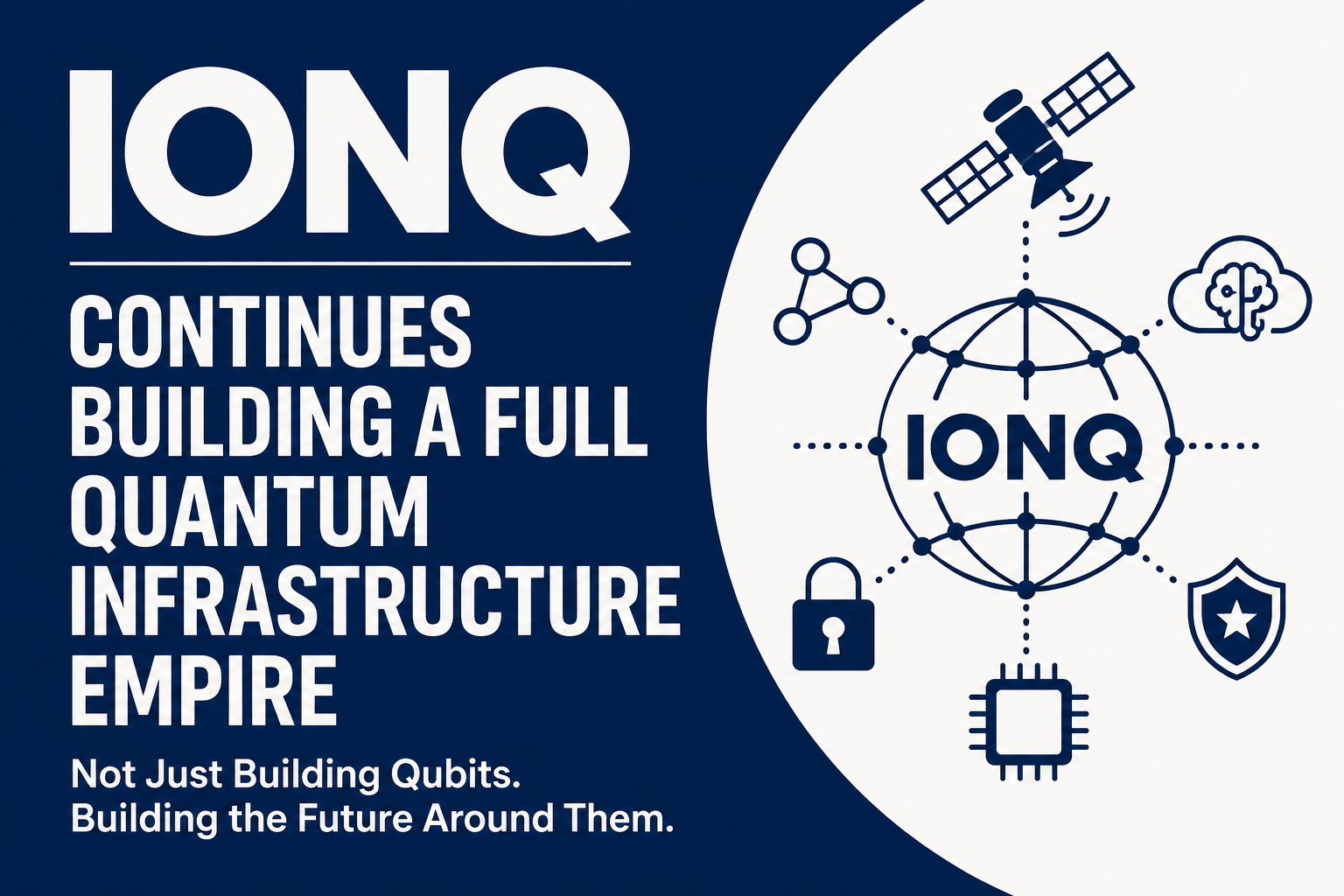
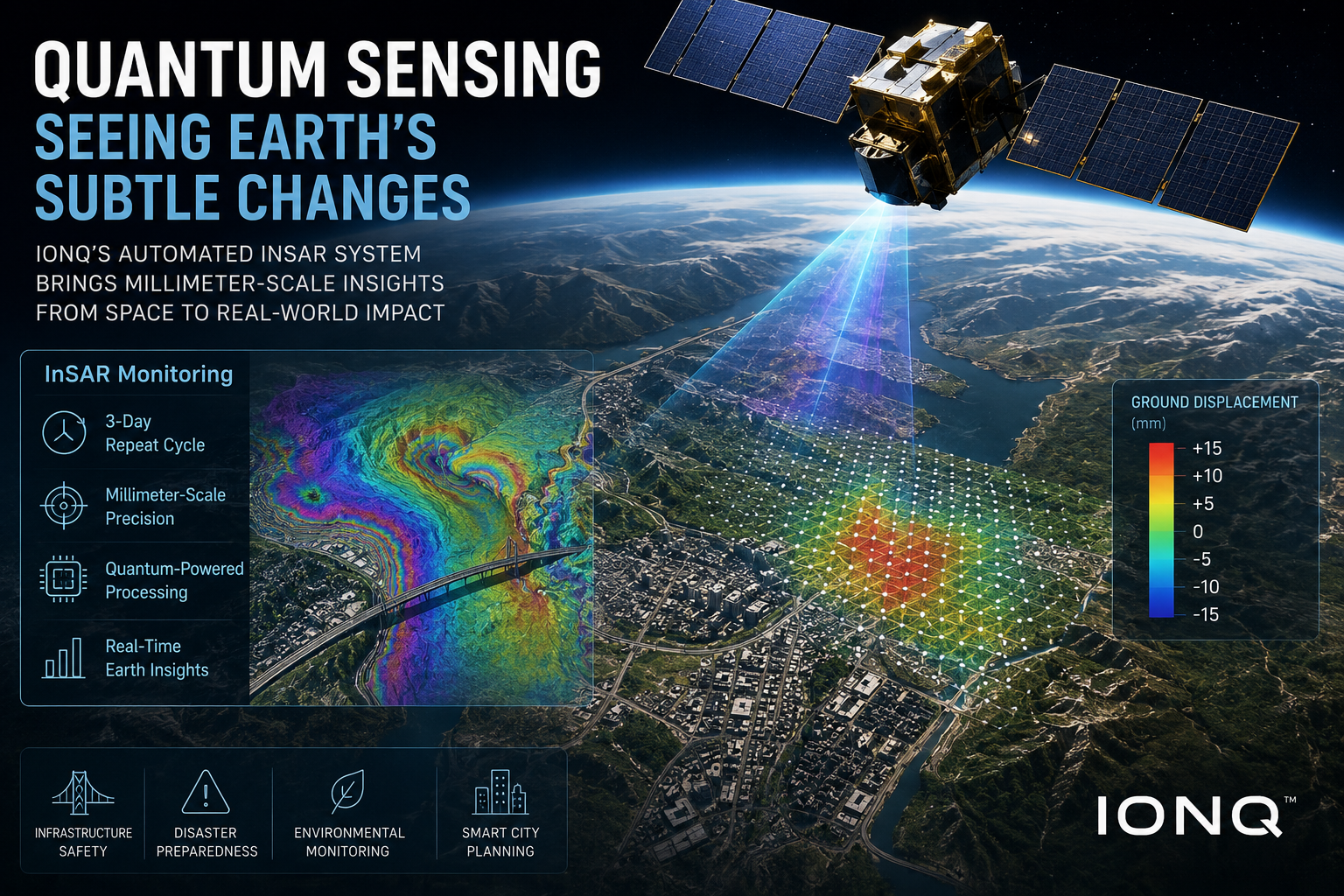
On May 11, IonQ announced the launch of an automated Interferometric Synthetic Aperture Radar (InSAR) capability designed to process millimeter-scale ground deformation and structural shifts using quantum computing architectures. Operating on a rapid three-day orbital repeat cycle, the system represents a notable shift in how quantum technologies are beginning to migrate from theoretical experimentation into practical commercial infrastructure.
Which sounds deeply technical. Because it is.
But beneath the acronyms and computational language is something much more human: the growing desire to see instability earlier.
To notice the almost invisible movements before they become catastrophes.
InSAR itself is not new. The technique has existed for decades as a method of using radar satellite imagery to measure changes in Earth’s surface over time. By comparing radar signals captured during multiple satellite passes, researchers can detect incredibly subtle shifts in terrain — sometimes down to millimeter precision.
That level of sensitivity changes how governments, engineers, insurers, scientists, and infrastructure operators understand risk.
Landslides become detectable before collapse. Bridges reveal stress accumulation patterns long before visible failure. Earthquake-prone regions expose gradual tectonic strain. Mining activity, groundwater depletion, volcanic inflation, coastal erosion — all of it leaves signatures across the surface if you know how to look closely enough.
The challenge has never really been whether these signals exist.
The challenge has been scale.
Modern Earth observation systems generate staggering volumes of data. Radar imagery accumulates continuously across vast geographic regions, creating computational bottlenecks that strain even advanced processing systems. Turning raw satellite data into actionable monitoring insights fast enough to matter operationally is a different problem entirely.
And this is where IonQ’s announcement becomes interesting.
The company’s automated InSAR capability reportedly uses quantum computing architectures to accelerate processing workflows associated with geophysical monitoring and infrastructure analysis. In practical terms, the system aims to reduce the enormous computational burden required to process repeat-pass radar observations while improving automation for continuous monitoring applications.
That may sound abstract until you imagine what “continuous monitoring” actually means in real life.
A city authority tracking subtle subsidence beneath urban neighborhoods before sewer systems fail.
A rail operator identifying tiny deformations along high-speed transit corridors before maintenance problems escalate.
Emergency response agencies detecting post-earthquake structural instability while aftershocks continue.
Energy infrastructure teams monitoring pipelines crossing unstable terrain.
Insurance companies reassessing risk models in regions increasingly affected by climate-driven geological stress.
The future of infrastructure management increasingly depends on sensing systems capable of observing changes too gradual or dispersed for humans to notice unaided.
And there’s something psychologically strange about that shift.
For most of human history, danger announced itself loudly. Storms appeared visibly on horizons. Buildings cracked dramatically. Floodwaters arrived with terrifying immediacy. But modern sensing technologies operate differently. They identify patterns before human intuition fully registers them. They notice whispers in the data long before physical systems visibly fail.
Civilization is becoming increasingly dependent on machines that perceive subtlety better than we do.
Not just in Earth monitoring, either.
Across medicine, cybersecurity, climate science, manufacturing, and financial systems, advanced sensing increasingly revolves around identifying microscopic deviations hidden inside overwhelming informational noise. The challenge isn’t merely collecting data anymore. It’s extracting meaning from complexity quickly enough to matter.
Which is partly why quantum computing keeps appearing in conversations around sensing and monitoring technologies. Quantum architectures are particularly well suited for certain optimization and pattern-processing problems that become computationally difficult for classical systems at large scales.
That does not mean quantum computing suddenly solves everything overnight. The field still faces enormous technical limitations, error correction challenges, and scaling constraints. But the industry narrative is shifting noticeably away from speculative futurism and toward narrower, commercially targeted applications where hybrid quantum-classical workflows may provide incremental advantages sooner than fully transformative breakthroughs arrive.
And honestly, that feels healthier.
For years, quantum computing discussions often drifted into a kind of technological mythology. Every advancement was framed as civilization-altering. Every hardware milestone carried the emotional tone of imminent scientific transcendence. It created a strange atmosphere where practical engineering realities sometimes disappeared beneath layers of futurist branding.
But practical technologies eventually demand specificity.
What does the system actually do?
What problems does it solve?
How does it integrate into operational workflows?
Who benefits?
Where are the constraints?
IonQ’s InSAR announcement feels emblematic of this broader transition happening across quantum industries right now. Less emphasis on abstract future potential. More focus on infrastructure, automation, and operational utility.
Less cinematic disruption.
More computational logistics.
And perhaps that’s exactly where quantum technologies become genuinely interesting.
Because real technological change often arrives quietly. Not through singular moments of dramatic transformation, but through incremental integration into systems people already rely upon. A processing workflow becomes faster. A monitoring capability becomes more precise. An infrastructure network becomes slightly more resilient because instability gets detected earlier.
The public rarely notices these transitions immediately.
But eventually daily life reorganizes around them.
There’s also something culturally revealing about the growing intersection between quantum technologies and planetary observation systems. It reflects an era increasingly defined by environmental uncertainty and infrastructural fragility. Climate change alone is forcing governments and industries to monitor physical systems with unprecedented intensity. Coastlines shift. Permafrost destabilizes. Drought alters land movement. Flood cycles accelerate erosion patterns. Urban environments strain under aging infrastructure and population density.
The Earth itself is becoming harder to predict using older monitoring assumptions.
Which means sensing technologies are no longer niche scientific instruments operating quietly in research environments. They are becoming foundational components of risk management, urban planning, environmental policy, insurance modeling, and national infrastructure strategy.
And beneath all the technical language sits a more existential truth modern societies are slowly confronting: resilience depends on perception.
You cannot respond effectively to changes you cannot see.
The irony, of course, is that many of these systems work precisely because they reveal how unstable supposedly stable environments already are. The bridge was always flexing. The hillside was always moving. The city was already sinking incrementally beneath its own weight long before anyone mapped the deformation.
The instability existed regardless of observation.
Technology simply makes it harder to ignore.
There’s a certain emotional weight to that realization. Modern sensing systems increasingly expose the planet not as static infrastructure beneath human civilization, but as a continuously shifting physical environment requiring constant interpretation. Stability itself starts looking less permanent and more actively maintained.
Maybe that’s why Earth monitoring technologies feel oddly symbolic right now.
They reflect a broader cultural shift away from assumptions of permanence.
The climate changes faster than expected. Infrastructure ages visibly. Geological systems behave unpredictably. Cities expand into vulnerable terrain. Governments scramble to modernize systems built for environmental conditions that no longer exist. Across all of it sits a growing awareness that observation — sustained, detailed, automated observation — is becoming one of the defining survival mechanisms of modern civilization.
And somewhere above the atmosphere, satellites quietly circle the Earth every few days, collecting evidence of movements most people will never feel beneath their feet.