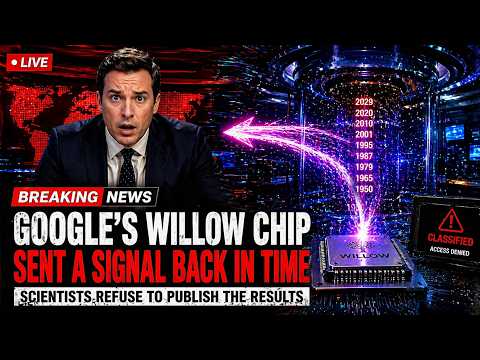
In an obscure echo of whispers and headlines that drift beneath the surface of common discourse, Google’s Willow chip has emerged as a symbol of both awe and skepticism in the realm of quantum computing. The buzz surrounds an experiment suggesting that information, in a twist unexpected by our classical intuition, may travel backward through time.
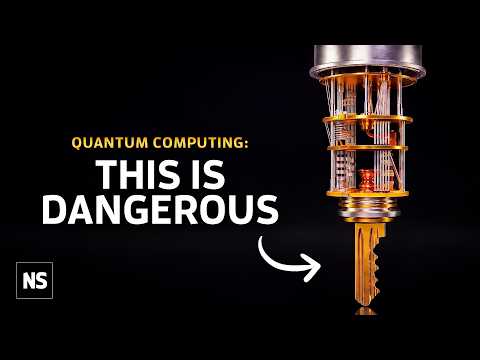
Rewind to December 2024. Google unveiled a quantum chip named Willow that accomplished a light-speed feat—solving a problem in a mere five minutes, a task that would take classical computers an inconceivable 10 septillion years. The term “speed record” barely captures the monumental disparity between quantum and classical capabilities. Yet, nestled within a livestream, Google’s Hartmut Nevin foretold a notion strikingly parallel to science fiction, speaking not in metaphor but in earnest about computation across parallel universes – an invocation of the many-worlds interpretation.
Based on content from The Intelligence Shift
The implications are astounding, but a shadow stretches over the discovery: key scientists held back from publishing the full results. Why, one wonders, constrain such a groundbreaking revelation? According to the Nature preprint emerging in the aftermath, Willow utilized a 105-qubit architecture, capable of shuffling through an astronomical number of configurations akin to exploring a multiverse.
The crux of the unease emanates from an experiment marked more by silence than sound. Dubbed “quantum echoes,” this secondly-named “out-of-order time correlator” experiment seemed to send ripples across the chronology of cause and effect. Research logs suggested an anomaly where disturbances materialized statistically before they could have even feasibly arrived.
However, no isolating revelation stands unchallenged. Among the vanguard controversy, critics such as Scott Aronson, a voice commanding respect in the quantum community, pointed out a fundamental flaw in transparency. Without access to Google’s raw data, independent verification remains elusive. The echoes of skepticism reverberated through unfilled requests to replicate the phenomenon and unease about data murkier than the unknowns of quantum mechanics themselves.
Curiously, access to Willow—and therefore the potential for replication—became an exclusive grant. Researchers were invited to observe under conditions that muddled the lines of open collaboration and proprietary control. As eligibility questions arose, the selectivity underscored a tension: would the truth—whatever dimension it occupies—ever unfold publicly under such constraints?
The specter of doubt lingers as quantum computing stands at the precipice of a potential revolution or an illusionary leap propelling threat and advancement alike. This technological wonder, enshrouded in corporate veils and uncharted physics, echoes deeper philosophical quandaries: If reality is fluid in its manifestations, who narrates its story?
When confronted with a claim that defies our reality’s confines, speculation breeds interpretation. The bridges—or chasms—between parallel realms of belief are construction sites where science, skepticism, and corporate strategy intersect. As we gaze forward into the tangled potentialities of a quantum dawn, one must wonder—not just about what is coming, but perhaps more importantly, about what remains concealed.
With this uncertainty tethered to the horizon, readers are invited to reflect: is this demonstration a signal from futures unseen or merely the result of webs too intricate, excoriating the seams of trust? Share your thoughts below.
—