In a world abuzz with nascent technologies, quantum computing stands out—not just for its sci-fi allure, but for its potential to redefine the landscape of computing. Yet discussions around quantum computing often oscillate between being overly technical and humorously vague. If you’ve ever found yourself lost between complex equations or abstract promises, you’re not alone. At Stir Trek 2026, under the thoughtful guidance of Tristan Chiappisi, a principal data architect at Satara Financial Services, we find a succinct, developer-friendly path through the quantum fog.
Chiappisi’s journey into the quantum realm began with curiosity, a spark typically kindled by those long nights spent in insomniac YouTube rabbit holes. With 25 years of experience under his belt, Chiappisi’s foray into this world feels like a reassuring hand guiding us through a new, albeit unconventional, terrain. As he shares his insights at the conference, there is a palpable recognition of the moment’s importance. Imagine the foresight of understanding AI’s potential just before the technology reshaped industries—that’s where quantum computing stands today, both promising and slightly unnerving.
Based on content from Stir Trek
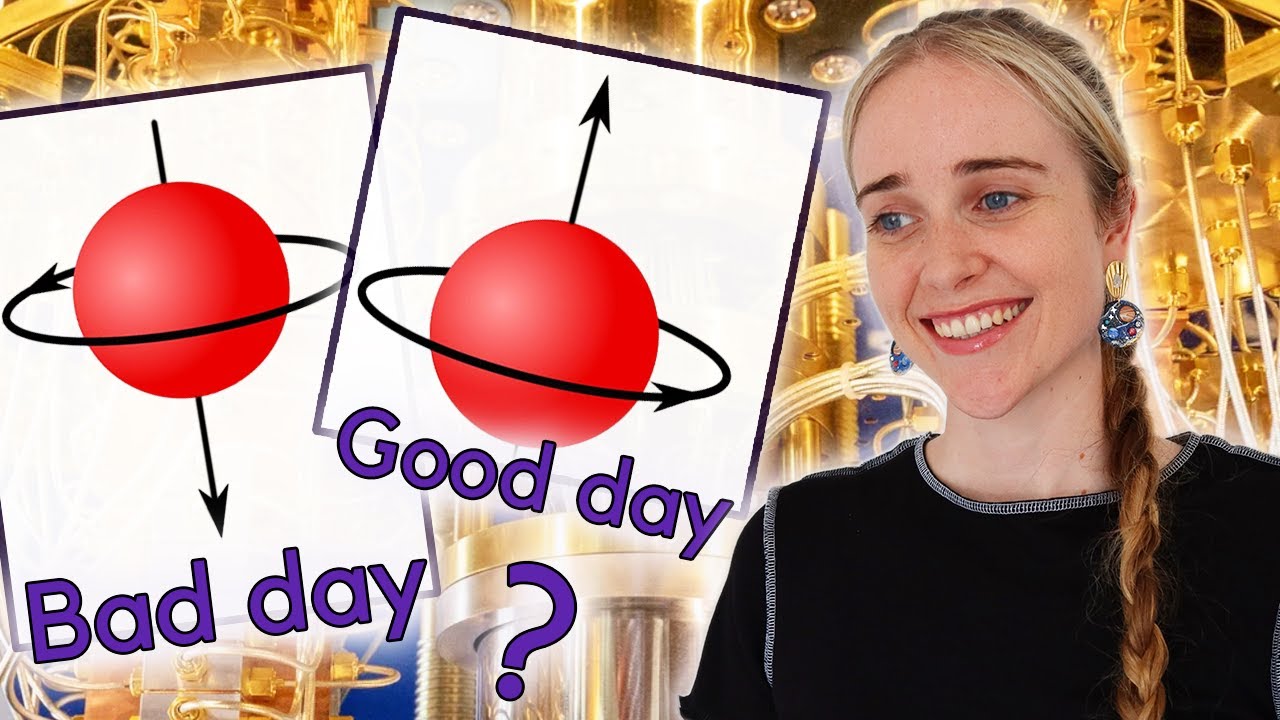
At its core, quantum computing is based on principles as bemusing as they are fascinating. The double-slit experiment, a curious phenomenon, forms the bedrock of this discipline. It’s a story of particles behaving unexpectedly, manifesting interference patterns only when not observed—a cosmic peekaboo if you will. From here arises the concept of superposition, where quantum bits—or qubits—exist simultaneously in multiple states, akin to a spinning coin that never lands. This property allows quantum computers to perform calculations across an ensemble of possibilities, something our binary-obsessed classical computers simply cannot match.
Chiappisi demystifies quantum jargon with clarity and wit. He gently nudges us to embrace superposition, entanglement, and interference without drowning us in cryptic formulas. In doing so, he opens our eyes to what quantum machines excel at: solving problems bound by complexity and scales beyond traditional computation—redefining fields from cryptography to optimization, yet reminding us of their limitations. Traditional systems remain steadfastly reliable where determinism reigns supreme. Neither AI nor quantum computers will replace our need for classical frameworks; they’ll exist symbiotically, each complementing the other’s strengths and weaknesses.
And then there’s the matter of security. Quantum computing’s capacity to crack current encryption standards whispers of a technological arms race. The specter of ‘Q-Day’ lingers, a hypothetical moment when our encrypted secrets become fair game. Yet Chiappisi reassures, citing innovations in encryption that rise to meet the challenge. We’re protected by forward-thinking cryptographers and physicists, striving for quantum-safe protocols. Anticipating this future isn’t merely about fear—it’s about preparedness, about recognizing the landscapes on our personal and professional horizons that will change.
The discussions held at Stir Trek reflect a pragmatic optimism—one that resonates beyond buzzwords. As quantum computing approaches its ‘chat moment’, we’re invited to engage with it not as passive observers, but active participants who understand enough to partake in the evolving dialogue. Chiappisi’s presentation isn’t a deep dive into quantum mechanics, but a launching pad for further exploration—a curated collection of knowledge to spark curiosity and drive self-directed research.
At its conclusion, the session carries forward-looking insights, encouraging developers to seek out interactive learning, to experiment within the quantum sandbox. The promise of quantum computing may stir existential questions about reality and computation, yet it leaves us with the robust assurance that we are at the cusp of a remarkable technological epoch.
—