In the shadow of quantum computing, a new breed of anxiety is percolating among tech enthusiasts and security professionals alike. Welcome to “Post-Quantum Panic,” a reality we tiptoed into while watching theoretical milestones turn into tangible threats. Let’s not mince words; we’re in a race against time as quantum computing starts swinging its double-edged sword.
My journey through quantum computing mirrors the progression of the technology itself. From the theoretical physics labs where quantum mechanics bewildered even the brightest, to pen testing in cybersecurity, I constantly gravitated towards understanding how the abstract becomes the inevitable. And now, as we’re teetering on the edge of a quantum leap, our cryptographic safeguards, the secrets beneath the digital locks, are glaringly vulnerable.
This video is from DEFCONConference.
Imagine this, quantum computers, unlike their classical cousins, don’t march from point A to B. They take a bizarre leap, simultaneously exploring multiple pathways and arriving at a destination almost instantaneously. Here’s the unsettling part: this ability threatens to dismantle the very fabric of cryptographic security systems like RSA and ECC, integral to our current cryptographic infrastructure, which primarily safeguards internet transactions and data encryption.
Why the fuss now when quantum computing has been a ‘future problem’? It turns out the future is almost upon us, far quicker than many anticipated. With the pioneering efforts of companies like IonQ, and the algorithmic leaps noted in recent research, we’re seeing the theoretical barriers crumble faster.
The dual algorithms Shor’s and Grover’s are at the heart of this impending turn. Shor’s algorithm, in theory, can break through RSA encryption by exploiting the properties of quantum mechanics to factorize enormous numbers swiftly—a once Herculean, near-impossible task for classical computers. Grover’s algorithm enhances the ability to search through massive databases at speeds unattainable previously.
Both bring a type of efficiency that, while awe-inspiring, spells potential disaster for data security. The cryptographic doomsday, or “Q-Day,” once a speculative point in the distant future, feels uncomfortably near. This proximity isn’t due to a single advancement but a rapid convergence of algorithmic development, hardware improvement, and increasing commercial interest and investment in quantum technologies.
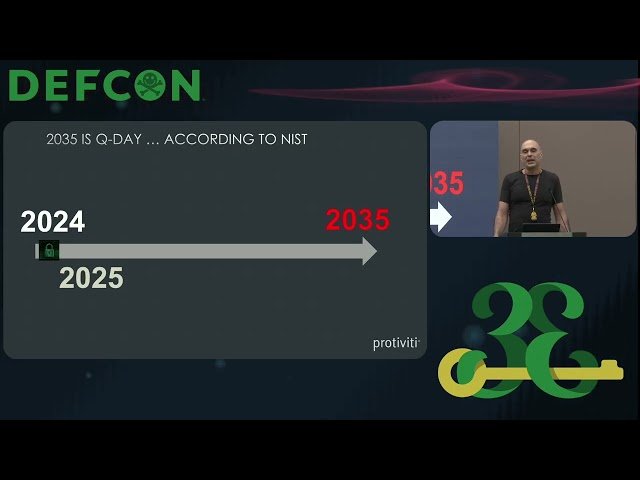
Facing this tidal wave, the National Institute of Standards and Technology (NIST) is in the throes of developing and implementing quantum-resistant encryption algorithms. Nonetheless, with implementation guides stretching to 2035, the gap between possibility and preparation seems worryingly expansive.
And here lies the philosophical crux we’re forced to confront: as we hurtle toward unlocking new realms of computing might, our foundational data security systems crumble under the advance. We’re tasked not only with understanding this impending change but proactively engaging with it. Cybersecurity professionals, Chief Information Security Officers (CISOs), and indeed any tech-savvy leaders shouldn’t just be aware of the shift but also actively participate in fortifying our digital fortresses.
Imagine—quantum attacks aren’t direct brute-force sieges; they’re secrets siphoned silently, making the stakes of inertia disastrously high. Each day without action is a day closer to potential chaos, where our financial, personal, and national security could be compromised with a few quantum computations.
To tread this tightrope between technological marvel and potential havoc, our approach must be twofly tripartite: Understand, prepare, and innovate. Understanding involves educating oneself and others about the realistic capabilities and timelines of quantum computing. Preparation calls for updating and fortifying existing encryption systems in anticipation of quantum capabilities. Lastly, innovation requires us to contribute to developing new cryptographic standards that can withstand the quantum onslaught.
In sum, as we stand on this precipice, looking into the quantum abyss, the call to action couldn’t be clearer or more urgent. Let us not be bystanders in this technological turnover but active participants in shaping a secure quantum-resistant world.