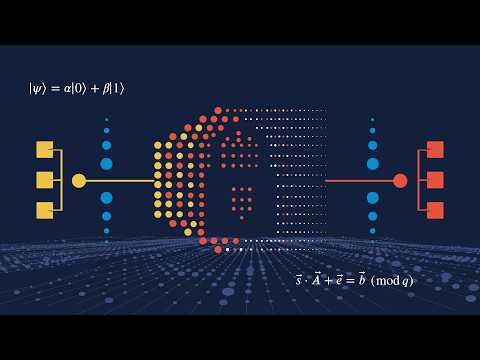
Let’s begin with this: the age of quantum isn’t coming. It’s already humming quietly in the background, like a machine you don’t notice until it stops working or suddenly does something unexpected.
Quantum computing isn’t a science fiction headline or a quirky subplot in a tech blog anymore. It is becoming one of the most profound shifts in global power since the first satellite blinked across the Cold War sky. The ground beneath cybersecurity, military strategy, and international diplomacy is already shifting, even if most people haven’t yet felt the tremor.
At the heart of this shift lies a paradoxical phenomenon. Quantum computing unlocks both breathtaking possibilities and unprecedented vulnerabilities. The same technology that could cure diseases and model climate futures might also dismantle the encryption that holds together everything from global finance to the secrets of sovereign states.
And it’s not hypothetical. Not anymore.
A Silent Arms Race with No Launch Codes
Let’s set the scene: Washington, Brussels, Beijing, and Tokyo. None of these cities is sleeping on quantum. They are throwing down hundreds of billions in funding, talent, and infrastructure to try to own this future before it owns them.
It’s not just about who gets to the finish line first. It is about who builds the road and who controls the tollbooths.
The U.S. CHIPS and Science Act invests over $ 200 billion in emerging technologies, with quantum computing as a key pillar. China has an entire research complex dedicated to quantum breakthroughs, encompassing a megacity. The EU’s EuroQCI initiative aims to secure communications with quantum resilience built in. Canada, the UK, and Australia are all scrambling to stay in the game.
This is not curiosity-driven science. It is not theoretical anymore. It is strategic.
The battlefield isn’t just filled with weapons. It is layered with code, networks, and supply chains. If one country breaks quantum ground while another is still patching its firewalls, the imbalance won’t just be technological; it will be existential.
The Cracks in the Digital Fortress
Let’s talk about the code we trust.
Currently, your online banking, medical records, and government communications are all protected by encryption that assumes one thing: no computer is fast enough to break the math.
Quantum computers operate in superposition, rendering that assumption moot.
Two algorithms in particular, Shor’s and Grover’s, change the game. Shor’s algorithm can break through RSA and ECC encryption, turning public keys into private ones in milliseconds, much like solving a Rubik’s Cube. Grover’s speeds up brute-force attacks, meaning symmetric encryption isn’t safe either, not unless we rethink key sizes and start now.
It’s not happening tomorrow. But it is coming. And that is enough.
Harvest Now, Decrypt Later: A Quiet Crisis Already Underway
Here’s the part that chills people who actually understand what’s happening.
Bad actors don’t need a quantum computer to attack you today. They need your encrypted data and the patience to wait.
That’s the “Harvest Now, Decrypt Later” strategy. Nation-states and criminal groups are already collecting vast amounts of encrypted data. Communications, contracts, defense plans, health records. Anything with long-term value. They will break it when the tools arrive.
The result? A breach that doesn’t come with flashing red lights. Just quiet access. And once trust is broken, systems don’t easily recover.
What’s at risk isn’t just confidentiality. It is the entire foundation of digital trust.
Two Roads Diverge: PQC vs. QKD
So how do we defend ourselves in this strange new world?
Two main paths exist, each with its own promise and pitfalls.
Post-Quantum Cryptography (PQC)
This is the most practical solution at present. Think of it as upgrading your locks before someone invents a master key.
PQC is software-based. It doesn’t need new cables or satellites. It is built on mathematical problems that even quantum computers cannot easily solve, at least not yet. In 2024, the U.S. National Institute of Standards and Technology (NIST) finalized its first set of standards, including CRYSTALS-Kyber, CRYSTALS-Dilithium, and SPHINCS+.
Cloud providers and defense agencies are already deploying them. The key benefit? Crypto-agility. If a flaw is found, you can swap algorithms, like changing armor instead of rebuilding the castle.
Quantum Key Distribution (QKD)
The second path, QKD, sounds magical. It utilizes the laws of physics to exchange encryption keys in a manner that is theoretically unhackable. If someone even tries to eavesdrop, the system knows.
But reality sets in quickly. QKD needs expensive hardware, is limited by physical distance, and doesn’t scale easily. It is a beautiful idea, just not one that most nations can build their digital defense around.
PQC is winning for now. Quietly, but decisively.
The Quantum Battlefield: Seeing Without Being Seen
Quantum isn’t just about computers. It is about sensing. Seeing the world more precisely than ever, without emitting a single signal.
In places where GPS is jammed or spoofed, such as conflict zones or the aftermath of cyberattacks, quantum navigation tools can determine location using gravitational or magnetic shifts. Passive. Undetectable. Resilient.
The UK recently tested a quantum navigation system on a naval ship. It was fifty times more accurate than traditional backups during simulated warfare. That is not just technical progress. That is a strategic advantage.
Even more unsettling, quantum sensors could detect submarines by mapping subtle magnetic anomalies. The oceans have long been hiding places for nuclear deterrents. If quantum removes the curtain, what happens to the global balance of power?
Sometimes the most dangerous shifts happen not with explosions, but with clarity.
Preparing for the Inevitable
Being quantum-ready isn’t about chasing shiny tech. It is about doing the quiet, hard work:
- Training a new kind of workforce—creative, neurodiverse, and comfortable with ambiguity
- Building ethical frameworks for sensors that could track people through walls
- Redesigning infrastructure with flexibility, not just strength
This is more than an arms race. It is a redefinition of what power looks like in a connected, unpredictable world.
The Quiet Before the Quantum Storm
The next decade will decide everything.
Not just who builds the fastest quantum computer, but who adapts wisely. Who plans for ambiguity? Who learns to trust slowly, rebuild flexibly, and listen deeply, even in silence.
Because the loudest risks may not come with sirens.
They may come in the form of things we don’t see until it is too late.
The age of quantum isn’t about what we invent. It is about how we respond.
And that response starts now.