The internet we depend on every day is fragile. Data breaches have become routine, and the security of our digital lives depends on algorithms locked in an arms race against increasingly sophisticated attackers. But a fundamental shift is underway. Quantum cryptography isn’t just theory—it’s turning the idea of an unhackable internet into something tangible and deployable today.
The Looming Cyber Threat
Modern cybersecurity rests on public-key cryptography—systems like RSA and ECC that protect everything from financial transfers to state secrets. These methods rely on the difficulty of solving specific mathematical problems. For now, even the fastest supercomputers would take centuries to break them.
That confidence ends with Shor’s algorithm. Published in 1994, it proved that a sufficiently powerful quantum computer could factor large numbers almost instantly, rendering today’s encryption useless. This is no longer hypothetical: nation-states and tech giants are racing toward quantum supremacy. Whoever crosses that finish line first gains the ability to unlock vast stores of encrypted data. Many actors are already collecting encrypted traffic now to decrypt later once the hardware catches up. The countdown to a post-quantum security crisis has already begun.
Quantum Key Distribution: Security by Physics
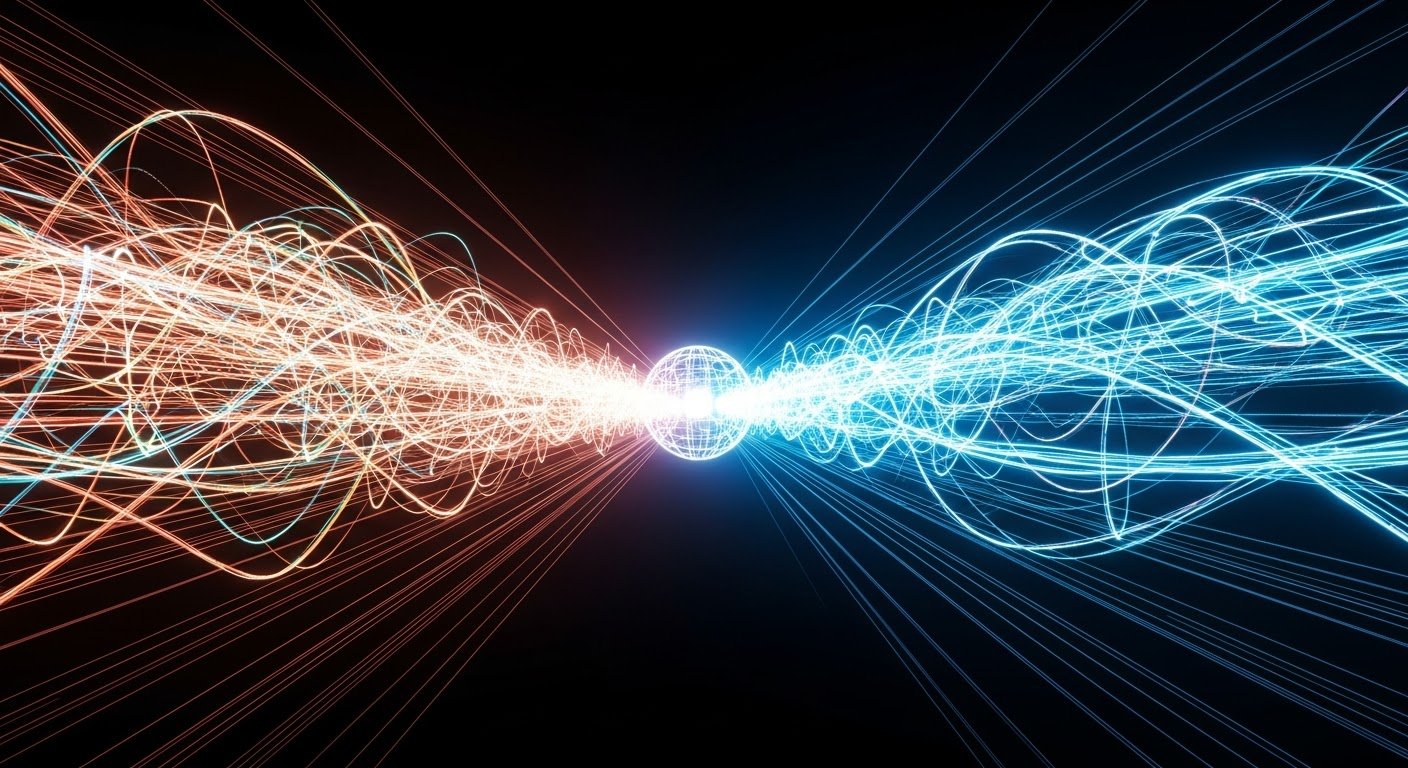
The defense will come not from stronger math but from the laws of nature themselves. Quantum Key Distribution (QKD) allows two parties to share a cryptographic key using single photons. Because each photon exists in a quantum state, any attempt to observe it alters it—instantly exposing an eavesdropper.
In the standard BB84 protocol, key bits are encoded in the polarization of photons. When an intruder tries to measure them, the act collapses their quantum state. It changes the key, alerting both parties—the result: security guaranteed not by computational limits but by physics.
Toward a Quantum Internet
Banks, utilities, and governments are already using QKD for ultra-secure communications. The limitation is distance: photons degrade over long fiber links, restricting current systems to a few hundred kilometers.
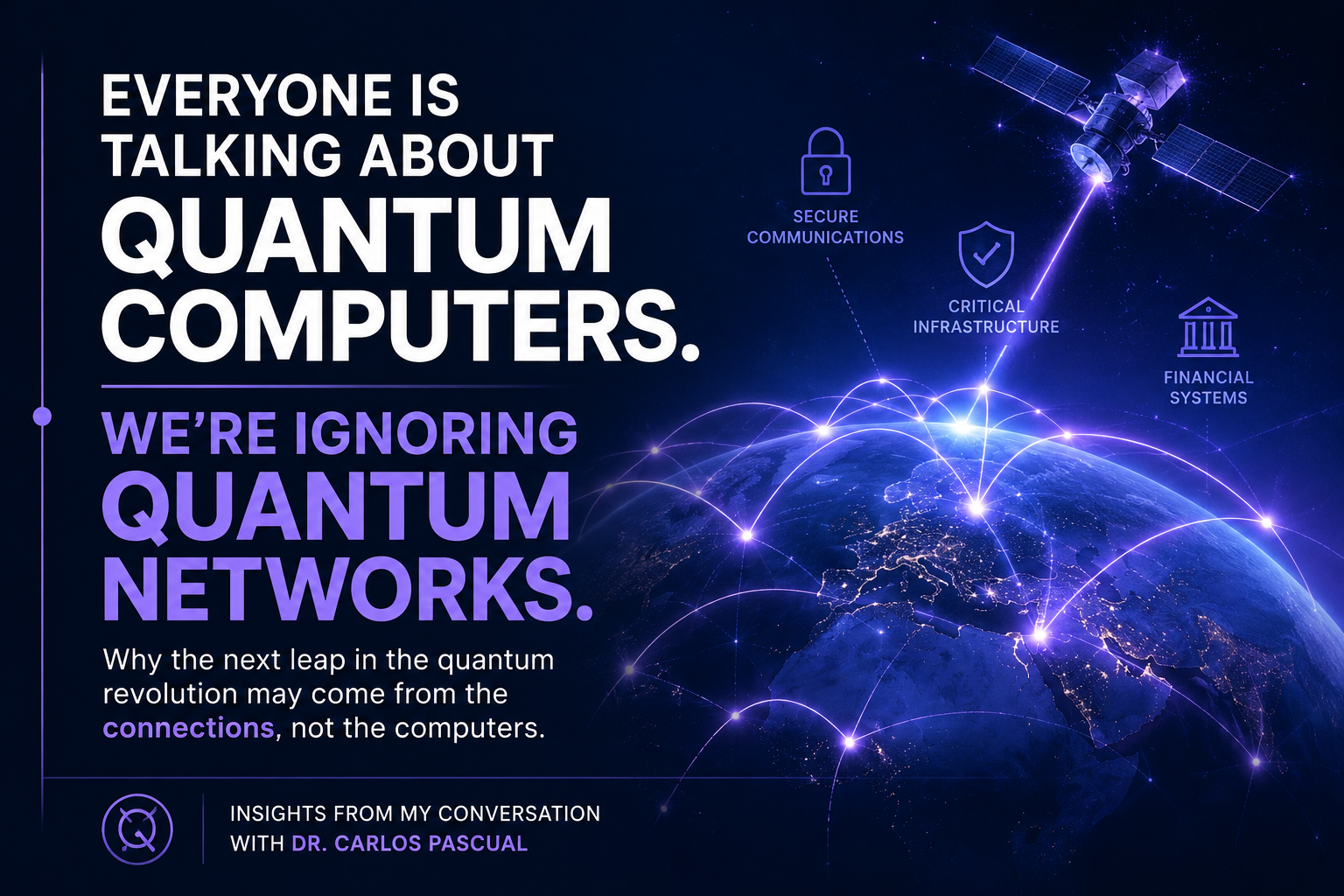
Scaling up demands quantum repeaters—devices that extend entanglement without destroying it—and a network architecture optimized for low-noise “dark fiber.” Milestones are emerging quickly. China’s Micius satellite achieved intercontinental QKD between ground stations thousands of kilometers apart. Europe’s EuroQCI program is deploying a continent-wide quantum network. Similar efforts in the U.S., Japan, and Singapore are accelerating the development of a truly global quantum internet.
Beyond Keys: Quantum-Safe Algorithms
Quantum cryptography isn’t limited to key exchange. Researchers are designing quantum-secure blockchains, tamper-proof ledgers, and quantum-random number generators to enhance everything from logistics to finance.
At the same time, governments are preparing with Post-Quantum Cryptography (PQC)—classical algorithms resilient to quantum attacks that can be implemented on today’s infrastructure. The U.S. NIST PQC standards (FIPS 203–205) are finalizing global replacements for RSA and ECC. In practice, PQC and QKD will coexist: PQC protecting most software communications, and QKD guarding the most sensitive links.
Rebuilding Digital Trust
An internet rooted in quantum security could transform society. Citizens could own their privacy again. Financial transactions would become immune to quantum theft. Democracy itself could gain a more resilient foundation of trust.
But absolute privacy also raises hard questions for law enforcement, national security, and global equity. QKD infrastructure is expensive and complex, risking a new digital divide between those who can afford quantum security and those who cannot.
The takeaway is clear: quantum cryptography is no longer optional background research—it’s the cornerstone of tomorrow’s secure world. The unhackable internet isn’t a dream; it’s under construction. The question is how quickly we choose to connect.