There’s something poetic about the idea of backing up a quantum state. It’s like trying to catch moonlight in a mason jar; the entire notion has always seemed too slippery, too forbidden by the fundamental laws of physics. And yet, here we are, standing at the edge of an impossible made real.
In early 2026, a paper published in Physical Review Letters dropped the equivalent of a mic in the quantum community: “Encrypted Qubits Can Be Cloned.” And the minds behind this intellectual somersault? Dr. Achim Kempf and Dr. Koji Yamaguchi from the University of Waterloo’s Institute for Quantum Computing (IQC). Their work doesn’t just tiptoe around the No-Cloning Theorem—it elegantly reinterprets the stage.
This is more than a scientific win. This is a narrative shift for how we imagine the future of data. Of security. Of communication. Of consciousness encoded in flickers of probability. And yes, even of storage solutions with quantum Dropbox vibes.
The No-Cloning Problem: A Cosmic Catch-22
Classical data is shamelessly copyable. A photo, a PDF, that one file you swear you didn’t mean to send to your boss—all of it can be duplicated ad nauseam because the information is explicit and readable. It’s just a string of bits.
But quantum data? That’s a diva with boundaries.
Qubits don’t play by classical rules. They exist in fragile superpositions, simultaneously multiple things until observed. Peek too closely, and you collapse the wave function. Try to copy them? The No-Cloning Theorem slams the door in your face. Quantum information has long been described as unbackup-able. A single drop, and it’s gone forever.
This is the nightmare scenario for anyone trying to build scalable quantum infrastructure. You can’t scale what you can’t protect.
Waterloo’s Workaround: Encryption as a Loophole
And yet, the IQC team has found a side-door—one that doesn’t violate the laws of quantum mechanics but dances with them.
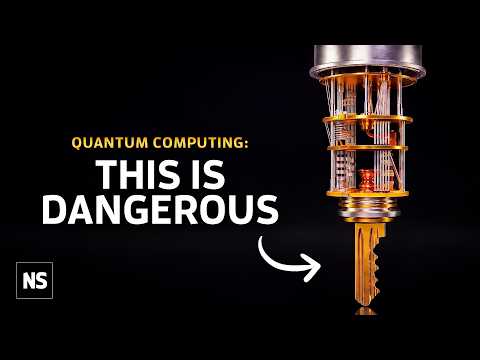
Here’s the elegant twist: while you can’t clone a raw quantum state, you can create unlimited copies of an encrypted version of that state. Think of it as making thousands of locked safes, each containing scrambled data. Only one key exists—and it’s quantum too.
Once the key is used to decrypt any one of the encrypted copies, it self-destructs. Poof. One use, one copy. The theorem remains unbroken, but the game has changed.
Dr. Yamaguchi put it plainly: “After one picks and decrypts one of the encrypted copies, the decryption key automatically expires.”
We’re not breaking the rules, we’re rerouting around them with elegance. It’s less of a hack and more of a Mathematical koan.
Quantum Cloud: The Shape of Things to Come
What does this mean, practically? Imagine quantum backups that span continents. Quantum files are stored redundantly across multiple servers—nine could fail catastrophically, but if one survives, you’re still good. That kind of resilience? We call it fault tolerance, and it’s the backbone of every real-world system.
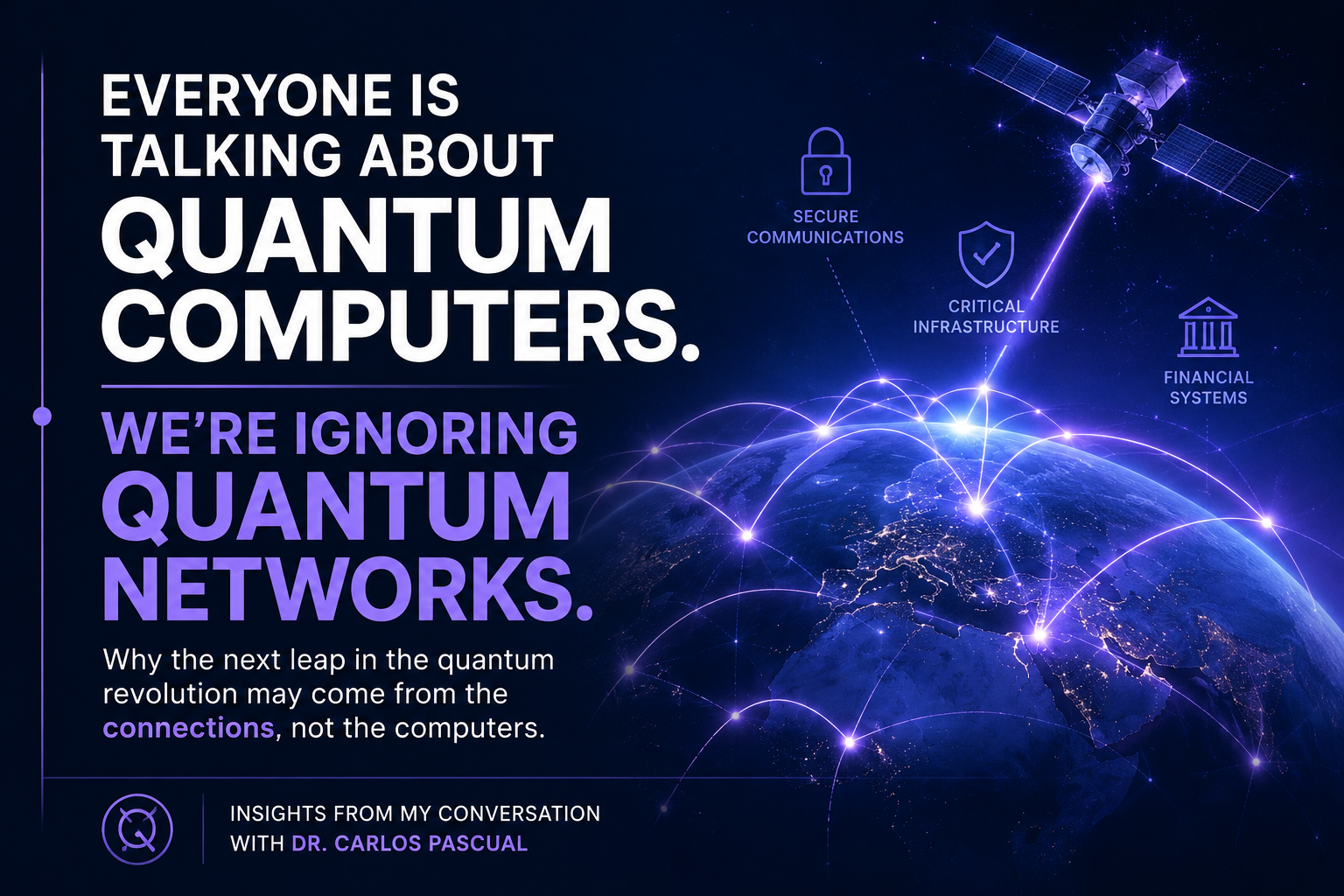
Now apply that to the Quantum Internet. Today’s quantum communications are like whispering across a canyon—if the echo fails, the message is lost. But with encrypted redundancy? You’re whispering ten times, in ten directions. One echo will do.
Waterloo’s method transforms the fragile into the recoverable. Suddenly, quantum storage isn’t a high-wire act—it’s a distributed safety net.
Security and Scale: The Dual Temples
This breakthrough hits two holy grails simultaneously: security and scalability.
Quantum Key Distribution (QKD) gets a protective upgrade. No more praying that one photon gets through. Send a dozen encrypted quantum keys, and if just one reaches its destination, the communication stands. That’s not just theoretical resilience; it’s practical hope for long-distance quantum networks, even through turbulent atmospheres or flaky satellite links.
On the scaling front, we’re inching closer to Quantum Cloud Services’ secure, redundant platforms where quantum workloads can live temporarily, travel safely, and still be there when you come back. We’re talking about Quantum Computing-as-a-Service (QCaaS) that doesn’t panic at the first sign of hardware hiccups.
But Let’s Not Get Ahead of Ourselves…
The math is clean. The demo is solid. But implementation? That’s the realm of hardware engineers, systems designers, and patience.
We’ll need gates that behave like saints and qubits that don’t lose their cool. We’re still in the early stages of developing physical systems capable of handling the complexity of encrypted cloning.
Yet something fundamental has shifted: the myth of quantum fragility has cracked. We now have a credible path toward redundancy—toward persistence—in a space where everything once felt like vapor.
In an age obsessed with infinite copies and digital permanence, quantum computing has always felt like a reminder of impermanence. Of entropy. Of delicate balances we cannot cheat.
Until now.
The University of Waterloo didn’t break the laws of quantum mechanics; they wrote a clever footnote. And in doing so, they’ve made the future a little less ghostly.
Because what is storage, if not a form of memory?
And what is memory, if not a promise we can keep?
Even in the quantum world.