

The air in the room is rich with anticipation as you join the D-Wave webinar. Here, amid the quiet hum of servers and the muffled keystrokes of researchers, a conversation is unfolding—a narrative woven from the tiny but potent world of quantum mechanics. This is not just a technical briefing; it’s a glimpse into the heart of innovation, where each word holds the weight of a paradigm shift.
Dr. Andrei Petrenko, VP of Gate Product Management at D-Wave, and Murray Thom, VP of Quantum Technology Evangelism, are your guides for this journey. They begin the session by placing D-Wave in the quantum computing landscape, showing a dual commitment to both the annealing and gate-model paradigms. These two models, they explain, are akin to different languages of the mysterious subatomic realm, each suited to a specific form of expression, much like how a poet might choose free verse for one subject and a sonnet for another.
Based on content from D-Wave
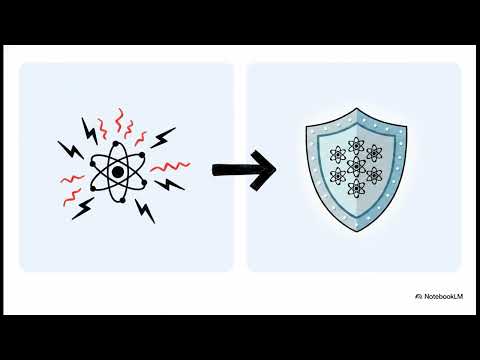
The concept of error—a lapse, a deviance, a misstep—takes center stage. Yet rather than viewing error as an adversary, here it is reframed as an opportunity for clarity, for deepening our understanding of quantum processes. Error-aware programming, with its unique capacity to embed error detection directly into the architecture at the hardware level, emerges as a transformative approach. As Petrenko speaks, the term “error” seems to shimmer in the air, not as a fault, but as a beacon guiding us toward innovation.
This is not merely theoretical exposition; it is deeply practical, with discussions turning towards the specifics of D-Wave’s dual-rail qubit architecture—a technology both robust and subtle. By embedding error detection directly into these superconducting cavities, D-Wave reduces the qubit overhead ordinarily associated with achieving fault tolerance. Imagine trying to hear a single, delicate note played in a bustling room; then imagine everyone in that room growing quiet as you bring a stethoscope to your ears. Such is the promise of dual-rail architecture, attuned to the precise whispers of quantum communication.
The introduction of a gate-model simulator on the Leap™ quantum cloud platform is another feather added to this cap. It comes as both tool and canvas, allowing users to prototype and validate quantum algorithms and applications before setting them into the real-time quantum ecosystem. This, too, serves as a narrative nod to imaginative exploration while tethered firmly to practicality.
The dialogue continues, exploring the terrain of fault-tolerant quantum computing. What does it mean to anticipate and mitigate errors at the nascent stages, in the ambient glow of potential rather than the stark light of realized mistakes? Here lies the essence of error-aware programming—an ethos that privileges proactive insight over reactive correction.
As the conversation drifts toward its conclusion, there remains a hum of unanswered questions. What uncharted territories will this technology unlock? How will it redefine the frameworks within which we currently understand possibility itself? Petrenko and Thom leave us with a roadmap that stretches into the future, a promise not just of technological milestones, but of a shift in perspective—from focusing solely on where the path is leading, to appreciating the path itself.
In the end, this webinar is more than a collection of insights on quantum mechanics and programming. It is a reminder that within the error lies the possibility for profound clarity—a notion that leaves us both curious and hopeful as we ponder the future of quantum computing.
—






Leave a Reply