

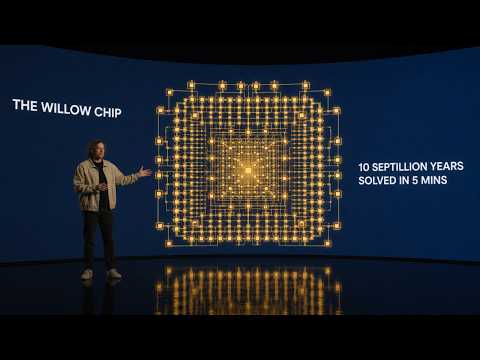
In the hushed corridors of cutting-edge technology, a profound transformation is quietly unfolding. Quantum computing, no longer a distant mirage of speculation, is steadily materializing into an ingenious reality, nudging the limits of what is computationally possible. If you pause to listen—truly listen—behind the hum of traditional machines, there’s a subtle symphony of shifting probabilities, a whisper of qubits entangled in a dance dictated by quantum mechanics.
Based on content from FutureTech_Insights
These aren’t your everyday computers; quantum computers operate on qubits that can exist in multiple states, leveraging the enigmatic principles of superposition and entanglement to handle calculations at speeds and complexities far beyond the grasp of classical bits. While they won’t replace your smartphone or laptop, they herald a new era for problems that today’s supercomputers wrestle with ineffectually, extending their elegant logic into the heart of complex scientific, financial, and industrial landscapes.
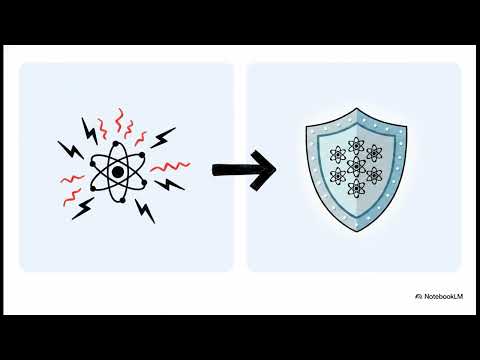
Consider the delicate art of error correction—a once daunting barrier in quantum computing where the slightest environmental shift could skew calculations. Researchers are illuminating this path with new techniques enabling qubits to collaborate and correct themselves with greater fidelity. The implication? Quantum systems that could execute intricate programs with precision instead of dissipating into the incoherence of noise.
In the realm of drug discovery, quantum computing offers whispers of revolution. Simulating molecular interactions—an exhaustive task for classical computers—could become remarkably precise, expediting early-stage discoveries and reshaping healthcare landscapes. Imagine the trajectory of medical research reduced from years to mere inklings of time, clarifying pathways once obscured by the fog of molecular complexity.
Then, there’s the promise lying in materials science. Our modern world rests on materials honed for specific needs—a new battery chemistry here, a stronger composite material there. Quantum simulations of atomic interactions could usher in unprecedented innovations across industries, from renewable energy breakthroughs to future aerospace marvels.
Finance, too, stands at a threshold. As vast as the data governing financial systems is the room for improved methods of portfolio optimization and fraud detection. With quantum advances, financial modeling may gain untold power, navigating through computational seas too turbulent for current systems, giving rise to insights once unattainable.
The logistics sector, always hungry for efficiency, anticipates a quantum boost, with the potential to optimize every delivery route, every warehouse schedule, at efficiencies classical algorithms dream of but rarely achieve. Even slight improvements in such large-scale operations could cascade into significant resource savings, echoing through the bottom lines of global commerce.
In fields where security is non-negotiable, quantum communication opens new dialogues of data encryption. With quantum key distribution, the integrity of data transmission is guarded with quantum laws, detecting even the faintest whispers of interception attempts, potentially reshaping the cybersecurity landscape as we know it.
Artificial intelligence, forever driven by data and computational demand, awaits its own transformational tide. Quantum enhancements could redefine the capabilities of AI systems, optimizing machine learning algorithms and processing vast data sets with refreshed efficiency. For now, classical systems lead the charge, but quantum prowess is emerging, ready to lend its substantial capabilities to specific, intricately challenging tasks.
Perhaps the most profound breakthrough lies in quantum systems’ potential to tackle scientific mysteries that mock classical limits. Climate modeling, fusion energy research, and complex chemical reactions sit within the scope of quantum exploration, offering glimpses into a deeper understanding of our universe and its complexities.
The culmination of these breakthroughs coalesces in the promise of real-world applications at a transformative scale. As contrived as science fiction once seemed, the harmonies of qubits are edging closer to practical viability. Developments in error correction, qubit stability, and algorithm design are the stepping stones guiding quantum systems from theoretical curiosity to indispensable realities in medicine, chemistry, logistics, and beyond.
Yet, as with all emerging innovations, quantum computing traverses a path fraught with challenges. Delicate balancing acts of engineering, environmental stability, and interdisciplinary collaborations remain. But with each stride, the horizon of possibility grows more tangible, illuminating sectors and disciplines across the board.
As we embark into future landscapes shaped by quantum breakthroughs, we are left with questions that flicker with opportunity and potential. How will society adapt to this seismic shift in computational capability? Can we harness quantum clarity without being overwhelmed by the intricacies it reveals? The answers, perhaps, lie waiting in superposed states, ready to be unveiled by the thinkers and dreamers who dare to watch, to question, and ultimately, to know.
—










Leave a Reply