

Within the quiet hum of a University of Chicago lab, a small team of physicists may have just tilted the scale of quantum computing towards a more attainable reality. It’s not about discovering new particles or speeding up processing power—it’s about a breakthrough that could reduce the physical qubits needed for a functional quantum computer by a factor of 10 to 20. The implications of this could move quantum computing from a distant dream to an achievable target far sooner than anticipated.
This insight stems from a newly developed blueprint combining quantum low-density parity-check codes (qLDPC) with reconfigurable neutral-atom quantum computers. These qLDPC codes represent a paradigm shift from traditional methods like the surface-code approach, which, while reliable, demands an overwhelming number of physical qubits to ensure a single logical qubit. Enter the ingenious lead of Professor Liang Jiang and his team at the University of Chicago, who proposed a model where less literally translates to more.
Based on content from Nova Hardware
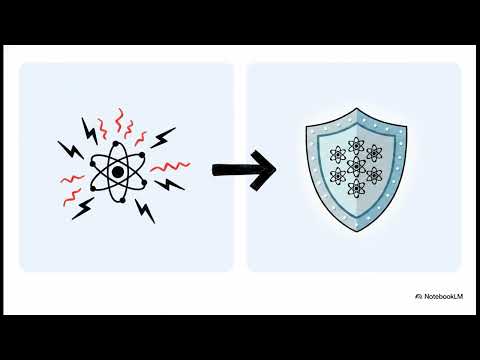
Traditionally, quantum error correction, a necessity due to the fragile nature of qubits, has necessitated spreading information across many physical qubits to create a single logical qubit. This is to protect against the infamous “decoherence,” where qubits easily lose their delicate quantum states due to minuscule environmental interferences. The surface code has been the boss in this domain; however, it demands a battalion of hundreds to thousands of physical qubits per logical qubit, pushing the requirements into the millions for any practical large-scale quantum computer. It’s a bottleneck that seemingly stalls progress.
Yet, this new blueprint bypasses much of the traditional overhead by introducing reconfigurable neutral atoms controlled by laser light, which can be rearranged, allowing qubits that are far apart to communicate effectively. It’s akin to having a security system where every guard can communicate direct instructions to any other, making the building’s protection vastly more efficient with fewer guards. This potential restructuring slashes the number of physical qubits required to mere tens of thousands—a feat that seems poised to reshape the landscape of quantum computing.
Fast forward to 2026, and QuEra, Harvard, and MIT researchers take this conceptual advance into the experimental realm, achieving remarkable gains in quantum error correction using large neutral-atom arrays. They recorded impressive logical error rates at efficiency levels previously considered unattainable, edging closer to overcoming what researchers call the “Terraquap” regime—a milestone suggesting the capability to handle real-world complex algorithms.
Not to be outdone, July 2026 witnessed IBM, in synergy with the University of Chicago, showcasing a new error correction method that marked a significant step toward practical quantum advantage. Their demonstration of 70 logical qubits performing calculations defies what traditional supercomputers can manage, embodying quantum speed and accuracy—a testament to the escalating momentum in quantum computing research.
Still, these advancements don’t necessarily herald the dawn of available quantum computers. The path is filled with engineering hurdles yet to be surmounted: atom movement stability, real-time data decoding, and reliable systems verification are non-trivial challenges. Moreover, proof of these advancements hinges on the ability to repeat results consistently, an essential step towards proving not just speed but reliability—an important facet because speed without accuracy offers little for practical applications.
Why does this matter? The implications stretch far beyond the realm of academia. Think drug discovery; a capable quantum computer might simulate molecular behaviors at unprecedented levels, potentially slashing years off drug development processes. Similarly, new materials for batteries or superconductors could be formulated with more precision and less conjecture. These possibilities illustrate why the timeline to a quantum-empowered world is not just speculative fiction but a meticulously detailed draft, slowly being inked into reality.
On the cybersecurity front, potential quantum advances signal urgency for transitioning to quantum-safe encryption. The current global infrastructure needs to adapt to preemptively guard against future quantum threats, a call to action underscoring quantum’s transformative—and disruptive—potential.
Let’s temper this momentum with a sense of cautious optimism. The strides being made are monumental, each iteration building on the last. However, the journey from laboratory demonstrations to commercially available quantum computers comes with unpredictable timelines. It is a complex architectural endeavor that commands patience alongside persistence.
In conclusion, as these quantum methodologies mature, it leads us to a crucial question: Not if quantum computers will become practicable, but when and how efficiently they will be realized. The vast implications are already being whispered in the corridors of industries and governments alike. For the curious mind, keeping an eye on these developments may not just be a curiosity; it might well be an essential preview of the technological shifts soon to define our era.
—









Leave a Reply