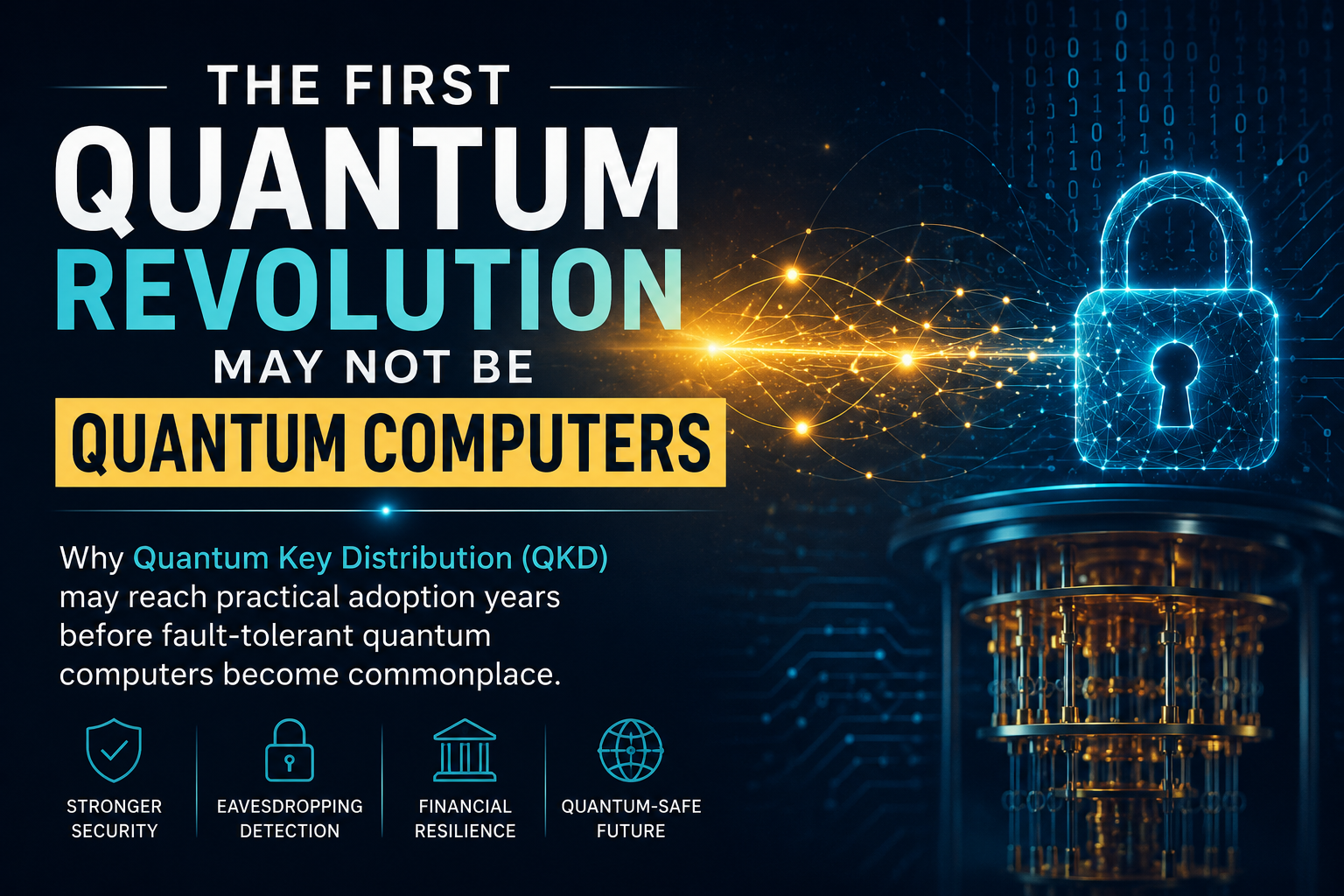
When most people hear the phrase “quantum computing,” their minds immediately jump to futuristic machines capable of solving problems beyond the reach of today’s most powerful supercomputers. Headlines often focus on qubit counts, breakthrough hardware announcements, and predictions about when fault-tolerant quantum computers will finally arrive.
But what if the first meaningful quantum revolution doesn’t come from quantum computers at all?
What if it comes from quantum security?
This possibility emerged during a recent conversation on the Impact Quantum Podcast with Hillary Ogbodo, a software engineer, fintech CTO, and graduate researcher whose work focuses on Quantum Key Distribution (QKD) and secure communications. His perspective offers a compelling reminder that technological revolutions rarely unfold as we expect.
While the industry continues its pursuit of practical quantum computers, another branch of quantum technology may be moving quietly toward real-world deployment. For CISOs, security leaders, enterprise architects, and financial institutions, that distinction matters.
The quantum future may arrive through security infrastructure long before it arrives through computation.
The conversation around quantum computing is often framed as a race. Nations compete for leadership. Companies announce new processors. Researchers publish increasingly impressive results. Yet the reality is that building large-scale, fault-tolerant quantum computers remains one of the most difficult engineering challenges humanity has ever attempted.
Despite remarkable progress, practical quantum computers capable of consistently outperforming classical systems across a wide range of commercial applications are still years away. Some experts believe meaningful fault-tolerant systems could emerge within the next decade. Others believe the timeline may be significantly longer.
Security, however, operates on a different timeline.
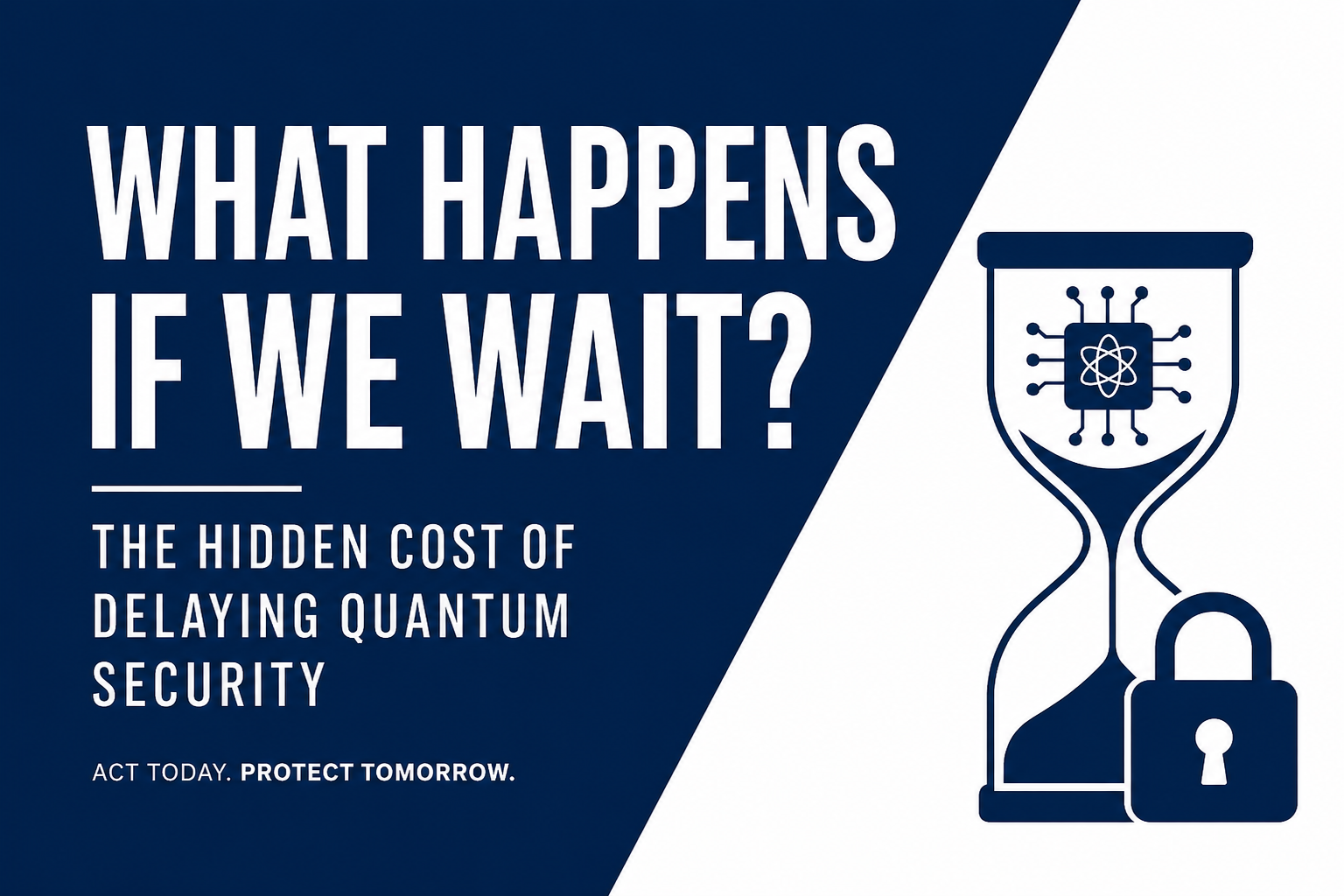
Organizations cannot afford to wait until a powerful quantum computer appears before they begin preparing. By the time the threat becomes obvious, it may already be too late.
This challenge is often referred to as the “harvest now, decrypt later” problem. Sensitive information encrypted today can be intercepted and stored by malicious actors. While that data may remain unreadable now, future quantum computers could potentially decrypt it years later. Information with a long shelf life—government records, financial transactions, healthcare data, intellectual property, and critical infrastructure communications—may already be vulnerable to future attacks.
This is where Quantum Key Distribution enters the conversation.
Unlike traditional encryption methods that rely on mathematical complexity, QKD uses the principles of quantum mechanics to distribute encryption keys. One of its most remarkable properties is its ability to detect attempts at eavesdropping.
In classical communications, a third party may intercept information without either sender or receiver realizing it. With QKD, any attempt to observe or intercept the quantum transmission alters the quantum state itself. The system can detect these disturbances and alert participants that the communication channel may have been compromised.
That capability represents a fundamental shift in how organizations think about security.
Historically, cybersecurity has focused on making attacks difficult. QKD enables detection of when an attack is occurring.
For financial institutions, that distinction is profound.
Banks, payment processors, stock exchanges, and global financial networks depend on secure communications. The integrity of key exchanges underpins everything from customer transactions to interbank transfers. A successful compromise of these systems could have cascading consequences across entire economies.
It is therefore unsurprising that some of the earliest quantum security experiments are taking place within the financial sector. Major institutions around the world have already begun exploring quantum-safe technologies, recognizing that the cost of waiting may ultimately exceed the cost of preparation.
The same logic applies to government agencies, defense organizations, healthcare providers, and operators of critical infrastructure. As digital systems become increasingly interconnected, the value of secure communication channels continues to rise.
Interestingly, many of the most significant developments in QKD are occurring outside the spotlight typically reserved for quantum computing announcements.
China has invested heavily in quantum communications infrastructure, including large-scale quantum networks and satellite-based experiments. European nations continue to expand quantum networking initiatives. Governments around the world are funding research programs focused on quantum-safe communications.
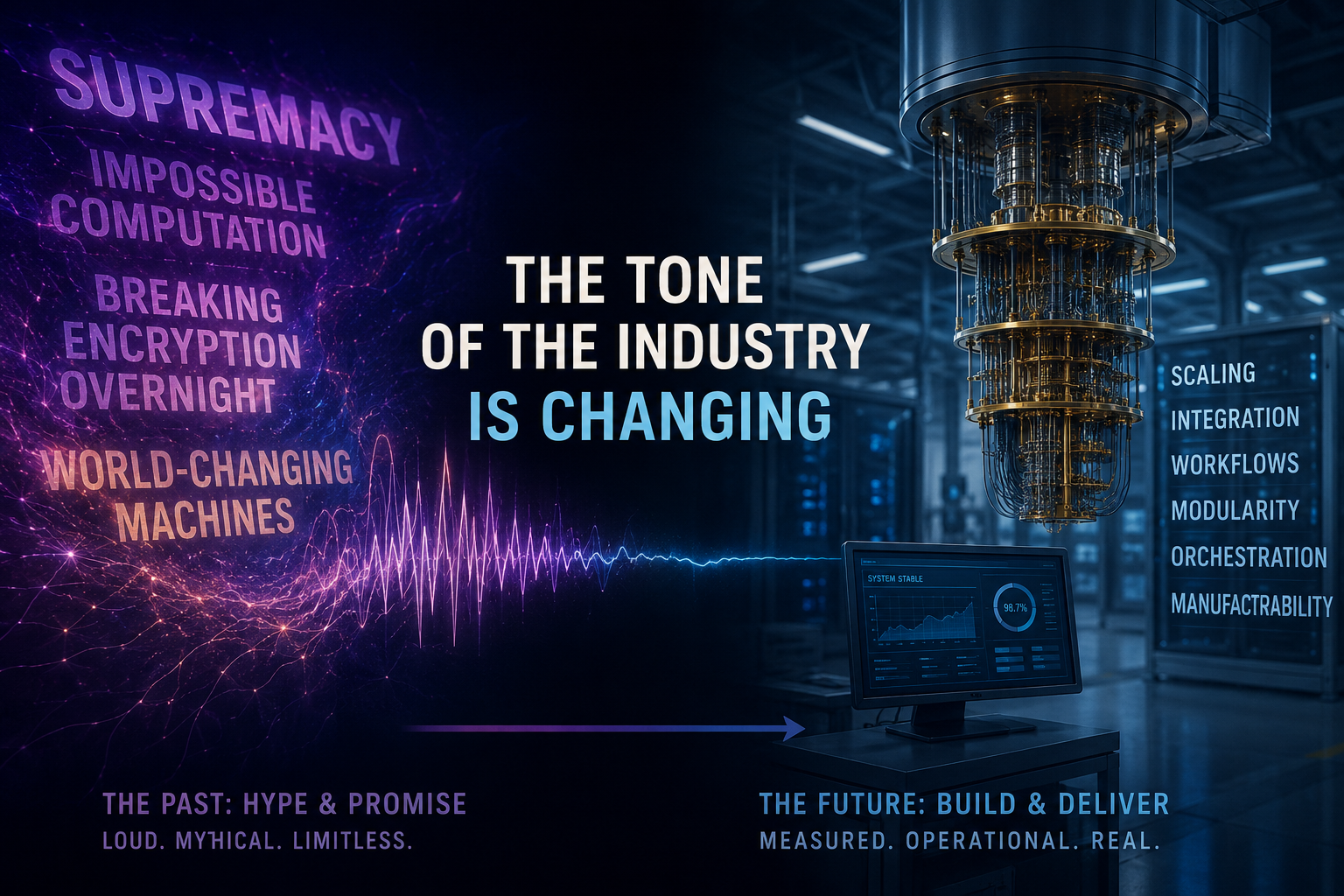
These investments reflect a growing recognition that quantum advantage may arrive in stages rather than all at once.
The public often imagines a future where a revolutionary quantum computer suddenly changes everything overnight. Reality is likely to be far more gradual.
The first phase may involve secure communications.
The second phase may involve specialized optimization and simulation workloads.
Only later may we see the widespread deployment of fault-tolerant quantum computers capable of transforming industries at scale.
This staged evolution mirrors how previous technological revolutions unfolded. The internet did not instantly become a global platform for commerce, entertainment, and communication. It began as infrastructure. The same was true for cloud computing. Long before businesses transformed their operations, foundational networks, protocols, and data centers had to be built.
Quantum technology appears to be following a similar path.
Infrastructure first.
Applications later.
For enterprise leaders, this perspective carries important implications.
Many organizations continue to view quantum computing as a future concern rather than a present one. Yet security leaders increasingly recognize that quantum readiness is not solely about acquiring future quantum capabilities. It is about protecting today’s assets against tomorrow’s threats.
The organizations that begin evaluating quantum-safe strategies today will likely be better positioned than those waiting for a clear signal that the quantum era has arrived.
That preparation does not necessarily require deploying quantum infrastructure immediately. It does require understanding where sensitive data resides, assessing cryptographic dependencies, developing migration strategies, and monitoring advancements in post-quantum cryptography and quantum communications.
The goal is not panic.
The goal is preparedness.
Perhaps the most important lesson is that technological revolutions are often easier to recognize in hindsight than in real time.
When historians eventually look back at the emergence of the quantum era, they may not point to a single breakthrough computer as the beginning of the transformation.
They may instead point to the moment organizations started rebuilding the foundations of digital trust.
They may point to the deployment of quantum networks.
They may point to advances in secure communications.
They may point to the quiet adoption of technologies like Quantum Key Distribution.
Because the first quantum revolution may not be the arrival of quantum computers.
It may be the reinvention of security itself.