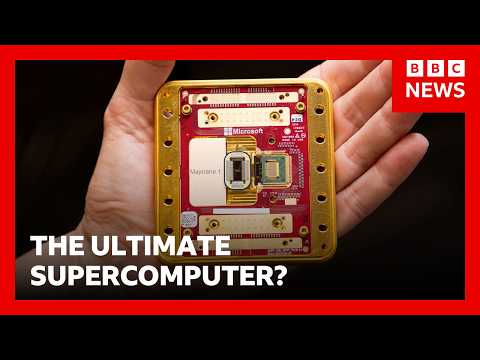
There’s something quietly significant happening in quantum computing right now, and it has less to do with flashy demos or headlines about machines “changing the world overnight” and more to do with factories. Real ones. Concrete floors. Manufacturing lines. Engineers in cleanrooms are adjusting microscopic defects that most people will never see.
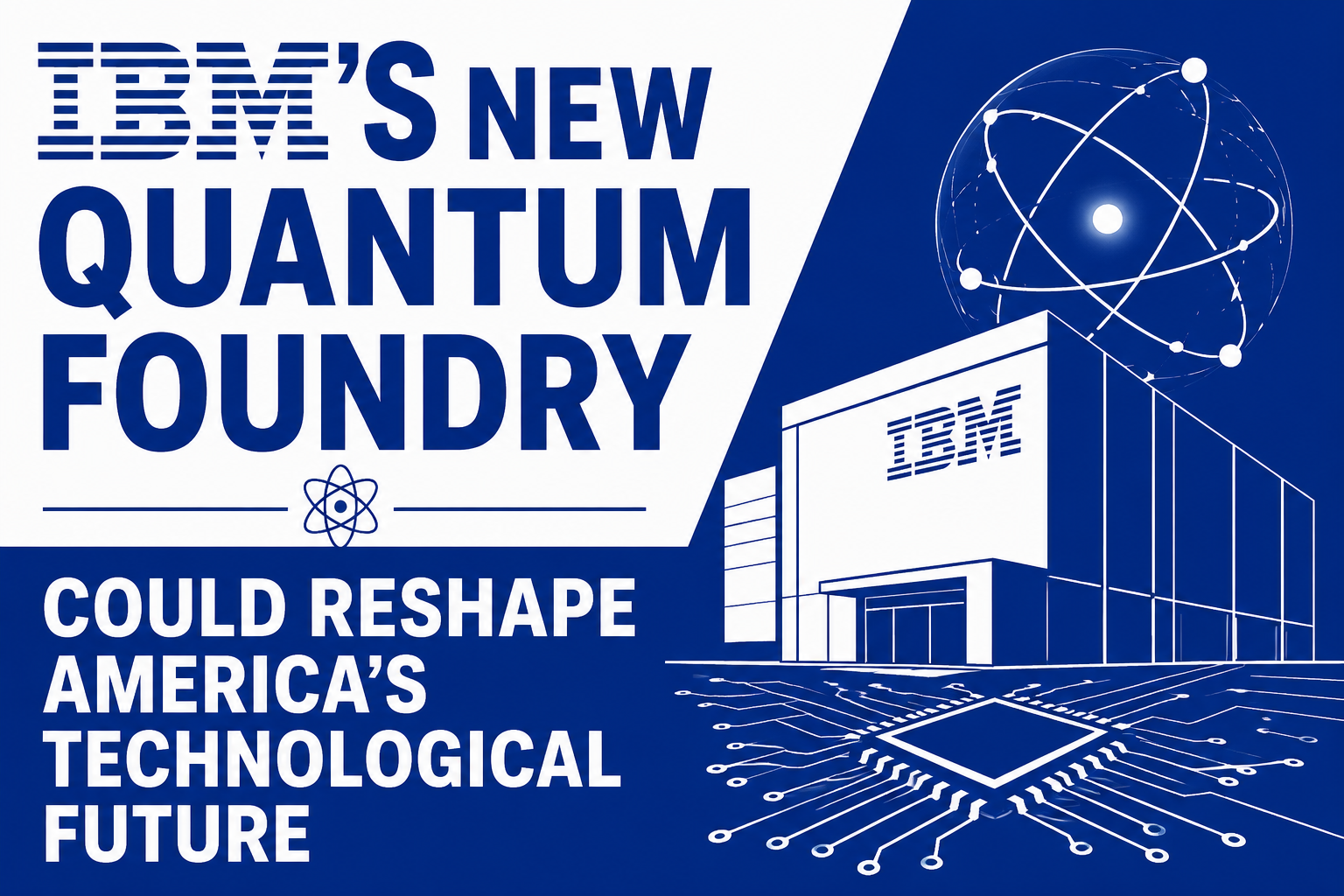
IBM and the U.S. Department of Commerce recently announced plans to build “Anderon,” which would become America’s first dedicated quantum chip foundry in Albany, New York. The project is proposed to receive $2 billion in investment, split between IBM and federal funding through the CHIPS and Science Act.
At first glance, it sounds like another government-tech partnership announcement. Another massive number is attached to another emerging technology. But beneath it lies a deeper shift in how the industry thinks about quantum computing itself.
For years, quantum conversations lived mostly in research labs, on conference stages, and in speculative headlines. The focus was always on breakthroughs: more qubits, better algorithms, theoretical supremacy, the promise of machines capable of solving problems classical computers cannot touch.
But quietly, another problem has been sitting underneath all of it.
How do you actually build these systems at scale?
That part rarely makes headlines because manufacturing is not romantic. It is repetitive, expensive, and unforgiving. Yet every transformative technology eventually collides with the same reality: ideas are not enough. At some point, someone has to figure out how to reliably produce the hardware over and over again without everything falling apart.
That is the real significance of Anderon.
Right now, many quantum chips are still produced in highly specialized research environments or small-scale fabrication facilities. The process is delicate and inconsistent. Unlike classical semiconductors, which benefit from decades of industrial manufacturing refinement, quantum hardware still feels closer to handcrafted experimentation than scalable production.
IBM’s vision for Anderon changes that equation.
The foundry would operate as a standalone manufacturing facility focused specifically on quantum chips, allowing outside companies, startups, researchers, and partners to fabricate hardware without needing to build their own advanced cleanrooms from scratch. In many ways, it mirrors what happened in classical computing when companies like TSMC transformed chip manufacturing into a scalable global ecosystem.
And that comparison matters.
Because once manufacturing becomes standardized, entire industries accelerate.
You can almost feel the quantum sector beginning to move away from isolated science projects and toward something more industrial. More permanent. Less speculative.
The foundry plans to use 300mm silicon wafer production, which aligns quantum manufacturing more closely with modern semiconductor fabrication techniques already used throughout the classical computing world. That may sound like a technical detail, but it represents something larger: quantum computing is slowly learning to exist within real manufacturing systems rather than alongside them.
The project will initially focus on superconducting qubits and cryogenic control electronics.
Superconducting qubits are extraordinarily sensitive. Tiny imperfections in materials or environmental noise can cause them to lose their quantum state almost instantly. That instability has been one of the field’s largest engineering headaches for years. Scaling production while maintaining consistency has proven incredibly difficult.
And then there is the wiring problem.
Modern quantum systems require enormous bundles of cables running from room-temperature control systems down into refrigerators operating colder than outer space. The image itself feels strange when you picture it closely. Thick cables descending into silence and frost while researchers try to keep fragile quantum states alive for fractions of seconds.
It works for experiments.
It does not scale cleanly.
Anderon aims to integrate more of those control systems directly alongside the quantum hardware itself through cryogenic electronics. If successful, that could dramatically reduce complexity, heat leakage, and physical infrastructure requirements in future systems.
Which brings the conversation to something bigger than technology.
Sovereignty.
That word keeps appearing more frequently in quantum discussions lately, and not by accident.
Governments increasingly view advanced computing, AI, semiconductors, and quantum systems as strategic infrastructure rather than ordinary commercial markets. The fragility of global supply chains over the past several years changed how nations think about technological dependence. Quantum computing now sits inside that conversation alongside AI chips, cybersecurity, and advanced manufacturing.
Because whoever controls the infrastructure often shapes the industry’s future.
The United States appears determined not to repeat some of the manufacturing mistakes it made during previous semiconductor cycles, where large portions of fabrication moved overseas over time. By investing early, before quantum manufacturing fully matures, the government is attempting to establish domestic capability before global dependencies become entrenched.
Albany is also not a random choice.
New York already has deep semiconductor infrastructure, research institutions, and engineering talent. There is an existing ecosystem there. One of the strange things about advanced technology is how physical it eventually becomes. We talk about “clouds” and “virtual systems,” but beneath it all are buildings, energy grids, materials science labs, water systems, specialized workers, and regional expertise accumulated over decades.
Technology always returns to geography eventually.
What may matter most about Anderon, though, is that it is being positioned as an open-access foundry rather than a closed IBM-only facility.
That changes the emotional texture of the announcement entirely.
Instead of one company trying to dominate the field alone, the structure suggests building a broader manufacturing ecosystem that multiple organizations can use. Smaller quantum startups that could never afford billion-dollar fabrication facilities may eventually gain access to industrial-grade manufacturing capabilities.
That lowers barriers.
And when barriers lower, experimentation expands.
Some of the most important breakthroughs in computing history did not come from the largest companies. They emerged because infrastructure became accessible enough for smaller groups to build on top of it.
There is also something psychologically important happening here.
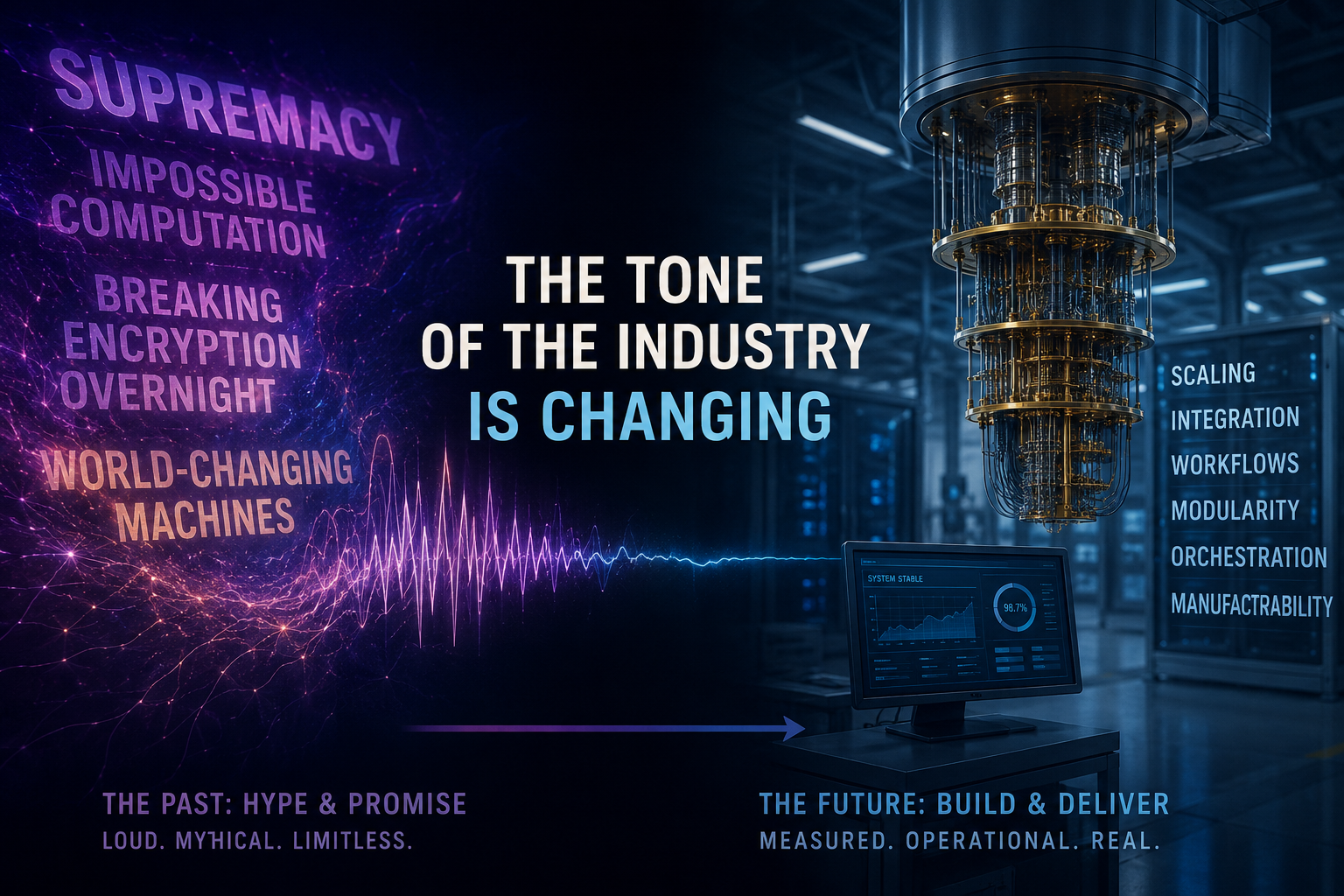
The tone of the quantum industry is changing.
A few years ago, many quantum headlines sounded almost mythological. Endless promises. Exponential claims. Timelines that felt detached from engineering reality.
Now the language feels different.
More grounded.
More operational.
More focused on manufacturing, integration, and scalability.
That usually happens when a technology begins inching closer to reality.
The loud phase fades first.
Then comes the difficult part: building systems people can actually use.
And maybe that is what Anderon really represents beneath all the investment numbers and political messaging. Not the arrival of quantum computing itself, but the beginning of the infrastructure required to make it durable.
The moment when quantum computing stops behaving like a scientific spectacle and starts behaving like an industry.