It might seem counterintuitive at first. In a world where precise calculations and structured experiments seem to reign supreme, philosophy appears like an abstract detour. Yet, as highlighted by Elise Crull, an Associate Professor of Philosophy at CCNY and the CUNY Graduate Center, it’s exactly this intersection—or collision—of philosophy and physics that is shaping the cutting edges of quantum engineering.
Based on content from The New Quantum Era
Elise Crull’s recent discussion on “The New Quantum Era” podcast peels back complex layers of what it means to reconcile these two disciplines. The conversation is richly textured with historical anecdotes, such as her work recognizing voices like Grete Hermann’s, and inviting us to see quantum mechanics not just as a set of equations, but as an evolving dialogue. This dialogue took a public stage at Helgoland in June 2025, where Crull acknowledged the “courage” it took to invite a philosopher into a realm typically reserved for physicists.
Why does this matter? Because the questions of quantum mechanics are no longer just academic. As Crull underscores, the interpretive aspects of quantum physics—like entanglement and decoherence—are now engineering issues with financial stakes. The shift from theoretical contemplation to practical implementation means each “interpretation” of these concepts affects what is being built, funded, and researched.
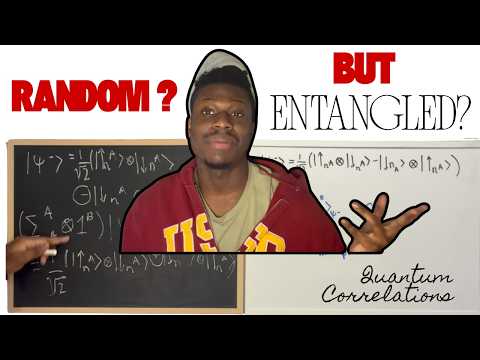
During the episode, she teasingly distinguishes terms that often get lumped together. Decoherence and noise, for instance, are not interchangeable. This distinction is crucial because an incorrect error correction strategy can cripple quantum hardware efficiency. Similarly, being precise about what we mean by “entanglement” is vital—currently, there over six definitions circulating, each leaving room for philosophical reflection and scientific reconsideration.
Perhaps more provocatively, Crull speaks to the way we’ve written the history of quantum mechanics, structurally erasing significant contributions, often by women, such as Hertha Sponer. It’s a sobering reminder that the intellectual history we construct affects how we perceive who owns knowledge and innovation.
Yet, amidst all these clarifying corrections, Crull anticipates the next big wave in physics will likely be “stranger, not tamer.” The evolution of science, much like philosophy, is unpredictable and intertwined with the ways we choose—or refuse—to look at old riddles anew. Even if engineers often dismiss philosophical queries with “it’s just a tool,” Crull warns this might be “the most insidious thing an engineer can say about quantum or AI technology.”
In traversing the landscapes of physics and philosophy, Elise Crull offers a window into a world where calculation meets contemplation, encouraging us to stay curious and critically engaged. She reminds us that while the powerful computers we build might require solid answers, the journey there is paved with newly opened questions.
As quantum computing becomes more deeply embedded in our technological and cultural fabric, Crull’s insights suggest perhaps we should not silo technical progress from theoretical exploration. Instead, might philosophy offer us not the answers we seek, but a framework resilient enough to handle uncertainty?
For those interested in diving deeper, be sure to explore Crull’s profiles on CCNY and CUNY Graduate Center, as well as her collaborative work in the forthcoming book, The Einstein Paradox.
It’s an intriguing time to challenge—both theoretically and practically—the puzzles quantum mechanics presents. Perhaps instead of seeking finite answers, it’s the rich questions that will carry us forward.
—