For years, Quantum lived in a kind of distance. Chalkboards. Equations. The kind of conversations that felt just out of reach unless you had spent a decade inside them. It was easy to admire from afar and just as easy to dismiss as something that didn’t belong to you.
But something is changing.
Quietly, almost without announcement, quantum computing has moved from the lab into rooms where decisions get made. Boardrooms. Strategy calls. Investment conversations. And suddenly, the question isn’t What is quantum?
It’s where do I fit into it?
At Impact Quantum, we’ve been sitting inside that question for a while now. And the answer, more often than not, has nothing to do with having a physics background. It has to do with how you think—and how willing you are to stay with something that doesn’t resolve immediately.
Because quantum doesn’t behave the way we’ve been taught to expect.
If you look down at the device in your hand, everything about it is built on certainty. Classical computing is clean in that way. Bits are either 0 or 1. On or off. A coin placed flat on the table—heads or tails, nothing in between.
It’s structured. Predictable. Reassuring, even.
Quantum asks you to hold something else entirely.
Instead of placing the coin on the table, imagine spinning it. Not fast enough to blur into nothing, but just enough that it refuses to settle. It’s not heads. It’s not tails. It’s both, and neither, at the same time.
This is superposition.
And if you sit with that—not just as a concept, but as a feeling—it starts to stretch something. The need for a single answer. The instinct to collapse possibilities too quickly.
A qubit doesn’t rush to decide. It holds the tension.
Then there’s entanglement.
In the classical world, everything is separate. One action leads to one outcome. Cause and effect, neatly contained.
Quantum breaks that boundary.
Two qubits can become linked in a way that doesn’t make intuitive sense. Change one, and the other responds—instantly, regardless of distance. Not as a signal traveling between them, but as if they were never truly separate to begin with.
It’s the kind of idea that resists explanation. And maybe that’s the point.
Because when you combine superposition and entanglement, you don’t just get a faster machine. You get a different way of navigating complexity.
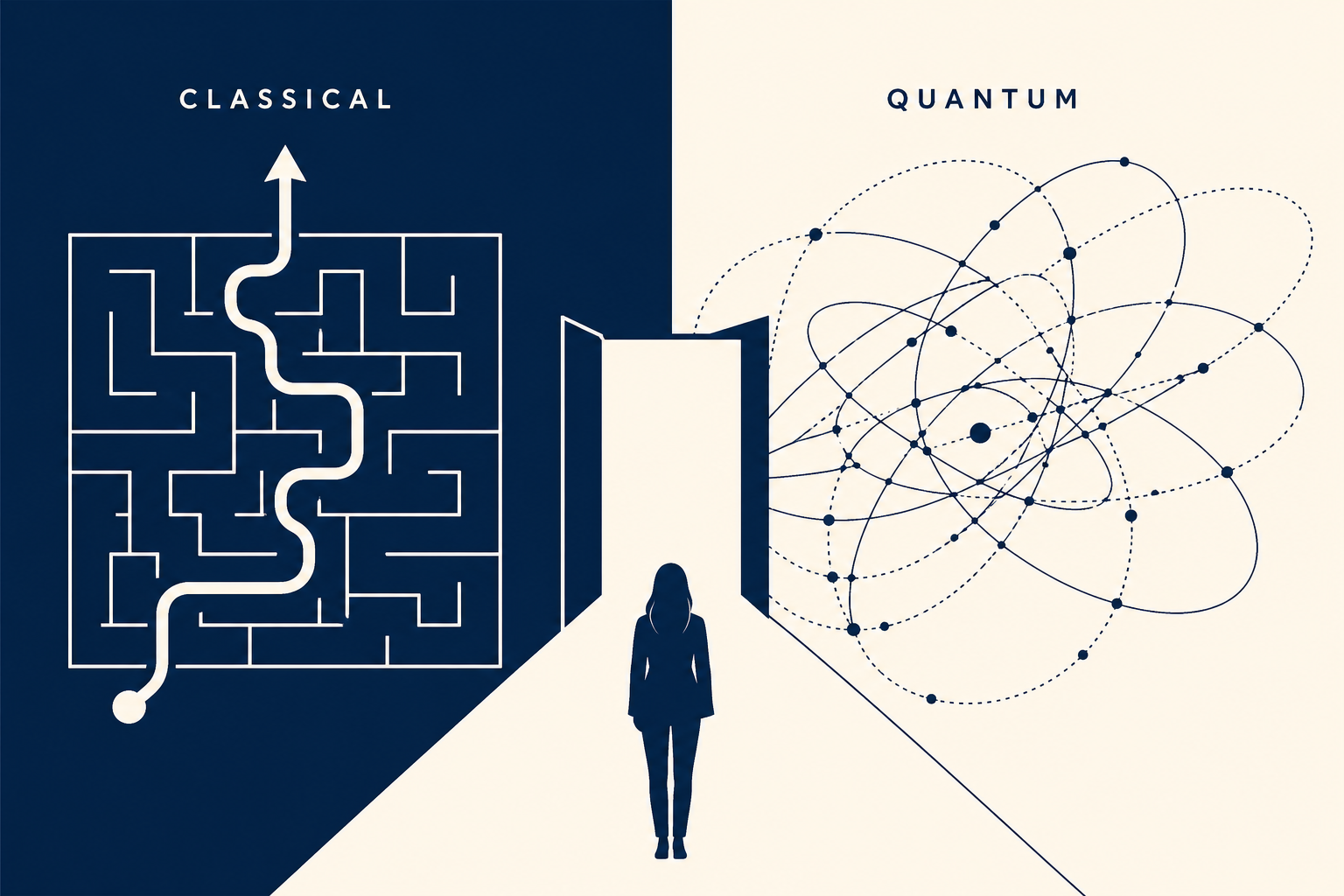
There’s an analogy that comes up often—a maze.
A classical computer enters and begins moving through it step by step. It chooses a path, follows it, hits a wall, turns around, tries again. Methodical. Persistent. Linear.
A quantum system doesn’t move through the maze the same way.
It holds all the paths at once. Not as a list, but as a kind of layered possibility. It doesn’t search for the answer in the traditional sense. It allows the right path to emerge from the problem’s structure itself.
And something about that lands differently, depending on how your mind already works.
For some, it feels abstract.
For others, it feels… familiar.
So why does any of this matter?
Because there are problems in our world that don’t respond well to step-by-step thinking.
Drug discovery is one of them. Right now, developing a new medication can take over a decade—not because we lack effort, but because simulating molecular interactions at scale is beyond what classical systems can handle efficiently. Quantum opens a different door. The possibility of modelling nature as it behaves, not as we approximate it.
Climate is another. The way we produce fertilizer alone consumes a staggering amount of global energy. The search for better catalysts, better materials, better systems—it’s all buried inside layers of complexity that resist simplification.
And then there’s optimization. Logistics. Finance. Systems where the number of possible outcomes grows so quickly that choosing the “best” one becomes almost impossible to compute.
Quantum doesn’t promise easy answers.
But it changes the shape of the question.
At the same time, there’s a kind of honesty we have to hold onto.
We are not in the future yet.
We’re in what’s called the NISQ era—Noisy Intermediate-Scale Quantum. And “noisy” isn’t just a technical term. It’s a reminder of how fragile these systems still are. A slight vibration. A small fluctuation in temperature. Enough to collapse the state entirely.
These machines exist in environments colder than outer space, not because it’s impressive—but because it’s necessary.
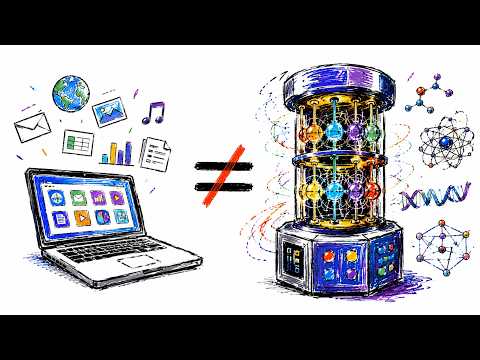
So no, this isn’t about replacing your laptop. Not anytime soon.
What we’re seeing instead is something more hybrid. Classical systems doing what they do best, with quantum stepping in for the problems that refuse to be solved any other way.
It’s not a takeover. It’s a collaboration.
And maybe this is the part that matters most.
There’s a persistent myth that to belong in this space, you need to be deeply technical. That unless you can write the equations, you’re standing outside the conversation.
But when you look closely at what’s actually happening, a different pattern starts to emerge.
The people moving things forward aren’t just physicists.
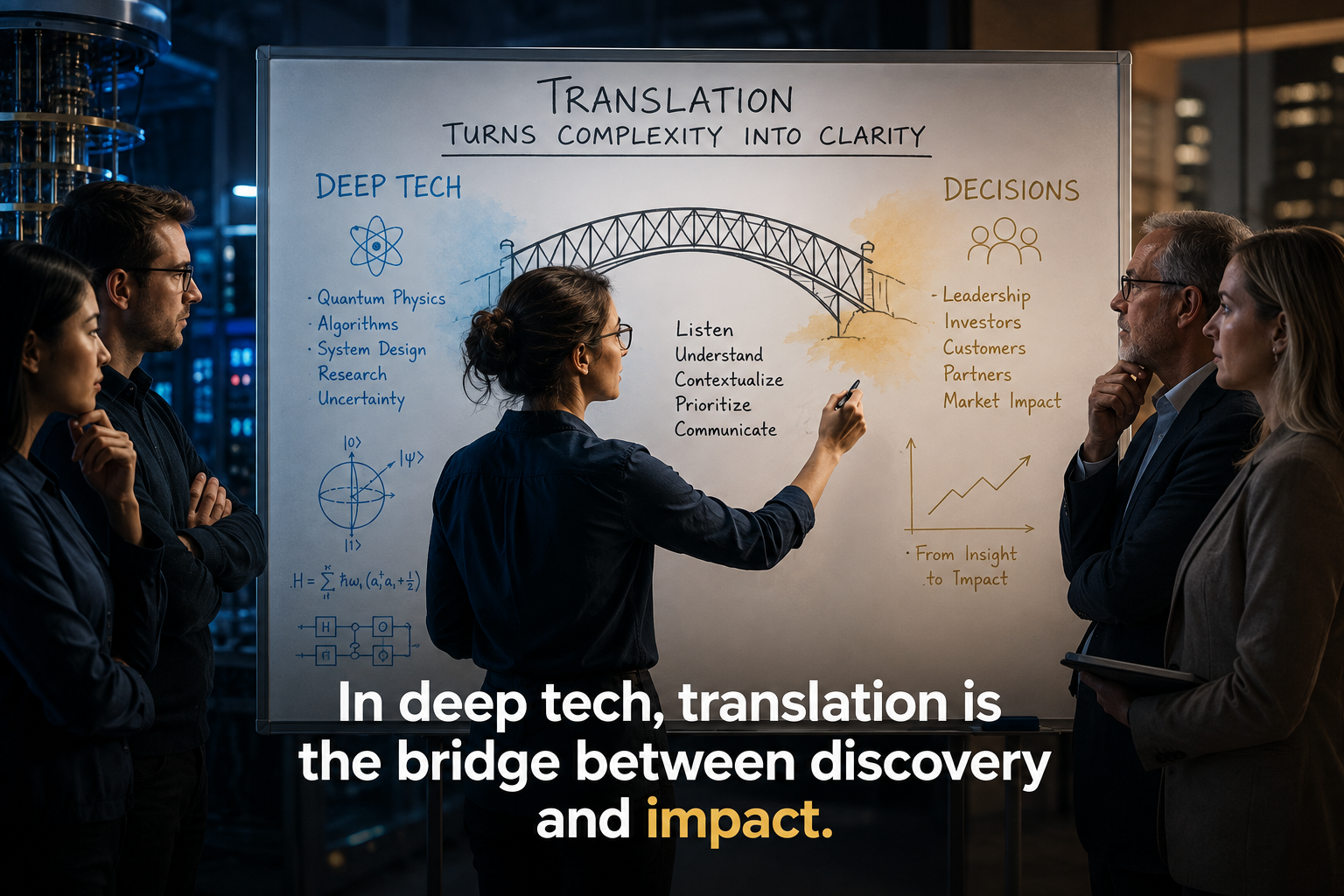
They’re translators.
People who can sit with complexity long enough to understand its shape—and then turn around and explain why it matters. Strategists who can recognize where quantum might create leverage. Designers who can make these systems usable. Communicators who can connect technical progress to human impact.
And maybe most importantly, people who think differently.
Because this space needs more than precision.
It needs perspective.
Quantum computing is often described as a revolution.
But revolutions aren’t always loud.
Sometimes they feel like this—
a quiet shift in how we approach the unsolvable.
a slow loosening of the need for certainty.
a recognition that there might be more than one way through the maze.
You don’t need to understand every equation to be part of it.
You just need to stay curious long enough to notice that something fundamental is changing.
And maybe, in the process, notice how you think is changing too.