There’s a peculiar dance that happens when deeply held scientific beliefs come into conflict with curiosity. A rhythm of doubt, questioning, and re-examination that feels both unsettling and exhilarating. One such belief that has stood steadfast in the landscape of physics is the notion that the speed of light is an insurmountable barrier, an absolute limit that cannot be broken. In a world where boundaries are constantly being pushed, this concept of an ultimate speed limit feels almost like an invitation for reconsideration.
Consider this: why should the speed of light be the fastest any signal or object could travel? Such a question might sound naive at first, after all, it’s rooted in Einstein’s famed theories, which depict it as a barrier requiring infinite energy to surpass. Yet, the other side of this question lies in the realm of quantum mechanics, an area notoriously perplexing and esoteric. Sabine Hossenfelder, a physicist known for her thought-provoking perspectives, argues that the limitations often attributed to the speed of light may stem from a fundamental misunderstanding of quantum mechanics itself.
Based on content from Sabine Hossenfelder
Physicists’ reluctance to challenge this barrier is more than just an academic curiosity; it encompasses broader implications. Consider our ventures into space: if the speed of light limits our technology, then the stars remain tauntingly out of reach, their whispers unheard across the cosmic expanse. It’s a constraint that orders our scientific playbook, dismissing prospects of contacting extraterrestrial civilizations because such communication would defy this very speed constraint.
Hossenfelder suggests that this hesitation is based not on the true nature of the universe as unraveled by quantum physics but on a misunderstanding—and a collective reluctance to explore alternatives. To unravel this, we dive into the depths of the causality problem, a conceptual tug-of-war about whether faster-than-light (FTL) communication would disrupt the sacred order of cause and effect.
The crux of the causality concern is this: if signals could travel faster than light, one might rewrite the past, altering events in paradoxical loops. Yet, this assumes that time itself doesn’t have a preferred direction—a notion we don’t fully comprehend yet trust implicitly. It’s worth recognizing that, in our world, time does have a direction. It moves us inexorably forward, shaping our perceptions of cause and effect. Hossenfelder argues convincingly that acknowledging this irreversible flow nullifies the causality problem. FTL signals could still respect the arrow of time, maintaining cosmic order without descending into paradox.
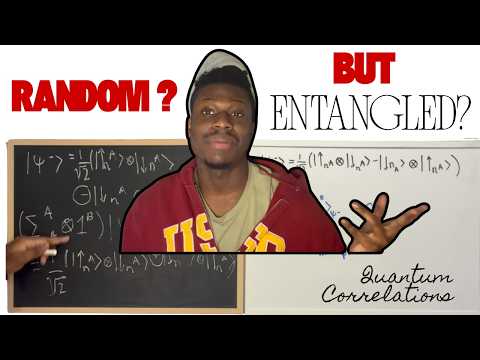
Quantum physics enters this conversation—often perceived as a domain rife with paradox itself. The concept of non-locality in entangled particles has fueled misunderstandings about what happens when one of a pair is observed. Are these interactions somehow instantaneous, defying the very speed of light? Traditional interpretations, fuelled by a dramatic allure, often talk of ‘spooky actions,’ but Hossenfelder refines this notion, suggesting it’s more a matter of knowledge retrieval than physical interaction. Thus, entangled particles do not transmit information faster than light, thereby aligning quantum mechanics with Einstein’s limit on the speed of distant signals.
But what if we dared to embrace non-traditional models? The universe might harbor hidden variables, elements not captured in our present equations. This is where the notion of superdeterminism steps in—a framework proposing that everything in the universe is intricately predetermined, and deviations from quantum mechanics could, paradoxically, allow signals to travel faster than light—without violating causality. The idea of superdeterminism thus shuffles the cards, inviting us to consider that quantum mechanics might not be the universe’s definitive language, but rather a highly useful statistical tool that speaks to deeper truths beneath.
Admitting even the possibility of these deeper layers defies groupthink—a pivotal counter-narrative to the predominant doctrines of physics. It asks us to open our minds to what lies beneath current theories, to embrace the uncertainty of the unknown with open arms. Exploring this could unlock unprecedented realms in physics, perhaps finally offering the means to defy the speed-of-light convention and traverse or communicate across the vast, daunting stretches of spacetime.
There’s beauty in questioning what we hold to be absolute. Such scrutiny reminds us that as much as we tread on the legacy of giants, those footsteps are starting points—not end destinations. The speed of light, a grand sentinel within the annals of physical law, may merely be another threshold inviting investigation. If there’s a definitive understanding of the universe awaiting us, acknowledging the potential to surpass even our most sacred limits is a journey only curiosity and bold interrogations can lead us toward. These thoughts linger, whispering to question what we accept today and urging us to ponder where these quiet inquiries may lead us tomorrow.
Are we bold enough to embrace the notion that the boundaries we perceive might just be temporary stops on an endless journey of discovery?
—