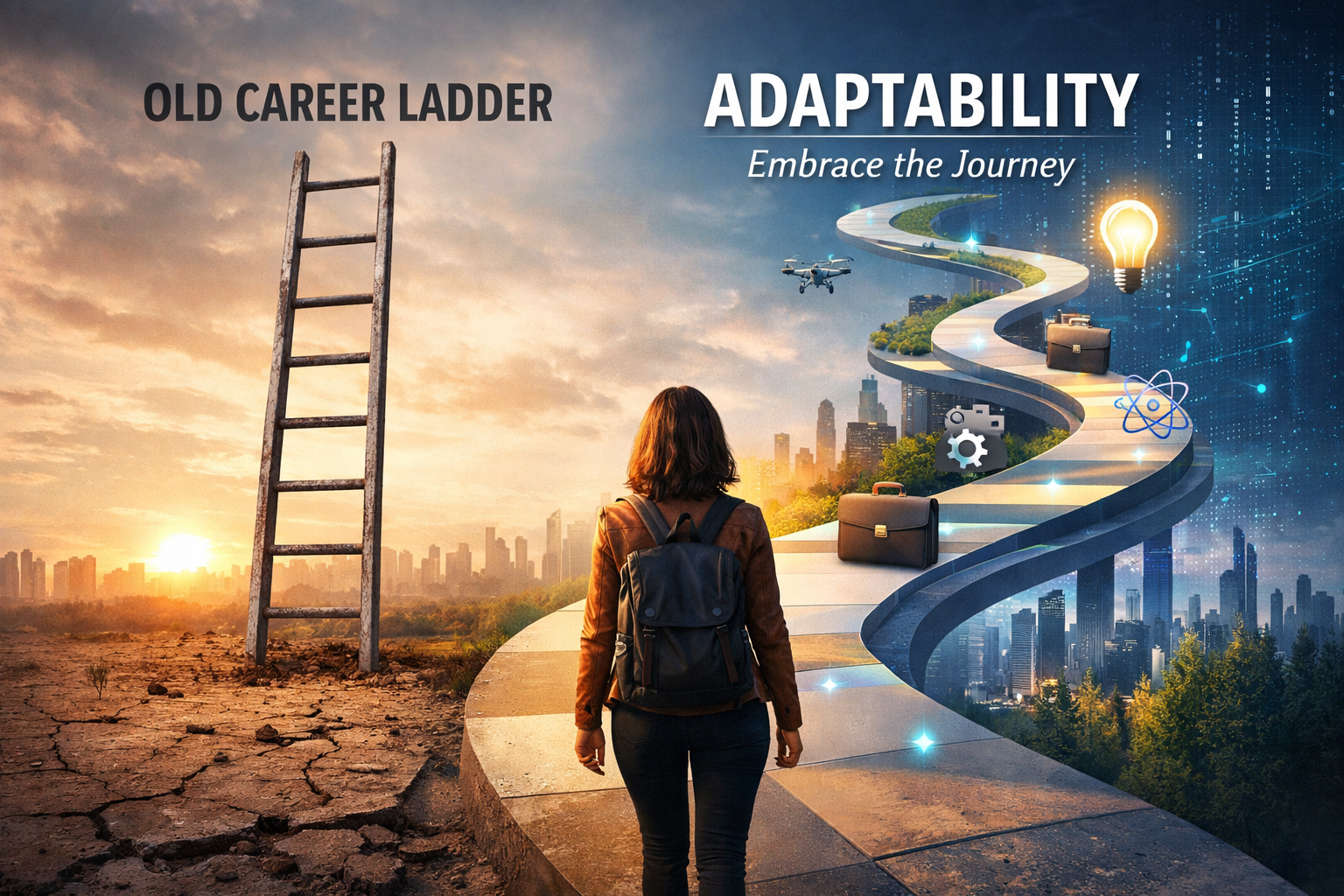
Most people were taught to think about their careers like a ladder, something steady, predictable, and linear. You pick a path early, commit to it, and, over time, through consistency and loyalty, you climb. That model made sense in a different era, one where industries moved more slowly and where staying in one place long enough often meant security. But that’s not the reality we’re living in anymore, and if you’ve been paying attention, you can feel that shift happening all around you.
The ground beneath our feet is moving faster than ever. Roles are evolving in real time, entirely new job categories are emerging, and skills that were highly valuable just a few years ago are being reshaped or replaced by technology. AI is accelerating that pace, and deep tech is redefining entire industries. Stability, the thing we were all told to aim for, has quietly become something far less dependable.
That’s why my conversation with Sierra Clouse stayed with me. It wasn’t just about quantum or venture building; it was about what it actually takes to build a career in this kind of environment. Sierra’s path doesn’t follow the traditional script, and that’s exactly why it matters.
She started in supply chain and logistics, with a grounding in systems and operations. She graduated into the 2008–2009 recession, where even the best plans were disrupted by forces outside anyone’s control. She stepped away from her career to raise her children, then re-entered the workforce through IT recruiting, moved into consulting, explored blockchain, and ultimately found her way into quantum.
That’s not a straight line, and it’s not supposed to be. It’s a reflection of something much more relevant today: adaptability in action. What struck me most was how simply she framed it. “You have to be adaptable.” There was no drama in that statement, no attempt to dress it up as inspiration. It was just the reality of how careers work now.
There’s still a version of career advice that tells people to specialize early and stay in their lane, but what happens when that lane shifts or disappears entirely? What happens when industries restructure, when economic cycles hit, when technology changes the nature of work itself, or when life pulls you in a different direction?
We’ve already lived through multiple waves of disruption: 9/11, the financial crisis, and the pandemic, and now we’re in the middle of another transformation driven by AI and emerging technologies. This isn’t a temporary phase. It’s a pattern.
What Sierra’s story highlights, and what I’m seeing more and more across conversations in deep tech, is that the people who thrive aren’t the ones with the most linear resumes. They’re the ones who can move, translate, and adapt.
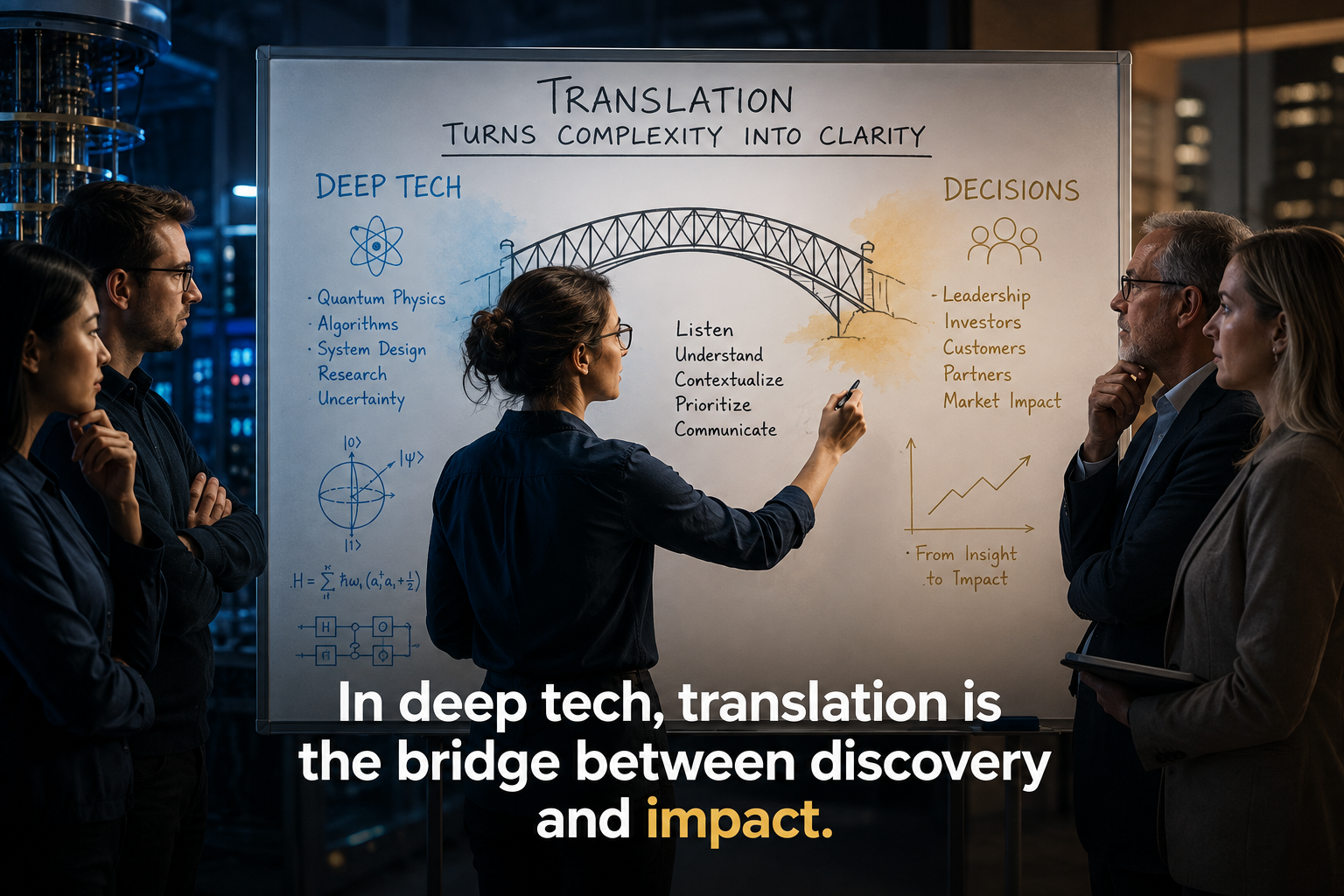
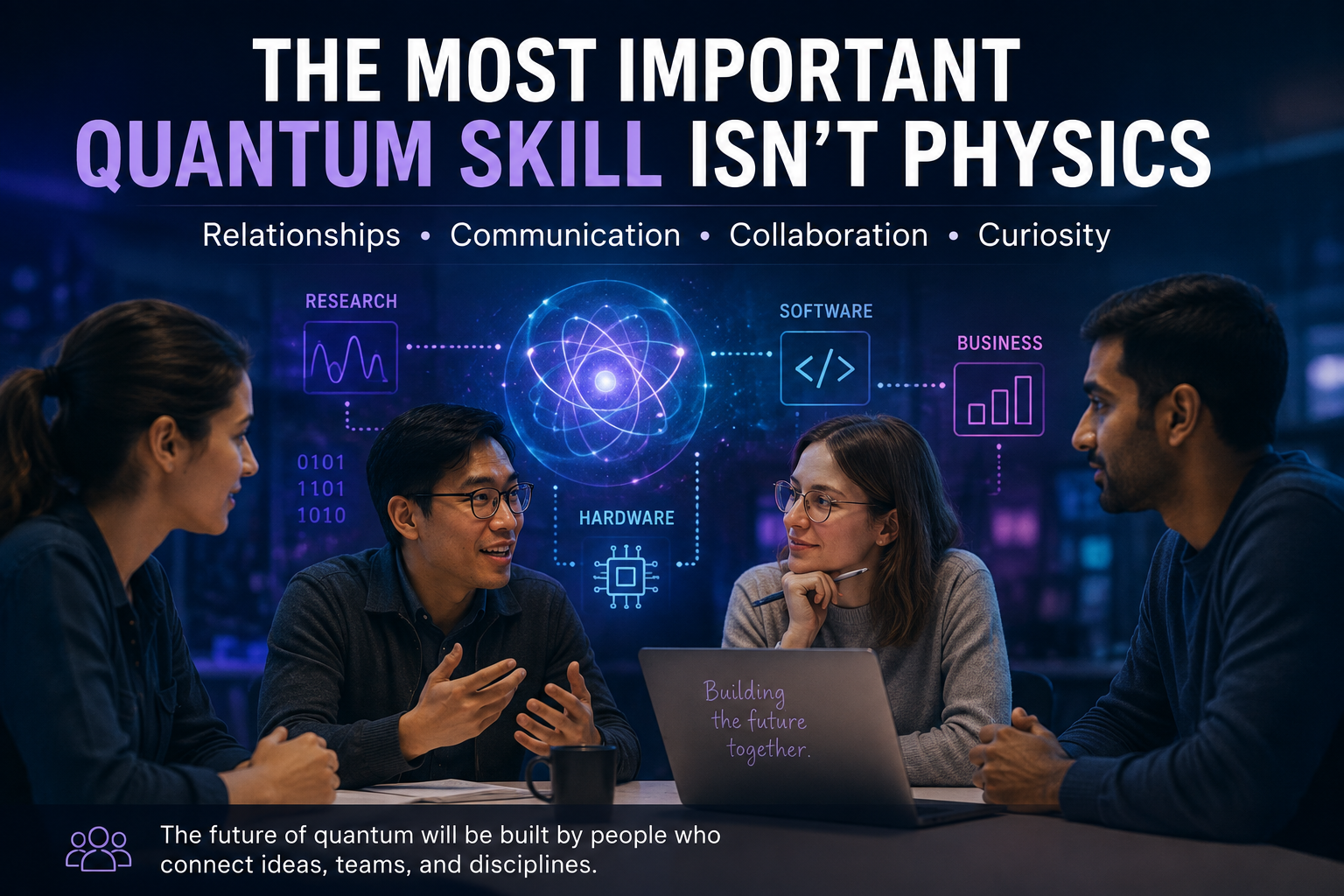
Sierra didn’t enter quantum because she had a traditional technical background in physics. She got there because she understood systems, was curious about how things worked, and could see how different pieces connected. That way of thinking travels across industries.
It allows you to move from logistics to recruiting to consulting to blockchain to quantum without losing momentum, because what you’re actually building isn’t just experience; it’s perspective.
And this is where many people get stuck. They assume that moving into a new field means starting over, but that’s not what adaptability looks like. Adaptability is about carrying your thinking with you and applying it in new contexts.
It’s about recognizing that your skills are often more transferable than you’ve been led to believe. The ability to understand systems, manage complexity, communicate ideas, or bring structure to ambiguity doesn’t belong to one industry. It’s valuable everywhere.
There’s also a deeper layer to this that doesn’t get enough attention. Adaptability isn’t just a professional skill; it’s an emotional one. It’s the ability to stay grounded when things feel uncertain, to keep moving when the path isn’t clearly defined, and to rebuild when circumstances force you to change direction.
For many people, especially those balancing careers with real-life responsibilities, this kind of adaptability is already part of their experience, even if it hasn’t been framed that way. Career pauses, re-entries, unexpected shifts—these aren’t setbacks. They’re part of how modern careers are shaped.
What this conversation reinforced for me is that we need to rethink what strength looks like in a career. It’s no longer about staying in one place, mastering one function, or following a predictable trajectory. It’s about learning quickly, recognizing patterns, translating complexity, and stepping into new opportunities before you feel completely ready.
The old model rewarded loyalty with the promise of stability. The new reality rewards adaptability with the ability to stay relevant.
In a world where everything is changing, technology, markets, and expectations; the capacity to evolve compounds over time. And the people who understand that aren’t falling behind; they’re building careers that move with the future instead of trying to hold onto a version of the past that no longer exists.
Listen to the full episode here. https://player.captivate.fm/episode/aa19388e-5b49-4909-b383-faae070b4db3/