When people imagine the future of quantum computing, they tend to picture something abstract—an elegant machine solving problems beyond the reach of classical computers. The conversation often focuses on algorithms, qubits, and breakthroughs in physics.
But the more I explore the quantum ecosystem, the more I realize that many of the real challenges are far more grounded.
They’re about infrastructure.
During my conversation with Danny Wall on the Impact Quantum podcast, one theme kept resurfacing: building quantum computers isn’t just about quantum mechanics. It’s also about power, cooling, facilities, and engineering systems that can sustain extremely delicate environments.
In other words, quantum computing isn’t just a scientific frontier.
It’s an energy and infrastructure frontier.
And that reality is beginning to reshape how the industry thinks about scaling quantum technology.
A Computer That Lives Colder Than Outer Space
Let’s start with something that surprises many people the first time they hear it.
Most superconducting quantum computers operate at temperatures colder than outer space.
Outer space sits around 2.7 Kelvin. Many quantum systems operate in the range of 10 to 20 millikelvin, which is a tiny fraction of a degree above absolute zero.
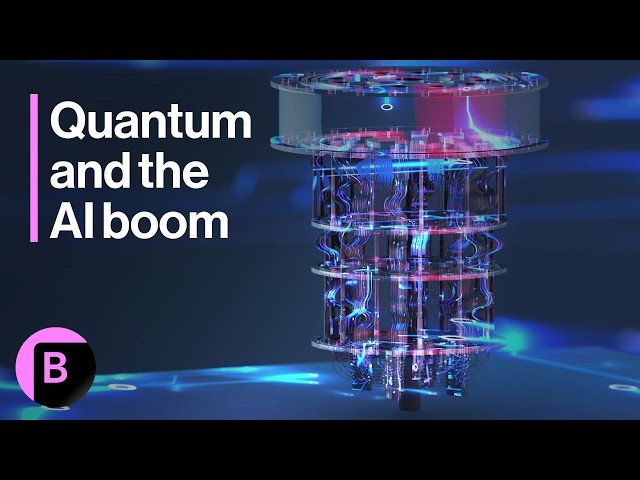
Maintaining those temperatures requires an extraordinary piece of equipment called a dilution refrigerator. These refrigerators use mixtures of helium isotopes to create ultra-low temperature environments where quantum states can remain stable long enough to perform computation.
But cooling a machine to that level isn’t as simple as turning on a freezer.
It requires:
- multi-stage cooling systems
- specialized vacuum environments
- electromagnetic shielding
- vibration isolation
Each of these systems must work together continuously, often operating 24 hours a day.
And all of that infrastructure consumes energy.
This is one of the quieter realities of quantum computing: the machines themselves may be small, but the systems that support them are anything but.
“Building a quantum computer is as much about infrastructure as it is about physics.”
— Danny Wall
That statement captures a shift that many people in the industry are beginning to recognize.
Scaling quantum technology is not just a physics problem.
It’s an infrastructure problem.
The Rise of Quantum Facilities
As the quantum industry grows, we’re seeing the emergence of a new type of facility: quantum facilities designed specifically to support these machines.
These environments often resemble a hybrid between a research lab, a data center, and an advanced engineering facility.
They require:
- vibration-controlled environments
- specialized electrical systems
- electromagnetic isolation
- stable cryogenic infrastructure
In many cases, quantum computers are integrated alongside classical high-performance computing systems. These hybrid environments allow classical processors to coordinate and control quantum operations.
That hybrid model is likely to become the dominant architecture for the foreseeable future.
Quantum computers are not replacing classical computing.
They are becoming specialized accelerators within larger computational ecosystems.
And those ecosystems require infrastructure that can support both worlds.
Energy Efficiency Will Shape the Next Phase of Quantum
As the field matures, another question is emerging.
How efficient can these systems become?
Right now, maintaining quantum environments requires substantial resources. Cooling systems, control electronics, and facility infrastructure all contribute to the energy footprint of a quantum installation.
But history tells us something interesting about emerging technologies.
In the early stages, systems are often inefficient. Over time, engineering innovation dramatically improves performance and energy efficiency.
We saw this with classical computing.
The first computers filled entire rooms and consumed enormous amounts of power. Over decades of engineering refinement, those machines evolved into highly efficient processors embedded in everyday devices.
Quantum computing may follow a similar trajectory.
Researchers and engineers are already exploring ways to reduce energy demands through:
- more efficient cryogenic systems
- improved control electronics
- integrated chip architectures
- photonic and room-temperature quantum approaches
Each of these innovations has the potential to change how quantum machines are deployed and operated.
The Future May Look Like Quantum Data Centers
One of the most intriguing possibilities is the emergence of quantum data centers.
Instead of individual machines scattered across research labs, future quantum systems may be concentrated in specialized facilities optimized for their operational requirements.
These facilities could house:
- multiple quantum processors
- advanced cryogenic systems
- classical high-performance computing clusters
- secure network infrastructure
In this model, quantum resources could be accessed remotely through cloud platforms.
In fact, many companies are already experimenting with this approach. By centralizing quantum infrastructure in specialized facilities, organizations can manage the complex environmental requirements more efficiently.
This model also makes quantum technology accessible to a much wider audience.
Researchers, developers, and businesses could access quantum resources without needing to build their own infrastructure.
The parallels to the early days of cloud computing are hard to miss.
Infrastructure Is Where Quantum Becomes Real
One of the things that fascinates me about emerging technologies is the moment when they transition from scientific curiosity to engineered infrastructure.
That transition rarely happens overnight.
It happens through incremental improvements in the systems that support the technology.
Quantum computing is beginning to reach that stage.
The industry is moving beyond the question of whether quantum machines can work.
Now the question is how to build environments where they can operate reliably, efficiently, and at scale.
And answering that question will require collaboration across many disciplines.
Physicists will continue to push the boundaries of quantum science.
But engineers, infrastructure designers, and energy specialists will play an equally important role in shaping how the technology is deployed.
Listen to the Full Conversation
My conversation with Danny Wall explores many of these challenges in more detail—from the engineering complexity of quantum systems to the broader infrastructure questions facing the industry.
If you’re curious about the hidden layer of technology that keeps quantum machines running, I encourage you to listen to the full episode of the Impact Quantum podcast.
🎧 Listen to the episode here:
Impact Quantum Podcast Episode with Danny Wall
Quantum computing is often described as the next revolution in computing.
But revolutions don’t happen in isolation.
They require systems, infrastructure, and the energy that powers them.
And as quantum technology continues to evolve, those foundations may turn out to be just as important as the qubits themselves.