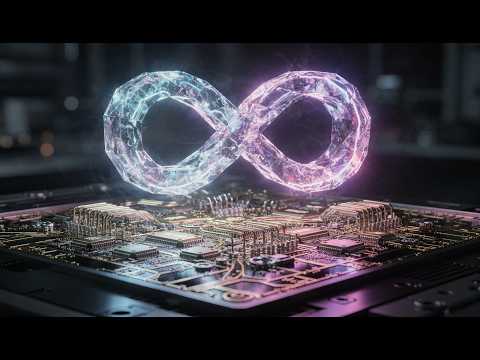
For decades, quantum mechanics has been described as the science of the unseen—phenomena so small, strange, and fleeting that they seem far removed from everyday experience. But this year’s Nobel Prize in Physics changed that perception. The 2025 award went to John Clarke, Michel H. Devoret, and John M. Martinis for proving that quantum behavior can thrive not just in atoms or photons, but in circuits you can hold in your hand.
Their work marks a turning point in humanity’s understanding and application of the laws of physics. By demonstrating macroscopic quantum tunneling and energy quantization in superconducting circuits, the trio bridged an essential gap: the one between abstract theory and real-world technology. Using tiny superconducting loops cooled to near absolute zero, they observed electrons “tunneling” through barriers that, by classical logic, should have been impenetrable. Even more remarkably, they measured distinct quantum energy levels—evidence that the same rules governing subatomic particles also apply to engineered circuits.
This wasn’t merely a scientific curiosity. Clarke, Devoret, and Martinis laid the groundwork for superconducting qubits, the heart of today’s most advanced quantum computers. Their discoveries showed that it’s possible to build and control quantum systems large enough to integrate into devices, opening the door to powerful applications in computing, sensing, and secure communication.
The Nobel Committee called their work “a bridge between worlds”—a phrase that captures both its technical and philosophical resonance. It means the frontier of quantum science has moved from the realm of thought experiments to the lab bench, from paradoxes to prototypes.
In honoring these scientists, the 2025 Nobel Prize in Physics celebrates more than a discovery—it acknowledges a transformation in how we define the boundaries of the quantum world. What was once invisible and intangible has become something we can now engineer, scale, and understand. And in that quiet shift lies the foundation for the next era of technology: one where quantum is no longer theoretical, but tangible, measurable, and unstoppable.
Stay Connected
Follow our journey and be part of the conversation:
🔗 Find us on LinkedIn
📬 Join our mailing list
📺 Subscribe to our YouTube channel