Imagine a world where your phone flags a disease before symptoms appear, or your car glides through dense fog with pinpoint accuracy. That’s not sci-fi anymore—it’s quantum sensing, and it’s already sneaking into the tech we use every day.
Wait, What Is a Quantum Sensor?
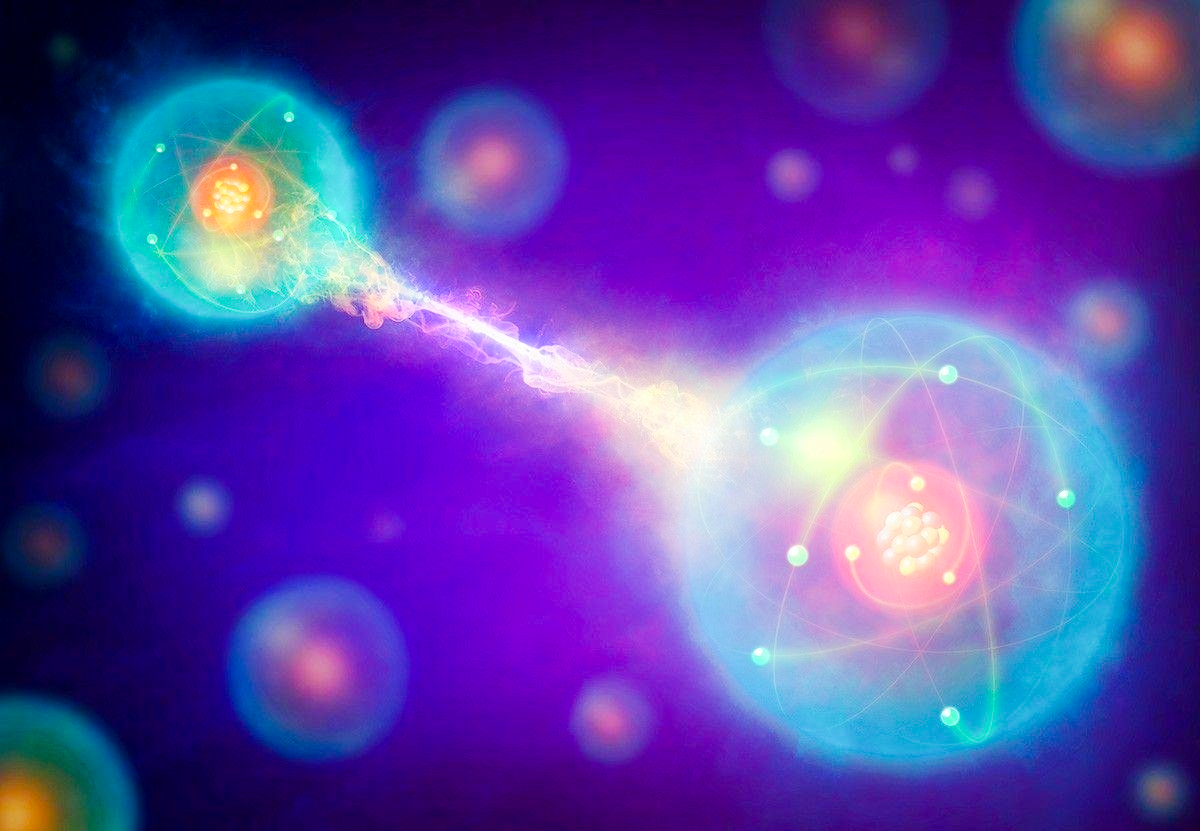
Quantum sensors use the weird rules of quantum mechanics—where particles can be in two states at once or mysteriously linked across space—to measure things like motion, time, and magnetic fields with extraordinary precision.
They used to live in research labs. Now they’re heading into healthcare, transportation, smart cities, and even wearables.
Beyond GPS
GPS has limits. It can be blocked, spoofed, or glitched out in cities or tunnels. Quantum accelerometers and gyroscopes, on the other hand, don’t need satellites. They measure how atoms move when cooled and split in just the right way—resulting in navigation that works underground, underwater, or off-grid.
Companies like SandboxAQ and Q-CTRL are utilizing the Earth’s itself into a kind of natural map.
Quantum Health
Quantum sensors can pick up magnetic fields so faint, they make current medical tech look blunt. They could help detect brain disorders or cancers before symptoms appear. Some are already being used in wearable brain-scanning helmets—no freezing chambers required.
In the near future, your smartwatch might monitor your brain or cells with precision we’ve never had access to outside a lab.
Everyday Quantum
In homes and cities, quantum sensors could:
- Detect intruders via tiny magnetic shifts
- Fine-tune energy use
- Monitor pollution with atomic-level accuracy
Thanks to new micro-sized technology (MEMS), these once-bulky devices are now as small as a grain of rice—ready to be embedded in your phone, car, or even your socks.
Quantum tech isn’t flashy. It’s quiet. It’s precise. And it’s already changing how we measure, move, and monitor the world around us.
Stay Connected
Follow our journey and be part of the conversation:
🔗 Find us on LinkedIn
📬 Join our mailing list
📺 Subscribe to our YouTube channel