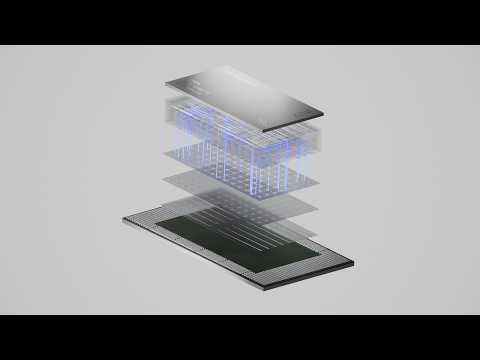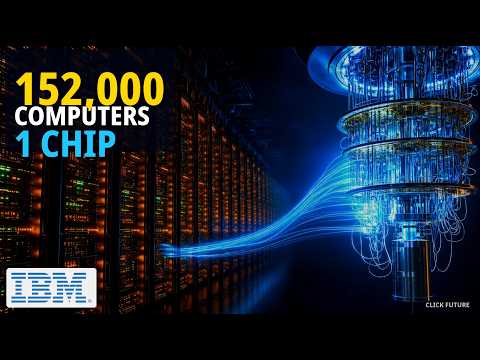
The date was March 12, 2026. While the world turned with its usual haste, a quiet revolution unfolded — a tale of junctions where boundaries blur, where expectations dissolve, only to reemerge seamlessly coherent. IBM, in a hushed yet profoundly reverberating announcement, unfurled a vision so expansive it’s both unsettling and exhilarating: the Quantum-Centric Supercomputing blueprint. In this grand design, they didn’t just lay down hardware; they illustrated an entirely new narrative for our computational odyssey. Here, quantum processors and classical supercomputers aren’t competitors but collaborators, harmonizing in a singular, hybrid eloquence.
Based on content from Click Future
Imagine, if you will, the meeting of two minds — where brute strength meets elegant intuition. IBM’s configuration links RIKEN’s Fugaku supercomputer, a behemoth with over 152,000 classical computing nodes, to their sophisticated quantum processors. The synergy of this colossus and this marvel manifested in the simulation of a 303-atom protein structure. For context, try to grasp the notion of simulative steps exceeding the number of atoms in the observable universe — and remember, IBM achieved it in mere days.
This is more than an advancement in computational power; it’s a paradigm shift poised to redefine industries, from pharmaceuticals to artificial intelligence. The implications are both monumental and myriad. The very mechanics of drug discovery, a $200 billion industry, face transformation. Consider a future where molecules are not trialed by decade-long experiments in bustling labs, but perfected by simulations at the atomic level, tailored to the nuances of a patient’s unique biology.
Within this hybrid creation, the classical and quantum components assume roles befitting a corporate analogy: the bustling classical nodes act as clerks — diligent, tireless, managing the massive influx and arrangement of data. In contrast, the quantum processor is the discerning CEO, resolving the complexities that defy the binary logic of classical bits, undertaking calculations nature itself intimates through quantum realities.
It is here, in the intersection of potential and limitation, that IBM’s insight becomes evident. Rather than building a jack-of-all-trades quantum juggernaut, they’ve woven efficiency through specialization. The classical elements handle the enormity of data; the quantum chip surmounts the cryptic intricacies of quantum states.
Yet, beneath the grandiosity lies the subtle, transformative implications for the scientific method. Imagine agriculture benefited by quantum simulations making zero-emission fertilizers, or climate change mitigated by materials engineered at the elemental level to capture carbon. We find ourselves not just observers but participants in a leap toward an era where technology converses with the cosmos in its native tongue.
As we navigate through and beyond this innovation, we can’t ignore the racing steps of IBM’s rivals. Nvidia forges its path in hybrid domains, acknowledging the necessity of quantum acceleration for AI’s progress. Google and Microsoft press onwards, their own quantum-classical architectures vying to reshape how data centers function globally. Yet, IBM stands ahead, if only by a hair, with hardware and strategic alliances like RIKEN’s anchoring their position.
The stakes aren’t merely economic; they involve a profound reconstitution of our engagement with the natural world. In hospitals and labs, the accelerated discovery could rescript narratives of life and longevity. We stand at the precipice of an era where our biggest existential threats — disease, climate entropy, resource scarcity — are addressed not through isolation of disciplines but through their confluence.
IBM’s blueprint serves as an invitation to rethink computing as not just a tool, but a continuum, a reflection of both the complexity and elegance inherent in the universe. What was unveiled wasn’t just a technological achievement; it was a signal — a signal forecasting an epoch where our computational grasp finally touches the threads of the cosmos. What we do with this grasp remains unwritten, stirring us to ask: what realms will we unveil in this new synthesis of the digital and the quantum?
As you ponder these revelations, consider where you see the greatest promise. Is it in curing diseases once thought indomitable? Crafting sustainable climates from the shelter of elemental insight? The conversation beckons you, as does the future it signs. Until then, continue to engage, wonder, and anticipate; your journey forward is but a click away.
—